
Ashland University RN to BSN and Beyond: In-Person Nursing
Ashland University's in-person graduate nursing pathways help RNs move beyond the bachelor's degree into advanced practice, leadership, or education.

By Lisa Bennett
Registered nurses who already hold a bachelor's degree often wonder what comes next. The truth is that a Bachelor of Science in Nursing (BSN) is no longer the ceiling for ambitious RNs. Ashland University offers in-person graduate nursing pathways designed for registered nurses who want to move beyond the bachelor's degree and into advanced practice, leadership, or education roles. If you are an RN searching for a rigorous, face-to-face program that fits your schedule and your career goals, Ashland University's in-person graduate nursing options deserve a close look. This article breaks down what those programs involve, who they are for, how to pay for them, and how they compare with online alternatives.
Why Go Beyond a Bachelor's Degree in Nursing?
A bachelor's degree gets you into the profession, but the healthcare landscape is shifting toward higher credentials. Hospitals seeking Magnet status, for example, often require a certain percentage of nurses to hold a BSN or higher. Advanced practice roles, such as nurse practitioner, clinical nurse specialist, and nurse educator, require a master's degree at minimum. Leadership tracks in nursing administration frequently prefer or require a graduate degree as well. In short, going beyond the bachelor's degree is not just about personal fulfillment; it is about staying competitive in a field that increasingly rewards specialization.
There is also a financial case. According to the Bureau of Labor Statistics, advanced practice registered nurses earn significantly more than entry-level RNs, and nurse educators and administrators command higher salaries than staff nurses in many markets. If you are weighing the cost of graduate tuition against lifetime earnings, the math often favors investing in a graduate degree, especially when your employer offers tuition reimbursement. Ashland University's in-person format can be particularly valuable for nurses who learn best through hands-on simulation, face-to-face mentorship, and cohort-based collaboration.
Finally, the in-person format at Ashland University provides something that online programs sometimes struggle to replicate: direct access to faculty who practice in the field, clinical placements coordinated through the university's healthcare partners, and a campus community that supports professional networking. For RNs who thrive in structured, interactive environments, an in-person graduate program can be the difference between finishing and floundering.
Ashland University's In-Person Graduate Nursing Pathways
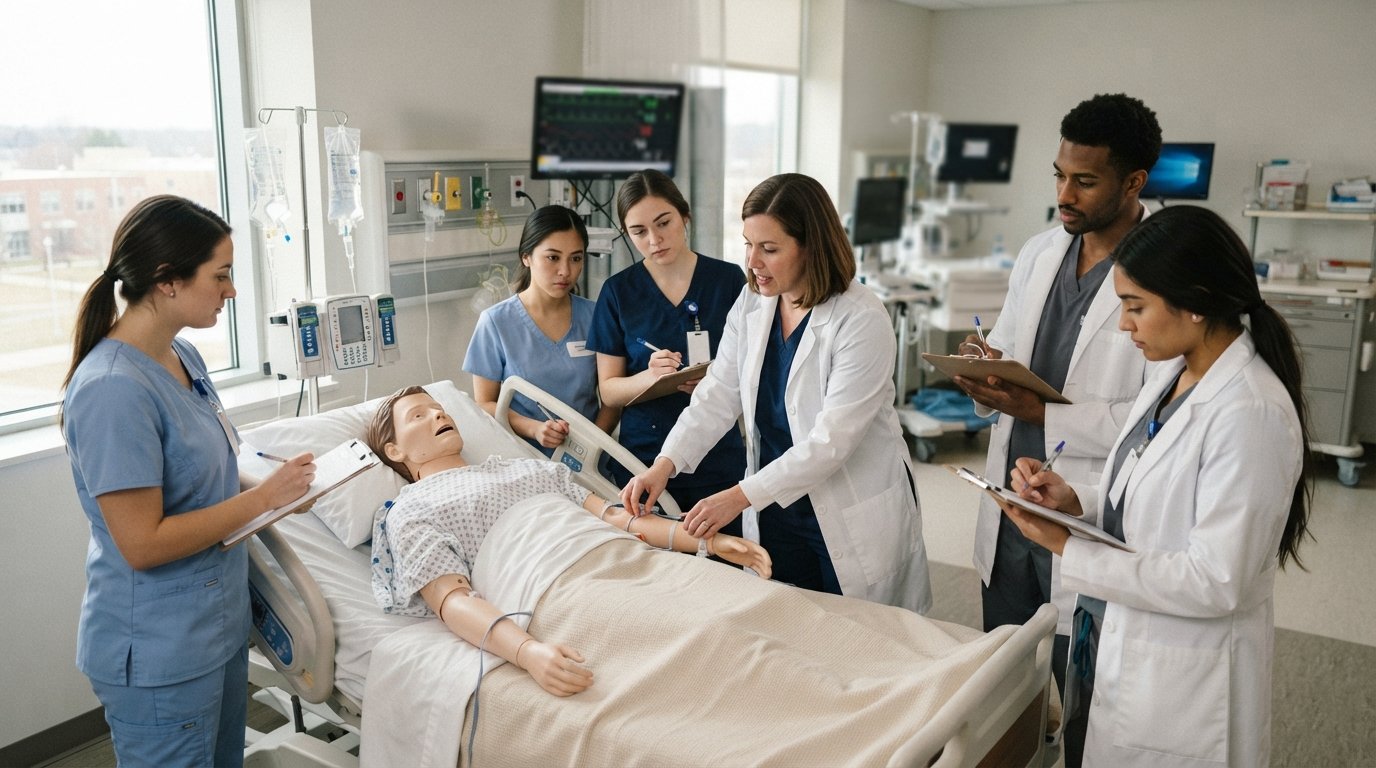
Ashland University, located in Ashland, Ohio, offers a range of graduate nursing programs for registered nurses who already hold a bachelor's degree. These programs are delivered in person, meaning students attend classes on campus or at designated clinical sites rather than completing coursework entirely online. The in-person format is intentional: it allows for real-time feedback, simulation labs, and the kind of peer interaction that builds clinical judgment.
The university's graduate nursing offerings typically include a Master of Science in Nursing (MSN) with concentrations in areas such as family nurse practitioner, nurse education, and nursing administration. There may also be post-master's certificate options for nurses who already hold an MSN but want to add a new specialty. For RNs who hold a bachelor's degree in a non-nursing field, Ashland University may offer an RN-to-MSN bridge pathway, though you should confirm current offerings with the university directly. What matters here is the structure: in-person classes, clinical rotations arranged by the program, and a curriculum that blends advanced pathophysiology, pharmacology, health assessment, and leadership coursework.
Admission requirements for these programs generally include an unencumbered RN license, a bachelor's degree from an accredited institution, a minimum GPA (often 3.0 or higher), and prerequisite coursework in statistics and health assessment. Some programs require letters of recommendation, a personal statement, and an interview. Because Ashland University's programs are in-person, you should also consider geography and commute time. The university's main campus is in Ashland, Ohio, with additional locations in Columbus and Cleveland, so prospective students in those areas may have convenient access.
What to Expect in an In-Person Graduate Nursing Program
In-person graduate nursing programs are rigorous. You can expect to spend significant time in class, in simulation labs, and in clinical settings. A typical week might include one or two evening classes, a day of clinical rotation, and several hours of study and group work. The advantage of the in-person format is that you can ask questions in real time, practice skills under supervision, and build relationships with faculty who can later serve as references or mentors.
Clinical placements are a major component. Ashland University coordinates placements with hospitals, clinics, and community health organizations in the region. This is a significant benefit for students who worry about finding preceptors on their own. That said, you should plan for the time commitment: clinical rotations can be scheduled during weekdays, evenings, or weekends depending on the site. If you are working full-time, you may need to negotiate a flexible schedule with your employer or reduce your work hours during clinical semesters.
Coursework typically includes advanced health assessment, advanced pharmacology, advanced pathophysiology, research methods, healthcare policy, and courses specific to your concentration. For nurse practitioner students, there will be additional clinical hours in primary care or specialty settings. For education or administration students, there may be practicum hours in academic or leadership settings. The curriculum is designed to prepare you for certification exams and for the realities of advanced practice.
Costs, Financial Aid, and Employer Support
Graduate nursing programs are an investment. Ashland University's tuition is set per credit hour, and the total cost depends on the number of credits required for your chosen track. You should check the university's website for current tuition rates, as they change annually. Beyond tuition, budget for fees, books, travel to clinical sites, and possibly a new laptop or software. If you are comparing programs, our guide on online university degree costs and tuition can help you understand how in-person and online costs stack up, even though Ashland's program is in-person.
Financial aid for graduate students is available through federal loans, scholarships, and assistantships. Ashland University may offer merit scholarships or graduate assistantships that reduce tuition in exchange for work on campus. You should also ask your employer about tuition reimbursement or tuition assistance programs. Many hospitals and health systems offer reimbursement for nurses pursuing advanced degrees, sometimes in exchange for a work commitment after graduation. This is often the most underused benefit in nursing.
- Federal Direct Unsubsidized Loans: available to graduate students regardless of financial need.
- Graduate PLUS Loans: for students who need to borrow beyond the unsubsidized limit.
- Employer tuition reimbursement: common in hospital systems; ask your HR department for details.
- Scholarships and grants: search the university's financial aid portal and professional nursing organizations.
- Graduate assistantships: may include tuition waivers and stipends.
It is also worth noting that the careers.org resource provides useful overviews of nursing career paths, including typical duties, work settings, and the education required for advanced roles. If you are still deciding between nursing administration, education, and advanced practice, a career exploration site can help you clarify the day-to-day realities of each path before you commit to a program.
In-Person vs. Online: Which Format Fits Your Life?
Ashland University's in-person graduate nursing programs are not the only option. Many universities offer online MSN and post-master's certificate programs, and online formats can be more flexible for working nurses with irregular schedules. However, in-person programs offer advantages that online programs may not. For example, simulation labs allow you to practice hands-on skills with immediate feedback. Faculty office hours are face-to-face, which can be helpful if you are struggling with a concept. And cohort models build a sense of community that many online students miss.
The right choice depends on your learning style, your schedule, and your location. If you live near Ashland, Columbus, or Cleveland and you prefer structured, interactive learning, the in-person format may be ideal. If you travel frequently, work night shifts, or live far from campus, an online program might be more practical. Either way, the key is to choose a program that is accredited by the Commission on Collegiate Nursing Education (CCNE) or the Accreditation Commission for Education in Nursing (ACEN). Ashland University's nursing programs are accredited, which matters for certification eligibility and employer reimbursement.
It is also worth considering the clinical placement support. Some online programs require you to find your own preceptors, which can be difficult. Ashland University's in-person program coordinates placements, which reduces that burden. If you already have a strong network of preceptors in your area, an online program might work well. If not, the in-person structure can be a lifesaver.
Career Outcomes After Going Beyond the Bachelor's Degree
Graduates of Ashland University's graduate nursing programs go on to roles such as family nurse practitioner, adult-gerontology nurse practitioner, nurse educator, nursing director, and clinical nurse specialist. The exact title depends on the concentration and certification. Nurse practitioners, for example, must pass a national certification exam and obtain state licensure. Nurse educators may pursue certification through the National League for Nursing. Nursing administrators may pursue certification through the American Organization for Nursing Leadership.
Salary outcomes vary by region and specialty. According to the Bureau of Labor Statistics, nurse practitioners earned a median annual wage of about $126,260 in 2023, while registered nurses earned about $86,070. Nurse educators and administrators also earn more than staff nurses in most markets. Beyond salary, advanced degrees open doors to roles that offer better work-life balance, such as education, quality improvement, and informatics. If you are considering a move into one of those areas, a graduate degree is often the entry ticket.
It is also important to think about the long game. Healthcare is becoming more complex, and payers are demanding outcomes-based care. Nurses with advanced degrees are well positioned to lead teams, design care protocols, and advocate for patients at the policy level. The investment in a graduate degree is not just about the next job; it is about building a career that can adapt to changes in the healthcare system.
Steps to Apply to Ashland University's In-Person Graduate Nursing Program
If you are ready to move forward, here is a practical sequence to follow. First, confirm your eligibility by checking the admission requirements for your desired track. Second, gather your materials: transcripts, license verification, letters of recommendation, and a personal statement. Third, submit your application by the priority deadline, which is typically in the spring for fall admission. Fourth, apply for financial aid using the FAFSA and explore employer reimbursement. Fifth, plan your schedule for the first semester, including clinical hours if applicable.
- Review admission requirements for your chosen MSN or certificate track.
- Request official transcripts from all previous institutions.
- Verify your unencumbered RN license and prepare a copy for upload.
- Write a personal statement that explains why you are pursuing advanced nursing and why Ashland University's in-person format fits your goals.
- Submit the application and schedule an interview if required.
- Complete the FAFSA and apply for scholarships and employer tuition benefits.
After you are admitted, attend orientation and meet with your academic advisor to map out your plan of study. Because the program is in-person, you will also need to plan for commute time and clinical schedules. It is wise to speak with your employer early about flexible scheduling, especially during clinical semesters. Many managers are supportive if they know in advance.
Is Ashland University's In-Person Program Right for You?
Choosing a graduate nursing program is a personal decision. Ashland University's in-person format is a strong fit for RNs who value hands-on learning, face-to-face mentorship, and a structured cohort model. It is less ideal for nurses who live far from campus or who need maximum schedule flexibility. Before you decide, visit the campus, talk to current students, and ask about clinical placement support. Also compare the total cost with online alternatives, factoring in travel and time away from work.
If you are looking for a program that goes beyond the bachelor's degree and prepares you for advanced practice, leadership, or education, Ashland University's in-person graduate nursing pathways are worth exploring. The combination of accredited curriculum, clinical partnerships, and faculty support can help you reach your goals. And if you are still exploring career options, the resources at Careers.org offer helpful context on what different nursing roles involve. Take the next step by requesting information from Ashland University and speaking with an admissions advisor about your specific situation.