
Ball State Math Master's: In-Person Graduate Guide
Ball State's in-person math master's builds advanced skills and research experience. Call (877)-218-7081 for guidance on costs and admissions.

By Sophia Clark
Earning a bachelor's degree in mathematics opens doors, but for many students the next step is where the real specialization begins. At Ball State University, the Department of Mathematical Sciences offers a graduate program that goes beyond the bachelor's level, providing in-person instruction, research opportunities, and a pathway to advanced careers or doctoral study. If you are considering graduate work in mathematics, this guide will walk you through what Ball State offers, how the program is structured, and what you need to know about costs, admissions, and outcomes.
Why Pursue Graduate Mathematics at Ball State University?
Ball State University, located in Muncie, Indiana, is a public research university with a strong commitment to teaching and applied research. The Department of Mathematical Sciences offers a Master of Arts (M.A.) and Master of Science (M.S.) in Mathematical Sciences, both delivered in person on the main campus. These programs are designed for students who want to deepen their understanding of pure and applied mathematics, statistics, or mathematics education, and they provide a solid foundation for careers in industry, government, or academia.
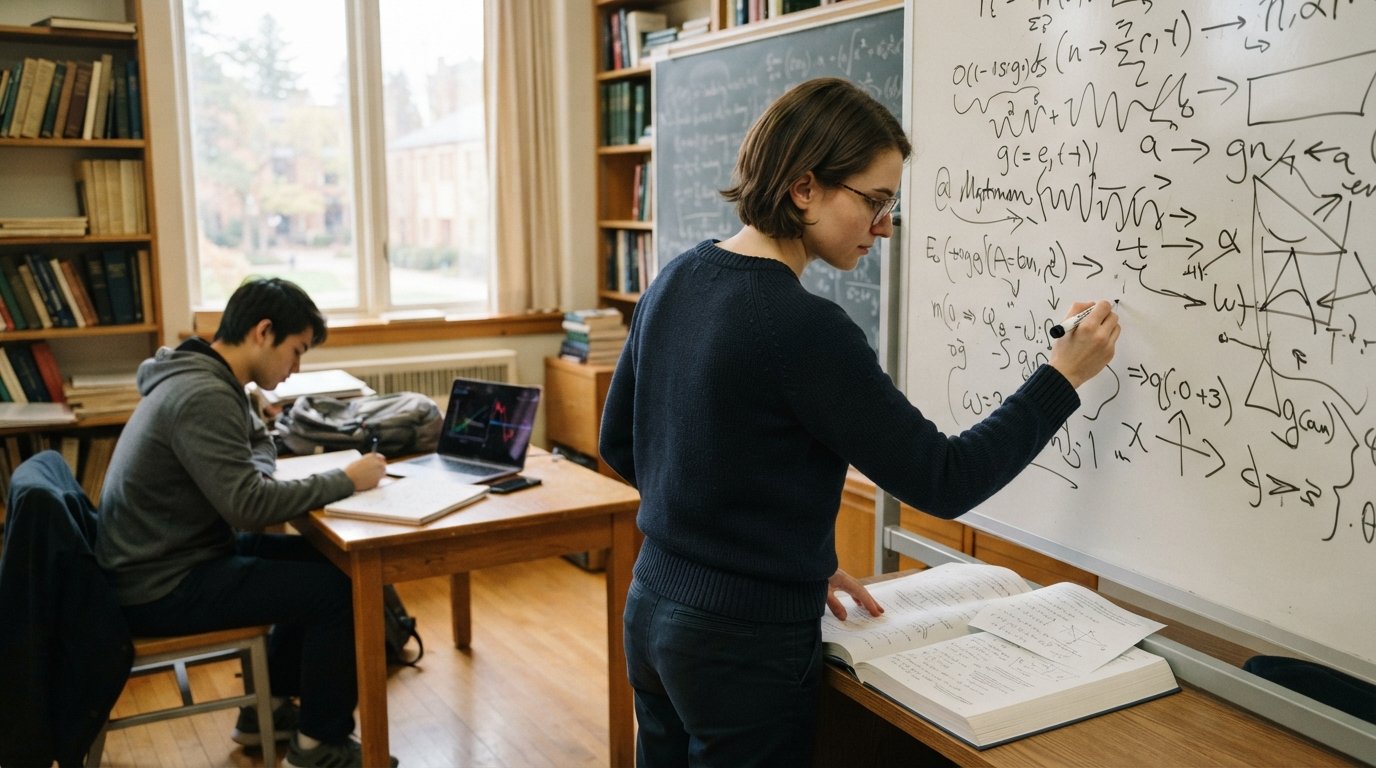
One of the key advantages of Ball State's program is its size and faculty accessibility. With small class sizes and dedicated faculty, students receive individualized attention and mentorship. The department also emphasizes practical experience through research projects, internships, and teaching assistantships. For students who thrive in a hands-on, face-to-face learning environment, Ball State offers a supportive community that goes beyond the bachelor's degree.
Program Options and Degree Requirements
Ball State's graduate mathematics programs are flexible, allowing students to tailor their studies to their interests and career goals. The M.A. and M.S. degrees differ slightly in focus: the M.A. often appeals to students interested in mathematics education or who plan to pursue further graduate work, while the M.S. is more oriented toward applied mathematics and statistics for industry or government careers. Both degrees require a minimum of 30 credit hours of graduate coursework.
Core requirements include courses in algebra, analysis, and either statistics or applied mathematics. Students can then choose electives in areas such as numerical analysis, differential equations, combinatorics, mathematics education, and probability. A research project or thesis may be required depending on the track selected. The department also offers a graduate certificate in applied statistics for students who want to gain specialized skills without committing to a full master's program.
For those interested in teaching at the community college level or pursuing a Ph.D., the M.A. with a thesis option provides excellent preparation. Students work closely with faculty advisors to design a plan of study that aligns with their goals. The in-person format fosters collaboration and allows students to participate in seminars, reading groups, and departmental events that enrich the graduate experience.
Admissions and Prerequisites
Admission to Ball State's graduate mathematics programs is competitive but accessible. Applicants should have a bachelor's degree in mathematics or a closely related field, with coursework in calculus, linear algebra, and abstract algebra. Students with degrees in other disciplines may be admitted conditionally if they complete prerequisite courses. The department reviews applications holistically, considering GPA, letters of recommendation, a personal statement, and GRE scores (though the GRE is not always required).
Prospective students should prepare their application materials well in advance. The online application includes a statement of purpose, official transcripts, and three letters of recommendation. International students must also submit proof of English proficiency. Application deadlines vary by semester, but fall admission is most common, with priority consideration given to applications received by early spring.
One of the benefits of Ball State's in-person program is the opportunity to visit campus, meet faculty, and sit in on classes before applying. The department encourages prospective students to reach out to faculty members with shared research interests. This personal touch is a hallmark of the Ball State experience and helps ensure a good fit for both the student and the program.
Costs, Financial Aid, and Value
Graduate tuition at Ball State University is competitive, especially for Indiana residents. For the 2026-2027 academic year, estimated tuition for in-state graduate students is around $450 per credit hour, while out-of-state students pay approximately $1,100 per credit hour. These figures do not include fees, books, and living expenses. However, the department offers several financial support options to offset costs.
Graduate assistantships are available in the form of teaching assistantships, research assistantships, and tutoring positions. These positions often include a stipend and partial or full tuition remission. Students can also apply for scholarships and fellowships through the university and external organizations. For example, the Department of Mathematical Sciences awards several merit-based scholarships each year to incoming and continuing graduate students.
When comparing costs, it's important to consider the value of an in-person program. Face-to-face interaction with faculty and peers, access to campus resources, and opportunities for networking can translate into stronger career outcomes. Additionally, Ball State's location in Muncie offers a low cost of living compared to larger cities, making graduate study more affordable. For students exploring other state university options, our guide on SUNY colleges and costs provides a useful comparison point for public higher education expenses.
Research and Career Outcomes
Graduates of Ball State's mathematics master's programs pursue a variety of career paths. Some enter the workforce as data analysts, statisticians, actuaries, or operations researchers in industries such as finance, healthcare, technology, and manufacturing. Others go on to earn doctoral degrees in mathematics, statistics, or mathematics education at institutions across the country. The department's strong reputation and alumni network provide valuable connections for job placement.
Research opportunities abound. Faculty members are active in areas including algebra, analysis, topology, numerical analysis, statistics, and mathematics education. Graduate students have the chance to collaborate on research projects, present at conferences, and publish their work. Recent students have presented at regional and national meetings of the Mathematical Association of America and the American Mathematical Society. These experiences are invaluable for students considering doctoral study or research-oriented careers.
For students interested in teaching, Ball State offers pathways to licensure and professional development. The M.A. in Mathematics with a concentration in mathematics education is designed for current teachers who want to enhance their content knowledge and pedagogical skills. This program can be completed part-time and is delivered in person, allowing teachers to balance their studies with their classroom responsibilities.
How to Apply and Get Started
Ready to take the next step? Here is a step-by-step overview of the application process for Ball State's graduate mathematics programs:
- Review the program requirements and decide which degree track (M.A. or M.S.) aligns with your goals.
- Complete the online graduate application and pay the application fee.
- Submit official transcripts from all colleges and universities attended.
- Provide three letters of recommendation from professors or professionals who can speak to your mathematical abilities.
- Write a personal statement describing your academic background, research interests, and career objectives.
- Submit GRE scores if required (check current program guidelines).
- For international students, provide proof of English proficiency and financial documentation.
After submitting your application, you may be invited for an interview or campus visit. The department reviews applications on a rolling basis, so early submission is encouraged. Once admitted, you will work with a faculty advisor to plan your coursework and explore funding opportunities.
For students who are considering a broader range of graduate programs, exploring resources like CollegeDegree.Education can help you compare options and find programs that match your career aspirations. This platform connects prospective students with accredited colleges and universities, offering tools to simplify the search process.
Is Ball State's In-Person Graduate Math Program Right for You?
Choosing a graduate program is a personal decision. Ball State's in-person mathematics master's programs offer a blend of rigorous coursework, supportive faculty, and practical experience. If you value face-to-face interaction, small classes, and the opportunity to engage in research, this program may be an excellent fit. The department's commitment to student success is evident in its high retention and graduation rates, as well as the accomplishments of its alumni.
Before applying, consider your career goals and learning style. Do you thrive in a collaborative, campus-based environment? Are you looking for opportunities to teach or conduct research? If so, Ball State's program provides the structure and resources you need. Additionally, the university's central location and affordable cost of living make it an attractive option for students from across the Midwest and beyond.
For those who are unable to relocate, online options may be more suitable. However, the in-person experience at Ball State offers unique benefits that are difficult to replicate online, including access to laboratories, libraries, and face-to-face networking. If you are ready to advance your mathematical knowledge and career, consider reaching out to the Department of Mathematical Sciences to learn more.
In summary, Ball State University's graduate programs in mathematics, general beyond the bachelor's degree, delivered in person, provide a strong foundation for a variety of careers. With dedicated faculty, financial support, and a welcoming community, it is a compelling choice for students seeking advanced training in mathematical sciences.