
Bioengineering Associate Degree at Delaware Tech: 2-Year Path
Earn a Bioengineering and Biomedical Engineering Associate's degree at Delaware Tech-Terry in 2 years. Hands-on training, low cost, and strong job outlook.

By Emily Wilson
What if you could step into the rapidly growing field of biomedical technology in just two years, without committing to a four-year university or taking on overwhelming student debt? That is exactly the opportunity that the Bioengineering and Biomedical Engineering Associate's degree, usually 2 years In-person at Delaware Technical Community College-Terry provides. This hands-on program combines engineering principles with life sciences to prepare graduates for immediate employment in hospitals, research labs, medical device companies, and biotechnology firms. For students who want a fast, affordable route into a high-demand career, this degree deserves serious attention.
What the Bioengineering and Biomedical Engineering Associate's Degree Covers
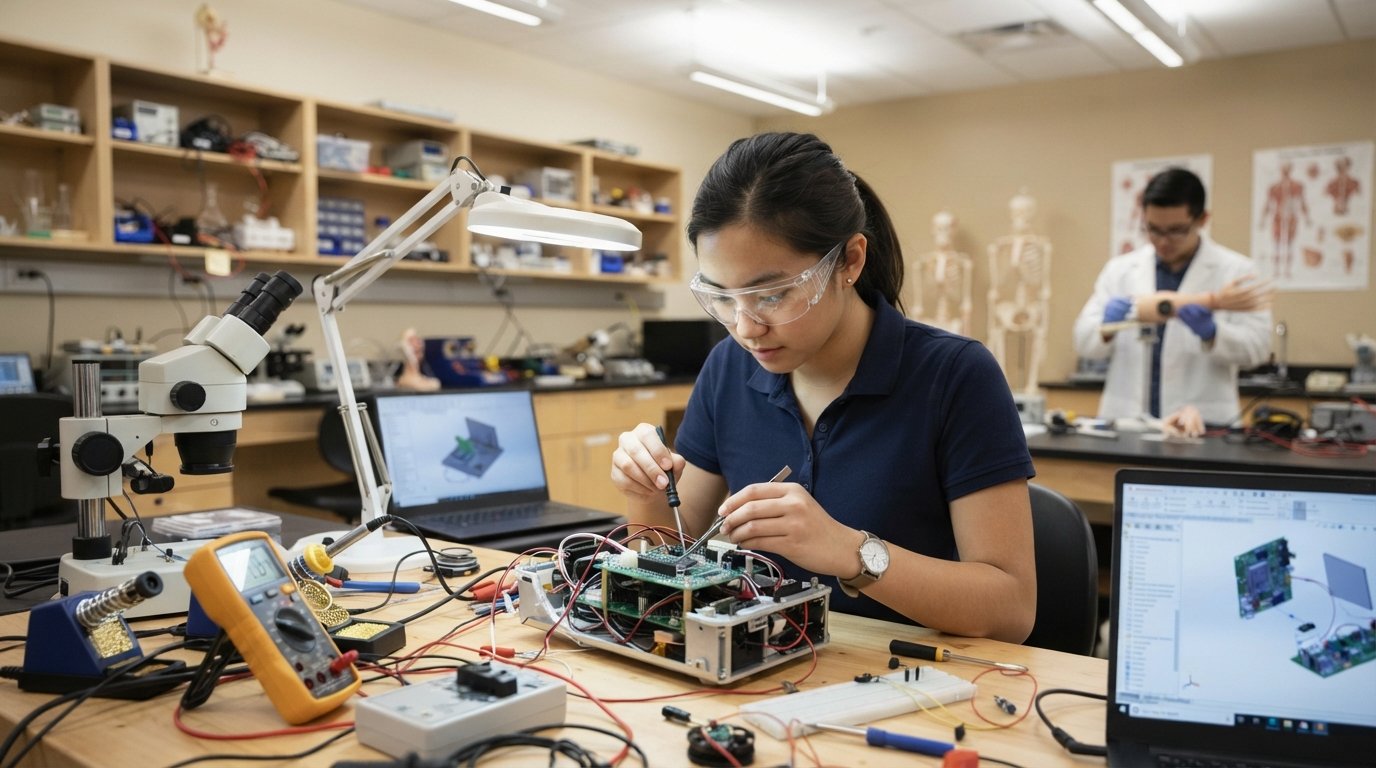
This associate's degree is designed to give students a working foundation in both engineering and biology. Coursework typically includes biomedical instrumentation, biomechanics, biomaterials, circuit analysis, anatomy and physiology, and computer-aided design. Students learn how to maintain, troubleshoot, and even design medical equipment and devices. The curriculum blends classroom theory with significant lab time, which is essential because biomedical work is intensely practical.
At Delaware Technical Community College-Terry, the program is delivered in person, usually over two years of full-time study. That in-person format matters: students get direct access to instructors with industry experience, hands-on training with real biomedical equipment, and the chance to build a professional network before they graduate. The Terry campus, located in Dover, Delaware, houses modern labs and simulation spaces that mirror real healthcare and manufacturing environments.
Graduates of this program often pursue roles such as biomedical equipment technician, engineering aide, research assistant, or quality control technician. According to the U.S. Bureau of Labor Statistics, employment for medical equipment repairers is projected to grow steadily, and biomedical technicians are needed in every hospital and clinic. The associate's degree also provides a pathway to a bachelor's degree if students choose to continue their education later, often with transfer agreements that maximize credit acceptance.
Why Delaware Tech-Terry Stands Out for This Program
Delaware Technical Community College is Delaware's only community college system, and its Terry campus has a strong reputation for career-focused technical education. The biomedical engineering technology program is accredited by ABET, which means it meets rigorous quality standards recognized by employers and other institutions. That accreditation is a major advantage when applying for jobs or transferring credits.
Another standout feature is the college's connections to regional healthcare systems and biomedical employers. Delaware sits within easy reach of Philadelphia, Baltimore, and the growing life sciences corridor in the Mid-Atlantic. Many students complete internships or clinical practicums at hospitals, medical device manufacturers, and research centers. These experiences frequently lead to job offers before graduation.
Class sizes are typically small, and instructors often have years of industry experience. Students who need flexibility may find the in-person requirement challenging, but the trade-off is intensive, hands-on learning that online programs struggle to replicate for this field. For anyone who thrives in a lab environment and wants to work directly with medical technology, the Terry campus offers a practical, supportive setting.
Cost and Financial Aid: Making the Two-Year Degree Affordable
Cost is often the biggest concern for students and families. As a public community college, Delaware Tech charges significantly lower tuition than four-year universities. For Delaware residents, tuition is especially affordable, and out-of-state students still pay far less than they would at most private colleges. Because the program takes only two years, total costs are roughly half of what a bachelor's degree would cost, and students enter the workforce sooner, which means they start earning and gaining experience earlier.
Financial aid options are plentiful for associate degree programs. Students can apply for federal grants, state grants, work-study, and scholarships. Delaware Tech also offers institutional scholarships specifically for STEM and healthcare programs. Many employers in the biomedical field offer tuition reimbursement or loan repayment assistance for technicians who join their teams, so the return on investment can be excellent.
To maximize affordability, students should file the FAFSA as early as possible and search for outside scholarships. One valuable resource for finding and evaluating scholarships is Scholarship.Education, which aggregates opportunities for students at all levels, including those pursuing associate degrees. Combining federal aid, institutional scholarships, and external awards can bring the net cost of this two-year program down to a very manageable level.
Admission Requirements and How to Apply
Admission to the Bioengineering and Biomedical Engineering Associate's degree at Delaware Tech-Terry is straightforward but competitive. Applicants typically need a high school diploma or GED, and they must demonstrate readiness for college-level math and science. That usually means completing algebra, biology, and chemistry in high school, or taking placement tests and possibly developmental courses at the college.
The application process involves submitting an online application, official transcripts, and any required test scores. Some students may need to attend an orientation or meet with an advisor before registering for classes. Because the program is in-person and cohort-based, early application is recommended. The college also encourages students to apply for financial aid simultaneously.
For students who are unsure about their math or science background, Delaware Tech offers tutoring and support services. The key is to start the conversation early with an admissions advisor. They can help map out a plan, including any prerequisite courses, so that the two-year timeline stays on track.
Career Outcomes and Earning Potential
Graduates with this associate's degree are well-positioned for entry-level roles in a growing industry. Biomedical equipment technicians, for example, earn median salaries in the $50,000 to $65,000 range, depending on location and experience. With overtime and specialization, experienced technicians can earn more. Research assistants and quality technicians also enjoy stable employment and opportunities for advancement.
The demand for biomedical skills is not limited to hospitals. Medical device companies, pharmaceutical manufacturers, university research labs, and even the military all hire graduates with this background. Many employers value the hands-on training that Delaware Tech provides and often prefer associate degree holders for technical roles because of their practical, job-ready skills.
For those who want to continue their education, the associate's degree can serve as a stepping stone to a bachelor's in biomedical engineering technology, engineering, or biology. Delaware Tech has transfer agreements with several four-year institutions, allowing students to apply their credits toward a bachelor's degree. That flexibility means graduates can choose to enter the workforce immediately or keep learning.
Comparing This Program to Other Options
Prospective students often wonder whether a two-year associate's degree is enough to break into bioengineering. The answer depends on career goals. For hands-on technical roles, an associate's degree is often the perfect credential: it is faster and cheaper than a bachelor's, and employers in the field actively recruit graduates. For roles in research and development or engineering design, a bachelor's degree may be necessary. The Delaware Tech program provides a solid foundation that can be built upon later.
Compared to online programs, the in-person format at Terry offers distinct advantages. Biomedical engineering technology requires access to labs, equipment, and face-to-face instruction. Online options in this field are limited and often lack the hands-on components that employers value. The Delaware Tech program's in-person structure ensures that students graduate with practical experience, not just theoretical knowledge.
Another comparison point is cost. Four-year universities can cost tens of thousands of dollars per year. Delaware Tech's tuition is a fraction of that, and students can often live at home while studying. When you factor in the ability to start earning two years sooner, the financial case for the associate's degree is compelling.
Is This Program Right for You?
This program is ideal for students who enjoy science and technology, like working with their hands, and want to enter the workforce quickly. It suits recent high school graduates, career changers, and military veterans looking for a stable, meaningful career. If you are detail-oriented, good at problem-solving, and interested in healthcare or engineering, biomedical engineering technology could be a great fit.
It is also a good choice for students who want to test the waters of engineering before committing to a four-year degree. The associate's degree provides a credential that can be used immediately, and credits can often be transferred later. For parents, it represents a low-risk, high-return educational investment.
Before enrolling, consider your comfort with math and science, your willingness to attend classes in person, and your career goals. Talk to an advisor, visit the campus, and speak with current students or graduates. The more informed you are, the better your decision will be.
Next Steps: How to Get Started
If the Bioengineering and Biomedical Engineering Associate's degree, usually 2 years In-person at Delaware Technical Community College-Terry sounds like the right path, here is how to move forward:
- Visit the Delaware Tech website and review the program page for specific admission requirements and course sequences.
- Contact the admissions office at the Terry campus to schedule a conversation with an advisor.
- Submit your application and official transcripts as early as possible.
- File the FAFSA and search for scholarships using resources like Scholarship.Education.
- Attend an information session or campus tour to see the labs and meet instructors.
Taking these steps early can help ensure a smooth start and keep you on track for graduation in two years. The demand for biomedical skills is strong, and this program offers a direct route to a rewarding career.
Choosing a college path is a big decision, but it does not have to be overwhelming. The Bioengineering and Biomedical Engineering Associate's degree at Delaware Tech-Terry combines affordability, hands-on training, and strong job prospects. For students who want to make a difference in healthcare and technology without spending four years in school, this two-year program is a smart, practical choice. With the right planning and financial aid, it can open doors to a stable and fulfilling career.