
CCV Clinical Lab Science Certificate: 1-Year Path
The CCV Clinical Laboratory Science/Medical Technology/Technologist Certificate, 1 year to less than 2 years In-person, offers hands-on lab training and a fast path to healthcare work.

By Logan Parker
Landing a role in a hospital laboratory or a diagnostic clinic usually requires a credential, and the Clinical Laboratory Science/Medical Technology/Technologist Certificate, 1 year to less than 2 years In-person at Community College of Vermont, is one of the fastest, most affordable ways to get there. CCV's program is designed for students who want hands-on training without committing to a four-year degree, and it is delivered entirely face-to-face, which matters in a field where pipetting accuracy, instrument handling, and safety protocols cannot be learned from a video lecture. If you are weighing a short certificate against a longer degree or wondering whether a community college can actually prepare you for a lab career, this guide walks through the curriculum, costs, admission steps, career outcomes, and the financial aid strategies that make the program realistic for working adults.
What the CCV Clinical Laboratory Science Certificate Actually Covers
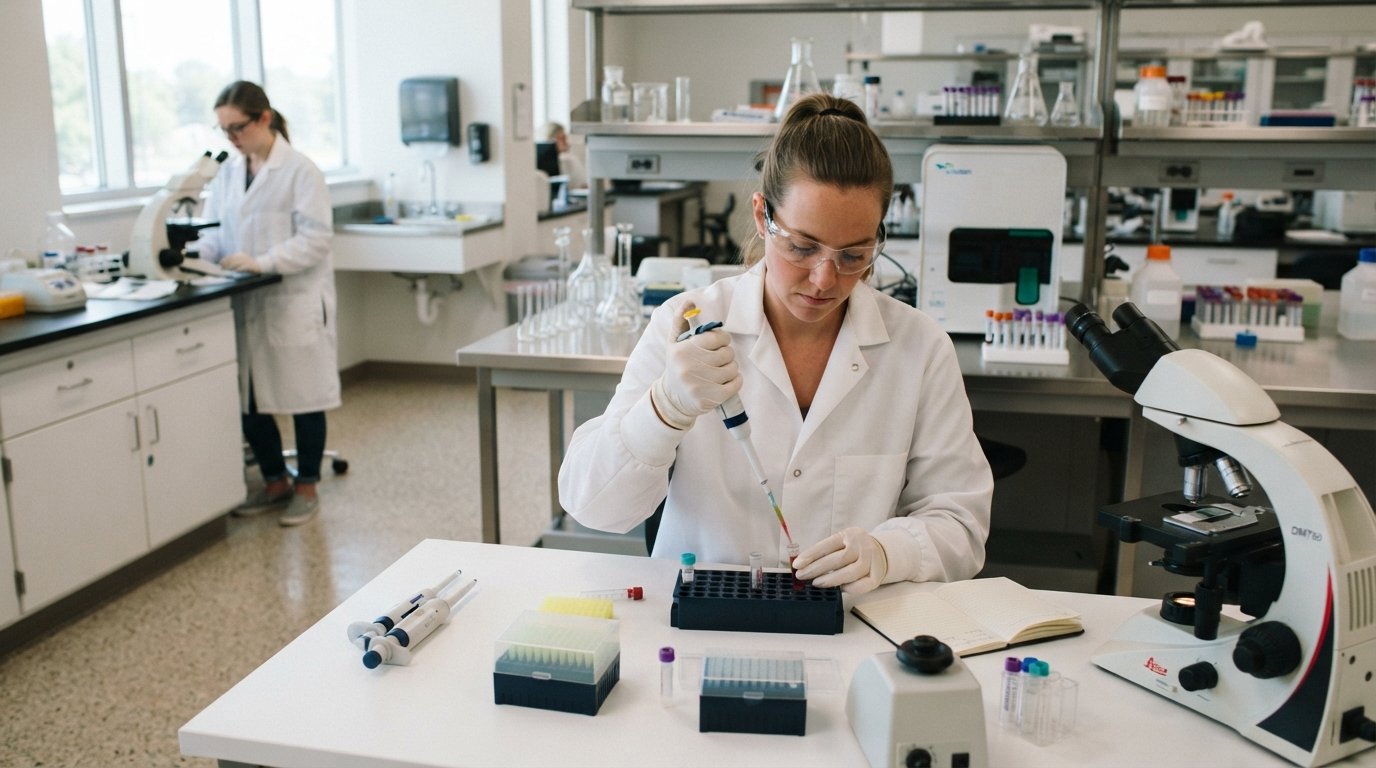
The Clinical Laboratory Science/Medical Technology/Technologist Certificate, 1 year to less than 2 years In-person at Community College of Vermont, is a compact credential that introduces students to the core duties of a medical laboratory technician or assistant. Coursework typically blends lecture with supervised laboratory sessions, covering specimen collection, hematology, clinical chemistry, microbiology, immunology, and quality control. Because the program is in-person, students spend real hours at the bench: labeling tubes, operating centrifuges, reading slides, and practicing the chain-of-custody habits that protect patient results.
CCV structures the certificate so that it can be completed in roughly 12 to 18 months depending on course load and prerequisite timing. Many students attend part-time while working, since classes are scheduled at CCV's campuses across Vermont. The certificate is not the same as a national certification exam, and it does not automatically make you a licensed medical laboratory scientist. Instead, it builds a foundation that can lead to entry-level laboratory assistant roles, further study toward an associate degree, or transfer into a medical laboratory technology program. That distinction matters: knowing exactly what the credential does and does not qualify you for prevents wasted tuition and misplaced expectations.
A typical course sequence includes foundational biology and chemistry, a medical terminology course, and laboratory-specific classes such as clinical microbiology and hematology. Students should expect a mix of quizzes, practical exams, and lab reports. Because the program is in-person, attendance and punctuality are part of the grade in many courses, mirroring the reliability that employers demand in clinical settings. The certificate also emphasizes safety and regulatory awareness, including infection control and the basics of CLIA-waived testing, which are frequently listed in job postings for laboratory assistants and phlebotomists.
Why an In-Person Community College Format Works for Lab Training
Laboratory science is one of the few fields where online learning genuinely falls short. You cannot learn to calibrate a microscope, perform a differential cell count, or troubleshoot a contaminated culture through a screen. The in-person requirement at CCV means students practice with actual instruments and reagents under instructor supervision, which builds the muscle memory and judgment that employers screen for during interviews. Hands-on repetition also reduces the anxiety many new hires feel during their first weeks in a clinical lab.
Community college laboratories are usually smaller than university labs, which means more individual attention. At CCV, class sizes tend to be modest, and instructors often have direct clinical or industry experience. That access matters when you need a recommendation letter, a reference for an internship, or advice about which local employers are hiring. The in-person format also creates a cohort effect: students who practice together tend to study together, and that peer network often carries into job searches.
There is a practical cost angle as well. Community colleges generally charge lower tuition per credit than four-year institutions, and students who live at home or work while enrolled can keep living expenses down. For families comparing options, it helps to look at private college rates in other regions to see how much variation exists; our guide on private college rates in St. George Utah illustrates how dramatically sticker prices can differ by sector and location, which makes a low-cost community college certificate an attractive first step before transferring.
Admission Requirements and Enrollment Steps
CCV maintains open-access admission for most programs, but the Clinical Laboratory Science/Medical Technology/Technologist Certificate, 1 year to less than 2 years In-person at Community College of Vermont, may have specific placement requirements in math, reading, and science. Applicants should be prepared to take a placement assessment or submit prior college transcripts and standardized test scores if available. Some laboratory courses require prerequisite completion in biology or chemistry, so starting the application early gives you time to sequence courses correctly.
The enrollment process is straightforward but has several checkpoints. Following a clear sequence reduces the risk of missing a registration window or enrolling in a course whose prerequisite is not yet complete.
- Complete the CCV admissions application and submit high school or prior college transcripts.
- Take the placement assessment or provide scores that satisfy math and English readiness.
- Meet with an academic advisor to map the certificate sequence and confirm lab course availability by campus.
- Apply for financial aid by filing the FAFSA and review CCV payment plan options.
- Register for first-semester courses during the priority registration window and confirm lab fees and supply costs.
After registration, students should budget for additional expenses beyond tuition, including lab coats, safety goggles, textbooks, and possibly a stethoscope or other basic equipment depending on the course. These costs are modest compared with four-year programs, but they should be planned for. Advisors can usually estimate total program costs, including fees, before the first day of class, which helps families avoid surprise bills later in the year.
Cost, Financial Aid, and Scholarship Strategy
Cost is the reason many students choose a certificate over a degree, and CCV's per-credit tuition is among the lowest in Vermont. A one-year certificate typically requires 30 to 36 credits, so total tuition often lands in the low thousands rather than the tens of thousands. Vermont residents may qualify for state grant programs, and the federal Pell Grant can cover a significant portion of community college costs for eligible students. Federal student loans are also available, though borrowing should be limited to what is necessary.
Scholarships are the most underused tool for short certificate programs. Many local foundations, hospital auxiliaries, and workforce development boards offer awards specifically for allied health students, and these awards often go unclaimed because applicants assume they are only for degree seekers. Students should search broadly and apply early, since deadlines for fall enrollment often fall in the spring. Resources such as Scholarship.Education can help students discover and evaluate scholarship and financial aid opportunities across the US, UK, Canada, Australia, and the EU, which is useful for non-traditional students and adult learners returning to school.
Employer tuition assistance is another option worth exploring. Hospitals and reference laboratories sometimes reimburse tuition for employees who pursue laboratory credentials, especially when the employer faces a staffing shortage. A student who works as a specimen processor or front-desk registrar at a hospital may be able to combine employer reimbursement with federal aid and a local scholarship, reducing out-of-pocket costs to a few hundred dollars per semester. Always confirm reimbursement rules in writing before enrolling, since some programs require a service commitment after completion.
Career Outcomes and Next Steps After the Certificate
Graduates of the Clinical Laboratory Science/Medical Technology/Technologist Certificate, 1 year to less than 2 years In-person at Community College of Vermont, typically pursue roles as laboratory assistants, phlebotomists, specimen processors, or quality control aides. These positions are in demand across hospitals, independent reference labs, public health departments, and physician office labs. Pay varies by region and setting, but entry-level laboratory assistants often earn a living wage with opportunities for shift differentials and overtime.
For students who want to advance, the certificate can serve as a stepping stone. Many four-year institutions and community colleges offer associate or bachelor's degree pathways in medical laboratory technology, and some credits from the certificate may transfer. Students should confirm transferability with the receiving institution before enrolling, because accreditation and course equivalency rules vary. A common pathway is to work as a laboratory assistant while completing an associate degree, then sit for national certification as a medical laboratory technician.
Job search preparation should begin before graduation. Students should build a resume that highlights hands-on lab hours, instrument familiarity, and safety training, and they should ask instructors for references while coursework is still fresh. Networking through clinical practicums, if available, often leads directly to job offers, since laboratory supervisors prefer candidates they have already observed at the bench. A short certificate does not limit ambition; it simply provides a faster, lower-cost entry point into a stable healthcare field.
Is This Certificate the Right Fit for You?
The strongest candidates for this program are detail-oriented, comfortable with science, and eager to work in healthcare without spending four years in school. If you enjoy hands-on tasks, can follow precise protocols, and want a credential that leads to employment quickly, the certificate is worth serious consideration. Students who dislike repetition or who are uncomfortable with bodily fluids should explore other healthcare pathways, since laboratory work involves both.
Prospective students should also weigh geography. CCV's in-person format means attending classes at a Vermont campus, so relocation or a reliable commute is part of the decision. For students outside Vermont, comparing local community college programs may be more practical, and resources that explain regional cost differences, such as private college rates in other states, can help families benchmark what a fair price looks like for a short credential.
The Clinical Laboratory Science/Medical Technology/Technologist Certificate, 1 year to less than 2 years In-person at Community College of Vermont, offers a pragmatic route into a healthcare career with minimal debt and a clear path to advancement. By planning coursework carefully, applying for every eligible scholarship, and using employer tuition benefits where available, students can keep costs low and enter the laboratory workforce within about a year. The key is to start early, ask advisors direct questions about prerequisites and transfer options, and treat the certificate as a launch point rather than a final destination.