
Corrections Certificate: 12 Weeks to Under 1 Year at Coastal Bend
Coastal Bend College's corrections certificate takes 12 weeks to under a year in person, a fast, affordable path into criminal justice work.

By Emily Wilson
If you want to move into the criminal justice field without committing to a multi-year degree, a corrections certificate can be one of the fastest, most affordable entry points available. Coastal Bend College offers a corrections certificate program that can be completed in as little as 12 weeks and finishes in less than one year, delivered entirely in person. For students in Texas who want hands-on training, direct instructor contact, and a quick path to employment in jails, detention centers, and community corrections, this program deserves a close look. This guide breaks down what the certificate covers, who it suits, what it costs, how to enroll, and how to fit it into a realistic budget.
What Is a Corrections Certificate and Why Does It Matter?
A corrections certificate is a short, career-focused credential that prepares students for entry-level roles in the correctional system. Unlike an associate or bachelor's degree, it strips away general education requirements and focuses almost entirely on the skills and knowledge correctional officers need on the job: inmate supervision, safety and security procedures, legal responsibilities, communication, and report writing. Because the training is concentrated, students can finish quickly and begin applying for positions without spending two or four years in school.
That speed matters for several reasons. First, correctional agencies often prefer candidates who have completed formal training, and a certificate signals that you understand the basics before your first day. Second, earning a credential in under a year means you can enter the workforce and start earning sooner, which reduces the opportunity cost of school. Third, the focused curriculum helps you decide whether corrections is the right fit before investing in a longer degree. Many students use a certificate as a stepping stone toward an associate degree in criminal justice or a related field later on.
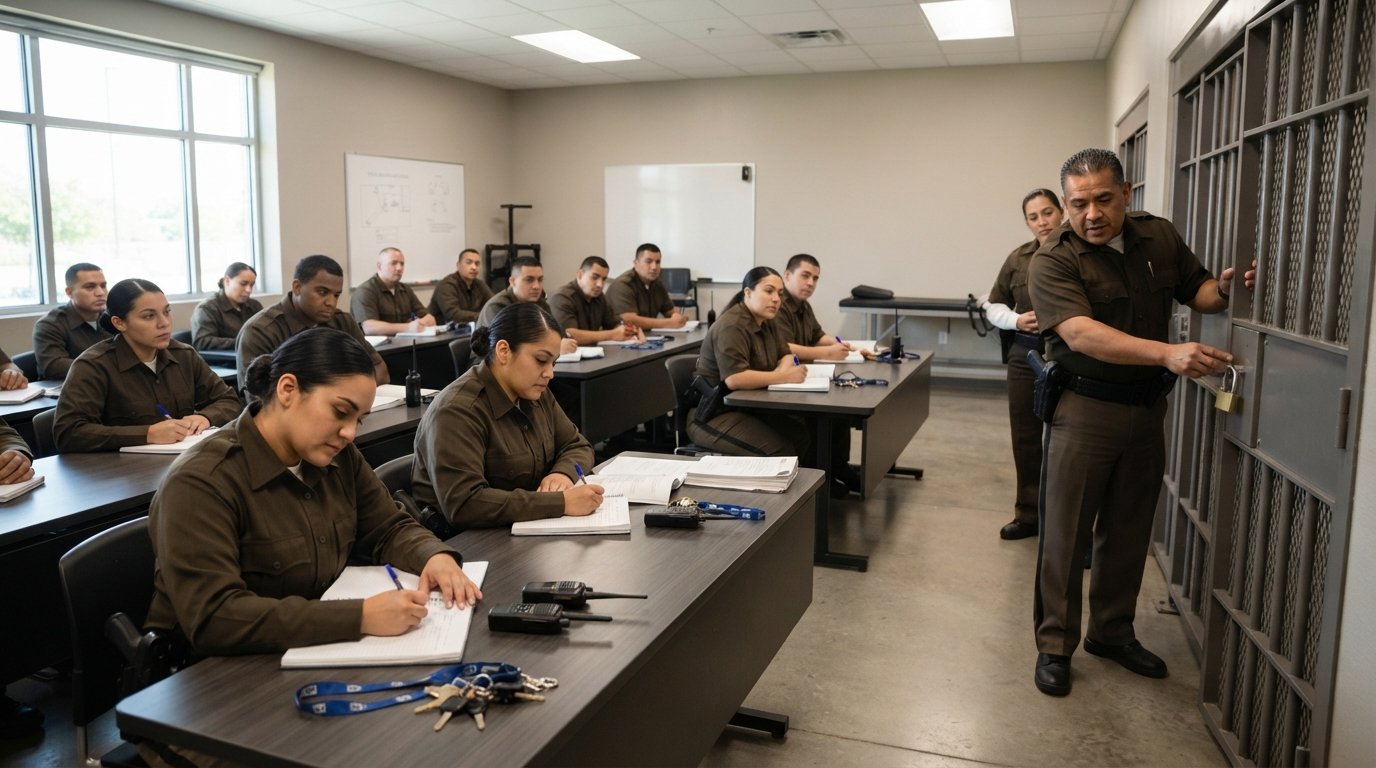
Coastal Bend College delivers this program in person, which is a meaningful advantage for a hands-on field. In-person instruction lets you practice procedures, ask questions in real time, and build relationships with instructors who often have direct experience in corrections or law enforcement. If you are the kind of learner who benefits from structure, face-to-face feedback, and a cohort of peers, an in-person format can make the difference between finishing and stalling out.
Program Length and Format: 12 Weeks to Less Than One Year In Person
The headline feature of the Coastal Bend College corrections certificate is its timeline. Depending on the track and course scheduling, students can complete the certificate in as little as 12 weeks, and the full program finishes in less than one year. That range gives you flexibility: if you can attend full time and want to move fast, the 12-week option gets you into the job market quickly. If you need to balance work or family obligations, the longer end of the range still lets you finish inside a single academic year.
Because the program is in person, you should plan for commuting, campus attendance, and a schedule that fits around your other responsibilities. In-person programs usually have set class times, which can be an advantage for students who thrive with a fixed routine but a challenge for those with unpredictable work schedules. Before you enroll, confirm the current class schedule with the college, ask whether day or evening sections are available, and map out your weekly commitments so you can commit to attendance. Corrections training is cumulative, and missing sessions can set you back.
It also helps to think about the format in terms of learning style. In-person corrections courses often include scenario-based practice, group discussion, and direct demonstration of procedures. That kind of active learning is hard to replicate online, and it is one reason employers value hands-on training. If you have struggled with self-paced online courses in the past, the structure of an in-person certificate may actually improve your odds of completion.
What You Will Learn in the Corrections Certificate Program
While specific course titles vary, corrections certificate programs generally cover a core set of topics that map directly to entry-level job duties. You can expect coursework in correctional operations, inmate supervision, legal and ethical issues, report writing, and crisis response. The goal is to graduate with practical knowledge you can apply immediately, not abstract theory.
Here are the kinds of skills and subject areas typically emphasized in a corrections certificate:
- Safety and security procedures, including searches, counts, and facility control
- Inmate supervision and behavior management techniques
- Legal rights, use of force policies, and ethical conduct
- Communication, de-escalation, and conflict resolution
- Report writing and documentation standards
Beyond the specific topics, a good certificate program builds professional habits: punctuality, attention to detail, teamwork, and the ability to stay calm under pressure. These soft skills matter as much as technical knowledge in corrections, where split-second judgment and consistent professionalism are expected every shift. Instructors with field experience can give you realistic insight into what the job is actually like, including the parts that television dramas leave out.
You should also ask about any physical fitness or background requirements tied to the program or to employment after graduation. Many correctional agencies have fitness standards and conduct background checks, and knowing those expectations early helps you prepare. The certificate itself may not require a fitness test, but aligning your preparation with hiring standards is smart planning.
Who Should Consider This Program?
The corrections certificate is designed for people who want a fast, practical route into public safety work. That includes recent high school graduates who are not ready for a four-year degree, adult learners changing careers, military veterans, and working adults who want to add a credential without pausing their income for years. It also suits students who plan to pursue an associate or bachelor's degree later and want a credential to work with in the meantime.
It is less suitable for someone who wants a broad liberal arts education or a role that requires a four-year degree from the start. If your goal is federal law enforcement, probation and parole, or specialized investigative work, check the education requirements for those positions before committing. A certificate is a strong entry point for local and county corrections and detention roles, and it can be a foundation for further study.
Geographic fit matters too. Because the program is in person at Coastal Bend College, it works best for students who can reasonably commute to campus. If you live outside the area, compare the cost of relocation or a long commute against the value of the program, and consider whether a local community college offers a similar certificate closer to home.
Cost, Financial Aid, and Budget Planning
One of the biggest advantages of a short certificate is the lower total cost compared with a degree. Tuition for a 12-week to under-one-year program is typically a fraction of what a two-year or four-year program costs, and you start earning sooner. That said, you should budget beyond tuition: fees, books, uniforms or equipment, transportation, and any background check or testing costs can add up.
Financial aid is often available for certificate programs at accredited colleges, so file the FAFSA and talk to the financial aid office about grants, work-study, and scholarship options. Ask specifically whether the certificate is eligible for federal aid and whether the college offers payment plans. A short program can also reduce reliance on student loans, which lowers your risk after graduation.
Planning your budget carefully is part of making a short program pay off. For a broader look at how to prepare financially for college, see our guide on planning for college what students should budget, which covers the expenses students often overlook. Pair that with a conversation with the Coastal Bend College financial aid office so you know your actual out-of-pocket cost before classes begin.
Admissions Steps and How to Enroll
Enrolling in a certificate program is usually simpler than applying to a degree program, but it still requires attention to deadlines and paperwork. The exact steps vary, so confirm details with the college, but most students can expect a process like this:
- Complete the college application and any program-specific application.
- Submit transcripts or proof of high school completion or equivalency.
- Meet with an advisor to confirm the schedule and program requirements.
- Complete financial aid forms and arrange payment or a payment plan.
- Attend orientation and confirm your in-person class times and location.
Start early, especially if you need transcripts from another school or are applying close to a term start date. Ask about any placement tests, immunizations, or background check requirements, and confirm whether the 12-week option is available in your start term. A short conversation with an advisor can save weeks of confusion.
It also helps to think about your end goal while you enroll. If you plan to work while studying, ask about class times that fit your schedule. If you plan to continue to a degree, ask which credits transfer. Small questions at the start prevent big problems later.
Career Outlook and Next Steps After Completion
Graduates of corrections certificate programs typically pursue roles as correctional officers, detention officers, and support staff in jails, prisons, and community corrections facilities. Hiring in this field is often steady because agencies need trained staff, and a certificate can help your application stand out. Pay and requirements vary by agency, so research the specific departments you want to join and review their hiring standards.
For a broader view of how different careers are structured, including the training and credentials each path requires, Careers.org is a useful reference for understanding job duties and education requirements. Use it alongside local agency job postings so you know exactly what employers in your area expect.
After you finish, keep building. Many students use the certificate to enter the field and then pursue an associate degree in criminal justice or a related area, often with employer tuition assistance. Continuing education can open doors to promotion, specialized units, or related roles in probation, parole, or private security. The certificate is a starting point, not a ceiling.
A corrections certificate at Coastal Bend College offers a practical, fast, and affordable way to enter a stable field. With a timeline of 12 weeks to less than one year and in-person instruction that builds real skills, it is a strong option for students who want to start working soon without taking on years of tuition. Check the current schedule, confirm costs and aid options, and map out your plan so you can move from application to career with confidence.