
CUNY Lehman Science Teacher Education Beyond Bachelor's
Earn advanced science teacher certification at CUNY Lehman College with in-person graduate study that boosts classroom skills and salary potential.

By Sophia Clark
Earning a bachelor's degree is the first step toward a science teaching career, but it is rarely the last. For current teachers, career changers, and aspiring educators who want to deepen their content knowledge or qualify for advanced certification, pursuing graduate study in science teacher education is a strategic move. At CUNY Lehman College in the Bronx, the Science Teacher Education/General Science Teacher Education program beyond the bachelor's degree offers in-person preparation that blends rigorous academic coursework with real classroom experience. This article explains what the program involves, who it serves, how it supports certification and career growth, and how to plan for the cost.
Why pursue science teacher education beyond a bachelor's degree at CUNY Lehman College?
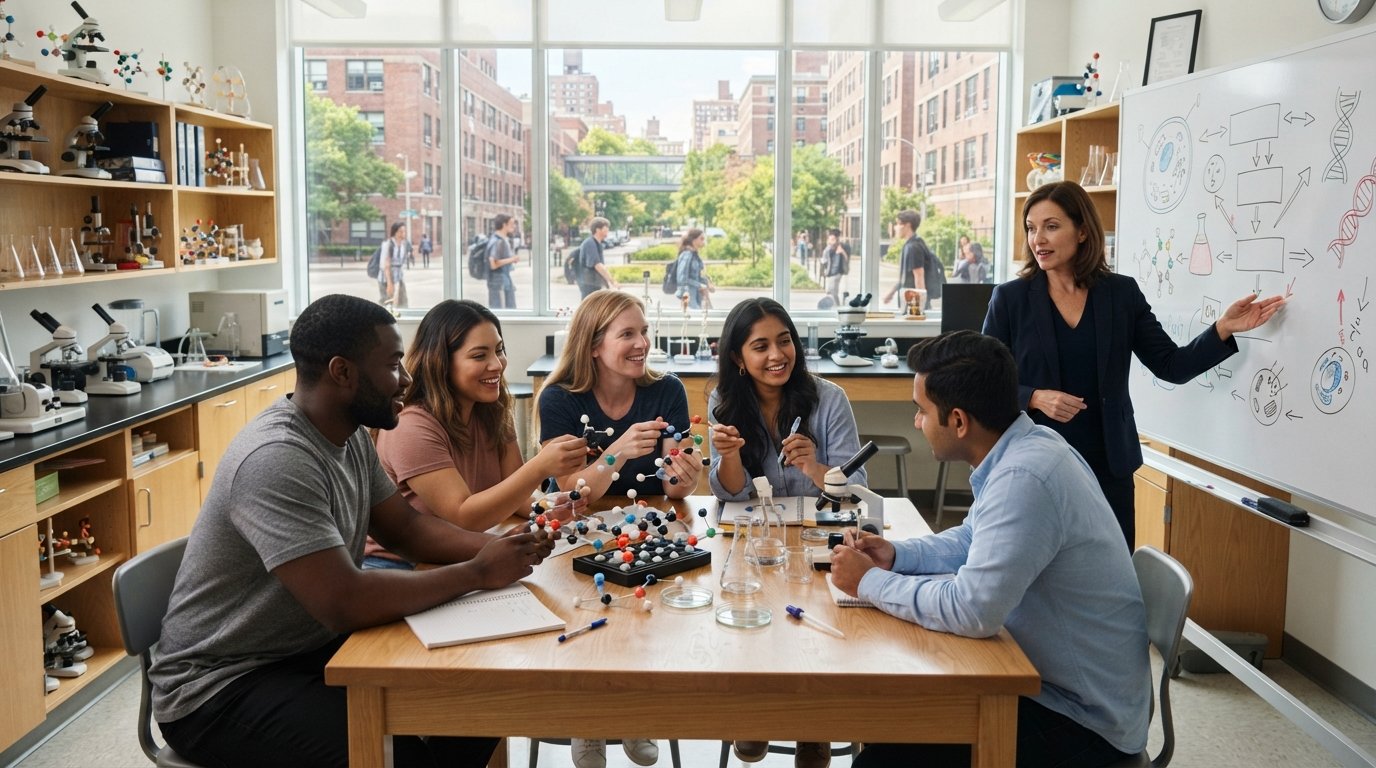
Science teachers are in high demand across New York State and the nation, especially in urban school districts. A graduate-level credential in science education signals advanced competence to employers, satisfies professional certification requirements, and often leads to higher pay through salary schedules. CUNY Lehman College, part of the City University of New York system, has a long-standing reputation for preparing educators who work effectively in diverse classrooms. Its in-person format allows for face-to-face mentorship, hands-on laboratory work, and cohort-based learning that online programs can struggle to replicate.
The program is designed for individuals who already hold a bachelor's degree. That includes teachers with initial certification who need a master's degree to obtain professional certification, as well as career changers from scientific fields who want to transition into teaching. Because the coursework is delivered on campus, students gain access to Lehman's science laboratories, education faculty, and partnerships with Bronx schools. This proximity to real classrooms is a significant advantage for anyone who learns best by doing.
Beyond certification, the program builds leadership capacity. Graduates often move into roles as department chairs, curriculum specialists, or instructional coaches. The in-person cohort model creates a professional network that lasts throughout a teaching career.
Program pathways and admission requirements
CUNY Lehman College offers multiple graduate pathways in science education, and the right one depends on your background and goals. The most common options include a Master of Science in Education (MSEd) in Science Education, which leads to initial or professional certification depending on prior credentials, and advanced certificate programs for teachers who already hold a master's degree but need additional subject-area coursework. Each pathway has distinct admission requirements.
Applicants should generally expect to submit the following:
- A bachelor's degree from an accredited institution with a minimum GPA, typically around 3.0 for graduate admission.
- Official transcripts showing completion of science coursework (biology, chemistry, physics, or earth science) adequate for the chosen certification area.
- Two or three letters of recommendation from academic or professional references.
- A personal statement explaining your interest in science teaching and your career goals.
- For applicants without a teaching license, evidence of satisfactory performance on the New York State Teacher Certification Examinations (NYSTCE) or a plan to complete them.
Admission is competitive, and candidates with a strong science background but limited education coursework may be admitted conditionally with the requirement to complete prerequisite courses. Because the program is in-person, applicants should also consider scheduling and commute logistics, as courses are typically offered on weekdays and some evenings. Prospective students should verify current deadlines and requirements directly with the Lehman College Office of Graduate Admissions.
Curriculum and clinical experiences
The curriculum for the Science Teacher Education/General Science Teacher Education program beyond the bachelor's degree is built around three pillars: advanced science content, pedagogical theory, and supervised clinical practice. Students take graduate-level courses in biology, chemistry, physics, or earth science to deepen their subject mastery. On the education side, courses cover adolescent learning and development, curriculum design, assessment strategies, and inclusive teaching methods for culturally and linguistically diverse classrooms.
A hallmark of the program is its clinical component. In-person candidates complete supervised field experiences in New York City schools, often in the Bronx and surrounding boroughs. Under the guidance of experienced mentor teachers, candidates plan and deliver lessons, manage classroom dynamics, and assess student learning. This hands-on work is supported by a seminar that helps candidates connect theory to practice. For teachers already employed in schools, some field requirements may be satisfied through their current position, subject to faculty approval.
Depending on the track, students may also complete a research capstone or a comprehensive portfolio demonstrating their growth as educators. The program typically requires 30 to 45 credits, and full-time students can finish in about two years. Part-time options exist for working teachers, though the in-person schedule means candidates should plan their time carefully.
Certification, career outcomes, and salary potential
Graduates of Lehman's science education programs are eligible for New York State certification in science, typically in general science for grades 7-12 or in a specific science discipline. The program is designed to meet the state's requirements for initial or professional certification, depending on the candidate's prior status. Earning professional certification is a major milestone: it removes the time limits attached to initial certificates and opens the door to career advancement.
Career outcomes for science teachers remain strong. School districts across New York State report shortages in science fields, particularly in chemistry, physics, and earth science. Graduates find positions in public, charter, and private schools, as well as in informal education settings such as museums and after-school programs. With experience, many move into administrative roles, curriculum development, or higher education.
Salary potential varies by district and experience. In New York City public schools, teachers with a master's degree earn higher salaries than those with only a bachelor's degree, and additional credits beyond the master's can lead to further increases. According to salary schedules, the difference can amount to several thousand dollars per year over the course of a career. For a detailed look at how graduate tuition compares across online and campus programs, see this online education degrees tuition guide.
Cost, financial aid, and planning strategies
Graduate study is an investment, and understanding the costs is essential. CUNY Lehman College offers relatively affordable graduate tuition compared to private institutions, especially for New York State residents. As of the most recent data, in-state graduate tuition is significantly lower than out-of-state rates. Students should also budget for fees, textbooks, and transportation.
Financial aid options for graduate students include federal loans, scholarships, and employer tuition assistance. Teachers employed by the New York City Department of Education may qualify for tuition reimbursement or salary differentials that offset costs. The Lehman College financial aid office can help students explore grants, work-study, and loan forgiveness programs, such as the Public Service Loan Forgiveness program for those who commit to teaching in high-need schools.
To make graduate study more affordable, consider these strategies:
- Apply for scholarships and fellowships through Lehman College and external organizations focused on STEM education.
- Take advantage of employer tuition benefits if you are already teaching.
- Enroll part-time to spread costs while continuing to earn an income.
- Investigate federal loan forgiveness programs for teachers in low-income schools.
For students exploring all their options, an educational matching service like CollegeDegree.Education can help identify accredited programs that fit both career goals and budget. Such platforms connect prospective students with colleges and universities, making it easier to compare costs and outcomes.
Because the Lehman program is in-person, commuting and parking costs may also factor into the budget. Students who live outside the Bronx should calculate travel expenses or consider moving closer to campus.
The in-person advantage and how to apply
While online programs offer flexibility, the in-person format at CUNY Lehman College provides distinct benefits for science educators. Laboratory courses require hands-on equipment and supervision, which are difficult to replicate remotely. Face-to-face interaction with faculty and peers fosters collaboration and immediate feedback. The program's location in the Bronx, one of the most diverse urban areas in the country, offers rich opportunities for clinical placements that reflect the communities many graduates will serve.
Applying to the program involves several steps. First, review the specific admission requirements for your desired track on the Lehman College website. Second, prepare your transcripts, letters of recommendation, and personal statement. Third, complete the online application through the CUNY Portal and pay the application fee. Fourth, submit any required test scores or supplemental materials. Finally, attend an interview or orientation if invited. Deadlines vary by semester, so applicants should check the official website for the most current information.
For those considering a science teaching career, the path beyond a bachelor's degree at CUNY Lehman College is a proven route to certification, leadership, and long-term job security. By combining advanced content knowledge with practical classroom experience, the program prepares educators to inspire the next generation of scientists and problem-solvers.