
Dental Assisting Certificate at ACC Los Angeles: 12 Weeks
Train in-person at American Career College-Los Angeles and earn a Dental Assisting/Assistant Certificate in as little as 12 weeks, with hands-on externship experience.

By Emily Wilson
Finding a fast, affordable path into healthcare can feel overwhelming, especially when you want to start working sooner rather than later. The Dental Assisting/Assistant Certificate, 12 weeks to less than 1 year In-person at American Career College-Los Angeles offers a focused route into a growing field, letting you train close to home and enter the workforce without committing to a multi-year degree. For students and career changers across Southern California, this program combines hands-on instruction, externship experience, and exam preparation in a condensed timeline. Just as importantly, it raises a practical question: how do you pay for it, and how does it compare with other certificate options? Understanding the costs, schedule, and outcomes now can save you time and money later. This guide walks through what the program covers, who it suits, what it costs, and how to make a confident decision about your training.
What the Dental Assisting/Assistant Certificate Covers
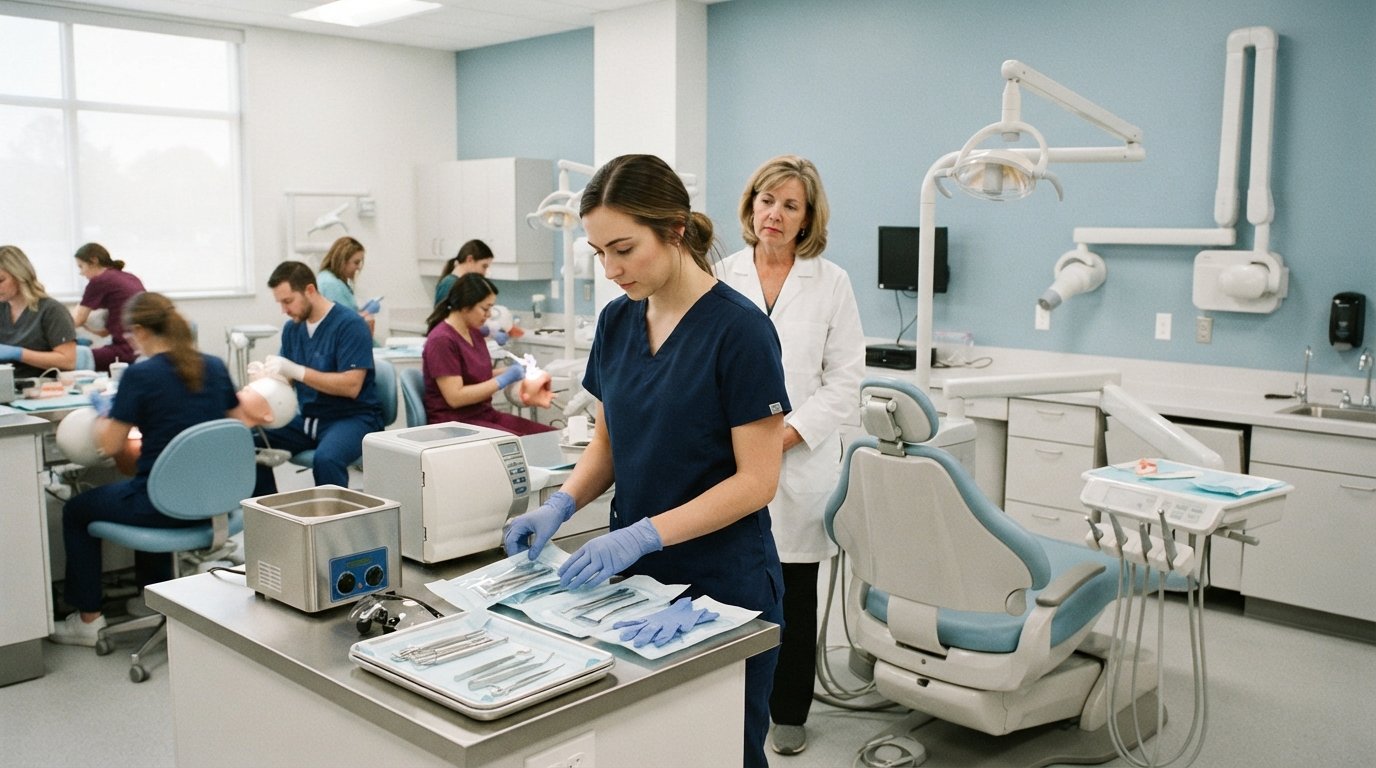
Dental assistants are the backbone of a smooth-running dental practice. They prepare treatment rooms, sterilize instruments, assist the dentist during procedures, take and process X-rays, and help patients feel at ease. The certificate at American Career College-Los Angeles is built around those real-world duties, so you are not just memorizing terminology; you are practicing the tasks you will perform on day one of a job.
Because the program is in-person, you get direct feedback from instructors who have worked in dental offices. That matters in a field where technique, safety, and patient communication are learned by doing. The compressed format, as short as 12 weeks and generally under a year, is designed for people who need to enter the workforce quickly. You can expect a blend of classroom instruction, lab practice, and a clinical externship that places you in an actual dental setting before you graduate.
Core topics typically include:
- Dental anatomy, terminology, and charting
- Infection control and sterilization protocols
- Chairside assisting and four-handed dentistry
- Dental radiography (X-ray) safety and technique
- Patient communication, records, and front-office basics
These skills map directly to the duties employers list in job postings, which is why certificate holders can move into entry-level roles relatively quickly. If you are still weighing whether a certificate or a longer degree fits your goals, it helps to compare how different credentials affect long-term career growth. Our guide on best colleges with graduate programs for career growth explains how advanced credentials can build on an entry-level start, which is useful if you see dental assisting as a stepping stone rather than a final destination.
Who This Program Is Built For
This certificate is not one-size-fits-all, but it fits several common situations well. The strongest candidates tend to be people who want a hands-on healthcare role without the length and cost of a degree, who live near the Los Angeles campus, and who are ready to attend in person rather than online. Because dental assisting requires physical dexterity, close teamwork, and direct patient contact, in-person training is often the most effective way to build confidence.
Typical students include recent high school graduates, adults changing careers from retail or hospitality, and working parents who need a schedule that finishes fast. Some students are already in dental offices in administrative roles and want to move into chairside work. Others are exploring healthcare generally and want a low-risk way to test the field before committing to something longer, such as hygiene or dentistry.
Before enrolling, it is worth asking yourself a few honest questions:
- Can I attend in-person classes consistently for the length of the program?
- Am I comfortable with close patient contact and standing for long periods?
- Do I have a plan for tuition, supplies, and living expenses during training?
- Is my goal to work soon, or to eventually pursue a larger credential?
Answering these questions up front helps you avoid the most common mistake in short-term training: enrolling without a clear financial or career plan. If your answers point toward a quick entry into healthcare, this program is likely a good match. If they point toward long-term advancement, it can still be a smart first step, provided you budget for future education as well.
Cost, Financial Aid, and Paying for a Short Program
One of the biggest advantages of a certificate under a year is that total tuition is usually far lower than a two- or four-year degree. Still, "lower" is not the same as "free," and short programs often have tight payment schedules because there are fewer semesters over which to spread costs. At American Career College-Los Angeles, prospective students should request a current cost sheet that itemizes tuition, lab fees, uniforms, background checks, and any exam fees, then compare that total against what they can realistically pay or borrow.
Financial aid for certificate programs can include federal student aid if the school and program are eligible, institutional payment plans, workforce development funds, and private scholarships. Because the program is short, even small awards make a meaningful dent. It is worth spending a few hours searching for scholarships before you assume loans are the only option. A resource like Scholarship.Education can help you discover and evaluate scholarship and financial aid opportunities, which is especially useful when you need to cover a specific, predictable cost like a certificate rather than a four-year tuition bill.
To keep costs under control, use a simple framework:
- Get the total program cost in writing, including every fee.
- Subtract any grants or scholarships you can secure.
- Compare remaining balance against payment plan and loan options.
- Confirm the monthly payment fits your budget after graduation.
That last step matters. A payment that looks manageable during a 12-week program can become stressful if your first job takes a few months to find. Building a small cushion, or working part-time during training if the schedule allows, reduces that risk. It also helps to ask the school about job placement support and average time-to-employment for graduates, since faster placement directly improves the return on your investment.
Schedule, Externship, and What to Expect Week to Week
Short programs are intense by design. In a 12-week format, you may be in class most weekdays, with limited time between topics. That pace rewards students who stay organized and attend consistently. Missing a few sessions in a compressed program is not the same as missing a few sessions in a semester-long course; it can set you back significantly. Treat the program like a full-time job, even if it is technically part-time.
The externship is often the most valuable part of the experience. Placing you in a real dental office lets you apply sterilization, chairside, and patient-communication skills under supervision. It also gives you a professional reference and, in some cases, a direct path to hire. To make the most of it, arrive early, ask questions, and treat every task, even cleanup, as a chance to show reliability.
Week to week, you can expect a rhythm that moves from fundamentals to applied practice:
- Early weeks: terminology, anatomy, infection control, and safety
- Middle weeks: chairside assisting, radiography, and materials
- Later weeks: speed, accuracy, patient interaction, and externship prep
- Final phase: externship placement and certification exam review
This structure builds competence gradually, so you are not thrown into complex procedures before you are ready. It also mirrors how dental offices train new hires, which makes the transition to employment smoother.
Certification, Licensing, and Career Outlook in Los Angeles
Graduating from a certificate program is a milestone, but it is not always the finish line. Many states, including California, have specific requirements for dental assistants who perform radiography and other expanded functions. You may need to pass a radiation safety exam, complete a coronal polishing or sealant course, or hold current CPR certification. Ask the program exactly which credentials its curriculum prepares you for, and confirm current requirements with the Dental Board of California so you are not surprised after graduation.
In the Los Angeles area, demand for dental assistants is steady because dental practices serve a large and diverse population. Jobs exist in general dentistry, orthodontics, oral surgery, pediatric dentistry, and public health clinics. Entry-level pay varies by setting, experience, and whether you hold additional certifications, but the role offers predictable hours, a professional environment, and clear pathways to specialization. Many assistants later pursue registered dental assistant (RDA) status, hygiene, or practice management, all of which build on the foundation this certificate provides.
When comparing this program with alternatives, weigh factors beyond tuition:
- Accreditation and program length
- Externship partnerships and placement support
- Exam pass rates and certification preparation
- Total cost, including fees and supplies
- Schedule flexibility and commute to campus
A program that costs slightly more but places graduates faster can be the better financial choice. Conversely, a cheaper program with weak placement support may cost more in the long run through delayed employment. Request outcomes data, talk to recent graduates if possible, and visit the campus before committing.
How to Apply and Make a Confident Decision
The application process for a short certificate is usually straightforward: submit an application, provide proof of high school completion or equivalent, complete any entrance assessments, and meet with an admissions advisor to review costs and start dates. Because cohorts fill quickly, especially for in-person programs in a major metro area, it pays to start the process early rather than waiting until the last minute.
Before you sign anything, do three things. First, confirm the total cost and your payment plan in writing. Second, verify certification and licensing requirements with the state board, not just the school. Third, map out your schedule for the full program length, including externship hours, so you know childcare, work, and transportation will not derail you. A short program leaves little room for logistical surprises.
It also helps to think beyond the certificate. Even if you plan to work immediately, keep a longer horizon in mind. Additional certifications, specialization, or a future degree can increase your earnings and options. Planning for that now, even loosely, prevents the common trap of finishing a program and then realizing the next step requires money and time you have not budgeted. Use scholarship databases, employer tuition benefits, and workforce grants as you go, and revisit your plan each year.
The Dental Assisting/Assistant Certificate, 12 weeks to less than 1 year In-person at American Career College-Los Angeles is a practical option for anyone who wants to enter healthcare quickly, train hands-on, and start earning without a long detour. It is not the right fit for everyone, particularly those who need fully online learning or who want a degree-level credential from the start. But for the right student, with a clear budget and a realistic schedule, it can be a fast, focused, and affordable launch into a stable career. Take the time to compare costs, confirm certification requirements, and plan your finances before you enroll, and you will be far more likely to finish strong and step into a job with confidence.