
Dental Hygiene Associate's Degree at Colby CC: 2-Year Guide
A Dental Hygiene/Hygienist Associate's degree, usually 2 years In-person at Colby Community College, offers a fast, affordable path to licensure and clinical work.

By James Taylor
For students who want to enter the dental care field quickly, without committing to four years of university, a Dental Hygiene/Hygienist Associate's degree, usually 2 years In-person at Colby Community College stands out as a focused, affordable pathway. Colby Community College in northwest Kansas offers a campus-based program that blends general education with hands-on clinical training, preparing graduates to sit for licensure exams and begin work in a dental office. But before you enroll, it helps to understand the costs, the time commitment, the admissions process, and how this degree compares with other options. This guide walks you through each of those pieces so you can decide whether Colby's program fits your career goals and your budget.
What the Dental Hygiene Program at Colby Community College Involves
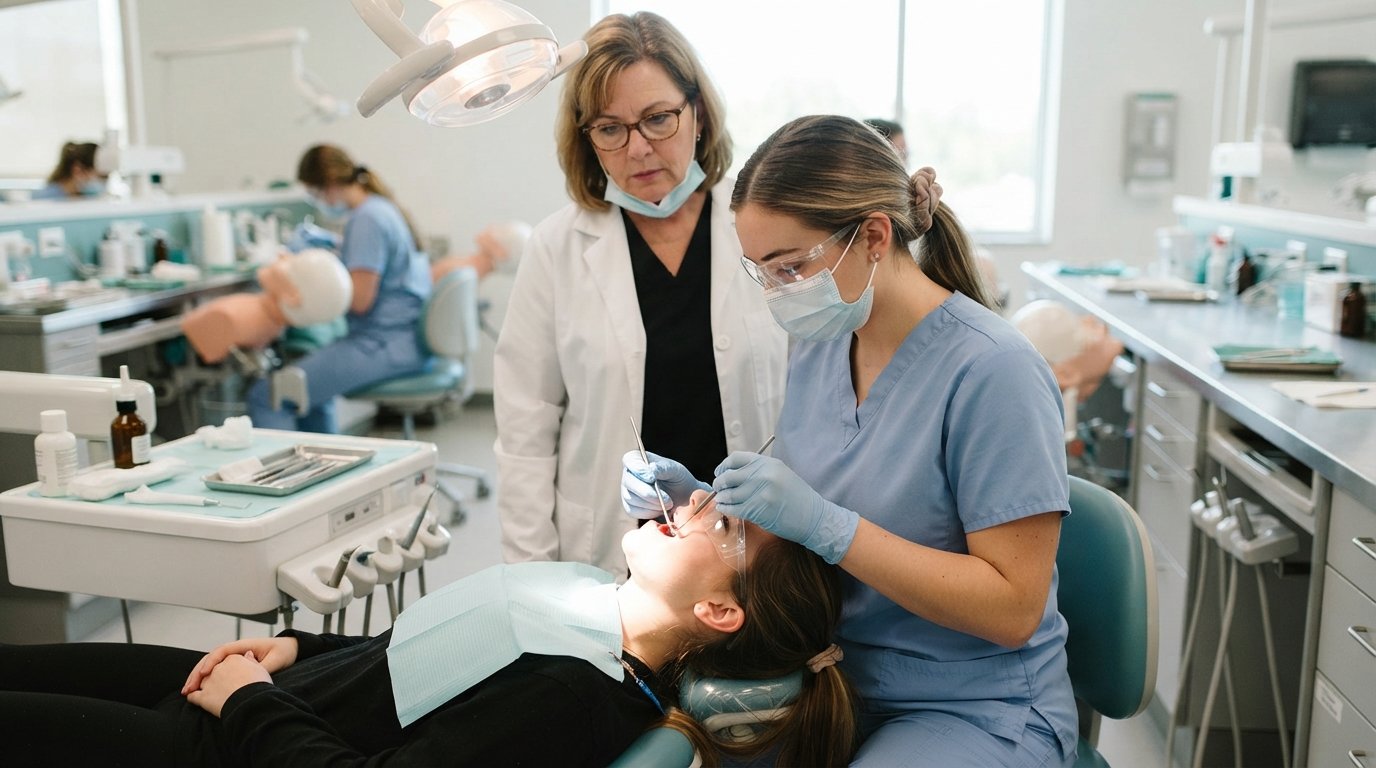
The dental hygiene program at Colby Community College is designed as a two-year associate degree, delivered entirely in person on the Colby campus. That format matters: dental hygiene is a clinical profession, and students need direct access to labs, equipment, and patients under supervision. The curriculum typically combines classroom instruction in anatomy, microbiology, nutrition, and oral pathology with preclinical practice on mannequins and peers, followed by supervised patient care in the college's dental clinic.
Because the program is in-person, students should plan to live near Colby or arrange transportation for daily classes and clinic shifts. The schedule is often demanding, with lectures, lab sessions, and patient appointments that can fall outside standard business hours. This is not a program you can complete online; the hands-on requirements are built into accreditation standards for dental hygiene education.
Colby Community College is regionally accredited, and its dental hygiene program holds programmatic accreditation, which is essential for licensure. Graduates are eligible to take the National Board Dental Hygiene Examination and a regional clinical board exam, both required to practice. The degree also includes general education coursework in communication, psychology, and social sciences, giving students a broader foundation that can help if they later pursue a bachelor's degree in dental hygiene or a related field.
Admissions Requirements and How to Prepare
Admission to the dental hygiene program at Colby is competitive, and the process usually involves more than just applying to the college. Students typically need to complete prerequisite courses in biology, chemistry, and math, often with a minimum GPA, before they can be considered for the program itself. Many applicants complete these prerequisites at Colby or transfer them from another accredited institution.
Here is a typical sequence for prospective students:
- Apply for general admission to Colby Community College and submit official transcripts.
- Complete prerequisite courses such as anatomy and physiology, microbiology, and college algebra with satisfactory grades.
- Submit a separate application to the dental hygiene program by its published deadline.
- Provide documentation of shadowing hours or volunteer experience in a dental setting, if required.
- Attend an interview or orientation session, then wait for a decision before registering for program courses.
Because prerequisites can take a semester or more, some students spend a year completing them before entering the two-year program. That means the total time from first enrollment to graduation can stretch beyond two years, depending on your starting point. Meeting with an academic advisor early is the best way to map out a realistic timeline and avoid taking courses that do not count toward the degree.
It also helps to research the profession itself before committing. Resources such as Careers.org career guides explain typical job duties, work settings, and licensing steps for dental hygienists, which can confirm whether the day-to-day realities of the job match your expectations.
Costs, Financial Aid, and Value
One of the main reasons students choose a community college program is cost. Tuition at Colby Community College is substantially lower than at most four-year universities, and because the program is completed in two years, total borrowing needs are usually smaller. Still, dental hygiene programs carry additional expenses that applicants often overlook, including instruments, uniforms, liability insurance, background checks, and licensure exam fees.
Financial aid options for this program include federal Pell Grants, subsidized and unsubsidized student loans, Kansas state aid, and institutional scholarships. Students should file the FAFSA as early as possible and check with the college's financial aid office about program-specific scholarships. Some dental offices and clinics offer sponsorship or tuition reimbursement in exchange for a work commitment after graduation, which can further reduce out-of-pocket costs.
When comparing the cost of this program with alternatives, it is worth looking beyond tuition alone. A useful reference is this guide to online IT degree cost and tuition, which explains how to compare total program costs, fees, and aid across different formats. The same comparison principles apply here: add up tuition, fees, supplies, and living expenses, then subtract grants and scholarships to estimate your real net cost.
Career Outcomes and Licensure
Dental hygiene is a stable, in-demand field with a relatively clear path from graduation to employment. After completing the associate degree, graduates must pass the National Board Dental Hygiene Examination and a clinical board exam, then apply for a state license. Most states also require continuing education to maintain licensure, and some allow hygienists to perform additional procedures, such as administering local anesthesia, after further training.
Typical duties for dental hygienists include cleaning teeth, taking and developing X-rays, applying sealants and fluoride, educating patients about oral health, and documenting care. Most hygienists work in private dental offices, though some are employed in community health clinics, schools, or public health programs. Schedules often include evening or weekend hours, and part-time positions are common, which can be attractive for students who later want to balance work with family or further education.
Career advancement usually requires additional education. A bachelor's degree in dental hygiene can open doors to teaching, public health administration, research, or sales roles within the dental industry. Some hygienists eventually pursue dental school, though that path requires completing a different set of prerequisites and a doctoral degree.
Is the Colby Program Right for You?
The Dental Hygiene/Hygienist Associate's degree, usually 2 years In-person at Colby Community College is a good fit for students who want a hands-on, affordable route into a licensed health care career and who are able to commit to full-time study in a rural Kansas community. It is less suitable for students who need fully online flexibility or who cannot relocate for clinical training. Prospective applicants should weigh the competitive admissions process, the prerequisite coursework, and the additional costs of instruments and exams against the relatively quick timeline to employment.
Before applying, visit the campus if possible, talk with current students and faculty, and review the program's accreditation and licensure pass rates. Those data points tell you more about program quality than marketing materials alone. If the program fits your budget and your schedule, it can be a practical first step toward a career that combines patient care, education, and preventive health work.