
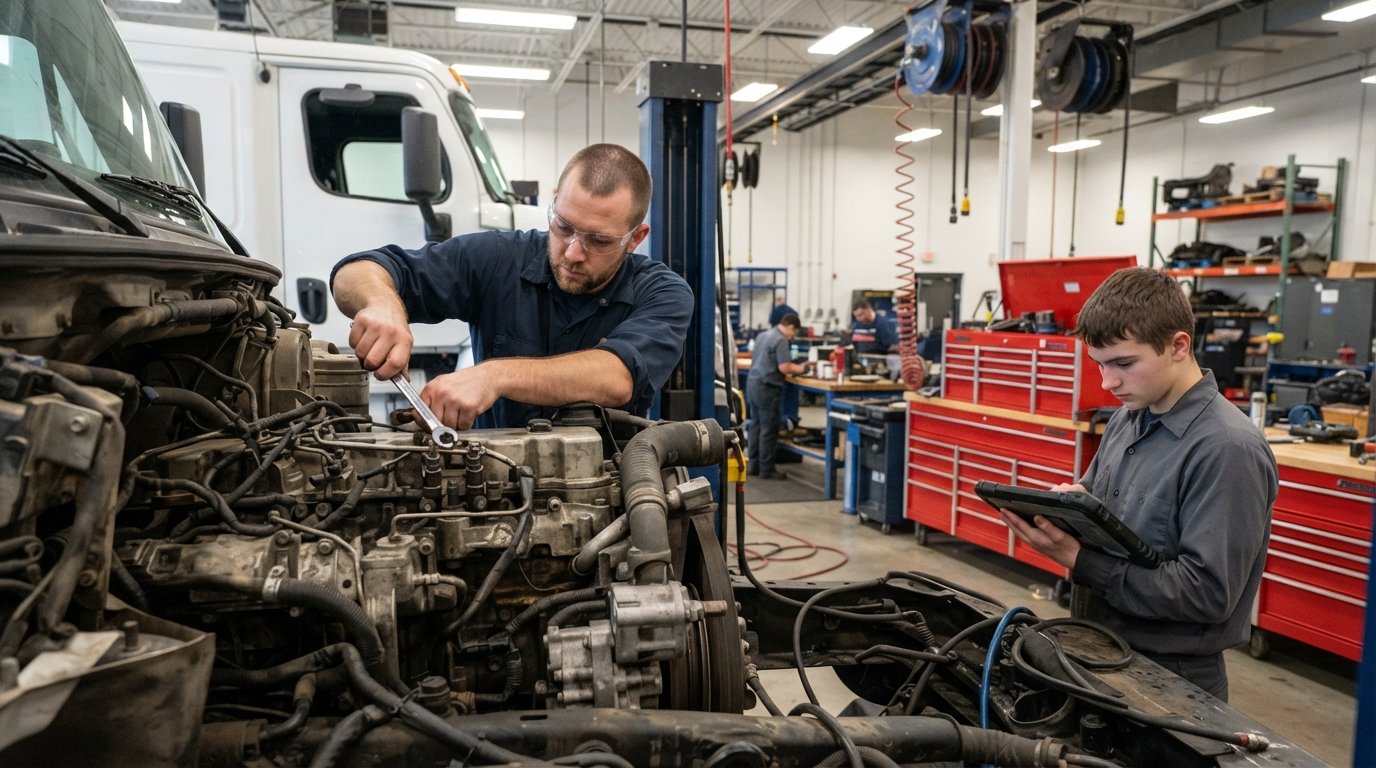
Diesel Mechanic Certificate: 12 Weeks at Coastal Pines
The Coastal Pines diesel certificate takes 12 weeks to under a year, delivering hands-on training and a job-ready credential without years of tuition debt.

By Lisa Bennett
A diesel engine does not care whether you have a four-year degree. It cares whether you know how to diagnose a faulty injector, trace a wiring fault, and get a rig back on the road before the freight deadline. That reality is why short, hands-on diesel mechanic certificate programs have become one of the smartest routes into a skilled trade that keeps the country moving. If you are searching for a fast, in-person path into this field, the Diesel Mechanics Technology/Technician Certificate, 12 weeks to less than 1 year In-person at COASTAL PINES TECHNICAL COLLEGE deserves a close look, especially if you want to start earning without taking on years of tuition debt first.
This article walks through what the program covers, who it fits, what it costs in time and money, how to pay for it, and how to decide whether a certificate is the right move for your career and your budget. Along the way, you will find practical planning tips that apply whether you enroll at Coastal Pines or compare other trade programs in your area.
Why Diesel Technicians Are in Demand
Diesel power runs far more than pickup trucks. Delivery fleets, long-haul tractor-trailers, school buses, agricultural equipment, construction machinery, and standby generators all depend on diesel engines and the technicians who maintain them. When trucks stop, supply chains stop, which is why employers in freight, logistics, construction, and public transit treat skilled diesel mechanics as essential staff rather than optional hires.
That demand translates into a labor market where trained technicians can often choose between multiple job offers. Fleet operations, dealership service departments, independent repair shops, and municipal garages all compete for people who can work on modern diesel systems. Today's engines are electronically controlled, emissions-regulated, and sensor-heavy, so employers increasingly prefer candidates who have formal training rather than only informal shop experience.
A short certificate program is one of the fastest ways to demonstrate that training. Instead of spending two or four years in a classroom before touching a real engine, students in an accelerated diesel program typically spend most of their time in a shop environment, learning on the same types of equipment they will see on the job. That practical focus is exactly what hiring managers tend to value.
It also helps that diesel work is difficult to outsource or automate. Someone has to physically inspect, diagnose, and repair the vehicle. For people who prefer hands-on problem solving over desk work, this career path offers both stability and a clear sense of accomplishment at the end of each shift.
What the Coastal Pines Diesel Certificate Covers
The Diesel Mechanics Technology/Technician Certificate, 12 weeks to less than 1 year In-person at COASTAL PINES TECHNICAL COLLEGE is designed as a concentrated, entry-level credential. Because the program runs between roughly three months and under a year depending on the schedule you choose, it compresses the core skills employers expect into a tight timeline. You are not spending semesters on general education requirements that have little to do with turning wrenches. You are learning the trade.
Coursework in a program like this typically blends classroom instruction with substantial hands-on lab time. Instructors demonstrate a system, then students practice on training engines, drivetrains, and electrical boards until the procedures become second nature. Assessment usually happens through practical evaluations, not just written exams, because the job itself is practical.
Core topic areas generally include:
- Diesel engine fundamentals, including combustion, compression, and component identification
- Fuel injection systems, from mechanical pumps to modern common rail and electronic unit injectors
- Electrical and electronic diagnostics, including wiring schematics, multimeter use, and sensor testing
- Preventive maintenance procedures such as fluid analysis, filter service, and inspection routines
- Brake, suspension, and drivetrain systems found on medium- and heavy-duty trucks
- Emissions control systems, including diesel particulate filters and selective catalytic reduction
Safety is woven through every unit. Diesel shops involve heavy equipment, high-pressure fuel systems, hot exhaust components, and sometimes hazardous chemicals. Learning lockout procedures, proper lifting technique, and personal protective equipment habits early is not optional; it is part of becoming employable.
By the end of the certificate, graduates should be able to perform routine maintenance, diagnose common faults using scan tools and schematics, and complete repairs under supervision. That skill set is exactly what entry-level technician job postings tend to list, which is why the credential functions as a direct bridge into the workforce rather than a stepping stone toward more school.
Who Thrives in a 12-Week to Under-1-Year Diesel Program
Accelerated trade programs are not for everyone, but they fit several specific groups extremely well. The common thread is a preference for learning by doing and a desire to enter the workforce quickly rather than spend years in a traditional academic setting.
Career changers often gravitate toward this format. Someone who has spent a decade in warehouse work, food service, or retail may be ready for a job with better pay, more technical challenge, and a clearer path forward. A program that can be finished in a single season of life, rather than several years, makes that transition far less risky.
Recent high school graduates who are not interested in a four-year degree also benefit. Instead of accumulating debt while figuring out a major, they can build a marketable skill, start earning, and keep the door open to further certifications or an associate degree later if they choose. Many employers even offer tuition assistance for continuing education once someone is on staff.
Veterans and people with mechanical hobbies frequently excel in diesel training as well. Prior exposure to engines, whether through military service, farming, or weekend car projects, gives students a head start on the terminology and hands-on habits the program reinforces. Meanwhile, the structured schedule and clear outcomes appeal to anyone who wants a defined finish line.
What these groups share is a willingness to show up consistently, get their hands dirty, and ask questions. The program moves quickly, so missing lab days can put a student behind. For people who can commit to that pace, the payoff is a credential and a job-ready skill set in months, not years.
Cost, Financial Aid, and Planning Your Investment
One of the biggest advantages of a certificate over a degree is the lower total cost. Shorter programs mean fewer tuition payments, less time out of the workforce, and less accumulated debt. Even so, tuition is only part of the picture. Students should budget for tools, safety gear such as boots and eye protection, textbooks or digital course materials, and possibly transportation or relocation if the campus is not local.
Financial aid can significantly reduce out-of-pocket costs for qualifying students. Certificate programs at accredited technical colleges often participate in federal student aid programs, which means eligible students may access Pell Grants, federal student loans, and work-study. State workforce development grants and trade-specific scholarships are also common, particularly in fields with documented labor shortages like diesel technology.
Employer sponsorship is another route worth exploring. Some trucking companies, dealership groups, and fleet maintenance operations offer tuition reimbursement or direct payment for technician training in exchange for a commitment to work for them after graduation. These arrangements vary widely, so it pays to ask about the terms before signing anything.
For students comparing options, a useful step is to research scholarship opportunities before enrolling, since deadlines often fall months before the start of a term. Resources like Scholarship.Education aggregate scholarship and financial aid listings for students at many levels, which can help you identify awards you might otherwise miss. Combining a small scholarship with a grant and a payment plan can turn a seemingly out-of-reach program into a manageable one.
It also helps to calculate the return on investment honestly. Compare the total cost of the certificate against the starting wages for diesel technicians in your area. In many markets, entry-level technicians earn enough to recoup their training costs within the first year or two of full-time work, especially when overtime and shift differentials are available.
How to Choose the Right Diesel Training Program
Not every diesel program is built the same way, and the differences matter when you are investing time and money. Accreditation, lab equipment, instructor experience, and job placement support all influence how well a program prepares you for actual employment. Before committing, gather clear answers to a short list of questions.
- Is the program accredited by a recognized agency, and does it qualify for federal financial aid?
- How much time is spent in hands-on lab work versus classroom lecture?
- What types of engines, transmissions, and diagnostic tools will students train on?
- Does the school offer job placement assistance, employer partnerships, or internship connections?
- What is the total cost, including tools, fees, and materials, and what payment plans exist?
The answers reveal whether a program is designed around student outcomes or simply around enrollment numbers. A strong diesel program will have modern shop equipment, instructors who have worked in the field, and relationships with local employers who hire graduates. It will also be transparent about costs and completion rates.
Location matters too. If you plan to work in a particular region, training near that job market makes it easier to network with potential employers and attend interviews during the program. For students considering relocation, it is worth researching which states and metro areas have the highest concentrations of fleet maintenance and dealership jobs.
Finally, visit the campus if you can. Walking through the shop, meeting instructors, and watching a class in progress tells you more about the culture and quality of a program than any brochure. Ask current students what they wish they had known before enrolling. Their answers are often the most honest review you will get.
Career Outcomes After Earning Your Certificate
Graduates of diesel technician certificate programs typically enter the workforce in entry-level roles and advance quickly based on skill and reliability. Common job titles include diesel service technician, fleet maintenance technician, heavy equipment mechanic, and bus or truck mechanic. Work settings range from dealership service bays to highway maintenance garages to mobile repair units that travel to stranded vehicles.
Pay varies by region, employer type, and specialization, but diesel technicians generally earn more than many other entry-level trade roles, in part because the skill set is technical and the consequences of failure are expensive. Technicians who master diagnostics, emissions systems, or specific manufacturer platforms often command higher wages and more choice in where they work.
Advancement opportunities are also strong. With experience, a technician can move into lead mechanic roles, shop supervision, service writing, or specialized fields such as powertrain diagnostics or fleet management. Some eventually open their own repair businesses, while others pursue additional certifications that unlock higher pay tiers.
For anyone weighing a certificate against a longer degree, the key question is what the employer actually requires. Many diesel jobs list a certificate or diploma plus a valid driver's license and a clean record, not a bachelor's degree. That makes the shorter credential a practical and cost-effective entry point, particularly for students who want to minimize debt and start earning as soon as possible.
If you are ready to trade classroom theory for shop-floor practice, the Diesel Mechanics Technology/Technician Certificate, 12 weeks to less than 1 year In-person at COASTAL PINES TECHNICAL COLLEGE offers a focused way to build a career that keeps America moving. Do the math on cost, aid, and starting wages, ask the hard questions during your campus visit, and then decide with clear eyes. A few months of focused training can set the direction for the next several decades of your working life.