
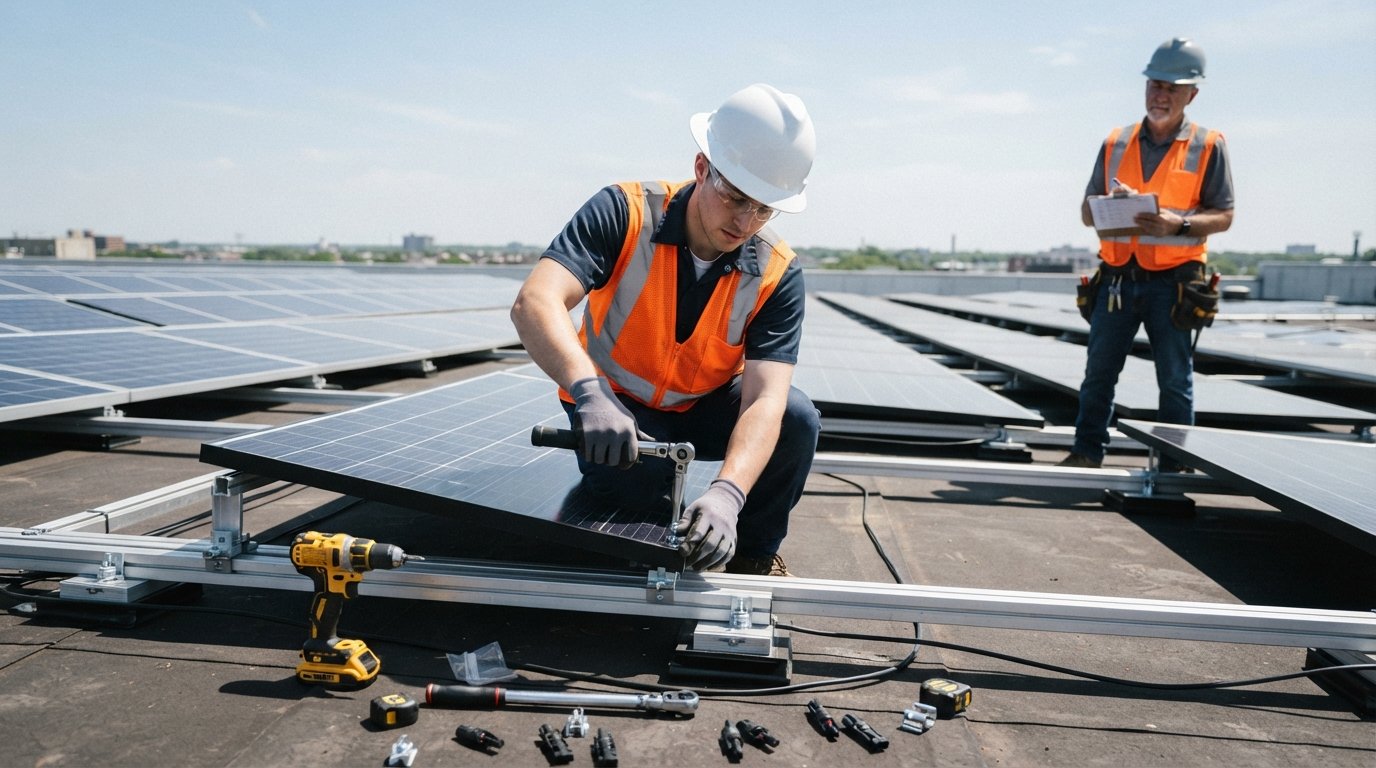
Fast Track Certifications for Renewable Energy Jobs in 2026
Fast track certifications for renewable energy jobs can get you hired in months. See top programs, costs, and how to avoid wasted tuition.
By Scott Thompson
Renewable energy is no longer a niche sector. In 2026, solar and wind power combined generate more electricity in the United States than coal, and battery storage is scaling fast. Utilities, construction firms, and engineering companies are all competing for skilled workers. Yet a four-year engineering degree is not the only path in. Fast track certifications for renewable energy jobs can get you site-ready in weeks or months, not years, and often at a fraction of the tuition cost. For students and career changers weighing affordability, these short credentials can be the fastest route from classroom to paycheck. If you are still comparing longer academic routes, our guide on top degrees for renewable energy careers explains how traditional programs stack up against accelerated options.
This article breaks down the most practical certifications, what they cost, how long they take, and which ones employers actually recognize. You will also see how these credentials fit into broader career planning, and how to avoid wasting money on programs that do not lead to real jobs.
Why Fast Track Certifications Make Sense in 2026
The renewable energy workforce is growing faster than the supply of traditional graduates. Solar installer positions are projected to grow by double-digit percentages through the decade, and wind turbine technician roles consistently rank among the fastest-growing occupations in the country. Employers cannot wait four years for every new hire. They need people who understand electrical safety, mechanical systems, and site protocols now.
That gap is exactly where short-term certifications fit. A focused program can teach you the core competencies for a specific role, such as photovoltaic installation, wind turbine maintenance, or energy storage safety. Many of these programs are offered at community colleges, technical schools, and through industry associations. Some are online, while others combine online coursework with hands-on labs.
The financial case is equally strong. A bachelor's degree in engineering can cost tens of thousands of dollars. A certification might cost a few hundred to a few thousand. For adult learners who need to start earning quickly, the return on investment can be measured in months, not decades. That is why many students now explore accelerated pathways before committing to a full degree.
Key advantages of these programs include:
- Short completion times, often ranging from a few weeks to six months
- Lower upfront costs compared to semester-based degree programs
- Targeted skills that map directly to specific job titles
- Flexible schedules, including evening and online options
- Stackable credentials that can later count toward an associate or bachelor's degree
Stackability matters. A solar certification can be a stepping stone. Later, if you want to move into design or project management, you can apply those credits toward a larger credential. That keeps your options open without forcing you to choose between work and school right away.
Top Fast Track Certifications for Renewable Energy Jobs
Not all certifications carry the same weight. Some are recognized nationwide, while others are regional or employer-specific. Below are the categories that consistently lead to hiring in 2026.
Solar Photovoltaic (PV) Certifications
Solar is the largest employer in the renewable sector. Entry-level installers often need a combination of safety training and hands-on PV skills. The North American Board of Certified Energy Practitioners (NABCEP) offers an associate-level PV certification that many employers request. It covers system design, installation, and safety. Training programs that prepare you for this exam can be completed in a few months.
Other solar credentials focus on specific tasks, such as battery storage or solar sales. If you are not sure whether to start with a certificate or a degree, the degree comparison guide mentioned earlier can help you map out a longer-term plan.
Wind Turbine Technician Certificates
Wind farms need technicians who can climb towers, inspect blades, and repair gearboxes. A wind energy certificate typically includes courses in hydraulics, electricity, and safety. Many community colleges offer these programs in partnership with manufacturers. Graduates often find work quickly because the demand for technicians remains high in states like Texas, Iowa, and Colorado.
Energy Storage and Battery Certifications
As more homes and utilities install batteries, the need for storage specialists is rising. Short courses in lithium-ion battery safety, installation, and maintenance are becoming common. Some are offered by equipment manufacturers, while others come from technical schools. These certifications can set you apart when applying for jobs with solar-plus-storage companies.
Energy Efficiency and Building Performance
Not all renewable jobs are on rooftops or wind towers. Energy auditors and weatherization technicians help buildings use less power. The Building Performance Institute (BPI) offers certifications that can be earned in weeks. These roles often appeal to people who want to improve energy efficiency without working at heights.
Electrical and Safety Credentials
Many renewable jobs require a basic understanding of electrical systems. OSHA safety cards, first aid, and CPR are often prerequisites. Some programs bundle these with technical training. If you already have an electrical background, you may only need a short course to transition into solar or storage work.
When choosing a program, check whether it includes hands-on practice. Employers value experience with real tools and real systems. A certificate without a lab component may not be enough to get hired.
How to Choose the Right Program Without Wasting Money
The market for online certifications is crowded. Some programs are excellent. Others are little more than a PDF and a quiz. To protect your time and money, start by identifying the job you want. Then work backward to the credential that employers list in job postings.
Here is a simple framework:
- Search for the job title on major job boards and note the required certifications.
- Check whether the certification provider is recognized by industry associations or employers.
- Confirm that the program includes hands-on training or a supervised internship.
- Ask about job placement rates and whether the school publishes them.
- Compare costs, including exam fees and equipment, not just tuition.
Accreditation also matters. Regional and national accreditors review schools for quality. If you later want to transfer credits to a degree program, accreditation will determine whether those credits count. For adult learners who may pursue a bachelor's degree in the future, this is a critical detail.
Financial aid can sometimes apply to certificate programs, especially at community colleges. Federal student aid is generally limited to programs that lead to a degree or a recognized credential. Short-term certificates may qualify if they are part of an eligible program. It is worth asking the financial aid office before you enroll.
If you are exploring online education more broadly, DegreesOnline.Education offers guides on accredited online degree programs and financial aid, which can help you compare certificate options with longer-term academic paths.
Job Outlook and Salary Expectations
Renewable energy jobs are not just plentiful. They also pay competitive wages. Solar installers earn a median salary in the mid-$40,000s, with experienced leads earning more. Wind technicians often start higher because of the specialized skills and travel requirements. Energy storage specialists and energy auditors can earn similar or higher wages depending on location and experience.
Many of these roles offer overtime and travel pay. Wind technicians, for example, may work on projects across multiple states. That can boost annual earnings significantly. Solar installers who move into sales or design can also increase their income without returning to school for years.
Geographic location matters. States with strong renewable policies, such as California, Texas, and New York, have more jobs and often higher pay. But even in regions with fewer incentives, utilities are investing in renewable projects to meet corporate and state goals. The demand is broad.
One caveat: some entry-level jobs are physically demanding and may require working outdoors in all seasons. Certifications can help you move into less physically intensive roles over time, such as inspection, design, or project coordination. That is another reason to choose stackable credentials.
Stacking Certifications for Career Growth
A single certificate can get you hired. A series of certificates can help you advance. For example, you might start with a solar PV associate certification, then add a battery storage credential, and later pursue a project management certificate. Each step builds on the last and increases your value to employers.
Some community colleges offer pathways that combine multiple certificates with an associate degree. If you complete the certificates first, you can often apply those credits toward the degree later. This modular approach is ideal for working adults who need to earn while they learn.
Employers also value soft skills. Communication, teamwork, and problem-solving are important on job sites. Programs that include customer service or sales training can be especially useful for roles that involve interacting with homeowners or business clients.
Common Mistakes to Avoid
One common mistake is choosing a program based solely on price. A cheap certificate that employers do not recognize is not a bargain. Another is assuming that all online programs are self-paced and easy. Some require strict deadlines and lab work. Read the fine print.
Also, be wary of programs that promise job placement but do not provide data. Ask for specific numbers: how many graduates found jobs in the field, and how quickly? Legitimate schools will share this information.
Finally, do not overlook safety training. Renewable energy jobs often involve electrical hazards, heights, and heavy equipment. A strong safety foundation is not optional. It can also make you more employable because employers want workers who will not get hurt.
Funding Your Certification
Cost is a major concern for many students. Fortunately, there are options. Community college certificate programs are often the most affordable. Some states offer workforce development grants for high-demand fields like renewable energy. Employers may also pay for certifications if you are already working in a related trade.
Scholarships for career and technical education exist, though they may be less publicized than traditional academic scholarships. Check with your state energy office, local workforce board, and the certification provider. Some providers offer payment plans or discounted exam fees for students.
If you are considering a longer degree later, keep records of your certificate coursework. You may be able to transfer credits and reduce the cost of a bachelor's degree. That is a smart way to keep both short-term and long-term goals in view.
Getting Started This Year
The renewable energy sector is moving quickly, and employers are hiring now. Fast track certifications for renewable energy jobs offer a practical way to enter the field without a long detour. Start by researching the specific role you want, then find a program that provides the skills and credentials employers ask for. With careful planning, you can be job-ready in months and build a career that grows with the industry.