
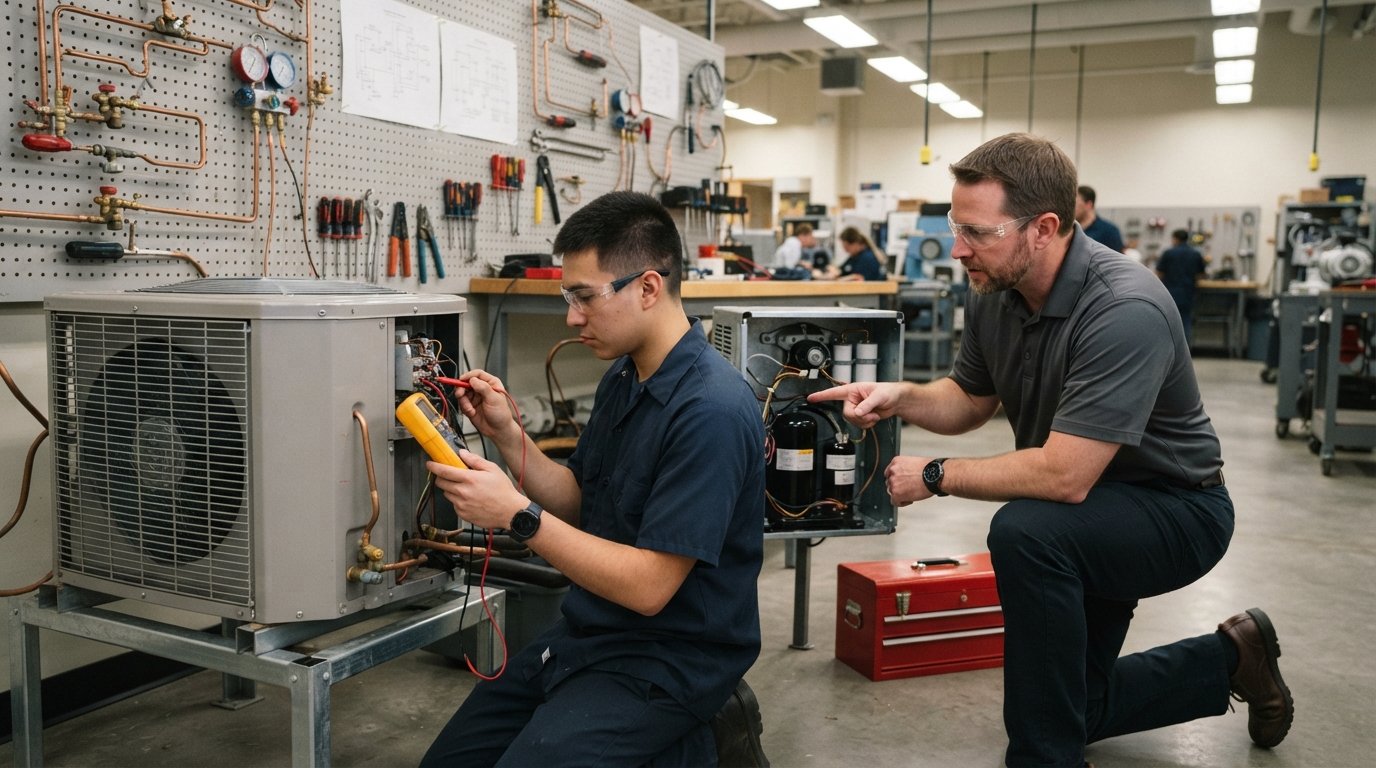
HVAC/R Certificate at Dixie Tech St. George: 12-Week Fast Track
Earn an HVAC/R certificate in 12 weeks to under a year at Dixie Tech St. George. Get hands-on training for a fast start in a skilled trade.

If you want to start a hands-on trade career without spending four years in a classroom, a short-term HVAC/R certificate can be a practical path. The Heating, Air Conditioning, Ventilation and Refrigeration Maintenance Technology/Technician Certificate, 12 weeks to less than 1 year In-person at DIXIE TECHNICAL COLLEGE ST GEORGE CAMPUS is designed to move you from beginner to job-ready in under a year. This article breaks down what the program covers, who it suits, how to enroll, and how to decide whether it fits your budget and career goals. You will also see how to compare it with other trade certificates, including an Arizona auto technician certificate option that follows a similar short timeline.
What This HVAC/R Certificate Covers
HVAC/R stands for heating, air conditioning, ventilation, and refrigeration. The certificate program at Dixie Technical College in St. George, Utah, focuses on the maintenance and service side of these systems. You will learn how to inspect, troubleshoot, repair, and maintain equipment found in homes, businesses, and light industrial settings. Because the program is in-person, you get direct access to labs, tools, and instructors who can demonstrate procedures in real time.
Coursework typically includes electrical fundamentals, refrigeration principles, system diagnostics, and safety practices. You will also study how to read schematics, use testing instruments such as multimeters and gauges, and follow environmental regulations for refrigerants. The 12-week to under-one-year format means you can complete the certificate quickly and enter the workforce or continue into an apprenticeship. For students comparing trade paths, this is similar in structure to other short programs, like the Cochise College auto technician certificate.
The program is hands-on by design. You should expect to spend significant time in a lab or shop environment, practicing on trainers and actual equipment. That practical exposure is a major advantage over purely online programs, because HVAC/R work requires physical dexterity and comfort with tools. If you are considering a career in the trades, the Careers.org career guide is a helpful resource for understanding job duties and training paths.
Who Should Consider This Program
This certificate is a good fit for recent high school graduates, adult learners changing careers, and working adults who want to add a credential without committing to a two- or four-year degree. If you enjoy troubleshooting, working with your hands, and solving practical problems, HVAC/R maintenance can be a rewarding field. It also appeals to people who want to enter the workforce quickly and avoid heavy student loan debt.
You do not need prior HVAC experience to enroll, but basic math and mechanical aptitude help. The program is also useful for maintenance workers, property managers, and facilities staff who want formal training. Because it is in-person at the St. George campus, you should consider your commute and schedule. The short duration means you will be in class or lab frequently, so planning your time is important.
Before enrolling, ask yourself these questions:
- Can I commit to a full-time or near full-time schedule for 12 weeks to under a year?
- Am I comfortable working in varied conditions, including heat, cold, and tight spaces?
- Do I want to start earning sooner rather than later?
- Is the St. George campus accessible for my daily commute?
If you answer yes to most of these, the certificate is worth exploring. It is also a stepping stone to further certifications, such as EPA Section 608 refrigerant handling, which many employers require.
Admission Steps and Enrollment Timeline
Dixie Technical College generally uses an open-enrollment model for many of its certificate programs, but you should verify current requirements with the admissions office. The process usually includes an application, a placement assessment, and a meeting with an advisor. Because the program is short, start dates may be frequent, so you can often begin within a few weeks or months.
Here is a typical sequence to follow:
- Visit the Dixie Technical College website or call the St. George campus to confirm program availability and start dates.
- Complete the online application and pay any application fee.
- Take the placement test or provide prior transcripts if required.
- Meet with a financial aid advisor to discuss payment options, scholarships, and payment plans.
- Register for classes and attend orientation.
Because the program is in-person, you will also need to arrange transportation and childcare if applicable. The 12-week to less-than-1-year timeline means there is little room for schedule conflicts, so clear your calendar before you start. If you are comparing programs, use the same checklist for each school to make an apples-to-apples decision.
Cost, Financial Aid, and Value
Tuition for trade certificates is often lower than for associate or bachelor's degrees, but costs vary by program and residency status. At a technical college, you may qualify for federal financial aid, state grants, or institutional scholarships. Some employers also offer tuition assistance or apprenticeships that can offset costs. Always ask for a total program cost estimate that includes tuition, fees, tools, books, and certification exam fees.
When evaluating value, compare the total cost to the expected entry-level salary in your area. HVAC technicians in Utah and nearby states generally earn competitive wages, and demand for maintenance and repair workers is steady. A short certificate can help you enter the field faster and start earning, which can offset the upfront cost. However, you should avoid over-borrowing. Use the net price calculator or speak with a financial aid officer to understand your out-of-pocket expense.
Consider these funding sources:
- Federal Pell Grants and Direct Loans (if the program is eligible)
- Utah state workforce development grants
- Dixie Technical College scholarships
- Employer tuition reimbursement or apprenticeship programs
- Payment plans offered by the college
Before you enroll, ask whether the certificate qualifies for federal aid and whether the college provides job placement assistance. A strong placement rate can improve the return on your investment.
Career Outcomes and Job Outlook
Graduates of HVAC/R maintenance programs typically find work as HVAC technicians, refrigeration mechanics, maintenance technicians, or facilities support staff. Jobs are available with HVAC contractors, property management companies, hospitals, schools, and manufacturing facilities. The work often involves installing, maintaining, and repairing heating and cooling systems, as well as refrigeration units in commercial settings.
According to the U.S. Bureau of Labor Statistics, employment of heating, air conditioning, and refrigeration mechanics and installers is projected to grow at a steady pace, driven by new construction and the need to replace aging equipment. Energy efficiency upgrades and environmentally friendly refrigerants are also creating demand for trained technicians. Certification and formal training can improve your chances of advancement into supervisory or specialized roles.
Entry-level pay varies by region and employer, but technicians who obtain EPA certification and gain experience can increase their earnings. Some technicians specialize in commercial refrigeration, building automation, or green technology, which can lead to higher pay. If you are career-focused, check local job postings in St. George and surrounding areas to see what employers are asking for.
How to Succeed in the Program
Success in an accelerated HVAC/R program requires discipline and punctuality. Because the schedule is compressed, missing a few labs can set you back. Treat the program like a job: arrive on time, participate actively, and ask questions when you do not understand a concept. Study the theory behind the hands-on work, especially electrical diagrams and refrigerant cycle principles, because those fundamentals will help you troubleshoot on the job.
Build a small toolkit as you go, and practice using meters and gauges until you are comfortable. Form study groups with classmates, and take advantage of instructor office hours. If you struggle with math or electrical concepts, seek tutoring early. Many technical colleges offer learning support services.
Also, start networking before you graduate. Attend job fairs, connect with local contractors, and ask your instructors for leads. A short certificate program can be intense, but the payoff is a credential that employers recognize and a faster path to earning.
Comparing Short Trade Certificates
HVAC/R is not the only short-term trade certificate available. Auto technician, welding, and electrical programs also offer 12-week to under-one-year formats. When comparing, look at total cost, program length, hands-on hours, certification outcomes, and job placement rates. The Cochise College auto technician certificate is a useful comparison for students interested in automotive work, because it follows a similar timeline and hands-on approach. Use these comparisons to choose the field that matches your interests and local job market.
If you are unsure which trade suits you, consider job shadowing or informational interviews. Talk to people already working in HVAC/R and ask about the best and worst parts of the job. That reality check can save you time and money.
The Heating, Air Conditioning, Ventilation and Refrigeration Maintenance Technology/Technician Certificate, 12 weeks to less than 1 year In-person at DIXIE TECHNICAL COLLEGE ST GEORGE CAMPUS is a practical option for students who want fast, hands-on training in a stable trade. By understanding the curriculum, costs, and career outcomes, you can decide whether this short program aligns with your goals. Take the next step by contacting the college, asking about financial aid, and visiting the campus if possible.