
Neuroscience Beyond Bachelor's at ASU: In-Person Guide
Explore neuroscience beyond a bachelor's degree with in-person campus immersion at Arizona State University. Learn about programs, costs, and research opportunities.

By Ethan Brooks
Earning a bachelor's degree in neuroscience is a significant achievement, but for many students, it is only the beginning of a longer academic and professional journey. The field of neuroscience is expanding rapidly, driven by advances in neuroimaging, computational modeling, and clinical interventions. For those who want to work at the frontier of brain science, graduate-level training is often essential. Arizona State University (ASU) offers a range of in-person graduate programs that allow students to immerse themselves in rigorous coursework, hands-on research, and collaborative lab environments. This article explores what it means to pursue neuroscience beyond a bachelor's degree through in-person campus immersion at ASU, covering program options, costs, research opportunities, and career outcomes.
Why Pursue Neuroscience Beyond a Bachelor's Degree
A bachelor's degree in neuroscience provides a solid foundation, but it often does not prepare graduates for independent research, clinical practice, or leadership roles in the field. Many entry-level positions in research or healthcare require at least a master's degree, and academic or senior research roles typically demand a doctoral degree. Graduate study allows students to specialize in areas such as cognitive neuroscience, neurobiology, behavioral neuroscience, or computational neuroscience. It also provides the opportunity to conduct original research, publish findings, and build a professional network.
Moreover, the job market for neuroscientists is competitive. According to the U.S. Bureau of Labor Statistics, employment for medical scientists, including neuroscientists, is projected to grow faster than the average for all occupations. However, most of these roles require a Ph.D. or an M.D. For students who want to work in clinical settings, a master's degree in neuroscience can lead to roles as research coordinators, lab managers, or clinical research associates. For those interested in applied fields, such as neurorehabilitation or neuromarketing, specialized graduate training is often necessary.
In-person campus immersion at ASU offers distinct advantages over online or hybrid programs. Students have direct access to faculty mentors, state-of-the-art laboratories, and interdisciplinary collaboration opportunities. The physical presence on campus fosters a sense of community and allows for spontaneous interactions that can lead to research partnerships and career opportunities. For neuroscience, where hands-on experience with equipment and techniques is crucial, in-person training is often the preferred path.
Neuroscience Graduate Programs at Arizona State University
Arizona State University is known for its innovative approach to education and research. The university offers several graduate programs relevant to neuroscience, housed within the College of Liberal Arts and Sciences, the School of Life Sciences, and the Ira A. Fulton Schools of Engineering. These programs are designed to train the next generation of neuroscientists through a combination of coursework, laboratory rotations, and dissertation research.
Prospective students can explore a variety of degree paths, including:
- Ph.D. in Neuroscience: This research-intensive program prepares students for careers in academia, industry, or government. Students engage in original research under the guidance of faculty mentors and take advanced courses in neuroanatomy, neurophysiology, and cognitive neuroscience.
- Master's in Neuroscience: A terminal master's degree that provides advanced training for students who wish to pursue research careers or enhance their qualifications for professional programs such as medical school or veterinary school.
- Interdisciplinary Programs: ASU offers opportunities to combine neuroscience with other fields, such as psychology, engineering, or biology. For example, the Neural Engineering concentration within the Biomedical Engineering program allows students to develop brain-computer interfaces and neuroprosthetics.
Each program has its own admission requirements, curriculum, and duration. The Ph.D. typically takes five to six years to complete, while a master's degree can be finished in two years. Students are encouraged to review the specific requirements on the ASU website and reach out to faculty members whose research aligns with their interests.
In-Person Campus Immersion: What to Expect
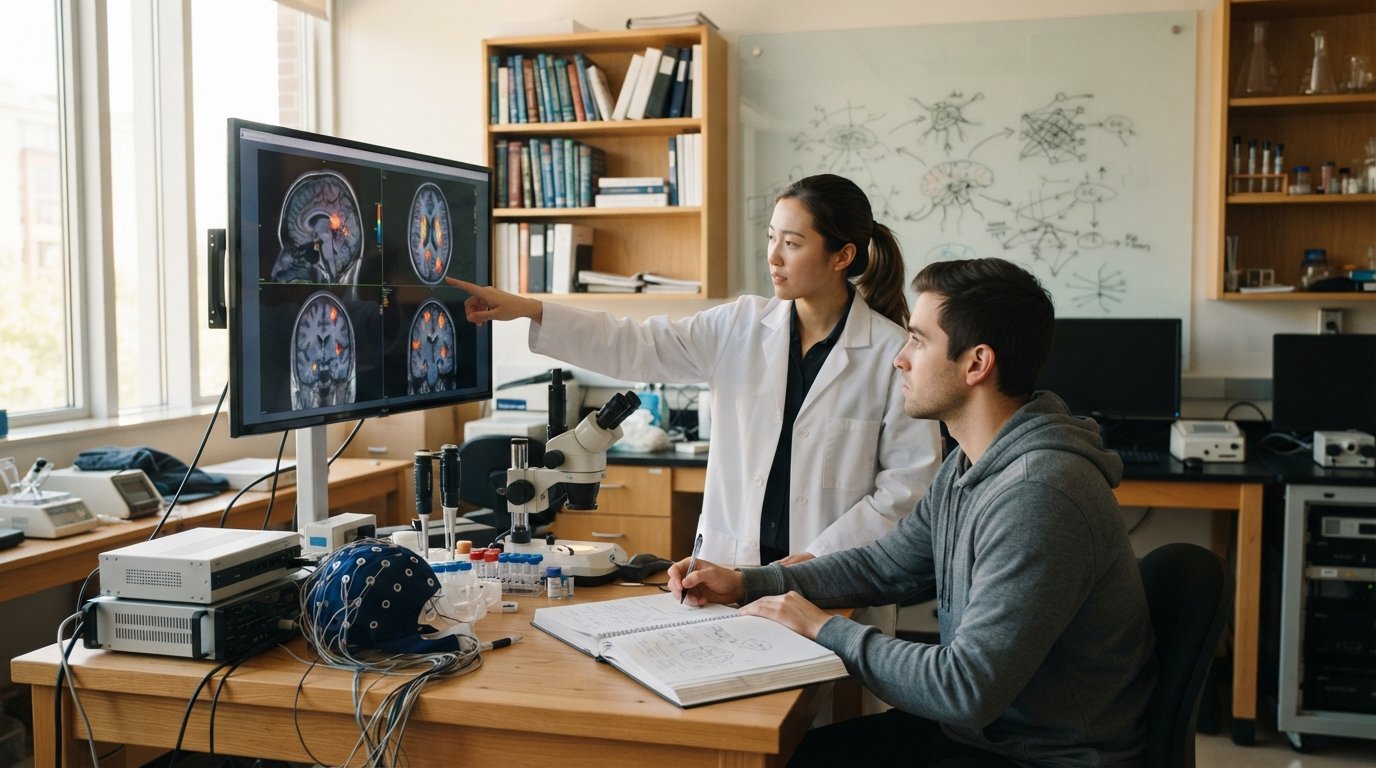
In-person immersion at ASU means more than just attending classes on campus. It involves becoming part of a vibrant research community. Graduate students in neuroscience spend significant time in laboratories, learning techniques such as electrophysiology, optogenetics, functional magnetic resonance imaging (fMRI), and behavioral testing. They also participate in journal clubs, seminars, and conferences, where they present their work and receive feedback from peers and experts.
The campus environment at ASU is highly conducive to collaboration. The university has several research centers and institutes focused on neuroscience, including the ASU-Banner Neurodegenerative Disease Research Center and the Institute for Interdisciplinary Salivary Bioscience Research. These centers bring together faculty from different departments, providing students with opportunities to work on cutting-edge projects that span traditional disciplinary boundaries.
Beyond the lab, students can take advantage of professional development resources, such as grant writing workshops, teaching opportunities, and career counseling. The in-person format also allows for networking with visiting scholars, industry partners, and potential employers. For many students, the relationships built during their graduate studies are as valuable as the knowledge gained.
Admission Requirements and Application Process
Admission to neuroscience graduate programs at ASU is competitive. While specific requirements vary by program, most expect applicants to have a strong background in biology, psychology, or a related field. Coursework in statistics, chemistry, and physics is also beneficial. Applicants typically need to submit transcripts, letters of recommendation, a personal statement, and scores from the Graduate Record Examination (GRE), although some programs have waived the GRE requirement in recent years.
Research experience is highly valued. Prospective students should highlight any laboratory work, independent research projects, or internships they have completed. It is also important to identify faculty members whose research interests align with your own and to mention them in your personal statement. Contacting faculty before applying can help you determine if the program is a good fit and whether they are accepting new students.
The application process usually begins in the fall for admission the following fall semester. Deadlines vary, so it is essential to check the program website for specific dates. International students may need to submit additional materials, such as TOEFL or IELTS scores, and should allow extra time for visa processing.
Cost and Financial Aid for Neuroscience Graduate Study
Pursuing a graduate degree in neuroscience is a significant financial investment. Tuition and fees at ASU vary depending on whether you are a resident or non-resident and whether you are enrolled in a master's or doctoral program. For the 2025-2026 academic year, estimated tuition for Arizona residents in a graduate program is around $12,000 to $14,000 per year, while non-residents can expect to pay $28,000 to $32,000 per year. These figures do not include living expenses, books, and health insurance.
Fortunately, many doctoral programs in neuroscience offer funding packages that include tuition remission, a stipend, and health insurance. These packages are often provided through teaching assistantships (TA) or research assistantships (RA), which require students to work part-time in exchange for financial support. Master's programs may offer limited funding, so students should explore external scholarships, grants, and loans.
For students seeking affordable options, it is worth noting that some online degree programs can reduce costs, but for neuroscience, in-person training is often necessary for hands-on research. Families and students navigating college costs can find valuable resources at College & Tuition, including guides on financial aid and scholarships. Additionally, for those considering a broader range of online and campus programs, DegreesOnline.Education provides comprehensive directories and reviews to help adult learners make informed choices.
To manage expenses, consider the following strategies:
- Apply for teaching or research assistantships, which often come with tuition waivers and stipends.
- Seek external funding from organizations such as the National Science Foundation (NSF), the National Institutes of Health (NIH), and private foundations.
- Look for scholarships specifically for graduate students in STEM fields.
- Consider in-state residency options to reduce tuition costs.
It is also wise to compare the cost of living in different cities. Tempe, where ASU's main campus is located, has a moderate cost of living compared to other major metropolitan areas. Students can find affordable housing options both on and off campus.
Research Opportunities and Specializations
One of the main reasons to pursue neuroscience beyond a bachelor's degree at ASU is the breadth of research opportunities. Faculty members are engaged in diverse areas of study, from molecular and cellular neuroscience to systems and cognitive neuroscience. Students can choose to specialize in areas such as:
- Neurodegenerative Diseases: Research on Alzheimer's, Parkinson's, and ALS.
- Developmental Neuroscience: Studying how the brain develops from infancy to adulthood.
- Cognitive Neuroscience: Investigating memory, attention, decision-making, and language.
- Computational Neuroscience: Using mathematical models and computer simulations to understand brain function.
- Neuroengineering: Developing devices and techniques to interface with the nervous system.
Students are encouraged to rotate through multiple labs during their first year to find the best fit for their dissertation research. This flexibility allows them to explore different techniques and research questions before committing to a specific project. The collaborative culture at ASU means that students often work on interdisciplinary teams, combining insights from biology, psychology, engineering, and computer science.
In addition to lab work, students can participate in outreach activities, such as Brain Awareness Week, where they share neuroscience with the public. These experiences help build communication skills and demonstrate the broader impact of their research.
Career Outcomes After Graduate Study
Graduates of neuroscience programs at ASU go on to a variety of careers. Those with a Ph.D. often pursue postdoctoral fellowships, tenure-track faculty positions, or research scientist roles in industry. The pharmaceutical and biotechnology industries hire neuroscientists to develop and test new drugs and therapies. Government agencies, such as the NIH and the FDA, also employ neuroscientists to conduct research and evaluate regulatory submissions.
Master's degree holders may work as research associates, lab managers, or clinical research coordinators. Some pursue further professional training in medicine, nursing, or allied health fields. Others enter science communication, policy, or education. The skills gained during graduate study, such as critical thinking, data analysis, and scientific writing, are transferable to many sectors.
According to the Society for Neuroscience, the job outlook for neuroscientists is positive, with demand growing in both academia and industry. However, competition for tenure-track positions is fierce, so many Ph.D. graduates seek roles in industry or government. Networking, publishing, and gaining teaching experience can improve job prospects.
Is In-Person Immersion Right for You?
Deciding whether to pursue an in-person graduate program in neuroscience depends on your career goals, learning style, and personal circumstances. In-person immersion offers unparalleled access to mentors, equipment, and a community of scholars. It is ideal for students who thrive in collaborative environments and want to be deeply involved in research. However, it also requires a significant time commitment and may involve relocation.
Prospective students should visit the campus, meet with faculty, and talk to current graduate students to get a sense of the culture and expectations. They should also consider their financial situation and whether they are willing to take on student loans or seek assistantships. For those who need flexibility, hybrid or online programs may be an option, but for neuroscience, the hands-on nature of the field often makes in-person training preferable.
ASU's commitment to innovation and inclusion makes it an attractive destination for graduate study. The university's large research enterprise and interdisciplinary ethos provide a fertile ground for neuroscience research. By pursuing a graduate degree in neuroscience at ASU, students position themselves at the forefront of a rapidly evolving field.
For more information on college costs, financial aid, and program comparisons, visit State University of New York Colleges and Costs Explained, which offers insights into how to evaluate public university costs. Additionally, DegreesOnline.Education is a valuable resource for exploring accredited online and campus programs across various disciplines. Whether you choose ASU or another institution, investing in graduate education in neuroscience can open doors to rewarding careers and meaningful contributions to science.