
Nursing Assistant Certificate in Under 12 Weeks at Caring Heart
The Nursing Assistant/Aide and Patient Care Assistant/Aide Certificate at CARING HEART TRAINING CENTER takes under 12 weeks in person, leading to quick employment.

By Sophia Clark
Finding a fast, affordable path into healthcare can feel overwhelming, especially when you need to start earning quickly. The Nursing Assistant/Aide and Patient Care Assistant/Aide Certificate, less than 12 weeks In-person at CARING HEART TRAINING CENTER offers a focused, hands-on route to a stable entry-level role. In just a few months, you can gain the skills required to work in hospitals, nursing homes, assisted living facilities, and home care agencies. For students and career changers who want to avoid years of tuition debt, this type of short-term credential is a practical alternative to a traditional degree. If you are also exploring other low-cost training options, our guide on affordable certificates for career growth explains how to compare programs and maximize your return on investment.
Why a Nursing Assistant Certificate Is a Smart Career Move in 2026
Healthcare demand continues to rise across the United States, and nursing assistants remain among the most needed frontline workers. Unlike many careers that require a four-year degree, this role values practical skills and state certification over lengthy academic study. A certificate program that takes less than 12 weeks means you can enter the workforce while your peers are still completing general education requirements. The financial advantage is significant: you pay for a short, focused program instead of multiple semesters of tuition, fees, and living expenses.
For adults returning to school or changing careers, the appeal goes beyond speed. Nursing assistant training builds a foundation that can lead to further advancement. Many registered nurses and licensed practical nurses began their careers as aides. The role teaches patient interaction, infection control, vital signs, and basic clinical procedures, all of which are prerequisites for more advanced healthcare credentials. In a competitive job market, having direct patient care experience gives you a distinct advantage when applying to nursing programs or specialized allied health roles.
Another benefit is the flexibility of work schedules. Hospitals, nursing homes, and home health agencies often offer day, evening, night, and weekend shifts. That means you can potentially work while continuing your education or managing family responsibilities. The certificate itself is a recognized credential that demonstrates competency, and many employers provide on-the-job training and tuition assistance for employees who want to pursue additional certifications or degrees.
What to Expect from the Program at CARING HEART TRAINING CENTER
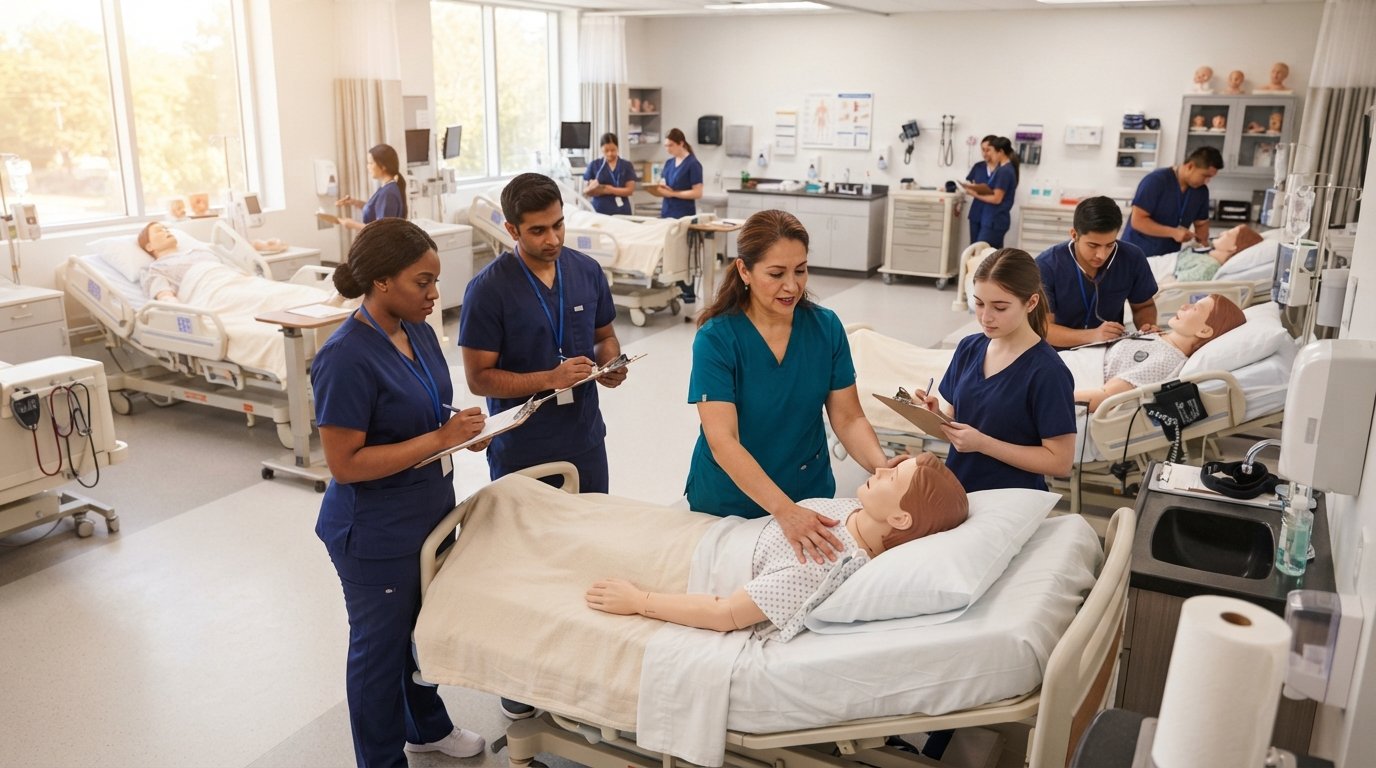
The Nursing Assistant/Aide and Patient Care Assistant/Aide Certificate, less than 12 weeks In-person at CARING HEART TRAINING CENTER is designed for students who want intensive, hands-on learning without a long time commitment. The curriculum typically combines classroom instruction, laboratory practice, and supervised clinical experience in a real healthcare setting. Because the program is in-person, you get direct feedback from instructors and the opportunity to practice skills on actual equipment before entering the workforce.
Core topics covered in most nursing assistant programs include:
- Patient rights, dignity, and communication techniques
- Infection control and standard precautions
- Measuring vital signs such as blood pressure, temperature, and pulse
- Assisting with activities of daily living (bathing, dressing, feeding, mobility)
- Observation and reporting of changes in patient condition
- Safety and emergency procedures, including fall prevention
In addition to these clinical skills, students learn how to document care accurately and how to work as part of a healthcare team. Communication with nurses, doctors, and family members is a critical part of the job, and the program emphasizes professionalism and empathy. Upon completion, you will be prepared to take your state's nursing assistant certification exam, which is required to work in most facilities. The in-person format ensures you have access to instructors who can answer questions in real time and help you refine your technique.
CARING HEART TRAINING CENTER focuses on small class sizes and personalized attention, which can make a big difference for students who have been out of school for a while. The compressed schedule means you are immersed in the material, which often leads to better retention and confidence. Many students find that the intensity of a short program keeps them motivated and focused, especially when they know a job is waiting at the end.
Comparing Costs: Certificate vs. Traditional Degree
Cost is one of the biggest factors when choosing an educational path. A bachelor's degree in nursing or a health science field can cost tens of thousands of dollars and take four or more years. Even an associate degree typically requires two years of full-time study. In contrast, a Nursing Assistant/Aide and Patient Care Assistant/Aide Certificate, less than 12 weeks In-person at CARING HEART TRAINING CENTER is a fraction of that cost. You pay for a single short program, and you can often start working within weeks of finishing.
To illustrate the difference, consider the following typical expenses:
- Bachelor's degree: $40,000 to $100,000+ total tuition and fees
- Associate degree: $10,000 to $30,000 total tuition and fees
- Nursing assistant certificate: $1,000 to $3,000 (varies by program and location)
Even after adding the cost of the state certification exam and any required background checks or uniforms, the total investment remains low. Many programs, including those at community colleges and vocational schools, offer payment plans or accept financial aid. Scholarships may also be available through healthcare employers or workforce development agencies. If you are looking for financial assistance, resources like Scholarship.Education provide databases and guidance on finding scholarships for career training and college.
When evaluating return on investment, consider that nursing assistants typically earn an hourly wage that allows them to recoup their training costs within a few months of full-time work. The experience also opens doors to overtime and shift differentials, which can increase annual earnings. Over time, you can pursue additional certifications, such as medication aide or restorative aide, which often come with higher pay. The certificate is a stepping stone, not a dead end.
How to Enroll and What to Prepare
Enrolling in the Nursing Assistant/Aide and Patient Care Assistant/Aide Certificate, less than 12 weeks In-person at CARING HEART TRAINING CENTER generally involves a straightforward application process. Most programs require a high school diploma or equivalent, a clean background check, and up-to-date immunizations. Some also require a physical exam or TB test. Because the program is in-person, you will need to attend classes and clinical rotations at scheduled times, so it is important to arrange transportation and childcare if needed.
Here are the typical steps to enroll:
- Contact CARING HEART TRAINING CENTER or visit their website to request information and an application packet.
- Submit your application along with proof of education and any required health documents.
- Complete an interview or orientation session to ensure the program is a good fit.
- Pay tuition or set up a payment plan, and purchase required supplies (scrubs, shoes, stethoscope, watch).
- Attend all classes and clinical hours, then register for the state certification exam.
It is also wise to check with your state's nurse aide registry to understand certification requirements and reciprocity rules. Some states have additional training hours or specific exams. The program at CARING HEART TRAINING CENTER is designed to meet or exceed these requirements, but you should always verify that the program is approved by your state's health department or board of nursing. Accreditation ensures that your certificate will be recognized by employers.
Financial preparation is equally important. Even though the program is short, you may need to reduce work hours or arrange for transportation and uniforms. Some employers offer to sponsor training if you commit to working for them after graduation. It is worth asking local nursing homes and home health agencies about such programs. Additionally, workforce development centers and community action agencies sometimes provide grants for short-term training in high-demand fields.
Career Outlook and Advancement Opportunities
According to the U.S. Bureau of Labor Statistics, employment of nursing assistants is projected to grow faster than the average for all occupations over the next decade. An aging population and increasing demand for healthcare services in various settings drive this growth. Jobs are available in hospitals, nursing homes, assisted living communities, home health agencies, and even schools and clinics. The role is often a gateway to other healthcare careers, and many employers offer tuition reimbursement for employees who want to become LPNs or RNs.
After gaining experience, you might consider specializing in areas such as geriatrics, pediatrics, rehabilitation, or mental health. Additional certifications, like Certified Medication Aide (CMA) or Certified Restorative Aide, can increase your responsibilities and pay. Some nursing assistants eventually become patient care technicians (PCTs) in hospitals, where they perform more advanced tasks like drawing blood or performing EKGs. Each step builds on the foundation you gain in a short certificate program.
If you are planning to eventually pursue a college degree, the credits you earn in a nursing assistant program may not always transfer, but the experience is invaluable. Many nursing programs give preference to applicants who have direct patient care experience. You may also be able to challenge exams or receive credit for prior learning. Always check with the specific college or university you plan to attend.
Why Choose CARING HEART TRAINING CENTER
CARING HEART TRAINING CENTER stands out because it offers a focused, in-person learning environment that prioritizes hands-on skill development. The program is short, typically less than 12 weeks, which means you can start earning quickly. Instructors are often experienced healthcare professionals who bring real-world insights into the classroom. Small class sizes allow for individualized attention, and the clinical rotations provide direct exposure to patient care before you graduate.
Another advantage is the support services. Many students need help with job placement, resume writing, or interview preparation. A good training center will connect you with local employers and provide references. CARING HEART TRAINING CENTER likely has partnerships with healthcare facilities in the area, which can give you a foot in the door. When you complete the program, you will have a certificate that demonstrates your competency and readiness to work.
Finally, the in-person format ensures that you are not left to figure things out on your own. You can ask questions, practice skills repeatedly, and get immediate feedback. For a career that requires physical tasks and interpersonal communication, this hands-on approach is far more effective than purely online learning. If you thrive in a structured, supportive environment, this program could be the right fit for you.
Making the Decision: Is This Program Right for You?
Before enrolling, consider your goals, schedule, and financial situation. If you need to start working soon, a short certificate is ideal. If you prefer a slower pace or want to explore other healthcare roles, you might look at longer programs. However, for many people, the Nursing Assistant/Aide and Patient Care Assistant/Aide Certificate, less than 12 weeks In-person at CARING HEART TRAINING CENTER is the fastest way to enter the healthcare field with minimal debt.
Talk to current nursing assistants and ask about their daily responsibilities. Visit the training center if possible, and speak with instructors. Check the pass rates for the state certification exam and job placement rates. These factors will help you determine whether the program is worth your time and money. Remember that no program guarantees a job, but a reputable one will give you the skills and credentials to compete for available positions.
If you decide to move forward, commit fully to the 12 weeks. Attend every class, study regularly, and practice your skills. The effort you put in will directly affect your confidence and competence on the job. Once certified, you will join a growing workforce of dedicated professionals who make a difference in patients' lives every day.
For those who need financial help, explore scholarships and grants through workforce boards, employers, and organizations like Scholarship.Education. A small investment in training can lead to a lifetime of stable employment and opportunities for advancement. Whether you see this certificate as a final destination or a stepping stone, it is a practical choice in an economy that values healthcare skills.