
Nursing Education Beyond Bachelor's Degree at EMU
Explore in-person graduate nursing programs at Eastern Michigan University, from MSN to DNP, and learn how to advance your career beyond a bachelor's degree.

By Sarah Thompson
Earning a Bachelor of Science in Nursing (BSN) is a major milestone, but for many nurses, it is just the beginning. The healthcare landscape is growing more complex, and the demand for advanced practice nurses, leaders, and educators has never been higher. If you are ready to elevate your career, pursuing nursing education beyond a bachelor's degree in person at Eastern Michigan University (EMU) offers a rigorous, hands-on pathway to specialization and leadership. EMU's School of Nursing provides a range of graduate programs designed to prepare you for the next level, whether you aspire to become a nurse practitioner, a clinical nurse specialist, a nurse educator, or a healthcare administrator.
Located in Ypsilanti, Michigan, EMU combines the resources of a comprehensive public university with the intimacy of small clinical cohorts. The in-person format is a deliberate choice: it fosters deep mentorship, interprofessional collaboration, and immediate feedback from faculty who are active practitioners. For nurses who thrive in dynamic, face-to-face learning environments, EMU's graduate nursing programs offer a distinct advantage over purely online alternatives. This article explores the options, benefits, and practical considerations for advancing your nursing education at EMU, including how to manage costs and find financial support along the way.
Why Pursue an Advanced Nursing Degree?
The Institute of Medicine's landmark report on the future of nursing recommended that nurses achieve higher levels of education to meet the demands of a transformed healthcare system. Today, that recommendation is a reality: many employers now prefer or require a master's degree for advanced practice roles, and leadership positions increasingly call for doctoral preparation. Beyond the job market, advanced education equips you with critical thinking skills, evidence-based practice knowledge, and the confidence to lead change at the bedside and beyond.
Nurses with graduate degrees also enjoy greater autonomy and earning potential. According to the Bureau of Labor Statistics, nurse practitioners, nurse anesthetists, and nurse midwives earn a median annual wage well above that of registered nurses, and demand for these roles is projected to grow much faster than average. For those interested in education or administration, a master's or doctoral degree opens doors to faculty positions, clinical leadership, and policy roles. In short, investing in your education is an investment in your professional future.
Graduate Nursing Programs at Eastern Michigan University
EMU's School of Nursing offers several graduate pathways, each tailored to different career goals. While some programs may have online components, the university emphasizes in-person learning for its clinical and advanced practice tracks. Below are the primary options for nurses seeking education beyond the bachelor's degree.
Master of Science in Nursing (MSN)
The MSN is the cornerstone of graduate nursing education at EMU. It prepares nurses for advanced practice roles and leadership positions. Students can choose from several concentrations, including Adult-Gerontology Primary Care Nurse Practitioner, Family Nurse Practitioner, and Nursing Education. The curriculum blends advanced pathophysiology, pharmacology, and health assessment with clinical practicum hours in partner healthcare facilities across southeastern Michigan. In-person classes and simulation labs allow students to practice hands-on skills under the guidance of experienced faculty.
The MSN program typically requires 36 to 48 credits, depending on the concentration, and can be completed in about two to three years of part-time or full-time study. Many students continue working while enrolled, taking advantage of evening and weekend course offerings. Graduates are eligible to sit for national certification exams in their specialty area.
Post-Master's Certificate Programs
For nurses who already hold an MSN but wish to gain a new specialty, EMU offers post-master's certificates. These focused programs allow you to add a credential, such as a Family Nurse Practitioner certification, without completing a second full master's degree. The coursework is streamlined and can often be completed in one to two years. This is an efficient route for nurses who want to expand their scope of practice or transition into a new clinical area.
Doctor of Nursing Practice (DNP)
The DNP is a practice-focused doctoral degree designed for nurses who want to lead in clinical settings, healthcare organizations, or academia. EMU's DNP program emphasizes evidence-based practice, quality improvement, and systems leadership. Students complete a scholarly project that addresses a real-world healthcare challenge, often within their own workplace. The in-person cohort model fosters collaboration and networking among experienced nurses from diverse backgrounds. The DNP is increasingly recognized as the terminal degree for advanced practice nursing, and graduates are prepared for the highest levels of clinical and administrative responsibility.
Benefits of In-Person Learning at EMU
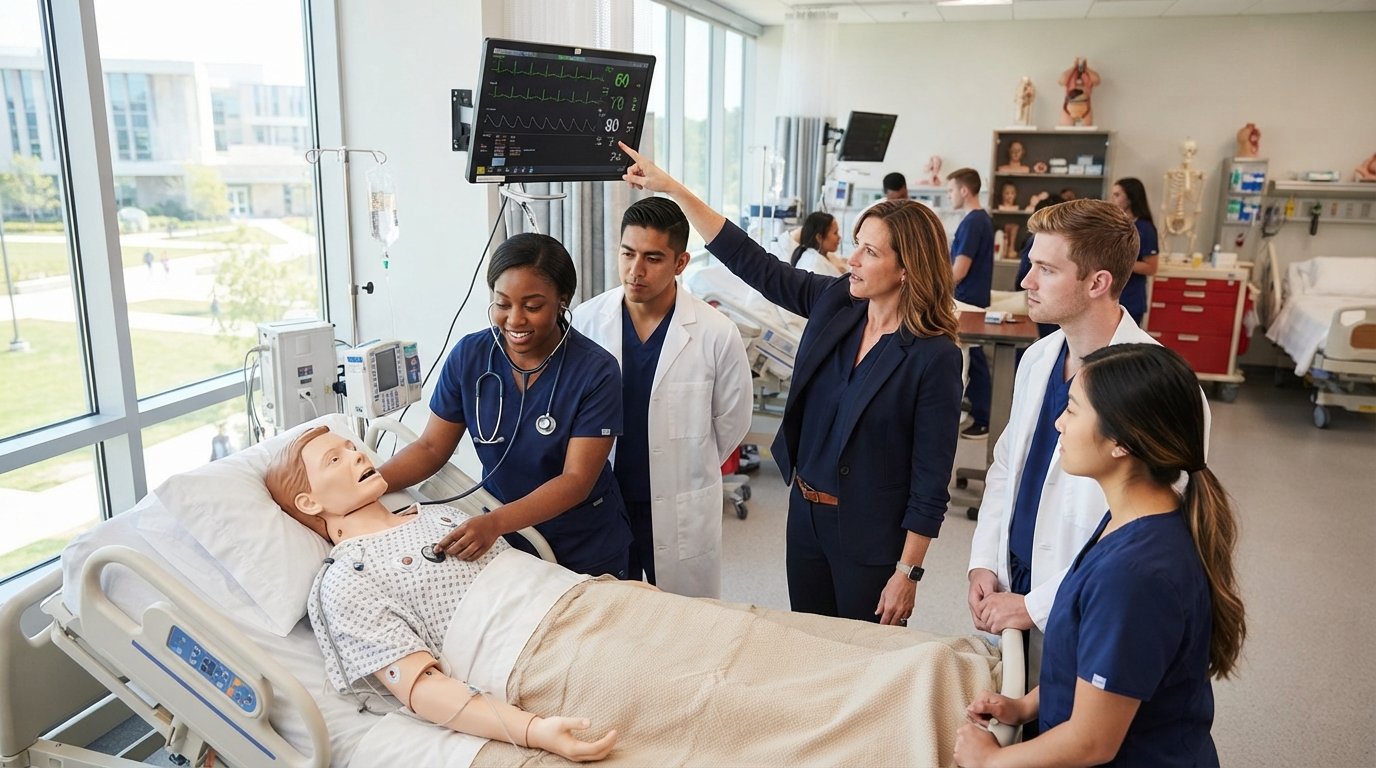
While online nursing programs offer flexibility, the in-person format at EMU provides distinct advantages that many students value. First, hands-on clinical simulation is a core component of graduate nursing education. EMU's simulation labs feature high-fidelity mannequins and standardized patients, allowing students to practice complex procedures and critical decision-making in a safe environment. This type of experiential learning is difficult to replicate fully online.
Second, in-person classes create opportunities for spontaneous discussion, peer support, and mentorship. Nursing is a collaborative profession, and learning alongside classmates who share your challenges and aspirations builds a professional network that lasts a lifetime. Faculty members are accessible for office hours, research projects, and career advice, and they often become lifelong mentors.
Third, EMU has strong partnerships with hospitals and clinics throughout the region, including Michigan Medicine, Trinity Health, and the VA Ann Arbor Healthcare System. These relationships facilitate clinical placements and often lead to job offers upon graduation. The university's career services team also provides resume workshops, interview preparation, and networking events specifically for nursing students.
Admission Requirements and Application Process
Admission to EMU's graduate nursing programs is competitive and holistic. While specific requirements vary by program, most applicants should expect to meet the following criteria:
- A Bachelor of Science in Nursing (BSN) from an accredited institution (or a related degree for some tracks).
- Current, unencumbered RN licensure in Michigan or a compact state.
- A minimum undergraduate GPA of 3.0 (on a 4.0 scale), though conditional admission may be available for those who fall slightly below.
- Completion of a statistics course and other prerequisite coursework, depending on the concentration.
- Letters of recommendation from professional references, a personal statement, and a current resume.
- For DNP applicants, a master's degree in nursing and relevant clinical experience are required.
The application process typically involves submitting an online application through EMU's graduate admissions portal, along with transcripts, test scores (if required), and other supporting documents. Deadlines vary by program and start term, so prospective students should check the School of Nursing website for the most current information. An interview may be part of the process for certain tracks.
Cost and Financial Aid for Graduate Nursing Education
Pursuing an advanced nursing degree is a significant financial commitment, but it is also an investment with a strong return. Tuition at EMU is competitive for a public university, and graduate students may qualify for federal financial aid, scholarships, and employer tuition assistance. For a detailed breakdown of program costs, including fees and estimated living expenses, you can refer to resources on how to find affordable online education degrees cost guide, which offers strategies that apply to in-person programs as well.
Many healthcare employers offer tuition reimbursement or loan repayment programs as part of their benefits packages. Nurses working for large hospital systems or in underserved areas may be eligible for the NURSE Corps Loan Repayment Program, which pays a portion of nursing education loans in exchange for a service commitment. Additionally, professional organizations such as the American Nurses Association and Sigma Theta Tau International offer scholarships for graduate study.
To explore a wide range of scholarship opportunities, students can use Scholarship.Education, a comprehensive online resource that helps students discover, evaluate, and apply for educational scholarships and financial aid opportunities worldwide. The platform includes databases, application tips, and guidance for graduate and non-traditional students. Before enrolling, be sure to complete the Free Application for Federal Student Aid (FAFSA) to determine your eligibility for federal loans and work-study programs.
Career Outcomes and Specialization Options
Graduates of EMU's graduate nursing programs are prepared for a variety of advanced roles. Nurse practitioners provide primary and specialty care, often serving as patients' main healthcare providers. Nurse educators teach the next generation of nurses in academic and clinical settings. Nurse administrators oversee nursing departments, manage budgets, and develop policies. Clinical nurse specialists focus on improving patient outcomes within a specific population or setting.
The demand for these roles is strong, particularly in Michigan and the broader Midwest. An aging population, rising rates of chronic disease, and a shortage of primary care providers have created a need for advanced practice nurses. Many EMU graduates find employment in hospitals, community health centers, private practices, and academic institutions. The university's alumni network and career services provide ongoing support for job searches and professional development.
Balancing Work, Life, and Graduate School
Returning to school while working full-time is challenging, but EMU's programs are designed with adult learners in mind. Part-time study options, evening classes, and clinical placements close to home help students manage their schedules. It is important to communicate with employers about your educational goals, as many organizations offer flexible scheduling or educational leave. Building a support system of family, friends, and classmates can also make the journey more manageable.
Time management is critical. Set aside dedicated study hours each week, and use breaks between clinical shifts to review material. Faculty advisors can help you plan a course sequence that fits your life. Remember that the investment of time and effort pays off in expanded career opportunities and personal growth.
Is EMU's In-Person Nursing Program Right for You?
Choosing the right graduate nursing program is a personal decision. If you value face-to-face interaction, hands-on learning, and a supportive community, EMU's in-person format may be an excellent fit. The university's location in southeastern Michigan provides access to diverse clinical sites and a strong network of healthcare employers. The faculty's commitment to teaching and mentorship is evident in small class sizes and personalized attention.
On the other hand, if you require maximum flexibility due to geographic or scheduling constraints, you might consider hybrid or online options. EMU offers some online coursework, but the clinical and lab components require on-campus attendance. Prospective students should weigh their priorities and visit campus or attend an information session to get a feel for the program culture.
Ultimately, advancing your nursing education is about investing in yourself and your ability to make a difference in patients' lives. Whether you choose EMU or another institution, the key is to find a program that aligns with your career goals and learning style. With careful planning and a commitment to lifelong learning, you can take the next step in your nursing journey with confidence.