
Radiologic Technology Associate Degree at CNM: 2-Year Path
The Radiologic Technology/Science - Radiographer Associate's degree, usually 2 years In-person at Central New Mexico Community College-Central-C01, offers hands-on clinical training and strong job prospects.

By Lisa Bennett
If you are looking for a hands-on healthcare career that combines patient care with advanced imaging technology, a Radiologic Technology/Science - Radiographer Associate's degree, usually 2 years In-person at Central New Mexico Community College-Central-C01, could be your entry point. This program prepares students to become radiologic technologists, the professionals who produce X-ray images and assist physicians in diagnosing injuries and illnesses. Unlike many online options, this degree requires in-person attendance because you need direct access to labs, imaging equipment, and clinical sites. That hands-on requirement is exactly what makes graduates competitive in the job market.
In this article, we will walk through the structure of the program, what you will learn, admission requirements, costs, financial aid options, and career outcomes. We will also compare the value of this degree against other paths and explain how to decide if radiologic technology is right for you. Whether you are a recent high school graduate or a career changer, understanding the time commitment and financial investment is essential before you enroll.
What the Radiologic Technology Program at CNM Covers
The Radiologic Technology/Science - Radiographer Associate's degree at Central New Mexico Community College (CNM) is a two-year, in-person program that blends classroom instruction with supervised clinical practice. The curriculum is designed to meet the standards of the Joint Review Committee on Education in Radiologic Technology (JRCERT), which accredits radiography programs. Accreditation matters because employers and state licensing boards often require graduation from an accredited program.
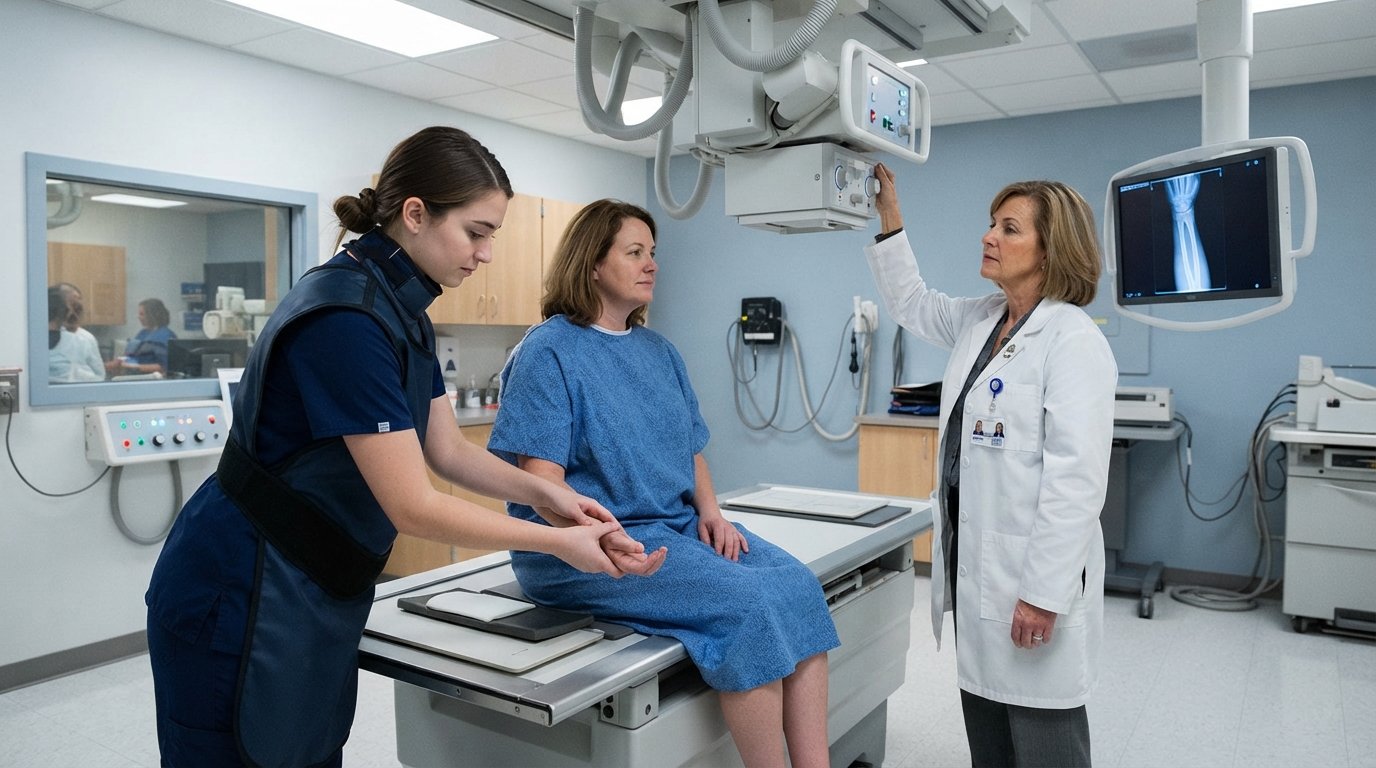
Students begin with foundational courses in anatomy, physiology, medical terminology, and radiation physics. As they progress, they move into positioning techniques, image evaluation, radiation protection, and patient care. The clinical component is extensive: you will rotate through hospitals, imaging centers, and clinics, working directly with patients under the supervision of registered technologists. This real-world experience is a major advantage of in-person programs over online alternatives.
Here is a snapshot of the core subject areas you can expect to study:
- Radiation physics and equipment operation
- Human anatomy and physiology
- Radiographic positioning and procedures
- Patient care and medical ethics
- Image analysis and quality control
Beyond technical skills, the program emphasizes communication and professionalism. Radiologic technologists interact with patients who may be anxious or in pain, so learning how to explain procedures clearly and provide comfort is part of the training. Graduates leave with the confidence to perform imaging exams independently and the critical-thinking skills to recognize when something is wrong.
Admission Requirements and How to Apply
Admission to the radiologic technology program at CNM is competitive. Because clinical placements are limited, the college admits a set number of students each year. Prospective students must first apply to CNM as a general student, then complete prerequisite courses before applying to the program itself. Prerequisites typically include college-level math, English composition, and introductory science courses. Some students complete these requirements at CNM or transfer credits from another institution.
The application process usually involves submitting transcripts, completing a background check, and providing proof of immunizations. Some programs also require a shadowing experience or observation hours in a radiology department. Check with CNM's admissions office for the most current requirements, as they can change from year to year.
Here are the typical steps to apply:
- Apply to Central New Mexico Community College and obtain a student ID.
- Complete all prerequisite courses with a grade of C or better.
- Attend an information session or meet with an academic advisor.
- Submit the program application by the published deadline.
- Complete a criminal background check and drug screening if accepted.
Once accepted, students should be prepared for a full-time schedule. The program is rigorous, and clinical rotations may include evening or weekend shifts. Balancing work and school can be challenging, so plan your finances and time accordingly.
Costs, Financial Aid, and Value
Tuition for the Radiologic Technology/Science - Radiographer Associate's degree, usually 2 years In-person at Central New Mexico Community College-Central-C01, is based on CNM's per-credit-hour rate for in-district, in-state, and out-of-state students. Because CNM is a community college, tuition is generally lower than at four-year universities, making it an affordable pathway into healthcare. However, students should also budget for textbooks, uniforms, clinical supplies, and certification exam fees.
Financial aid is available through federal grants, loans, and work-study programs. New Mexico residents may qualify for state-funded scholarships, such as the New Mexico Legislative Lottery Scholarship, which can cover a significant portion of tuition. The Free Application for Federal Student Aid (FAFSA) is the starting point for most aid. Students should also explore private scholarships offered by hospitals, radiology societies, and community organizations.
To put costs in perspective, compare the total program cost against the starting salary for radiologic technologists. According to the U.S. Bureau of Labor Statistics, the median annual wage for radiologic technologists was around $61,000 in 2023, with demand expected to grow. In New Mexico, wages may be slightly lower, but the cost of living is also lower. Graduates often find that the return on investment is strong, especially if they minimize student loan debt. For more guidance on planning college expenses, see this Central Piedmont accounting associate degree guide that illustrates how to evaluate a two-year program's financial fit.
Clinical Training and Certification
The clinical education component is the heart of the radiologic technology program. Students are placed in affiliated hospitals and imaging centers where they perform a variety of exams, from chest X-rays to fluoroscopy and mobile radiography. Under the supervision of credentialed technologists, students learn to position patients, set exposure factors, and evaluate image quality. This hands-on training cannot be replicated online, which is why the program is in-person.
Upon completion, graduates are eligible to take the national certification exam administered by the American Registry of Radiologic Technologists (ARRT). Passing this exam is required to become a registered radiologic technologist. Many states also require licensure, which typically involves passing the ARRT exam and meeting state-specific requirements. CNM's program prepares students for these milestones by integrating exam content into coursework and providing review sessions.
Certification opens doors to advancement. With experience, technologists can specialize in modalities such as computed tomography (CT), magnetic resonance imaging (MRI), or mammography. These specialties often come with higher pay and more responsibility. Some technologists move into education, management, or sales roles. The associate degree is a solid foundation for lifelong learning in the imaging sciences.
Career Outlook for Radiologic Technologists
The demand for radiologic technologists is steady. An aging population and increasing use of diagnostic imaging drive job growth. Hospitals, clinics, and physician offices all rely on technologists to operate imaging equipment. In New Mexico, healthcare facilities across Albuquerque, Santa Fe, and rural areas hire graduates from CNM's program. The in-person format ensures that students are familiar with the equipment and workflows used in local facilities, which can give them an edge in the job market.
Job duties for radiologic technologists include preparing patients for exams, explaining procedures, positioning patients, operating equipment, and maintaining patient records. They work in teams with radiologists, nurses, and other healthcare professionals. The role requires physical stamina, attention to detail, and strong interpersonal skills. For those who enjoy technology and patient interaction, it is a rewarding career.
Career planning resources can help you explore the field further. For example, Careers.org offers overviews of healthcare occupations, including the steps to become a radiologic technologist and the training required. Such resources are useful for confirming your interest before committing to a program.
Comparing In-Person and Online Options
While many degree programs are now available online, radiologic technology is not one of them. The clinical and laboratory requirements make in-person instruction mandatory. Students considering online alternatives should be cautious of programs that claim to offer fully online radiography degrees; they may not be accredited or may not lead to certification eligibility. The Radiologic Technology/Science - Radiographer Associate's degree, usually 2 years In-person at Central New Mexico Community College-Central-C01, is transparent about its format and prepares students for the reality of clinical work.
That said, some general education courses may be available online, which can add flexibility for students completing prerequisites. However, the core radiography courses and clinical rotations are conducted face-to-face. If you need a fully online program due to work or family obligations, radiologic technology may not be the best fit. Other healthcare fields, such as health information management or medical billing, offer more online options.
For students who are place-bound but still want to pursue radiography, relocating near a program like CNM's may be necessary. The investment in time and travel is offset by the hands-on training and strong job prospects.
Is This Program Right for You?
Choosing a career path is a personal decision. The radiologic technology program at CNM suits students who enjoy science, technology, and direct patient care. It requires discipline and a willingness to work in a clinical environment. If you are comfortable with anatomy, can handle the physical demands of the job, and want to enter the workforce after two years, this program is worth considering.
Before applying, reflect on your strengths and goals. Do you prefer working independently or as part of a team? Are you comfortable with computers and imaging equipment? Can you handle the emotional aspects of working with sick or injured patients? Answering these questions will help you determine if radiologic technology is a good match. You can also volunteer or shadow at a local hospital to get a feel for the daily routine.
Finally, consider the financial and time commitments. The program is full-time and rigorous, but financial aid and scholarships can help. Graduates enter a field with solid earning potential and opportunities for advancement. For many students, the Radiologic Technology/Science - Radiographer Associate's degree, usually 2 years In-person at Central New Mexico Community College-Central-C01, is a smart investment in a stable healthcare career.
To summarize, this program offers a direct route to a respected profession, with accreditation, clinical training, and certification preparation. It is not an easy path, but it is a rewarding one. If you are ready to take the next step, contact CNM's admissions office to learn about upcoming information sessions and application deadlines. Planning ahead will help you navigate the process smoothly and start your journey toward becoming a radiologic technologist.