
Room and Board Meaning: What College Living Costs Cover
Understand exactly what room and board covers in college, what it excludes, and how to cut housing and meal costs without losing financial aid.

By Rachel Adams
When you see a college's total cost of attendance, room and board is often the second-largest line item after tuition. Yet many families are unsure what that number actually buys. Does it include meals? What about books, travel, or that late-night pizza run? Understanding the room and board meaning, and what college living costs cover, is essential for building a realistic budget and avoiding surprise bills. This guide breaks down exactly what is included in a typical room and board package, what you still pay separately, how on-campus costs compare to off-campus living, and practical ways to reduce these expenses without jeopardizing financial aid.
What Room and Board Typically Covers
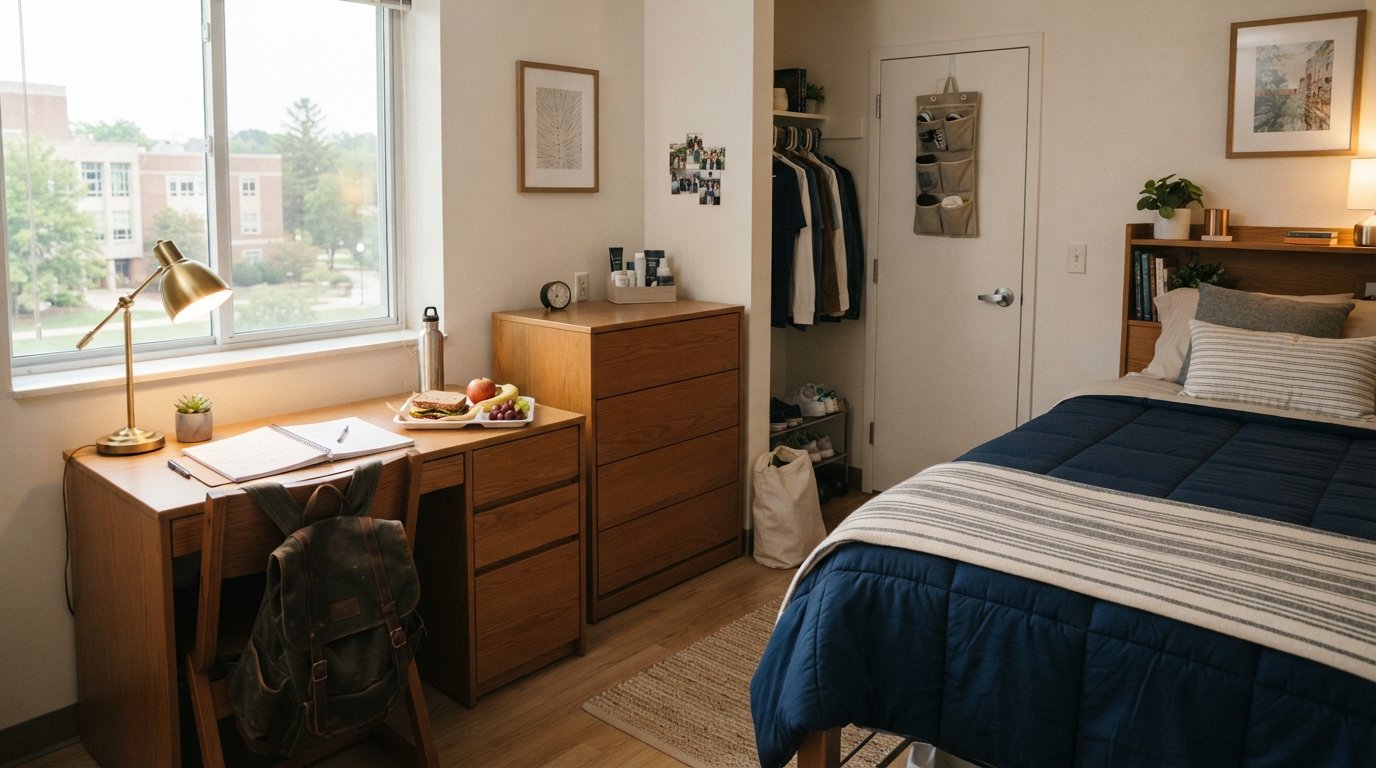
Room and board is a bundled fee that colleges charge for on-campus housing and a meal plan. The "room" portion covers your living space, whether that's a traditional residence hall double, a suite, or an apartment-style unit. The "board" portion covers meals, usually through a declining balance account, a set number of meals per week, or a combination of both. Most colleges require first-year students to live on campus and purchase a meal plan, so this cost is often mandatory for at least one year.
The specific inclusions vary by school, but a standard room and board package generally covers:
- Furnished living space: A bed, desk, chair, dresser, and closet or wardrobe in a shared or private room.
- Utilities: Electricity, water, heating, and air conditioning are typically included in the housing fee.
- Internet and cable: Most residence halls provide Wi-Fi and sometimes basic cable TV service.
- Meal plan: Access to dining halls, plus flex dollars or meal swipes that can be used at campus cafes and convenience stores.
- Community amenities: Common lounges, laundry facilities (sometimes free, sometimes coin-operated), fitness centers, and study rooms.
It's important to note that room and board does not usually cover personal expenses like toiletries, school supplies, or travel. Those fall under indirect costs in the cost of attendance calculation. For a deeper dive into budgeting for these extras, see our college living costs and budgeting guide for students.
What Room and Board Does Not Cover
Even with a comprehensive meal plan and a furnished dorm, students still face out-of-pocket expenses. These exclusions are where many freshmen get caught off guard. Textbooks and course materials alone can run $1,000 or more per year, and that's before factoring in a laptop, software, or lab fees. Personal care items like shampoo, laundry detergent, and cleaning supplies add up quickly. Transportation, whether that's a bus pass, gas money, or flights home for the holidays, is another significant cost that room and board does not touch.
Additionally, meal plans rarely cover every meal. If a student runs out of meal swipes before the end of the semester or wants to eat off campus with friends, those meals come out of pocket. Late-night food delivery, coffee shop visits, and snacks from vending machines are also separate. Social activities, club dues, and entertainment fall outside the room and board umbrella as well.
To avoid financial stress, students should create a personal budget that accounts for these indirect costs. A good rule of thumb is to set aside 10 to 15 percent of the total cost of attendance for miscellaneous expenses. For a more detailed breakdown, the CollegeDegree.Education platform offers tools to explore program costs and compare options across accredited institutions.
On-Campus vs. Off-Campus: Comparing Living Costs
One of the biggest decisions students face after their first year is whether to stay on campus or move off. On-campus room and board offers convenience, predictability, and a built-in social network. You don't have to worry about signing a lease, setting up utilities, or commuting. The cost is bundled into your tuition bill, and financial aid can be applied directly to it. However, on-campus living can be more expensive, especially at private colleges where room and board can exceed $15,000 per year.
Off-campus living often appears cheaper on paper, but the savings can be illusory. Rent may be lower, but you'll need to budget for utilities, internet, furniture, groceries, and a security deposit. You'll also need to cook for yourself, which requires time and planning. In many college towns, the demand for housing drives up rent, and students may need to sign a 12-month lease even if they only need a 9-month space.
When comparing options, consider the full picture: monthly rent plus utilities, food, transportation, and any fees. A $600-per-month apartment might seem like a bargain compared to a $12,000 room and board package, but once you add $150 in utilities, $300 in groceries, and $100 for parking, the gap narrows. Off-campus living can be a smart financial move, but it requires discipline and planning.
Strategies to Reduce Room and Board Costs
Room and board is often negotiable in ways that tuition is not. Students and families can take several steps to lower these costs without losing financial aid eligibility. First, understand your school's residency requirement. Many colleges require students to live on campus for one or two years, but after that, you may be free to move off campus. If you're required to live on campus, see if there are cheaper housing options, such as triple rooms or substance-free halls, which sometimes carry lower rates.
Meal plans are another area for savings. Some schools allow students to downgrade to a smaller plan after the first semester if they find they aren't using all their swipes. Others offer commuter plans for students who live nearby. If you're moving off campus, you'll likely be eligible to opt out of the meal plan entirely, which can save thousands per year.
Here are five practical ways to reduce housing and meal costs:
- Choose a lower-cost meal plan: Opt for the smallest plan that meets your needs, and supplement with groceries or campus convenience store purchases.
- Become a resident advisor (RA): RAs often receive free or discounted room and board in exchange for supervising the dorm.
- Live with roommates off campus: Sharing a house or apartment splits rent and utilities, often cutting costs by 30 to 50 percent.
- Apply for housing scholarships: Some colleges offer specific scholarships for housing or meal plans, so check with the financial aid office.
- Consider a commuter option: If you live within driving distance, living at home and commuting can eliminate room and board entirely, though you'll need to factor in transportation.
Before making any changes, confirm with your financial aid advisor that reducing room and board won't affect your aid package. In most cases, financial aid is based on the total cost of attendance, so a lower room and board bill may reduce your aid eligibility proportionally. However, some scholarships and grants are specifically designated for housing, so it's worth asking.
How Room and Board Fits Into Financial Aid
Room and board is a component of the cost of attendance (COA), which is the total amount a school estimates you'll need for one academic year. Financial aid, including federal loans, grants, and work-study, is based on this COA. If you choose a cheaper housing option, your COA may decrease, which could reduce your eligibility for need-based aid. This is why it's critical to communicate with the financial aid office before making any changes to your living situation.
Some schools offer "room and board" waivers for students who live at home with parents. If you're a commuter student, you may be able to reduce your COA, but you'll need to provide documentation. Keep in mind that reducing your COA can sometimes increase your out-of-pocket costs if you lose grant money, so run the numbers carefully.
For students seeking affordable online degrees, room and board may be irrelevant. Online programs typically do not charge for housing or meal plans, which can make them significantly cheaper overall. If you're considering an online degree, explore accredited options through platforms like CollegeDegree.Education to compare total costs.
Key Takeaways for Families
Understanding what room and board covers is the first step toward smart college budgeting. Remember that room and board includes housing and meals, but not books, travel, or personal expenses. On-campus living offers convenience but may be pricier than off-campus alternatives. And there are concrete ways to reduce costs, from downgrading meal plans to becoming an RA. Always check with your financial aid office before making changes that could affect your aid package.
As you plan for college, use the resources available to you. College & Tuition provides guides, tools, and comparisons to help you make informed decisions about affordability. Whether you're exploring on-campus living or considering an online degree, knowing the true cost of room and board empowers you to budget confidently and avoid financial surprises.