
Surgical Tech Associate's at Colorado Mesa: 2-Year Path
The Surgical Technology/Technologist Associate's degree at Colorado Mesa University takes about two years in person and leads to hospital OR jobs. Here is what it costs and what to expect.

By Ethan Brooks
Operating rooms run on precision, and the people who hand the surgeon the right instrument at the right moment are often surgical technologists. If you are weighing a fast, hands-on healthcare career that does not require a four-year degree, the Surgical Technology/Technologist Associate's degree, usually 2 years In-person at Colorado Mesa University, deserves a close look. This program format, roughly two years of face-to-face instruction in Grand Junction, Colorado, combines anatomy and microbiology coursework with intensive lab practice and supervised clinical rotations inside real surgical suites.
That in-person structure matters. Surgical technology is a contact profession: you sterile-glove, gown, and pass instruments under time pressure, and you learn it by doing it with instructors at your elbow. Colorado Mesa University (CMU) built its associate's pathway around that reality, pairing general education requirements with a sequenced core of surgical technology courses and clinical hours at partner hospitals and surgery centers. For students comparing affordable healthcare programs, it can be one of the more cost-predictable routes into a hospital job.
This guide breaks down what the degree covers, what admission and costs look like, how clinical placements work, what graduates earn, and how to decide whether this campus-based program fits your budget and career timeline.
What the Surgical Technology Associate's Degree at Colorado Mesa University Covers
The degree is a Associate of Applied Science (AAS) style program built for direct entry into the workforce rather than transfer to a bachelor's. The curriculum typically stacks three kinds of learning: general education, surgical technology theory, and clinical practice. Expect courses in medical terminology, anatomy and physiology, microbiology, pharmacology, and perioperative patient care, followed by specialized classes in aseptic technique, instrumentation, wound closure materials, and surgical procedures across specialties such as general, orthopedic, obstetric, and cardiac surgery.
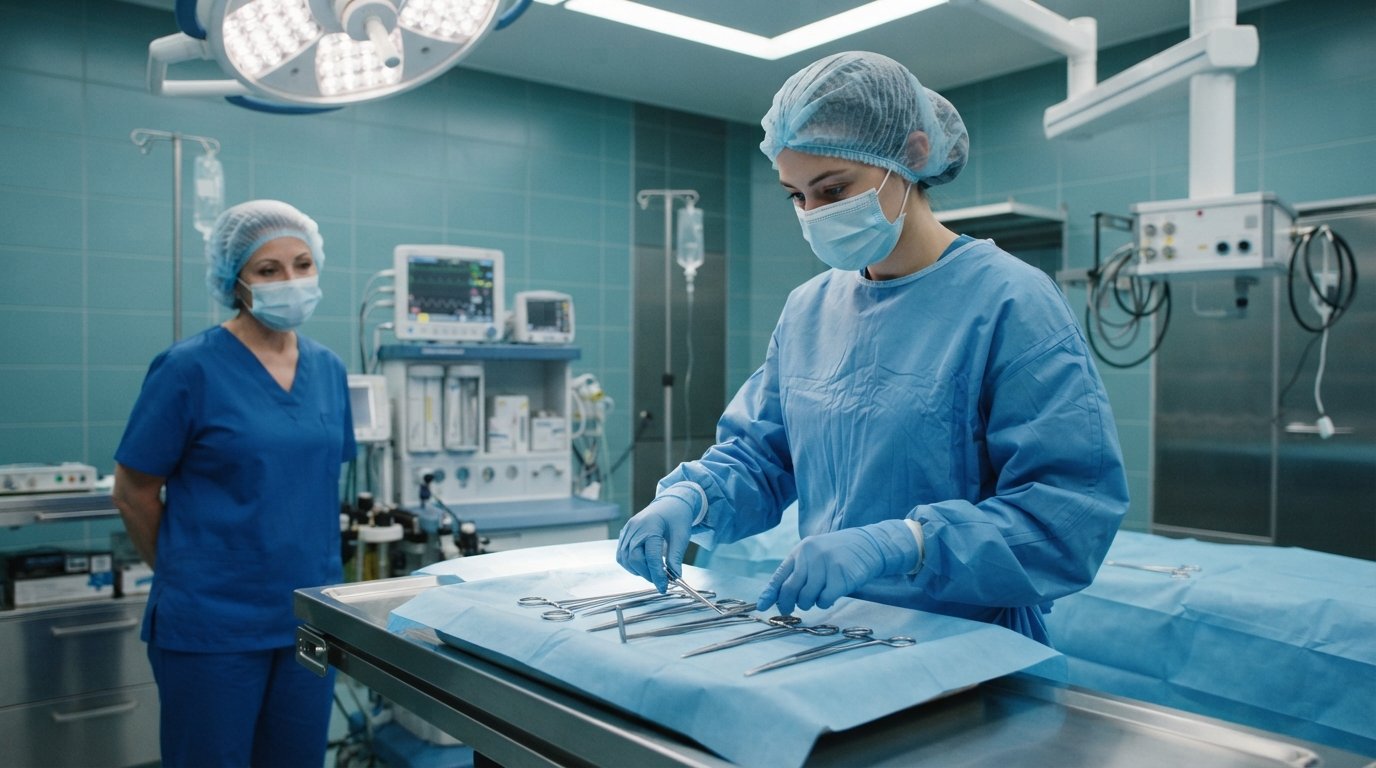
Because the program is in person, lab time is heavy. Students practice setting up sterile fields, assembling instrument trays, and anticipating surgeon needs in mock operating rooms before ever touching a real case. The sequencing is deliberate: you cannot scrub into a clinical rotation until you have demonstrated competence in the lab. Most cohorts move through the core as a group, which builds the kind of team communication that operating rooms depend on.
- General education: English composition, math, and social science courses that round out the associate's degree.
- Surgical core: aseptic technique, surgical procedures, instrumentation, and perioperative theory.
- Clinical practicum: supervised rotations in hospital and ambulatory surgery settings, usually concentrated in the final terms.
- Professional readiness: certification exam preparation and job search support woven into the final semester.
The clinical component is where the degree earns its value. Students rotate through different surgical services, logging cases and building the procedural memory that employers screen for during interviews. CMU maintains relationships with regional healthcare providers, so placements are coordinated rather than left to students to arrange, though travel to clinical sites is common and should be budgeted for.
Admission Requirements and Program Format at CMU
Colorado Mesa University admits students to the university first, then to the surgical technology program through a separate competitive process. That two-step structure is standard for allied health programs, and it means meeting general admission standards is necessary but not sufficient. Program seats are limited because clinical sites can only supervise so many students at once, so GPA, prerequisite completion, and sometimes an interview or observation hours factor into selection.
Prerequisites usually include college-level anatomy and physiology, medical terminology, and basic math or algebra, with minimum grade requirements in the sciences. Prospective students should confirm current prerequisites directly with the program, since requirements shift as accreditors and clinical partners update standards. The program is designed to be completed in about two years of full-time study, but many students take longer by spreading prerequisites across a semester or two before the competitive admission cycle.
Attendance expectations are strict. Clinical rotations can start before dawn, and missing a rotation is not like missing a lecture: it can delay graduation. Students who work full time often reduce their hours during the clinical phase. This is one reason the in-person format suits career changers who can arrange flexible schedules or savings for the final year.
Accreditation, Certification, and Licensure
Surgical technology programs should be accredited by a recognized body, typically the Commission on Accreditation of Allied Health Education Programs (CAAHEP) through the Accreditation Review Council on Education in Surgical Technology and Surgical Assisting (ARC/STSA). Accreditation matters for two reasons: it qualifies graduates to sit for the national Certified Surgical Technologist (CST) exam administered by the National Board of Surgical Technology and Surgical Assisting (NBSTSA), and it signals to employers that the curriculum meets industry standards.
Certification is not always legally required to work, but many hospitals prefer or require the CST credential, and some states are moving toward licensure or title regulation. Graduates should check their intended state's rules, because requirements vary. The CST exam covers perioperative theory and practice, and most programs build exam review into the final term. Passing it the first time is a strong hiring signal, and some employers pay a differential for certified staff.
For students mapping the credential to a longer career path, the associate's degree also serves as a foundation for supervisory roles, surgical assisting education, or a bachelor's completion program in healthcare administration or related fields.
Cost of Attendance and Financial Aid Considerations
Cost is where the associate's degree model shines compared with four-year alternatives. Colorado Mesa University is a public institution, so in-state tuition rates apply to Colorado residents, and Western Undergraduate Exchange (WUE) rates may help students from participating western states. Nonresident tuition is higher, and students should compare total program cost, not just per-credit rates, because clinical fees, uniforms, background checks, immunization tracking, and certification exam fees add to the bill.
Financial aid for this program follows the standard federal process: complete the FAFSA, and the university's financial aid office will package grants, work-study, and federal loans. Colorado state grants and institutional scholarships may also apply. Because the program is only two years, total borrowing tends to be lower than for a bachelor's degree, which matters for graduates entering a field with moderate starting salaries.
Prospective students comparing options should look beyond sticker price. A community college surgical technology program may cost less per credit but offer fewer clinical sites; a university program may cost more but provide stronger placement networks and transfer options. Running a full cost comparison, including living expenses in Grand Junction, is the practical way to decide. College & Tuition's resources on comparing tuition and financial aid can help frame that math.
Clinical Rotations and What to Expect in the Operating Room
Clinical education is the heart of the program. Students typically complete rotations across multiple surgical specialties, working under the supervision of certified surgical technologists and perioperative nurses. Duties during rotation include preparing the operating room, arranging sterile supplies, assisting with patient positioning, passing instruments during procedures, and managing specimens. Students also learn to anticipate, which is the core skill of the profession: knowing what the surgeon will need before the request is spoken.
The emotional and physical demands are real. Cases can run long, and students stand for hours in lead aprons during fluoroscopic procedures. Blood and open surgery are routine, so applicants should honestly assess their comfort with those conditions. Programs often require observation hours before admission precisely so candidates can test that comfort before committing two years and tuition dollars.
Clinical placements also function as extended job interviews. Many graduates receive offers from sites where they rotated, which is why program location and hospital partnerships matter. Students should ask during the application process which facilities host rotations and how placements are assigned.
Career Outcomes, Salary, and Job Outlook
Surgical technologists work primarily in hospital operating rooms, ambulatory surgery centers, and physicians' offices. The Bureau of Labor Statistics projects steady demand for surgical technologists as the population ages and outpatient surgery expands. Starting salaries vary by region and setting, with hospital positions generally paying more than ambulatory centers, and certified technologists earning more than non-certified ones. Shift differentials for evenings, nights, and call coverage can meaningfully raise annual earnings.
Career advancement usually comes through specialization, certification, or supervision. Experienced technologists may move into service coordinator roles, become surgical first assistants (which requires additional education and certification), or transition into sterile processing management or medical device sales. The associate's degree is the entry ticket; the career ladder is built through experience and credentials.
For students who want a broader view of how technology-focused healthcare and IT careers compare, our guide to best IT degrees and schools for technology careers offers a useful contrast in salaries, degree lengths, and work environments.
How to Decide If This Program Fits You
The right candidate for the Surgical Technology/Technologist Associate's degree, usually 2 years In-person at Colorado Mesa University, is someone who wants to work in healthcare, prefers hands-on technical work over direct patient care, and can commit to a structured, cohort-based schedule. It suits high school graduates ready for a focused two-year path, career changers who can manage clinical-year logistics, and military medics or sterile processing technicians looking to formalize their skills.
Before applying, take these practical steps:
- Confirm current prerequisites and admission deadlines with CMU, and complete observation hours if required.
- File the FAFSA early and compare aid packages, including state grants and WUE rates if you live outside Colorado.
- Budget for clinical year costs: travel, uniforms, immunizations, background checks, and the certification exam.
- Ask about clinical site locations and typical placement outcomes before accepting a seat.
It also helps to explore the occupation itself through neutral career resources. For a broader look at how to become a surgical technologist, typical duties, and the training paths employers recognize, Careers.org provides accessible occupation profiles that complement program research.
Finally, compare the CMU program against alternatives on total cost, accreditation, certification pass rates, and job placement. A program's own reported outcomes, not marketing language, are the best predictor of whether the investment pays off.
Two years is a short runway for a career that puts you at the center of surgical care. If the in-person, cohort-based model at Colorado Mesa University matches your learning style and budget, it is a credible, cost-conscious route into a stable allied health profession. Verify the details directly with the program, run the numbers, and shadow a working technologist if you can; that combination will tell you more than any brochure.