
Surgical Technology Associate's Degree at Cleveland CC
Earn your Surgical Technology/Technologist Associate's degree, usually 2 years In-person at Cleveland Community College, and launch a fast-paced healthcare career.
By Scott Thompson
A career in surgical technology places you at the center of patient care, working alongside surgeons and nurses in operating rooms where precision and preparation save lives. If you are searching for a direct, hands-on path into healthcare without the length of a nursing or medical degree, the Surgical Technology/Technologist Associate's degree, usually 2 years In-person at Cleveland Community College, offers a focused route. This program combines classroom instruction with intensive clinical practice, preparing you to become a certified surgical technologist (CST) and enter the workforce quickly. For students and families weighing cost, time, and career outcomes, understanding exactly what this degree involves is the first step toward a smart decision.
What the Surgical Technology Associate's Degree Covers
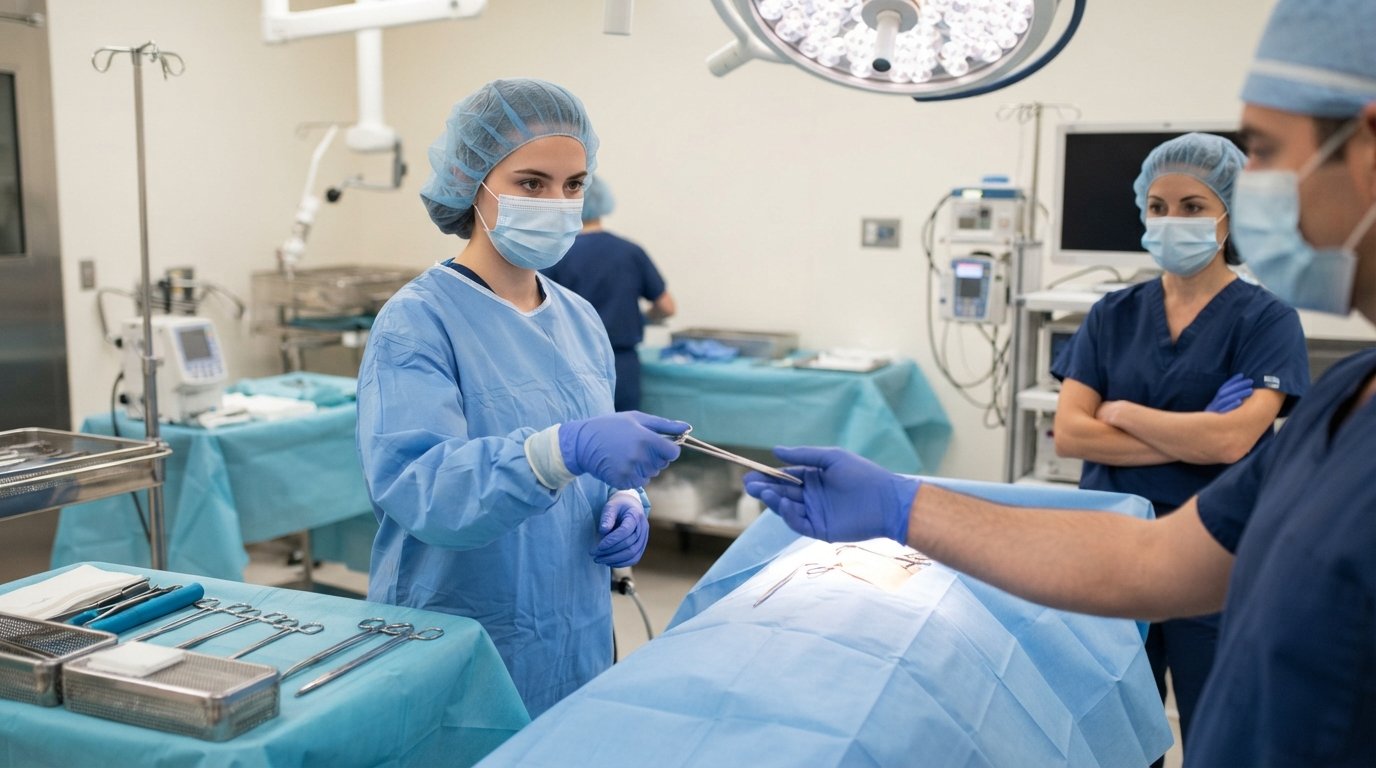
Surgical technologists, also called scrub techs or operating room technicians, are the professionals who set up sterile fields, pass instruments to surgeons, and ensure that every procedure runs safely and efficiently. The associate's degree program at Cleveland Community College is designed to build both the theoretical knowledge and the practical skills required for this high-stakes environment. Coursework typically includes anatomy and physiology, microbiology, pharmacology, surgical procedures, and sterile technique. You will learn how to anticipate the needs of the surgical team, manage supplies, and maintain a sterile field throughout operations.
The in-person format is a critical feature of this program. Unlike fully online degrees, surgical technology demands hands-on practice with real instruments, simulated surgeries, and supervised clinical rotations in actual operating rooms. At Cleveland Community College, students benefit from campus labs where they rehearse procedures before entering clinical sites. This face-to-face instruction ensures you graduate with the confidence and muscle memory needed to perform under pressure. The program usually takes two years of full-time study, including general education courses and the surgical technology core.
Accreditation is another key consideration. Programs accredited by the Commission on Accreditation of Allied Health Education Programs (CAAHEP) prepare students to sit for the Certified Surgical Technologist exam administered by the National Board of Surgical Technology and Surgical Assisting (NBSTSA). Cleveland Community College's program is designed to meet these standards, giving graduates a competitive edge in the job market. Before enrolling, always verify the current accreditation status and pass rates on the college's website or by contacting the program director directly.
Admission Requirements and Prerequisites
Getting into a surgical technology program requires more than a high school diploma. Because the field demands physical stamina, attention to detail, and emotional resilience, community colleges set specific prerequisites to ensure students are prepared. At Cleveland Community College, applicants typically need to complete developmental courses in math and English if required, maintain a minimum GPA, and finish prerequisite courses such as biology and medical terminology. Some programs also require a criminal background check, drug screening, immunizations, and CPR certification before clinical rotations begin.
The application process is competitive, and seats are limited due to the intensive nature of clinical placements. Prospective students should plan ahead by meeting with an academic advisor early, attending information sessions, and submitting all documents before the deadline. Here is a typical sequence for applicants:
- Complete admission to the college and any required placement tests.
- Finish prerequisite courses with a grade of C or higher.
- Submit the surgical technology program application by the stated deadline.
- Attend a mandatory orientation and complete health and safety requirements.
- Register for classes and begin the two-year cohort sequence.
Because the program is cohort-based, students move through the curriculum together, which builds a strong peer support network. This structure also means that missing a required course can delay graduation, so careful planning is essential. Advisors can help map out a schedule that balances general education requirements with the demanding surgical technology core.
Costs, Financial Aid, and Value
One of the biggest advantages of earning an associate's degree at a community college is the lower tuition compared to four-year institutions. Cleveland Community College offers affordable per-credit rates for in-state students, and the total cost of the two-year program is significantly less than a bachelor's degree. However, students should budget for additional expenses beyond tuition, including textbooks, uniforms, surgical instruments, certification exam fees, and travel to clinical sites. These costs can add up, so creating a detailed budget before enrolling is wise.
Financial aid is available for eligible students through federal grants, loans, and work-study programs by completing the FAFSA. Many community colleges also offer institutional scholarships and state-funded grants for healthcare programs. For students seeking additional funding, external scholarships can fill the gap. Resources like Scholarship.Education provide comprehensive databases and guidance to help students discover and apply for scholarships, making the cost of attendance more manageable. It is worth spending time searching for awards specific to healthcare and trade programs, as these often have fewer applicants than general scholarships.
When evaluating the return on investment, consider the earning potential. Surgical technologists earn competitive salaries, and demand for the profession is expected to remain strong due to an aging population and the continuous need for surgical procedures. Graduates who pass the CST exam and gain experience can advance into roles such as surgical first assistant or move into management or education. Compared to the cost of a four-year degree, the two-year associate's program offers a faster path to a stable, well-paying career with minimal student debt.
If you are exploring other technology-focused degrees as a backup or alternative, our guide on the best IT degrees and schools for technology careers can help you compare options and understand how different programs align with your goals. However, for those drawn to direct patient care, surgical technology remains one of the most rewarding associate-level healthcare careers.
Clinical Training and Hands-On Learning
The clinical component is the heart of the surgical technology program. Students spend hundreds of hours in hospital operating rooms, observing and then participating in surgeries under the supervision of experienced preceptors. This real-world experience is invaluable, as it exposes students to a variety of specialties, including general surgery, orthopedics, obstetrics, and cardiovascular procedures. The in-person format at Cleveland Community College ensures that students are well-prepared for the intensity of the clinical environment, with simulation labs that replicate operating room conditions.
During clinical rotations, students learn to think on their feet, communicate effectively with the surgical team, and maintain composure during emergencies. They also develop professional behaviors and understand the importance of patient confidentiality and safety protocols. The relationships built with clinical instructors often lead to job offers after graduation, as hospitals prefer to hire technologists they have already trained. Students should treat clinicals as extended job interviews, demonstrating reliability, a strong work ethic, and a willingness to learn.
Balancing clinical hours with coursework and personal responsibilities can be challenging. Many students find it helpful to reduce work hours during the program or arrange childcare in advance. The college's program director and faculty are typically available to offer support and advice on managing the demands of the program. Peer study groups and mentorship from second-year students can also ease the transition.
Career Outcomes and Certification
Graduates of the Surgical Technology/Technologist Associate's degree program are eligible to take the Certified Surgical Technologist (CST) exam, which is often required or preferred by employers. Certification demonstrates a commitment to excellence and can lead to higher starting salaries and better job prospects. The job outlook for surgical technologists is positive, with growth projected in outpatient surgery centers and hospitals. Employment settings include large medical centers, community hospitals, ambulatory surgical centers, and specialty clinics.
Beyond the operating room, experienced technologists can pursue advancement opportunities. Some become surgical first assistants, requiring additional certification and training, while others move into management, education, or medical sales. The associate's degree also provides a foundation for further education, such as a bachelor's degree in healthcare administration or nursing, for those who wish to expand their career options. The skills learned in the program, including sterile technique, teamwork, and attention to detail, are transferable to many healthcare roles.
When comparing programs, look at graduation rates, certification pass rates, and job placement rates. Cleveland Community College publishes this data, and reviewing it can help you assess program quality. Talking to current students and alumni can also provide insights into the program's strengths and areas for improvement. Remember that success in this field requires not only technical skill but also physical stamina, emotional resilience, and a genuine desire to help others.
Is This Program Right for You?
The Surgical Technology/Technologist Associate's degree, usually 2 years In-person at Cleveland Community College, is ideal for students who thrive in fast-paced, hands-on environments and want to enter the healthcare workforce quickly. If you are detail-oriented, work well under pressure, and are comfortable with the sight of blood and human anatomy, this career could be a great fit. The in-person format requires a significant time commitment, but the payoff is a rewarding career with job security and opportunities for growth.
Before applying, consider your financial situation and explore all funding options, including scholarships and grants. Use resources like Scholarship.Education to reduce out-of-pocket costs, and consult with the college's financial aid office for personalized guidance. Visit the campus, meet with faculty, and shadow a surgical technologist if possible to confirm your interest. With careful planning and dedication, you can complete this two-year program and step into a vital role in healthcare.