Students and families considering higher education in Clovis, California often face a critical financial decision: whether to attend a private university. With tuition rates that can exceed those of public institutions, understanding the full cost picture is essential. Private university fees in Clovis, California vary widely depending on the institution, program of study, and available financial aid. This guide breaks down the typical expenses, compares them to public options, and offers strategies to make private education more affordable.
What Are the Typical Private University Fees in Clovis?
Clovis is located in the Central Valley near Fresno, and while it does not host a large number of private universities itself, several private institutions in the greater Fresno area serve Clovis residents. The most prominent is Fresno Pacific University, a private Christian university located just a few miles away. Other options include the University of Phoenix Fresno campus and a handful of specialized colleges. Tuition for private universities in this region typically ranges from $15,000 to $40,000 per year for undergraduate programs. Additional fees for room and board, textbooks, and campus services can add another $10,000 to $15,000 annually.
It is important to note that these figures are base rates before financial aid. Many private institutions offer significant scholarships and grants that can reduce the net price substantially. Families should always look at the “net price” rather than the sticker price when evaluating affordability. The College & Tuition resource provides tools to help compare costs across institutions.
For a comparison of costs in other regions, see our guide on Private University Expenses in Washington DC: Full Cost Guide. That article highlights how geographic location influences fee structures.
Key Factors That Influence Private University Costs
Several variables determine the actual cost a student pays. Understanding these factors helps families avoid surprise bills and plan effectively.
Tuition and Mandatory Fees
Tuition is the largest component, but mandatory fees (for technology, student activities, health services) can add several hundred to a few thousand dollars per semester. At Fresno Pacific University, for example, undergraduate tuition for 2024-2025 is approximately $34,000, with mandatory fees around $1,200. Always check the official university website for the most current fee schedule.
Room and Board
Living on campus typically costs between $8,000 and $12,000 per year. Some students choose off-campus housing to save money, though utility and transportation costs must be considered. The total cost of attendance published by each university includes estimated room and board.
Financial Aid and Scholarships
Private universities often have larger endowments for need-based and merit-based aid. Completing the Free Application for Federal Student Aid (FAFSA) is the first step. Additionally, institutional scholarships can dramatically lower the net price. For instance, Fresno Pacific University offers the President’s Scholarship and other awards that cover a portion of tuition.
Families should also explore external scholarships and grants from community organizations. Using a tool like the one available at college tuition information from College & Tuition can simplify the search for financial resources.
Comparing Private vs. Public University Fees in the Clovis Area
To put private university costs in perspective, public institutions like California State University, Fresno (Fresno State) charge significantly lower tuition for in-state residents. Fresno State’s annual tuition is around $6,000, plus fees. However, private universities often offer smaller class sizes, specialized programs, and more personalized support. The decision involves weighing cost against educational value.
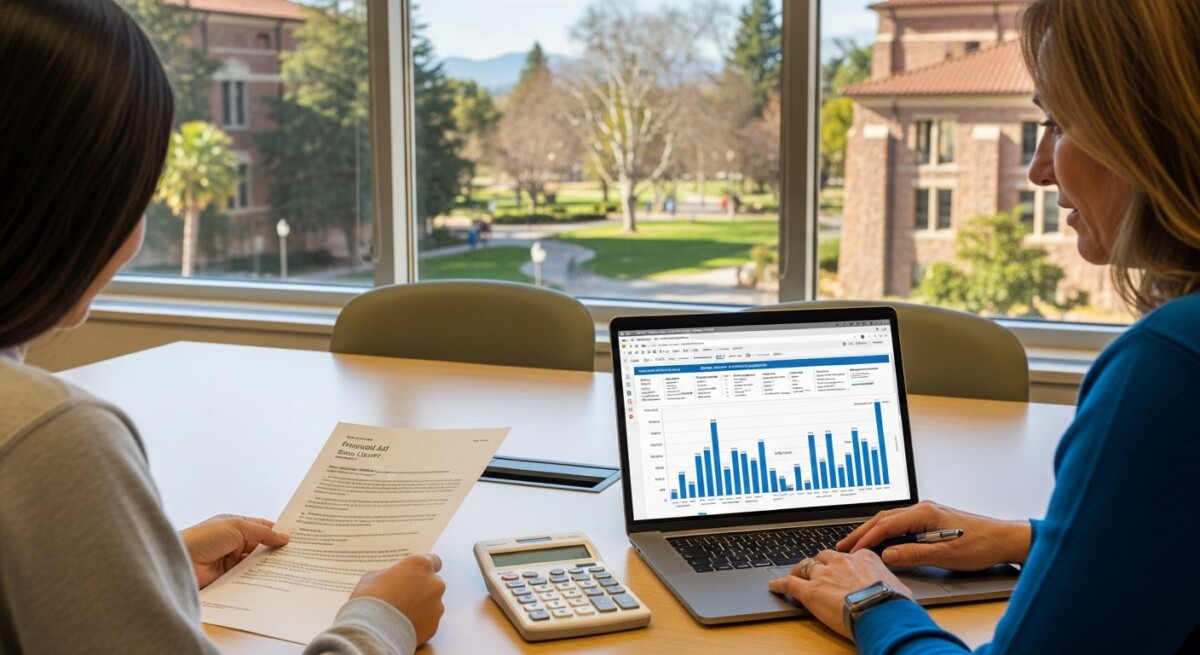
Many students find that after financial aid, the net price of a private university is comparable to or even lower than a public university. It is essential to compare the net price after all grants and scholarships, not just the sticker price. A useful exercise is to request financial aid award letters from multiple institutions and compare them side by side.
Similarly, our guide on Private University Fees in Roseville California: Cost Guide provides additional context for California private institutions and their fee structures.
Strategies to Reduce Private University Fees
Even with high sticker prices, there are actionable ways to lower the out-of-pocket cost of private education. Consider these approaches:
- Apply for institutional aid early. Many private universities have priority deadlines for need-based aid. Missing these deadlines can reduce the amount of grant money available.
- Negotiate financial aid packages. If you receive a better offer from another school, you can politely ask the financial aid office to reconsider your award. This is known as an appeal and is common practice.
- Enroll in a work-study program. Federal work-study provides part-time employment on campus, helping cover living expenses without adding to loan debt.
- Consider community college transfer pathways. Some private universities offer guaranteed transfer agreements with community colleges, allowing students to complete general education requirements at lower cost before transferring.
- Maximize tax credits. The American Opportunity Tax Credit and Lifetime Learning Credit can reduce federal tax liability for qualified education expenses.
Each of these strategies requires proactive planning. Start the process during the junior year of high school to take full advantage of deadlines and opportunities. The College & Tuition website offers detailed guides on each of these tactics.
Frequently Asked Questions About Private University Fees in Clovis
Are there any private universities located directly in Clovis?
Clovis itself has limited private higher education options. Most private institutions are in nearby Fresno, including Fresno Pacific University, which is the largest private university in the region. Some online programs also serve Clovis residents.
How do private university fees in Clovis compare to other California cities?
Fees in the Fresno/Clovis area tend to be lower than those in major metropolitan areas like Los Angeles or San Francisco. However, they are still higher than public university tuition. The cost of living in the Central Valley can be lower, which reduces overall expenses.
What is the average net price after financial aid at Fresno Pacific University?
According to recent data, the average net price for first-time, full-time students receiving grant or scholarship aid at Fresno Pacific University is around $22,000 annually. This figure varies based on individual circumstances.
Can out-of-state students attend private universities in Clovis at higher rates?
Private universities typically charge the same tuition for in-state and out-of-state students, unlike public universities. However, some institutions may offer regional discounts or reciprocity agreements.
What resources are available to help compare private university fees?
College & Tuition provides a scholarship database, college comparison tools, and financial aid guides. Students can use these to evaluate costs across multiple institutions and identify scholarships that match their profile.
Understanding private university fees in Clovis, California requires careful research and a willingness to explore financial aid opportunities. By breaking down the costs, comparing net prices, and employing strategic savings methods, families can make private education a viable and valuable investment. Start your planning early, use the tools available on College & Tuition, and don’t hesitate to ask institutions for clarity on fees and aid packages.
About the Author: Logan Parker