
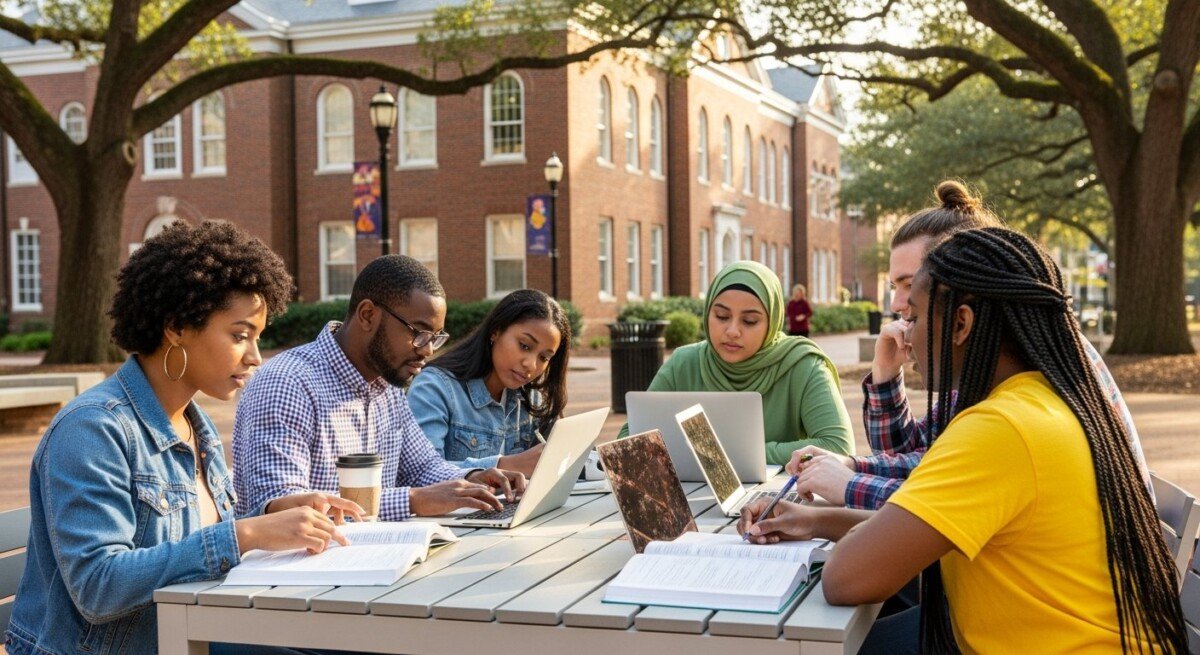
Affordable Alabama Universities: Low-Cost Degree Options
Discover how to earn a respected degree in Alabama without excessive debt. This guide highlights the state’s most affordable universities and proven strategies to lower costs.

By Ethan Brooks
Navigating the financial landscape of higher education can feel daunting, but for students seeking quality education without crippling debt, the state of Alabama offers a compelling array of affordable public universities. The key to unlocking this value lies not just in looking at the sticker price of tuition, but in understanding the full ecosystem of cost, financial aid, and return on investment. Alabama’s public university system, anchored by renowned research institutions and regional campuses, is structured to provide accessible education to residents, with many programs extending competitive rates to out-of-state students as well. This guide will delve into the institutions that stand out for their affordability, the strategies to minimize your net price, and how to evaluate the true value of an Alabama degree.
Understanding Affordability: More Than Just Sticker Price
When searching for the most affordable universities in the state of Alabama, the first number most families see is the published tuition and fees. However, true affordability is determined by the net price, which is the actual amount a student pays after grants and scholarships are applied. This distinction is critical. A university with a slightly higher published tuition might offer such generous institutional aid that it becomes the more affordable option. The first step for any prospective student is to complete the Free Application for Federal Student Aid (FAFSA), which unlocks federal Pell Grants, work-study opportunities, and federal student loans, and is also required by most universities for their own scholarship consideration.
Furthermore, Alabama supports several state-specific aid programs, such as the Alabama Student Grant Program and the Alabama Student Assistance Program, which can further reduce costs for residents. For a deeper dive into strategies for lowering your tuition bill, our guide on finding affordable universities with low tuition outlines proactive steps families can take. It’s also wise to consider the total cost of attendance, which includes room, board, books, and transportation. A lower-tuition school in a remote area might have higher living costs, while an urban campus with higher tuition might offer more opportunities for internships and part-time work to offset expenses.
Top Public Universities for Cost-Conscious Students
Alabama’s public higher education system is tiered, offering different price points and experiences. The most affordable options are typically the regional universities and those within the Alabama Community College System’s baccalaureate programs. However, even the flagship institutions can be affordable for in-state students with strong academic profiles who qualify for merit aid.
Flagship and Research Institutions
The University of Alabama (Tuscaloosa), Auburn University, and the University of Alabama at Birmingham (UAB) are the state’s premier research universities. While their out-of-state tuition is significant, they offer substantial merit-based scholarships to attract high-achieving students, effectively lowering the net price. For Alabama residents, their in-state tuition is competitive and represents a high-value proposition given their national rankings and extensive resources.
Regional Public Universities (The Best Value for Many)
This category is where many students find the optimal balance of cost, quality, and support. These institutions often have lower student-to-faculty ratios and a strong focus on undergraduate teaching. Key players known for their affordability include:
- University of North Alabama (UNA): Located in Florence, UNA consistently offers some of the lowest tuition rates among four-year public universities in Alabama, with a robust scholarship program for academics, athletics, and the arts.
- Jacksonville State University (JSU): JSU provides a comprehensive education at a cost below the state average, with particular strengths in education, nursing, and criminal justice.
- University of West Alabama (UWA): As one of the most affordable institutions in the state, UWA in Livingston serves a largely regional population with low tuition and fees.
- Alabama State University (ASU) & Alabama A&M University (AAMU): These historically black universities (HBCUs) in Montgomery and Huntsville, respectively, provide culturally rich environments and tuition rates that are accessible, with additional federal and institutional aid often available.
- Troy University: With multiple campuses and a strong online presence, Troy offers flexible, career-focused programs at competitive tuition rates for both in-state and out-of-state students.
Choosing the right degree program is a crucial part of maximizing your investment. For comprehensive guidance on navigating different degree types and their associated career paths, a valuable resource is college tuition information, which can help align your academic choices with your financial planning.
The Community College Pathway: An Ultra-Affordable Start
For ultimate affordability, the Alabama Community College System (ACCS) is an exceptional starting point. Students can complete an Associate’s degree for a fraction of the cost of a four-year university, often with guaranteed transfer agreements to public universities in the state through programs like the Alabama Transfers Guide. Institutions like Calhoun Community College, Wallace State Community College, and Jefferson State Community College offer seamless pathways to complete general education requirements before transferring to a university to finish a bachelor’s degree. This “2+2” approach can save tens of thousands of dollars and is one of the most financially savvy strategies for obtaining a four-year degree in Alabama.
Maximizing Financial Aid and Scholarship Opportunities
Affordability is actively created through diligent pursuit of aid. Beyond the FAFSA, students should aggressively seek scholarships. Each Alabama university has its own institutional scholarship application, often tied to the admission application. Many also offer departmental scholarships for specific majors. Statewide, programs like the Alabama GI Dependent Scholarship and scholarships for dependents of first responders provide additional support. Private scholarships from community organizations, employers, and national foundations add another layer. The key is to start early, meet all deadlines, and apply broadly. Even smaller awards add up and reduce reliance on student loans. Our resource on finding affordable universities emphasizes creating a personalized aid strategy as a core component of the college search.
Frequently Asked Questions
What is the single most affordable four-year university in Alabama?
For in-state tuition and fees, the University of West Alabama and the University of North Alabama are consistently among the lowest-cost four-year public institutions. However, the “most affordable” school for you personally could be a different one if you qualify for a significant merit scholarship.
Are there affordable options for out-of-state students in Alabama?
Yes. Several Alabama universities offer regional exchange programs or specific scholarships that lower out-of-state costs. For example, some schools have discounted tuition for students from neighboring states. Additionally, strong academic students can often secure merit scholarships that waive a portion or all of the out-of-state premium.
How does living on campus versus off-campus affect affordability?
This requires careful calculation. While living on campus is convenient and often part of the freshman experience, it can be more expensive than sharing an apartment off-campus. However, off-campus living adds costs for utilities, furniture, and transportation. Students should compare the total cost of attendance for both scenarios.
Does a lower-cost university mean lower quality education?
Not necessarily. Many of Alabama’s regional universities have accredited programs with excellent graduation rates and strong ties to local industries for internships and employment. Quality is measured by outcomes, faculty engagement, and accreditation, not by price alone.
When should I start applying for financial aid?
The FAFSA opens on October 1 each year for the following academic year. You should complete it as close to that date as possible, as some aid is awarded on a first-come, first-served basis. Check each university’s priority deadline for financial aid, as it may be earlier than the admission deadline.
Choosing a college is a significant financial decision, but in Alabama, it does not have to be an overwhelmingly expensive one. By focusing on net price, leveraging the community college transfer system, and being proactive in the scholarship search, students can access a respected, high-quality education that launches their careers without anchoring them in debt. The most affordable universities in the state of Alabama are those that, when combined with your individual financial aid package, provide a clear and sustainable path to your degree and your future.