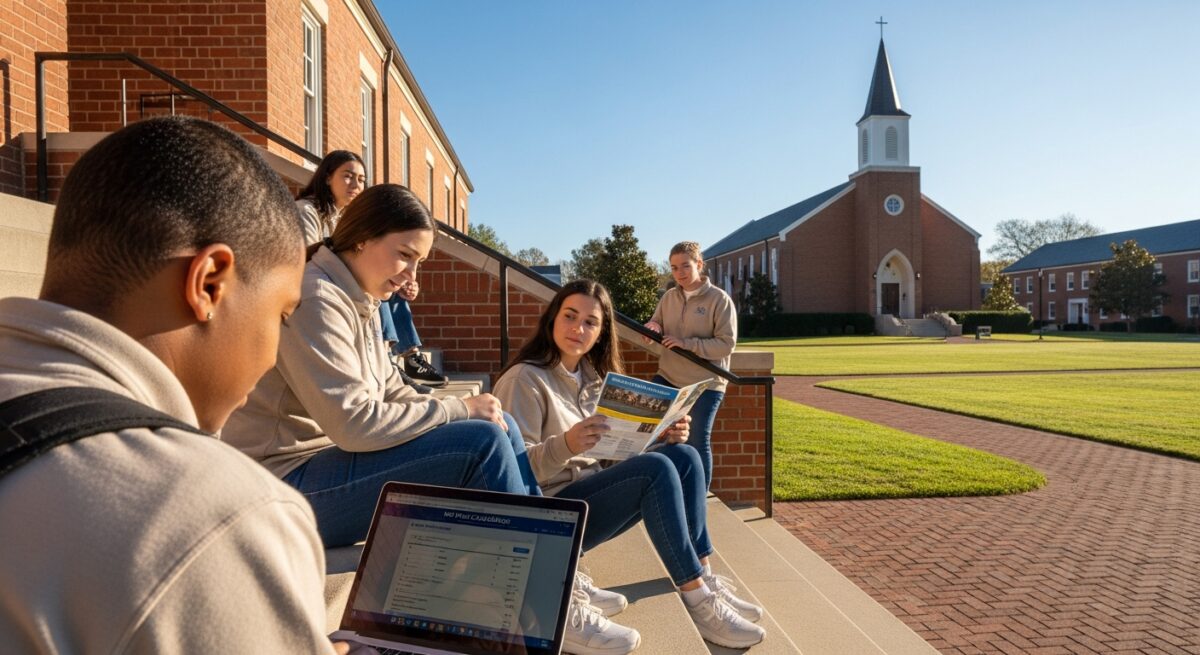
Finding a college that aligns with your faith while also fitting your budget can feel like an impossible task. Many families assume that private Christian education comes with a price tag that is out of reach, but that is not always the case. A growing number of institutions are committed to providing a values-based education at a fraction of the cost of elite private universities. This Affordable Christian Colleges and Tuition Guide will help you identify schools that offer strong academics, a supportive spiritual community, and a net price you can actually afford. We will break down the real costs, explore financial aid strategies, and highlight specific schools that deliver exceptional value.
What Makes a Christian College Affordable?
Affordability in higher education is not just about the sticker price. It is about the net price, which is the cost of tuition and fees minus grants, scholarships, and federal aid. Many affordable Christian colleges keep their base tuition low intentionally, often because they are subsidized by church denominations or large endowments. Others offer generous institutional aid that brings the cost down significantly.
When evaluating cheap Christian colleges, you need to look beyond the published tuition number. A school with a $40,000 sticker price might actually cost you less than a $20,000 public university if the private school offers a large scholarship package. The key is to use the Net Price Calculator on each college’s website. This tool gives you an estimate of what your family will actually pay after all aid is applied.
Another factor is the cost of living. Many faith-based institutions are located in smaller towns or rural areas where housing, food, and transportation are far cheaper than in major metropolitan areas. This can save you thousands of dollars per year without sacrificing academic quality.
Top Affordable Christian Colleges to Consider
There are dozens of low cost faith based colleges across the United States that offer excellent programs. Some are well-known nationally, while others are regional gems. Below is a list of schools that consistently rank high for both affordability and academic rigor. All of these institutions offer significant financial aid packages and keep their base costs reasonable.
- Brigham Young University (Provo, Utah): Tuition for LDS members is exceptionally low, around $6,000 per year. Non-LDS students pay about $12,000. The school is regionally accredited and offers strong programs in business, engineering, and the humanities.
- Hillsdale College (Hillsdale, Michigan): While the sticker price is higher, Hillsdale offers substantial merit-based aid. The college does not accept federal funding, which allows it to keep its curriculum independent. Average net price after aid is often under $20,000.
- Bryan College (Dayton, Tennessee): This small Christian college near Chattanooga offers a strong liberal arts curriculum. Tuition is around $28,000, but nearly all students receive some form of institutional grant, bringing the average net price closer to $16,000.
- College of the Ozarks (Point Lookout, Missouri): Known as “Hard Work U,” this school charges no tuition. Students work 15 hours per week on campus to cover their costs. Room and board fees are about $8,000 per year, making it one of the most affordable options in the country.
- Belmont Abbey College (Belmont, North Carolina): This Catholic Benedictine college offers a strong liberal arts education with a focus on character formation. Tuition is around $22,000, and the average grant award covers roughly 60% of that cost.
Each of these schools provides a distinct spiritual environment. Some are evangelical, some are Catholic, and others are nondenominational. You should visit the campus, attend a chapel service, and talk to current students to see if the community fits your personal faith journey. In our guide on Private College Tuition in Sunnyvale: Costs & Aid, we explain how location and regional costs can affect your overall budget, even for private institutions.
How to Maximize Financial Aid at Faith-Based Schools
Getting the best deal at an affordable Christian college requires a proactive approach. You cannot simply apply and hope for the best. You need to understand the types of aid available and how to present your family’s financial picture in the best possible light.
The first step is always to complete the Free Application for Federal Student Aid (FAFSA). Even if you think your family makes too much money, you should file the FAFSA. Many private Christian colleges use the FAFSA to determine eligibility for their own institutional grants. Missing this step could cost you thousands of dollars.
Next, look for the College Board’s CSS Profile. Some selective Christian colleges require this additional form to award non-federal aid. The CSS Profile asks for more detailed financial information, including home equity and small business assets. If a school requires it, you must submit it by the priority deadline to be considered for the best aid packages.
Finally, apply for outside scholarships. There are hundreds of scholarships specifically for Christian students. Some are offered by national organizations like the National Association of Christian College Admissions, while others are local church-based funds. A great resource for finding these opportunities is scholarship.education, which aggregates thousands of vetted awards from private donors and foundations. You should also check with your home church, as many congregations offer small scholarships to members attending Christian colleges.
Comparing Tuition: Public vs. Private Christian Schools
Many families default to public universities because they assume they are cheaper. However, when you factor in the total cost of attendance, a private Christian college can sometimes be the more affordable option. This is especially true for students who do not qualify for in-state tuition at their local public university.
Consider this comparison: A public university might charge $25,000 per year for out-of-state students. After federal loans and a small state grant, the net price might be around $20,000. Meanwhile, a private Christian college might have a sticker price of $30,000 but offer a $12,000 institutional grant and a $4,000 federal Pell Grant. The net price for the private school would be $14,000. Over four years, that is a savings of $24,000.
This math works best for students who have strong grades and test scores. Christian colleges often use merit-based aid to attract high-achieving students. If you have a GPA above 3.5 or an SAT score above 1200, you should apply to several private Christian schools and compare their aid offers. Do not be afraid to negotiate. If one school offers you a better package, you can ask another school to match it. Many admissions offices are willing to adjust aid to secure a committed student.
The Role of Work-Study and Campus Jobs
Another way to reduce costs at low cost faith based colleges is through on-campus employment. Many Christian schools participate in the federal work-study program, which provides part-time jobs for students with financial need. The wages earned are used to pay for tuition, fees, or personal expenses, reducing the need for student loans.
Some schools go a step further by guaranteeing employment for all students. College of the Ozarks is the most famous example, but other schools like Bob Jones University and Liberty University also have robust campus job programs. Working 10 to 15 hours per week can cover a significant portion of your room and board. It also teaches time management and builds your resume.
If you are considering a school that emphasizes work, make sure you understand the commitment. Some programs require you to work specific shifts that might conflict with your class schedule or extracurricular activities. Talk to current students to get a realistic picture of the workload before you commit.
Frequently Asked Questions
What is the average tuition for a Christian college?
The average tuition for a private Christian college in the United States is approximately $28,000 per year. However, after financial aid, the average net price paid by students is closer to $18,000. Many affordable Christian colleges have tuition below $25,000 before aid.
Are Christian colleges accredited?
Yes, most Christian colleges are regionally accredited by the same agencies that accredit public universities. Accreditation is essential for transferring credits and for eligibility for federal financial aid. Always verify a school’s accreditation status before applying.
Can I get a full scholarship to a Christian college?
Full scholarships are rare but possible. They are typically awarded to students with exceptional academic records, leadership experience, or specific talents (such as music or athletics). Some schools also offer full-tuition scholarships for National Merit finalists or valedictorians.
Do Christian colleges offer online degrees?
Many Christian colleges now offer fully online degree programs. These can be more affordable than on-campus options because they often have lower fees and no room and board costs. Liberty University and Grand Canyon University are two of the largest providers of online Christian education.
How do I know if a Christian college is worth the cost?
Look at the school’s graduation rate, average student debt upon graduation, and job placement rates. A school that graduates 70% of its students and has an average debt of $25,000 is likely a good investment. Compare these numbers to public alternatives in your state.
Making Your Final Decision
Choosing a college is one of the most important financial decisions your family will make. The right affordable Christian college can provide a transformative education without burdening you with decades of debt. Start your search early, compare net prices carefully, and do not be afraid to ask for more financial aid. Use the tools and resources available on this site to research schools, compare costs, and connect with programs that fit your goals. With careful planning and a clear understanding of your options, you can find a faith-based education that enriches your spirit and respects your wallet.
About the Author: Michael Anderson