
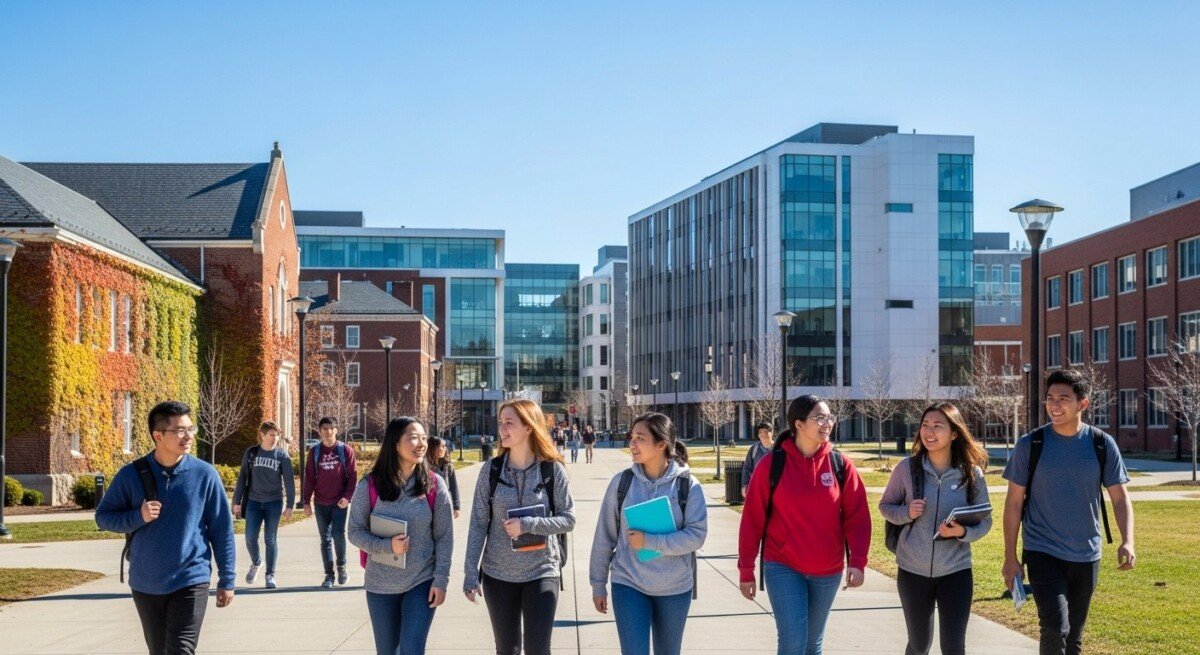
Affordable Colleges In Connecticut: Low-Cost Higher Education
Discover how to earn a respected degree in Connecticut without excessive debt by leveraging the state’s public community colleges, online options, and strategic transfer pathways.

By Daniel Thomas
Pursuing a college degree in Connecticut does not have to mean taking on a lifetime of student debt. While the state is home to prestigious, high-tuition universities, it also offers a robust network of public institutions, community colleges, and specialized schools that provide exceptional value. For students and families focused on financial sustainability, Connecticut’s most inexpensive higher education institutions represent a strategic pathway to a respected credential without the overwhelming financial burden. The key lies in understanding the full landscape of affordability, which encompasses not just published tuition, but also fees, living costs, and the availability of state and institutional aid designed to close the gap for residents. This guide explores the colleges and universities in Connecticut where cost-conscious students can receive a high-quality education while maintaining financial health.
Understanding True College Affordability In Connecticut
When evaluating Connecticut’s most inexpensive higher education institutions, looking solely at the sticker price of tuition is a common mistake. True affordability is a calculation that includes mandatory fees, books and supplies, and, critically, the cost of room and board or commuting. For Connecticut residents, the most significant cost savings often come from the state’s public higher education system, which is structured to provide accessible education to its citizens. The Connecticut State Colleges and Universities (CSCU) system is the primary engine for this mission, encompassing community colleges, a state university, and Charter Oak State College. Furthermore, the state offers generous financial aid programs, like the Connecticut Aid for Public College Students grant, which are often applied directly to tuition at in-state public institutions, effectively lowering the net price far below the published rate.
Another vital component of affordability is time to degree. An inexpensive per-credit cost can become much more expensive if a program takes five or six years to complete. Therefore, institutions with strong academic support, clear degree pathways, and options for credit acceleration (like AP, CLEP, or prior learning assessment) contribute significantly to lower overall cost. When planning your educational journey, comprehensive college tuition information is essential for comparing not just prices, but the total investment required. This holistic view ensures you are making a financially sound decision that aligns with your career and academic goals.
The Connecticut State Community College System
The foundation of low-cost higher education in Connecticut is its network of twelve community colleges, now unified under Connecticut State Community College. These institutions are designed as the most accessible point of entry into postsecondary education, with open admissions policies and the lowest tuition rates in the state. For Connecticut residents, the cost per credit hour is a fraction of that at four-year institutions, making them an ideal choice for completing general education requirements, earning an associate degree, or gaining career-specific technical skills. The savings are substantial: a full-time student can often complete their first two years of a bachelor’s degree for less than the cost of a single year at many universities.
Beyond low tuition, community colleges offer flexible scheduling, including night, weekend, and online courses, which allows students to work while they study. Many have guaranteed admission agreements, or articulation agreements, with Connecticut’s four-year public universities, ensuring a seamless and planned transfer that protects your investment in those initial credits. Popular and highly affordable starting points include campuses in Norwalk, Manchester, New Haven, and Waterbury, each offering a wide array of associate degree and certificate programs. The strategic use of a community college as a launchpad is one of the most effective methods for minimizing student debt while pursuing a bachelor’s degree.
Charter Oak State College: Connecticut’s Public Online College
For adult learners, career-changers, and those who require maximum flexibility, Charter Oak State College stands out as one of Connecticut’s most inexpensive and unique higher education institutions. As the state’s public online college, Charter Oak specializes in awarding degrees based on the accumulation of credits from a variety of sources. This model is inherently cost-effective. Students can transfer credits from other regionally accredited colleges, earn credits through standardized exams (like CLEP or DSST), and even receive credit for professional training, military service, or evaluated work experience.
The college’s primary focus is on helping students assemble these credits to complete an associate or bachelor’s degree. Tuition is competitively set for in-state students, and the ability to use so many alternative credit sources can dramatically reduce the number of courses a student needs to pay for directly. This makes Charter Oak an exceptionally affordable and fast route to a degree, particularly for those who already have some college credits or relevant life experience. Their competency-based approach ensures the degree has rigor and value, while the flexible, credit-building model keeps costs under control.
Connecticut State Public Universities: Value For A Bachelor’s Degree
For students seeking the traditional four-year campus experience at a public price point, Connecticut’s four state universities offer the next tier of affordability within the CSCU system. These include Central Connecticut State University (CCSU), Eastern Connecticut State University (ECSU), Southern Connecticut State University (SCSU), and Western Connecticut State University (WCSU). While their tuition and fees are higher than the community colleges, they remain significantly more affordable than private institutions and even many public flagships in other states. For Connecticut residents, these universities provide a comprehensive college experience with dormitories, athletics, and a full range of academic programs at a manageable cost.
The key to maximizing affordability at these schools is to combine their lower base tuition with institutional scholarships and state grants. Each university has its own merit-based aid programs. Furthermore, students who begin at a Connecticut community college and then transfer to one of these universities under a guaranteed pathway program often receive priority scholarship consideration. This “2+2” model is arguably the most cost-effective way to earn a bachelor’s degree from a respected public university in Connecticut. It minimizes debt while providing the credential and alumni network of the four-year institution.
Strategic Financial Planning For Low-Cost Education
Choosing an inexpensive institution is the first step, but proactive financial planning is what locks in affordability. Every student in Connecticut should complete the Free Application for Federal Student Aid (FAFSA) as early as possible. This form unlocks federal Pell Grants, which do not need to be repaid, and federal student loans, which have low interest rates and flexible repayment options. Crucially, the FAFSA is also the gateway to Connecticut’s state-based financial aid, including the need-based Connecticut Aid for Public College Students grant.
Beyond government aid, students should aggressively pursue scholarships. Many are surprised to learn that significant scholarship money is available for students attending in-state public institutions. Sources include:
- Institutional Scholarships: Awarded directly by the college based on merit, talent, or specific majors.
- Community Foundations: Local organizations in nearly every Connecticut town offer scholarships for residents.
- Employer Tuition Assistance: Many Connecticut companies offer reimbursement programs for employees.
- State-Specific Programs: Such as the Roberta B. Willis Scholarship for high-achieving students.
Creating a personal budget that accounts for all income (savings, work, aid) and expenses (tuition, fees, housing, food, transportation) is non-negotiable. This budget will reveal if there is a gap and how much, if any, needs to be covered by responsible borrowing. The goal is to graduate with a debt load that is manageable relative to your expected starting salary in your chosen field.
Frequently Asked Questions
What is the absolute cheapest college option in Connecticut?
For Connecticut residents, the lowest per-credit cost is almost always at one of the twelve campuses of Connecticut State Community College. This is the most affordable starting point for any degree path.
Can I get a bachelor’s degree entirely at a community college in Connecticut?
Typically, community colleges award associate degrees and certificates. However, some, like Housatonic Community College, may offer a limited number of bachelor’s degree programs in partnership with state universities. The standard path is a 2-year associate degree followed by transfer.
Are there any hidden costs at these low-tuition schools?
Always check mandatory fees (technology, activity, lab fees) which are added to tuition. Also budget accurately for books, which can be hundreds of dollars per semester. Many schools now offer inclusive access programs or digital materials to lower this cost.
Do I qualify for in-state tuition if I just moved to Connecticut?
Residency for tuition purposes has specific requirements, usually involving living in the state for at least one year (not primarily for education) and demonstrating intent to remain, such as through a driver’s license, voter registration, or tax filings. Contact the college’s registrar for precise rules.
Is online degree from an inexpensive Connecticut school respected by employers?
Yes, if the institution is regionally accredited, which all Connecticut public colleges and universities are. Employers focus on the accreditation and reputation of the school, not the delivery method. Charter Oak State College’s online degrees are widely recognized and respected.
Navigating the landscape of higher education in Connecticut with a focus on affordability requires research and strategy, but the opportunities are substantial. By leveraging the state’s public community colleges, online options like Charter Oak, and the transfer pathways to state universities, students can achieve a valuable, accredited degree while exercising serious fiscal responsibility. The investment in your education should empower your future, not anchor it with debt. Start by exploring the detailed programs and financial aid offices of Connecticut’s most inexpensive higher education institutions to build a plan that works for your academic ambitions and your financial reality.