
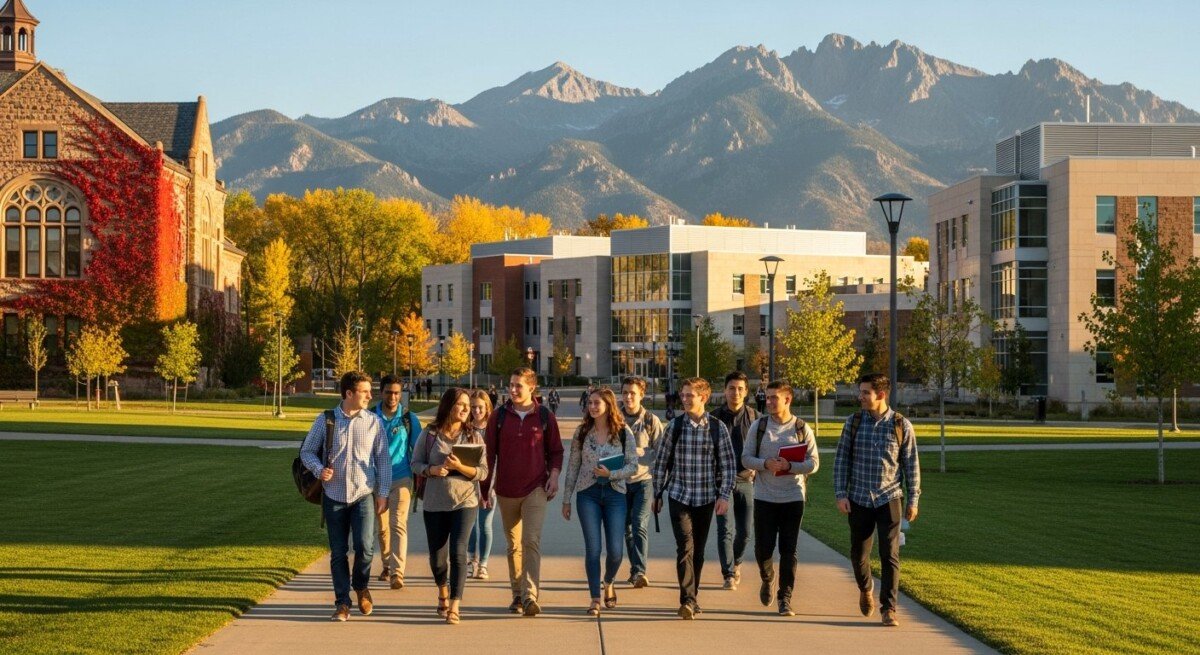
Affordable Colorado Colleges: Top Budget-Friendly Universities
Discover Colorado’s most affordable colleges and universities, where you can earn a valuable degree without overwhelming debt. This guide highlights budget-friendly pathways and key cost-saving strategies.

By James Taylor
Pursuing a college degree in Colorado doesn’t have to mean taking on a mountain of debt. The state offers a diverse range of public and private institutions where students can receive a high-quality education without the staggering price tag often associated with higher education. Understanding where to find value is key, and it involves looking beyond just the sticker price of tuition to consider financial aid packages, in-state versus out-of-state costs, and the long-term return on investment. This guide will navigate the landscape of budget-friendly universities and colleges in Colorado, providing you with the insights needed to make a financially sound decision for your future.
Understanding the True Cost of a Colorado Education
When evaluating affordability, the published tuition rate is only the starting point. The true cost of attendance includes fees, room and board, books, supplies, and personal expenses. A college with a slightly higher tuition might offer more generous scholarships, effectively making it cheaper than a school with a lower published rate. Colorado’s public institutions have a tiered pricing structure: in-state tuition, which is significantly lower for Colorado residents, and a higher rate for non-residents. However, some schools offer tuition discounts or special programs for out-of-state students who meet certain criteria, such as a high GPA or test scores. For a detailed analysis of these expenses, our guide on the real cost of college in Colorado breaks down every component.
Financial aid is the great equalizer in college affordability. This includes federal Pell Grants, state grants like the Colorado Student Grant, institutional scholarships, and work-study opportunities. Completing the Free Application for Federal Student Aid (FAFSA) is the critical first step for unlocking most of this aid. Many budget-friendly schools in Colorado have high percentages of students receiving financial aid, which dramatically reduces the net price, or what families actually pay. It’s essential to use each school’s net price calculator, available on their financial aid website, to get a personalized estimate of your cost after grants and scholarships.
Top Public Universities Offering Value and Quality
Colorado’s public university system is the cornerstone of affordable higher education in the state. These institutions receive state funding, which helps keep tuition lower for residents while providing robust academic programs, research opportunities, and campus life.
The University of Colorado system, particularly the CU Boulder and CU Denver campuses, offers a prestigious education with pathways to affordability. While CU Boulder’s out-of-state tuition is high, its in-state tuition is competitive, and it awards substantial merit-based scholarships to both resident and non-resident students. CU Denver, located in the heart of the city, provides a more urban, career-focused experience at a lower cost, with many programs designed for working adults. Colorado State University in Fort Collins is another flagship institution known for its value, especially in fields like veterinary medicine, engineering, and agriculture. CSU prides itself on a high graduation rate and strong career outcomes, which enhances the return on investment.
Regional comprehensive universities are often the hidden gems of affordability. These schools typically have lower tuition rates across the board and smaller class sizes. Key players in this category include:
- University of Northern Colorado (Greeley): Renowned for its education, nursing, and performing arts programs, UNC offers a classic residential campus experience at a cost well below the flagship average.
- Metropolitan State University of Denver: MSU Denver has one of the lowest tuition rates for a four-year university in the state. As an urban access institution, it focuses on serving the Denver metro area with career-ready degrees and flexible schedules.
- Colorado Mesa University (Grand Junction): CMU provides affordable tuition for Western Slope residents and all Colorado students, with growing programs in health sciences and technology.
- Fort Lewis College (Durango): Offering a unique liberal arts experience in a stunning setting, Fort Lewis provides a tuition waiver for Native American students and has a strong commitment to diversity and outdoor education.
Community Colleges: The Ultimate Affordable Starting Point
For maximum cost savings, Colorado’s community college system is unparalleled. These institutions offer the first two years of a bachelor’s degree (associate degrees) at a fraction of the cost of a four-year university. The Colorado Community College System (CCCS) includes 13 colleges across the state, ensuring access for all residents. Students can complete general education requirements close to home, then seamlessly transfer to a four-year partner institution through guaranteed transfer pathways (GT Pathways). This approach can save tens of thousands of dollars. Popular and highly regarded community colleges include Front Range Community College (with multiple campuses), Community College of Denver, and Pikes Peak State College in Colorado Springs.
Beyond transfer degrees, community colleges offer career and technical education (CTE) programs that lead directly to in-demand, well-paying jobs in fields like cybersecurity, advanced manufacturing, nursing, and renewable energy. These programs are often developed in partnership with local industries, ensuring graduates have the skills employers need. For students focused on efficient career entry with minimal debt, this pathway is arguably one of the most strategic choices available. Exploring finding low tuition universities and budget friendly options provides broader national context for this strategy.
Strategies for Reducing Your College Costs in Colorado
Choosing a budget-friendly school is the first step, but proactive financial planning can reduce costs further. One powerful strategy is to pursue concurrent or dual enrollment while in high school. Many Colorado school districts partner with community colleges to allow students to earn college credits, often for free or at a steeply reduced rate, before graduation. This can shave a semester or even a full year off your time to a degree.
Living arrangements also significantly impact the bottom line. Living on campus in a dormitory is often more expensive than finding shared housing off-campus after the first year. Some students also consider becoming a resident assistant (RA) after their freshman year, which typically provides free room and board. For others, attending a community college while living at home for two years remains the most effective cost-saving measure of all. Additionally, students should aggressively pursue external scholarships from local organizations, businesses, and national foundations. Every dollar earned in scholarships is a dollar not borrowed.
When selecting a program, consider the earning potential of your chosen field. A degree from a slightly more expensive school may be justified if it has a stellar reputation and high job placement rate in a lucrative field. Conversely, taking on significant debt for a degree with lower average starting salaries requires careful consideration. Responsible borrowing is part of the equation; always prioritize federal student loans over private loans due to their fixed interest rates and flexible repayment options. For comprehensive guidance on navigating these decisions, you can find valuable college tuition information and degree planning resources online.
Frequently Asked Questions
What is the most affordable four-year university in Colorado?
For in-state students, Metropolitan State University of Denver (MSU Denver) consistently has one of the lowest tuition rates for a four-year university. Colorado’s community colleges, which offer bachelor’s degrees in select fields, also provide extremely affordable four-year options.
Can out-of-state students get in-state tuition in Colorado?
Yes, through specific programs. The Western Undergraduate Exchange (WUE) allows students from western states to attend participating Colorado schools at a reduced rate (often 150% of in-state tuition). Some universities also offer merit-based non-resident tuition waivers that can bring costs down to near in-state levels.
Are private colleges in Colorado ever budget-friendly?
They can be, after financial aid. Private institutions like the University of Denver or Colorado College have high sticker prices but also large endowments used for financial aid. A student with significant demonstrated financial need or high merit might receive a package that makes the net price competitive with a public university.
How do I ensure my credits will transfer from a community college?
Use the Colorado Guaranteed Transfer (GT) Pathways program. Courses designated as GT Pathways guarantee transfer and application to degree requirements at all public four-year colleges in Colorado. Always work with an academic advisor at both your community college and your target transfer university.
What if my family income is too high for need-based aid but college is still unaffordable?
Focus on merit-based aid. Many Colorado schools offer automatic scholarships based on GPA and test scores. Also, explore payment plans that allow you to spread tuition over monthly installments without interest, and encourage your student to work part-time to contribute to expenses.
Finding the right balance between cost, quality, and personal fit is the ultimate goal in your college search. Colorado’s higher education landscape is rich with opportunities that won’t break the bank. By starting your search with affordability as a core principle, maximizing financial aid applications, and considering strategic pathways like community college transfer, you can invest in your future without compromising your financial stability. The journey requires research and planning, but the reward is a valuable degree and a solid financial foundation as you start your career.