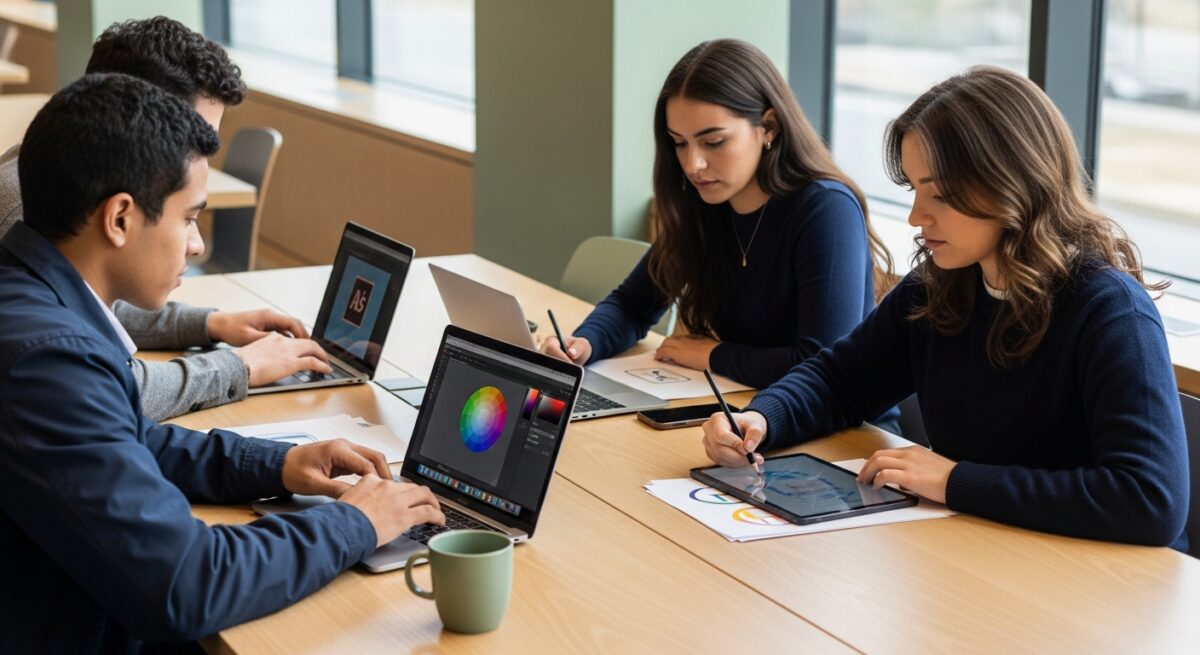
Finding a graphic design degree that fits your budget does not mean you have to sacrifice quality. Many accredited universities now offer fully online programs with tuition rates that are significantly lower than their on-campus counterparts. For students who want to build a career in visual communication without taking on overwhelming debt, searching for the cheapest graphic design degree online programs is a smart first step. These programs combine foundational design principles with digital tools like Adobe Creative Suite, and they often allow you to learn at your own pace. The key is knowing where to look and what questions to ask before you apply.
Online education has matured to a point where degree costs have become more transparent. Public universities, in particular, have started offering in-state tuition rates to all online students, regardless of where they live. This change has opened the door to some of the most affordable online graphic design degree options available today. Whether you are a high school graduate or a working professional looking to pivot careers, a low-cost online program can provide the credentials you need without the financial strain. In this guide, we break down the most affordable programs, what to expect from the curriculum, and how to maximize your investment.
What Makes a Graphic Design Degree Affordable?
Affordability in higher education is not just about the sticker price. It is a combination of low tuition rates, available financial aid, and the total cost of attendance. When evaluating affordable online graphic design degree programs, you should look at the per-credit cost, any mandatory fees, and the cost of course materials. Many online programs charge a flat per-credit rate that is often lower than traditional in-person tuition. Some schools also waive certain campus fees for distance learners, which can save you hundreds of dollars per semester.
Another factor that lowers the overall cost is the ability to continue working while you study. Since online programs are flexible, you can maintain your current job and avoid the lost income that often comes with full-time on-campus attendance. Additionally, many schools offer transfer credits for prior college coursework or professional experience. This can shorten the time to degree completion and reduce the total number of credits you need to pay for. When you combine these elements, the true value of a program becomes clear.
Key Cost Components to Compare
Before you commit to a program, break down the expenses into these categories:
- Tuition per credit hour: This is the baseline cost. Look for rates under $400 per credit for bachelor’s programs.
- Technology and distance learning fees: Some schools charge a small fee per semester for online platform access.
- Software and textbook costs: Graphic design programs often require Adobe Creative Cloud subscriptions. Check if the school provides these at a discount.
- Residency requirements: Confirm whether the school offers the same tuition rate to all online students or charges out-of-state rates.
Once you have these numbers, you can calculate the total estimated cost for the entire degree. Many schools provide a net price calculator on their website to help you estimate your actual cost after grants and scholarships. Use this tool before applying to avoid surprises.
Top 5 Cheapest Graphic Design Degree Online Programs
These programs stand out for their low tuition rates, strong curriculum, and accreditation. Each school offers a fully online path to a bachelor’s degree in graphic design or a closely related field like visual communication. While costs change annually, the programs listed here consistently rank among the most affordable options for students across the United States.
1. University of the People (UoPeople)
University of the People is a tuition-free, accredited online university. While it charges nominal assessment fees per course (around $120 to $200), the total cost for a four-year degree can be under $5,000. Their Associate and Bachelor of Science in Computer Science offer some design-related coursework, but their Business Administration program can also be paired with design skills. It is not a pure graphic design degree, but it is the absolute cheapest way to earn a recognized degree while building a personal portfolio on the side. For students who are self-motivated and primarily need the credential, this is a viable option.
2. Southern New Hampshire University (SNHU)
SNHU offers a Bachelor of Arts in Graphic Design and Media Arts with a per-credit tuition rate of $330. This rate has remained stable for several years, making it one of the most predictable costs in online education. The program covers typography, branding, web design, and motion graphics. SNHU also accepts up to 90 transfer credits, which can cut your degree completion time in half. With no application fee and multiple start dates per year, it is an accessible and low-cost choice for many students.
3. University of Florida (UF Online)
UF Online offers a Bachelor of Arts in Graphic Design through its College of the Arts. Tuition for online students is approximately $129 per credit hour for in-state residents and around $552 for out-of-state students. However, UF Online offers a flat-rate tuition option for full-time students that can lower the cost further. The program is rigorous and includes courses in design history, digital imaging, and user experience. It is one of the most affordable options from a top-tier public university.
4. Colorado State University Global (CSU Global)
CSU Global offers a Bachelor of Science in Graphic Design with a per-credit tuition rate of $350 for all students, regardless of residency. This rate includes all digital materials and textbooks at no extra cost. The program focuses on practical skills like layout design, digital illustration, and portfolio development. CSU Global also offers a tuition guarantee that locks in your rate for up to four years, protecting you from future tuition increases. This predictability is a major advantage for budget-conscious students.
5. Liberty University
Liberty University offers an online Bachelor of Science in Graphic Design with a per-credit rate of $390 for undergraduate students. The program is designed from a Christian worldview, but it covers all standard design principles and software. Liberty offers military and first-responder discounts that can bring the cost down further. They also provide a tuition lock guarantee and accept many transfer credits. For students who want a structured, faith-based learning environment at a low cost, this is a solid choice.
How to Evaluate Accreditation and Quality
Cost should never be the only factor in your decision. Accreditation is critical because it ensures that your degree will be recognized by employers and other institutions. For graphic design, the most important accreditation is regional accreditation for the university itself. Some programs also hold specialized accreditation from the National Association of Schools of Art and Design (NASAD). While not all online programs have NASAD accreditation, regional accreditation is the minimum standard you should accept.
To verify accreditation, visit the U.S. Department of Education’s database or the school’s website. If a program claims to be accredited but you cannot find it on the official list, proceed with caution. An unaccredited degree can limit your job prospects and make it difficult to transfer credits if you decide to pursue a master’s degree later. Always prioritize programs that are transparent about their accreditation status.
Maximizing Financial Aid and Scholarships
Even the cheapest graphic design degree online programs can become more affordable with the right financial aid strategy. Start by filling out the Free Application for Federal Student Aid (FAFSA) every year. This determines your eligibility for federal grants, work-study, and student loans. Many online students qualify for the Pell Grant, which can cover a significant portion of tuition at low-cost schools. You do not need to be a full-time student to receive federal aid, though enrollment status affects the amount.
Beyond federal aid, look for scholarships specifically for online or nontraditional students. Many professional organizations in the design field offer small scholarships. The Graphic Artists Guild and the American Institute of Graphic Arts (AIGA) sometimes have scholarship programs for students. Additionally, some states offer grants to residents attending approved online programs. Check with your state’s higher education agency for a list of eligible programs. For more details on managing college costs, read our guide on affordable business degree online programs and costs which covers similar strategies that apply to any low-cost degree path.
Frequently Asked Questions
Can I get a graphic design degree completely online for under $10,000?
Yes, it is possible. Programs like University of the People and SNHU can cost well under $10,000 for the entire degree, especially if you transfer credits and complete the program on schedule. Some community colleges also offer online associate degrees in graphic design for under $5,000, which you can later transfer to a bachelor’s program.
Do employers respect online graphic design degrees?
Employers care more about your portfolio and skills than the format of your degree. An accredited online degree from a recognized university is treated the same as an on-campus degree. Many hiring managers value the self-discipline and time management skills that online graduates demonstrate.
What software do I need for an online graphic design degree?
Most programs require Adobe Photoshop, Illustrator, and InDesign. Some also use Figma or Sketch for UI/UX design. Check if your program offers discounted or free access to these tools. Many schools provide Adobe Creative Cloud licenses as part of the tuition or at a reduced rate.
How long does it take to complete an online graphic design degree?
A full-time student can complete a bachelor’s degree in about four years. Accelerated programs or those that accept many transfer credits can be finished in two to three years. Part-time students typically take five to six years.
Building Your Portfolio While Studying
One of the best ways to increase the return on your investment in an affordable online graphic design degree is to start building a professional portfolio from day one. Your portfolio is the single most important tool for landing a job after graduation. Even if your program requires a capstone project, you should supplement it with personal projects, freelance work, and volunteer design jobs. Websites like Behance and Dribbble allow you to showcase your work and connect with potential employers.
Many low-cost programs integrate portfolio development into their curriculum. For example, SNHU and CSU Global include portfolio courses in their degree plans. Take these courses seriously and treat every assignment as a potential piece for your portfolio. If you graduate with a strong body of work, your degree will open doors regardless of the price you paid for it. Additionally, consider exploring other accredited degree options that might offer even more flexibility or specialization in your area of interest.
The cheapest graphic design degree online programs are not about cutting corners. They are about making smart choices that align with your financial situation and career goals. By focusing on accredited schools with low per-credit costs, maximizing financial aid, and building a strong portfolio, you can launch a successful design career without the burden of excessive student debt. The programs mentioned above provide a solid starting point for your research, but always verify current tuition rates and accreditation status before applying. With careful planning, an affordable graphic design degree is well within your reach.
About the Author: Daniel Thomas