
Agribusiness Associate's Degree at Beaufort County CC
Earn an Agribusiness/Agricultural Business Operations Associate's degree, usually 2 years In-person at Beaufort County Community College. Call 8772187081 for guidance.

By Emily Wilson
Agriculture in eastern North Carolina is not a small side industry. It is a major economic engine, and the people who run the business side of farming, from seed purchasing to commodity sales, keep that engine running. If you are searching for a practical, affordable path into that world, the Agribusiness/Agricultural Business Operations Associate's degree, usually 2 years In-person at Beaufort County Community College, deserves a close look. This program blends core business skills with agricultural science, giving you a credential that employers in farming, agri-supply, and food processing recognize immediately.
What This Agribusiness Degree Program Covers
Beaufort County Community College (BCCC), located in Washington, North Carolina, offers an Associate in Applied Science (AAS) in Agribusiness/Agricultural Business Operations. The degree is designed to be completed in about two years of full-time study, and it is delivered in person, which matters in a field where hands-on learning, equipment familiarity, and face-to-face networking carry real weight.
The curriculum typically combines general education courses (English, math, communications) with technical courses in agricultural economics, farm management, marketing of agricultural products, animal science, crop science, and agricultural law. You will learn how to read a balance sheet for a farm operation, how to price commodities, how to manage labor and equipment, and how to navigate the regulations that govern agricultural production and sales.
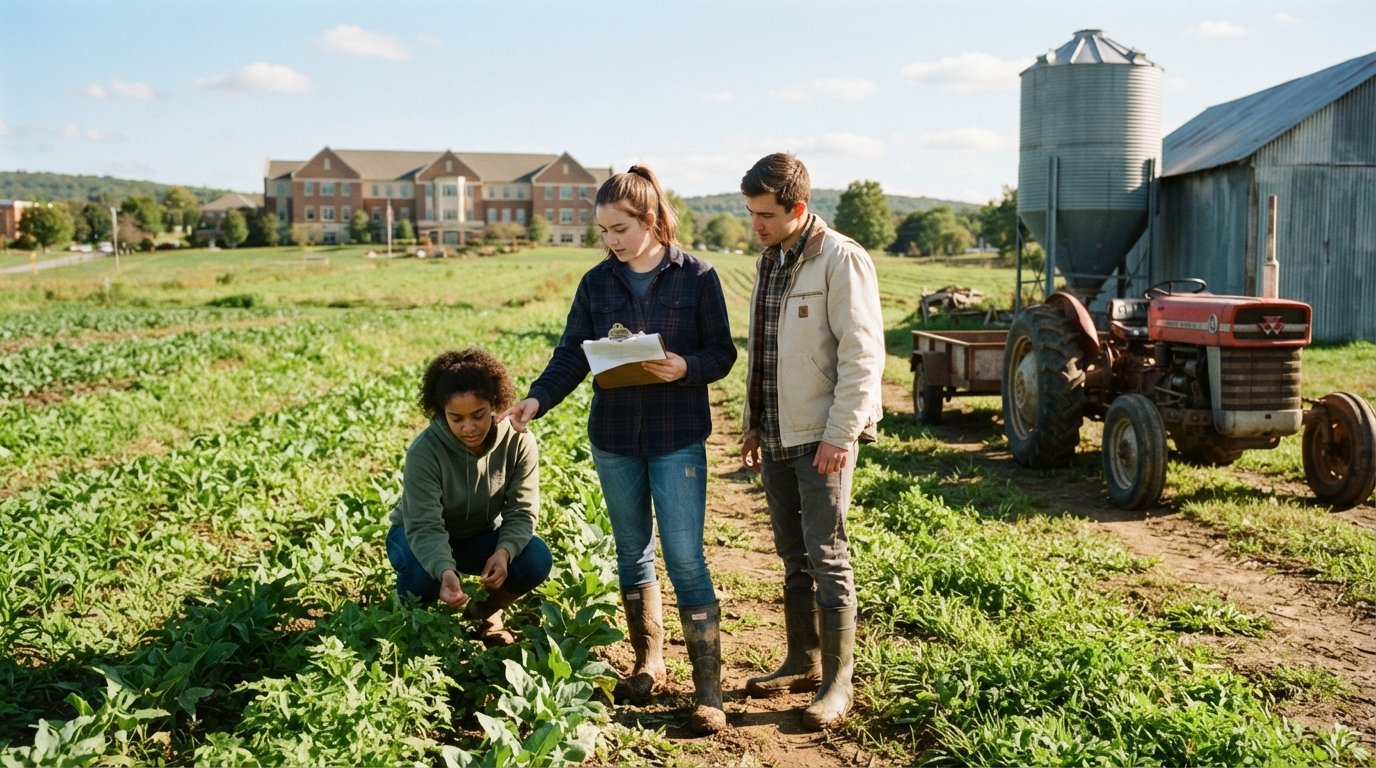
Because the program is in person, students often get access to campus farms, greenhouses, and local agricultural operations through field trips and internships. That practical exposure is difficult to replicate fully online, and it is one reason this particular degree remains a strong choice for students who want to work directly in the industry after graduation.
Why Beaufort County Community College Is a Smart Starting Point
BCCC serves a region where agriculture, commercial fishing, and related industries are part of daily life. That local context shapes the program in useful ways. Instructors often bring real-world experience from farms, cooperatives, and agribusiness firms, and they understand the seasonal rhythms that students may already be balancing with work or family responsibilities.
Cost is another major factor. North Carolina community colleges are among the most affordable higher education options in the country, and BCCC is no exception. For students who qualify for in-state tuition, the total cost of the degree is a fraction of what a four-year university would charge. Financial aid, scholarships, and work-study opportunities can reduce that cost even further. Resources like Scholarship.Education can help you identify national and regional scholarships that apply to agricultural students, and the college's own financial aid office can walk you through the FAFSA and state grant programs.
The in-person format also builds a local network. Classmates are often people who work on family farms, at grain elevators, or in agricultural supply stores. That peer network frequently turns into job leads before graduation. For a field built on relationships and trust, that is not a small advantage.
Admission Requirements and How to Apply
Admission to the Agribusiness/Agricultural Business Operations program at BCCC follows the college's general admission process. You will need to complete an application, submit high school transcripts or a high school equivalency credential, and take placement tests or provide other evidence of college readiness. Some students may need to complete developmental courses in math or English before starting technical classes, though placement policies vary.
Here is a simple sequence that most applicants follow:
- Submit the online application to Beaufort County Community College and pay any application fee.
- Request official transcripts from your high school and any colleges you have attended.
- Complete placement testing or submit SAT, ACT, or other approved scores if available.
- Meet with an academic advisor to map out your course sequence and discuss financial aid.
- Register for classes during the open registration window and confirm your payment or aid plan.
It is worth contacting the admissions office early, especially if you are applying for financial aid or scholarships, because deadlines can be tight. Advisors can also tell you whether any courses have prerequisites you should complete first.
Costs, Financial Aid, and Return on Investment
Tuition at North Carolina community colleges is set by the state and is significantly lower than at public universities. For the 2025-2026 academic year, in-state tuition at most NC community colleges is around $76 per credit hour, plus fees. A typical associate's degree requires about 60 to 70 credit hours, which puts total tuition in the range of $4,500 to $5,500 before fees and books. Out-of-state tuition is higher, but still far below most four-year schools.
Financial aid options include federal Pell Grants, North Carolina Need-Based Grants, the NC Community College Grant, and various scholarships. The Golden LEAF Foundation and other agricultural organizations also offer scholarships specifically for students in agricultural programs. Because BCCC is a public institution, it participates in federal student loan programs as well, though many students in this program graduate with little or no debt.
From a return-on-investment standpoint, the numbers are compelling. Graduates often step into jobs with starting salaries between $32,000 and $45,000 per year, depending on the role and region. Farm management, agricultural sales, and agronomy support positions frequently pay in that range, and experienced managers can earn considerably more. Compared to the cost of the degree, the payback period is short.
Career Outcomes and Job Outlook
An associate's degree in agribusiness opens doors to a variety of roles. The U.S. Bureau of Labor Statistics projects steady demand for agricultural managers and related occupations, partly because many current farmers and ranchers are approaching retirement age. That demographic shift creates openings for younger, trained professionals who understand both production and business principles.
Common job titles for graduates include:
- Farm or ranch manager
- Agricultural sales representative
- Commodity buyer or merchandiser
- Agricultural loan officer or credit analyst
- Soil conservationist or agronomy assistant
Many graduates also transfer to a four-year university to complete a bachelor's degree in agricultural business, ag economics, or a related field. BCCC has transfer agreements with several North Carolina universities, which can save you thousands of dollars by completing your first two years at the community college level.
If you are still weighing whether a business-focused credential fits your long-term goals, our Business Degree Guide for Future Career Growth explains how business education can support advancement in agriculture and other industries.
Comparing In-Person Versus Online Options
While online degrees offer flexibility, the in-person format at BCCC has specific advantages for agribusiness students. Agriculture is a physical, place-based industry. Learning to evaluate livestock, operate equipment, or assess crop conditions is best done in person. The hands-on components of this program are not easily replicated through a screen.
That said, some students may wonder whether an online business degree could serve as an alternative. It can, but it may lack the agricultural specialization and local industry connections that make this program distinctive. If your goal is to work directly in farming or agri-supply, the BCCC program is likely the better fit. If you are interested in general business management, an online option might work, but you would miss the agricultural context that employers in this sector value.
Is This Degree Right for You?
The Agribusiness/Agricultural Business Operations Associate's degree, usually 2 years In-person at Beaufort County Community College, is a strong choice for students who want a practical, affordable credential that leads directly to employment or transfer. It suits people who enjoy working outdoors, are comfortable with numbers and business concepts, and want to be part of an industry that feeds the country.
Before enrolling, consider your schedule and location. The in-person requirement means you need to be able to attend classes on campus in Washington, NC. If you live nearby and can commit to a two-year plan, the program offers excellent value. If you need more flexibility, you might explore online business or agricultural programs, though they may not provide the same hands-on experience.
It also helps to talk to people already working in the field. Ask them what skills matter most, what they wish they had learned earlier, and whether an associate's degree would help you get where you want to go. Their answers can confirm whether this program aligns with your goals.
Agriculture is a business, and the people who succeed in it often combine a love of the land with sharp management skills. The Agribusiness/Agricultural Business Operations Associate's degree at Beaufort County Community College is designed to build both. If you are ready to take the next step, contact the college's admissions office, explore financial aid options, and start planning your two-year path toward a career in one of North Carolina's most important industries.