
Campus College Degrees vs. Online Programs: Choosing the Right Fit
Explore the enduring advantages of campus college degrees, from immersive learning and hands-on resources to lifelong networking, to determine if a traditional education is your ideal path.

By Lisa Bennett
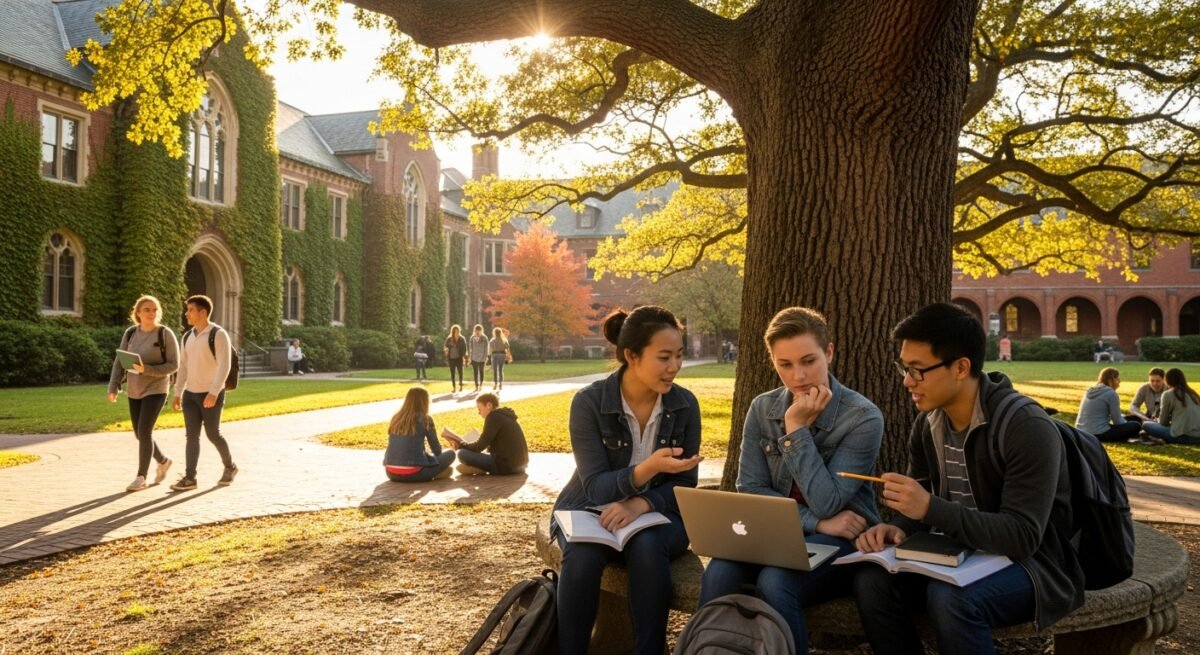
In an era where digital learning is ubiquitous, the traditional campus college degree often gets framed as a relic of the past. Yet, walk onto any vibrant university quad during the first week of classes, and you’ll feel an undeniable energy—a sense of immersion and community that technology struggles to replicate. This is the enduring promise of the residential campus experience. For many students, the question isn’t whether to get a degree, but where the most meaningful and effective learning happens. While online programs offer incredible flexibility and accessibility, the value of a campus-based education remains profound and distinct, built on pillars of structured immersion, interpersonal development, and spontaneous collaboration that shape professional and personal trajectories in unique ways.
The Unique Value Proposition of a Campus Education
The core advantage of pursuing traditional campus college degrees lies in the holistic, immersive environment they create. This is more than just attending classes; it’s about living within an ecosystem designed for learning, discovery, and growth. The campus acts as a curated microcosm where academic, social, and extracurricular lives intertwine seamlessly. This immersion fosters a deep focus on education, free from many of the distractions of daily home or work life that online learners must actively manage. The physical presence in labs, studios, libraries, and lecture halls creates a tangible connection to knowledge and mentors that can be transformative.
This environment accelerates the development of what are often called “soft skills,” but are more accurately termed essential human competencies. The daily navigation of shared living spaces, group project meetings, club activities, and informal conversations in the dining hall provides constant, low-stakes practice in communication, negotiation, teamwork, and leadership. Students learn to read social cues, manage conflicts, and build networks in real-time. These skills are cultivated organically through experience, not just through coursework. The serendipity of bumping into a professor after a lecture or brainstorming with a classmate over coffee often leads to insights, research opportunities, and mentorship connections that are less frequent in structured virtual settings.
Structured Learning and Academic Rigor
Campus programs are built on a framework of structured schedules and synchronous learning. This traditional model provides a consistent rhythm and discipline that many students need to thrive. The fixed class times, in-person lab sessions, and designated study periods create a routine that can enhance time management and accountability. For learners who benefit from external structure or who are making the transition from high school, this framework can be a critical support system. The immediate physical presence of instructors and teaching assistants also means help is readily available during office hours, before or after class, or even in chance encounters across campus.
The academic resources available on a physical campus are often unparalleled. Beyond the digital collections, university libraries offer rare archives, specialized librarians, and quiet study spaces conducive to deep work. Science and engineering students gain hands-on experience with advanced laboratory equipment, theater students work in professional-grade performance spaces, and art students have dedicated studios. This direct access to specialized facilities is a significant differentiator for many fields. The pedagogy itself often leans into this setting, with interactive seminars, debates, and collaborative workshops that thrive on live, in-person dynamics. While online degree programs have their own strategic advantages, the tactile, resource-rich environment of a campus is difficult to replicate virtually for certain disciplines.
Networking and Long-Term Professional Development
The networking potential embedded in a campus experience extends far beyond adding connections on LinkedIn. It’s about building a foundational professional community. Classmates become future colleagues, industry contacts, and collaborators. Professors become mentors, dissertation advisors, and sources for influential recommendations. Alumni networks associated with physical campuses are often deeply engaged, hosting on-campus recruiting events, career fairs, and local chapter meetups. These relationships are forged through shared experiences—late-night study sessions, team projects, campus events—that create strong, lasting bonds.
The career services offered on campus are typically hands-on and personalized. Students can walk into a career center for resume reviews, mock interviews, and tailored advice. Recruiters frequently visit campus for information sessions and interviews, providing direct access to employers. Internship coordinators often have strong local or regional ties, facilitating placements that complement the academic calendar. This integrated approach to career development, woven into the fabric of student life, provides a clear pathway from academia to the professional world.
Making the Decision: Is a Campus Degree Right for You?
Choosing between a campus-based and an online education is a highly personal decision that hinges on individual circumstances, learning style, and goals. A campus degree demands a significant investment of time, relocation, and often higher direct costs for tuition, housing, and meals. It is a full-life commitment for a set period. Therefore, it’s crucial to assess your personal fit for this model.
Consider the following key factors to evaluate if a traditional campus program aligns with your needs:
- Learning Style: Do you learn best through direct interaction, discussion, and hands-on experimentation? Do you need the structure of a fixed schedule to stay on track?
- Stage of Life: Are you able to relocate or commute to a campus? Can you commit to a full-time schedule, or do you require the flexibility to work or manage family obligations concurrently?
- Financial and Logistical Realities: Have you explored financial aid, scholarships, and housing options? Can you manage the total cost of attendance, or would a more flexible, potentially lower-cost online model better suit your budget?
- Career Goals: Does your target industry or profession value the specific networks, brand reputation, or hands-on training of particular campus programs? Are there licensing requirements that favor in-person lab or clinical hours?
- Personal Development Goals: How important is the “college experience”—independence, community living, extracurricular leadership—to your overall growth?
For some students, a hybrid approach may offer a best-of-both-worlds solution. Many universities now offer blended programs with significant on-campus components—such as intensive weekends, summer residencies, or lab blocks—combined with online coursework. This can provide access to campus resources and networking while maintaining greater geographic and scheduling flexibility. It’s also worth noting that the line between online and campus degrees continues to blur, with many traditional universities offering robust online options. For a deeper look at that pathway, you can explore resources on how to successfully get a college degree online.
The Enduring Relevance of Place-Based Learning
Despite the rapid rise of high-quality digital education, the demand for campus college degrees remains strong for a reason. There is an intangible yet powerful alchemy that happens when people dedicated to learning live, work, and collaborate in a shared physical space. The campus is an incubator for ideas, identity, and innovation. It provides a safe environment for experimentation and failure, supported by a community of peers and advisors. The cultural, athletic, and artistic events that define campus life contribute to a broad-based education that shapes worldview and critical thinking.
Furthermore, for many fields—particularly in the sciences, engineering, fine arts, healthcare, and hands-on trades—the physical facilities and immediate supervision are not optional; they are essential to competency. The future of education is undoubtedly pluralistic, embracing both digital and physical modalities. However, the campus model excels in delivering a deeply transformative, community-centered, and resource-intensive form of education. It cultivates not just knowledge, but a way of engaging with the world, building relationships, and contributing to a collective intellectual pursuit.
Ultimately, the choice between a campus degree and an online program is not about which is universally better, but which is better for you at this specific juncture in your life. By honestly assessing your learning preferences, goals, and constraints, you can select the educational path that will most effectively empower your future. The traditional campus experience, with its rich tapestry of academic rigor, personal development, and community, continues to offer a uniquely powerful journey for those who can embrace its immersive model.