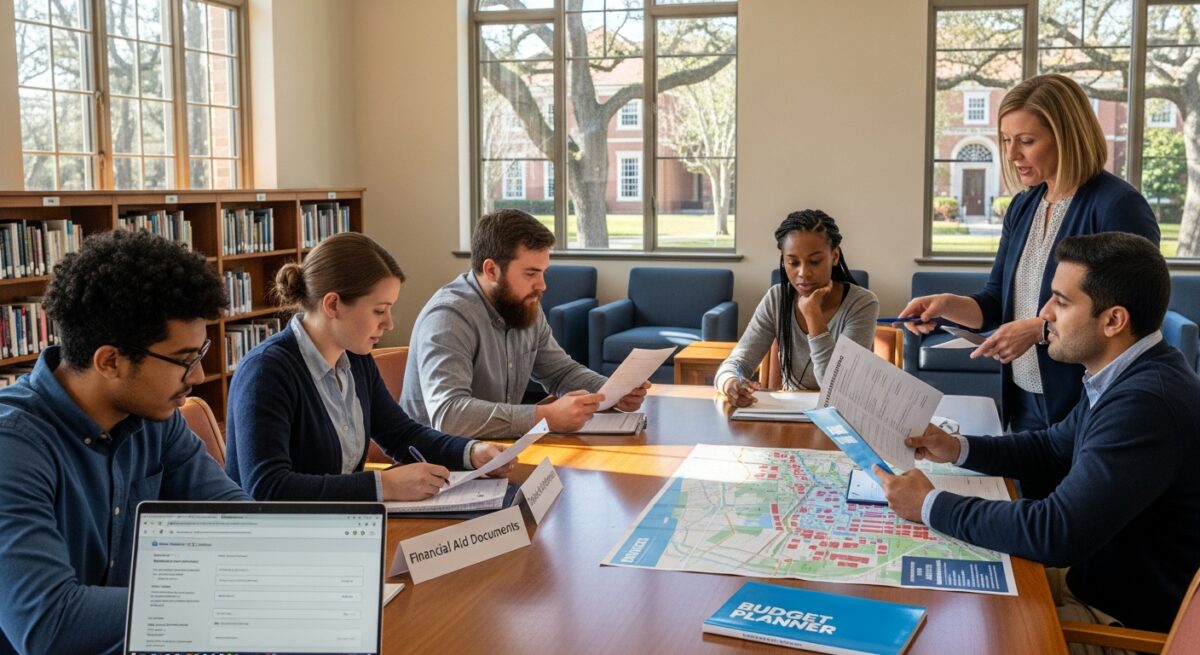
Pursuing a business degree has long been one of the most reliable paths to career advancement, higher earning potential, and professional flexibility. However, the rising cost of higher education has made many students question whether a traditional four-year degree is financially feasible. The good news is that affordable online options now exist at every level, from associate degrees to bachelor’s programs and even MBAs. This Cheapest Online Business Degree Programs Guide will walk you through the most budget-friendly accredited options, explain how to evaluate total program costs, and help you avoid hidden fees that can inflate your final bill.
Online education has matured significantly over the past decade. Employers now widely accept degrees from regionally accredited online institutions, and many top public universities offer their business programs entirely online at a fraction of the cost of on-campus attendance. By eliminating commuting, housing, and campus fees, online learners can save thousands of dollars each year. The key is knowing which programs deliver real value without sacrificing academic quality or career outcomes.
What Makes an Online Business Degree Affordable?
Affordability in online education is not just about the lowest tuition rate. You must consider the total cost of attendance, which includes tuition, fees, textbooks, technology requirements, and any proctoring or administrative charges. The cheapest online business degree programs typically share several common characteristics that keep costs low while maintaining academic rigor.
First, these programs often charge per-credit tuition rates that are significantly lower than their on-campus counterparts. Many public universities offer in-state tuition rates to all online students regardless of their state of residence. This policy can reduce costs by 50 percent or more compared to out-of-state on-campus rates. Second, affordable programs tend to include digital textbooks or open educational resources (OER) in their tuition, eliminating the need to purchase expensive physical books. Third, they minimize administrative fees by bundling technology, library access, and student services into a single flat rate per term.
When evaluating programs, look for these key affordability indicators:
- Per-credit tuition rates below $300 for in-state and $400 for out-of-state students
- No application fee or a waived fee for online applicants
- Inclusive digital materials and no mandatory campus visits
- Credit transfer policies that accept up to 75 percent of degree requirements
- Accreditation by AACSB, ACBSP, or IACBE to ensure employer recognition
Programs that meet these criteria allow you to complete your degree with minimal debt. For example, a bachelor’s degree at $250 per credit hour for 120 credits totals $30,000, which is well below the national average for a four-year degree. When combined with federal financial aid, Pell Grants, or employer tuition reimbursement, the out-of-pocket cost can shrink dramatically.
Top Affordable Online Business Degree Programs by Level
Your choice of degree level depends on your current education and career goals. Associate degrees provide a quick entry point into the workforce or a low-cost foundation for a bachelor’s program. Bachelor’s degrees open doors to management roles and higher salaries. Graduate certificates and MBAs offer specialization for experienced professionals. Below, we break down the most affordable options at each level.
Associate Degrees in Business
An Associate of Science in Business Administration typically requires 60 credit hours and takes two years of full-time study. These programs are ideal for students who want to start working quickly or who plan to transfer to a four-year university later. Community colleges offer the lowest tuition rates, often between $100 and $200 per credit hour. Many have fully online programs with no additional fees.
For instance, Coastal Alabama Community College offers an online Associate of Science in Business with a tuition rate of $154 per credit hour for in-state students and only $231 for out-of-state learners. The total cost for the entire degree ranges from $9,240 to $13,860. This program transfers seamlessly to many public universities in Alabama through articulation agreements. Similarly, Pierce College in Washington state provides an online Business Administration DTA degree at $116 per credit for in-state students, making the total cost approximately $6,960. These programs represent some of the cheapest online business degree options available today.
Bachelor’s Degrees in Business
For a four-year business degree, the most affordable options come from public universities with flat-rate online tuition. The University of Florida’s online Bachelor of Science in Business Administration charges $129 per credit hour for all students regardless of residency. The entire 120-credit program costs roughly $15,480, making it one of the most affordable regionally accredited programs in the country. UF Online also provides digital textbooks at no extra cost and has a robust advising system for distance learners.
Another strong contender is the University of North Carolina at Greensboro’s online Bachelor of Science in Business Administration, which offers in-state tuition of $226 per credit hour and out-of-state rates of $798. While the out-of-state rate is higher, North Carolina residents pay about $27,120 total. The program is accredited by AACSB, the gold standard for business education. Western Governors University (WGU) offers a competency-based Bachelor of Science in Business Management for approximately $4,755 per six-month term. Since students can accelerate through courses by demonstrating mastery, many complete the degree in two to three terms, bringing total costs below $15,000.
Graduate Business Programs
Master’s degrees in business, including MBAs and specialized master’s programs, have also become more affordable online. The University of Texas at Tyler offers an online MBA with a tuition rate of $668 per credit hour for all students, totaling about $24,048 for the 36-credit program. This AACSB-accredited program requires no GMAT and allows students to specialize in areas like finance, marketing, or healthcare administration.
Georgia Southwestern State University provides an even more affordable online MBA at $370 per credit hour for in-state students and $555 for out-of-state learners. The total cost ranges from $13,320 to $19,980. This program is also AACSB-accredited and offers concentrations in accounting, management, and marketing. For those seeking the absolute lowest cost, the University of the Cumberlands offers an online MBA for $445 per credit hour for all students, totaling $16,020 for 36 credits. The institution is regionally accredited and provides multiple start dates throughout the year.
Hidden Costs to Watch For
Even the cheapest online business degree programs can surprise you with unexpected fees. Before enrolling, carefully review the program’s fee schedule. Common hidden costs include technology fees of $50 to $200 per term, proctoring fees for exams that can cost $25 to $50 each, and graduation fees of $100 or more. Some programs require students to purchase specific software packages for accounting, statistics, or data analysis courses, adding several hundred dollars to your total.
Another potential expense is the cost of transferring credits. Many affordable programs limit the number of transfer credits they accept or charge a fee for credit evaluation. If you plan to transfer from a community college, confirm that your credits will apply to the specific degree requirements, not just as elective credits. Some universities also charge a graduation application fee or a diploma mailing fee that may not be disclosed until your final term.
To avoid these surprises, request a full cost breakdown from the admissions office before applying. Ask specifically about:
- Technology and distance learning fees per term
- Proctoring costs for online exams
- Required software or textbook costs not included in tuition
- Credit transfer evaluation fees
- Graduation and diploma fees
Programs that are transparent about all costs from the start tend to be more trustworthy and ultimately more affordable. For more details on evaluating program costs and comparing options, our guide on 7 Affordable Online Business Courses and MBA Programs provides additional insights into value-driven choices.
How to Maximize Affordability Through Financial Aid
Federal financial aid is available for accredited online programs, including Pell Grants, Federal Direct Loans, and work-study opportunities. To qualify, you must complete the Free Application for Federal Student Aid (FAFSA) each year. Pell Grants provide up to $7,395 per year (2024-2025 award year) for students with exceptional financial need and do not require repayment. Many students assume online programs are ineligible for federal aid, but this is not true. As long as the school is accredited and participates in federal student aid programs, you can receive the same aid as on-campus students.
Employer tuition reimbursement is another powerful tool. Many companies offer $3,000 to $10,000 per year in tuition assistance for job-related degrees. Check with your human resources department to see if your employer partners with specific universities for discounted rates. Some employers even pay for the entire degree upfront if you commit to staying with the company for a set period after graduation.
Military benefits also significantly reduce costs for veterans and active-duty service members. The Post-9/11 GI Bill covers full tuition and fees at public institutions for eligible veterans, and many private online universities offer a Yellow Ribbon Program that covers any remaining costs. Additionally, some schools offer military tuition discounts of $250 per credit hour or less for active-duty personnel.
Accreditation: Why It Matters for Affordability
Accreditation is the single most important factor when choosing an online business degree program. Regional accreditation ensures that your credits will transfer to other institutions and that employers will recognize your degree. Without it, even the cheapest online business degree is essentially worthless. Three accrediting bodies are recognized for business programs: AACSB International (Association to Advance Collegiate Schools of Business), ACBSP (Accreditation Council for Business Schools and Programs), and IACBE (International Accreditation Council for Business Education).
AACSB accreditation is the most prestigious and is held by top business schools like Harvard, Stanford, and the University of Pennsylvania. However, many affordable online programs carry ACBSP or IACBE accreditation, which still meets employer standards and allows graduates to sit for professional certifications like the CPA or CFA. When comparing costs, prioritize regionally accredited programs with any of these business-specific accreditations. Avoid unaccredited or nationally accredited programs, as they often have lower tuition but also lower graduation rates and poorer job placement outcomes.
Frequently Asked Questions
Can I get a business degree online for under $10,000 total? Yes, several community colleges offer associate degrees in business for under $10,000. For bachelor’s degrees, competency-based programs like WGU can cost under $15,000 if you accelerate your studies. Some public universities also offer flat-rate tuition that keeps total costs below $20,000 for a full bachelor’s program.
Are online business degrees respected by employers? Yes, especially when the program holds regional accreditation and a business-specific accreditation like AACSB or ACBSP. Employers increasingly value online degrees from established public universities and recognize the self-discipline required to complete them.
How long does it take to complete an online business degree? Most bachelor’s programs require four years of full-time study, but accelerated programs allow completion in 2.5 to 3 years. Competency-based programs can be even faster for motivated learners who can demonstrate mastery of course material quickly.
What is the difference between an online business degree and an on-campus degree? The curriculum and degree requirements are typically identical. The main difference is the delivery method. Online students access lectures, assignments, and exams through a learning management system rather than attending physical classes. The diploma usually does not indicate whether the degree was earned online.
Can I use federal financial aid for online business degrees? Yes, as long as the school is accredited and participates in federal student aid programs. Complete the FAFSA to determine your eligibility for Pell Grants, Direct Loans, and work-study funds.
Making Your Final Decision
Choosing the cheapest online business degree program requires balancing cost with quality, accreditation, and career outcomes. Start by identifying regionally accredited programs with per-credit rates below $300 for bachelor’s degrees and below $500 for master’s degrees. Verify that the program includes digital materials and has transparent fee structures. Then apply for financial aid, employer reimbursement, and any scholarships for online learners. By following this Cheapest Online Business Degree Programs Guide, you can earn a respected business degree without taking on crippling debt. As you explore your options, degree pathways for students offers additional resources to compare academic tracks and find the right fit for your goals.
About the Author: Emily Wilson