
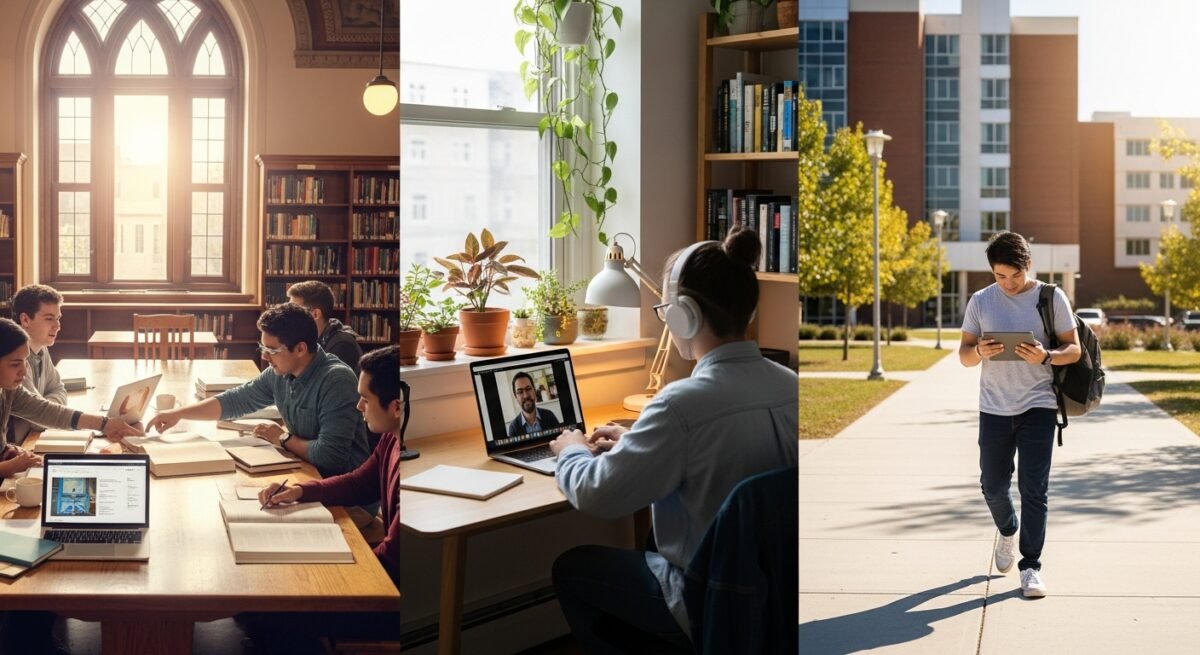
College Learning Options: Online, Campus, and Hybrid Explained
Explore online, campus, and hybrid college learning options to find the ideal fit for your lifestyle and goals. Understand key benefits like flexibility, immersion, and balanced structure to make an informed academic decision.

By David Reynolds
Choosing where and how to pursue your degree is one of the most significant decisions in your academic journey. The landscape of higher education has transformed, moving beyond the traditional lecture hall to offer flexible, technology-driven alternatives. Understanding the core models—online, campus-based, and hybrid—is essential to selecting the path that aligns with your learning style, life commitments, and career goals. This isn’t just about convenience; it’s about finding the educational environment where you will thrive. Each option presents a unique set of advantages and trade-offs concerning interaction, structure, and self-discipline. By demystifying these college learning options, you can make an empowered choice that supports your success from enrollment to graduation.
The Traditional Campus Experience: Immersion and Community
The on-campus model remains the quintessential image of college life for a reason. It offers a deeply immersive environment where academic, social, and extracurricular elements converge. Learning happens in real-time, in shared physical spaces, fostering spontaneous discussions, study groups, and mentorship opportunities that extend far beyond the syllabus. The structured schedule of classes, labs, and library hours provides a consistent routine, which many students find crucial for maintaining focus and momentum. This model is particularly effective for hands-on disciplines, such as laboratory sciences, performing arts, and clinical practices, where direct access to specialized facilities and equipment is non-negotiable.
Beyond academics, the campus experience is defined by community. Living in dorms, participating in clubs, attending campus events, and forming study networks contribute to personal development and often lead to lifelong professional connections. The direct, face-to-face access to professors during office hours is a significant benefit, allowing for nuanced conversation and immediate feedback. However, this model requires geographic relocation or commuting and operates on a fixed, often rigid schedule, which can be a barrier for working professionals, parents, or those with other significant responsibilities. The cost, including tuition, housing, and meal plans, is also typically the highest among the three options.
Online Education: Flexibility and Self-Directed Learning
Online learning has evolved from a niche alternative to a robust and respected mainstream option. It dismantles geographical and temporal barriers, allowing students to access high-quality education from anywhere in the world, on a schedule they control. This modality is built for the self-motivated learner who excels at managing their time and responsibilities independently. Coursework is delivered asynchronously through learning management systems, featuring recorded lectures, digital readings, discussion forums, and virtual assignments. This structure is ideal for adult learners advancing their careers, military personnel, caregivers, and anyone who needs to balance education with other immutable parts of their life.
The success of an online student hinges on specific skills and resources. Before enrolling, consider if you have:
- Reliable Technology: A consistent, high-speed internet connection and a capable computer.
- Time Management Prowess: The discipline to create and adhere to a personal study schedule without external reminders.
- Self-Motivation: The internal drive to engage with material, participate in online discussions, and meet deadlines.
- Digital Communication Skills: Comfort in expressing ideas clearly in writing and via video calls, as this replaces most face-to-face interaction.
While some may perceive online learning as isolating, many programs actively foster community through group projects, live video seminars, and dedicated student support channels. For clear guidance on navigating these digital academic pathways and evaluating programs, prospective students can find essential college degree information through dedicated educational resources. The key is to seek out accredited, reputable institutions that provide strong faculty interaction and comprehensive student services tailored to the remote learner.
The Hybrid Model: Blending the Best of Both Worlds
Hybrid learning, often called blended learning, is a strategic fusion of online and in-person instruction designed to maximize the benefits of each. It is not merely a partial online course; it is an intentionally redesigned curriculum where each component serves a specific pedagogical purpose. Typically, theoretical content, readings, and preliminary assessments are handled online, freeing up valuable campus time for interactive, applied learning. This face-to-face time is then dedicated to hands-on labs, collaborative projects, in-depth discussions, simulations, or problem-solving workshops that benefit most from direct human interaction and access to physical resources.
This model offers a balanced compromise. It provides more flexibility than a fully on-campus program by reducing the number of required commutes or relocations. Simultaneously, it offers more structure and personal connection than a fully online program, ensuring students build relationships with peers and instructors. Hybrid programs are exceptionally popular in fields like business, education, nursing, and information technology, where theory and practice must be closely integrated. For instance, an MBA student might complete case studies and lectures online but attend monthly in-person weekend sessions for networking, team presentations, and live negotiations. The challenge lies in successfully navigating the transitions between learning environments and staying organized across two different modes of instruction.
Choosing Your Path: A Framework for Decision-Making
Selecting the right learning format is a personal decision that should be based on a clear assessment of your individual circumstances, goals, and preferences. A thoughtful comparison goes beyond surface-level pros and cons to examine how each model interacts with your life. Start by conducting an honest audit of your learning style. Do you absorb information best through live dialogue and lecture, or through self-paced review of materials? How important is physical presence and nonverbal cues to your understanding? Your answers will point you toward the environment that supports your cognitive processes.
Next, undertake a practical lifestyle analysis. Map out your weekly commitments—job hours, family responsibilities, community obligations—and assess their flexibility. A fixed campus schedule may create conflict, whereas the asynchronous nature of online learning could integrate seamlessly. Also, consider your financial picture, including not only tuition but also ancillary costs like commuting, parking, childcare, or potential lost wages. Finally, align your choice with your long-term professional objectives. Some careers value the networking opportunities inherent in campus life, while others prioritize the technological fluency and self-discipline demonstrated by successful online graduates. Research your target industry or speak with professionals to gauge perceptions.
To systematically evaluate your options, follow this decision framework:
- Identify Your Non-Negotiables: List constraints you cannot change, such as your location, work hours, or caregiving duties.
- Rank Your Learning Priorities: Determine what you value most: schedule flexibility, hands-on practice, cost, faculty access, or peer collaboration.
- Research Program Specifics: Not all programs in the same format are equal. Investigate the curriculum delivery, support services, and technology requirements of specific institutions.
- Test the Waters: If possible, take a single course in a new format (e.g., an online elective while on campus) to experience it firsthand before full commitment.
The Future of Academic Delivery
The evolution of college learning options is being accelerated by advancements in educational technology. Digital Learning Methods are becoming more sophisticated, incorporating elements like adaptive learning platforms that personalize content, virtual reality labs for immersive simulations, and sophisticated analytics to identify students who may need extra support. These innovations are enhancing all three modalities, making online learning more interactive, campus learning more data-informed, and hybrid models more seamless. The line between formats will continue to blur, with many traditional campuses adopting flipped classrooms—a form of hybrid learning—as a standard. The ultimate goal is to create more accessible, effective, and student-centered educational experiences, regardless of the delivery method. The power now lies with the learner to choose the ecosystem that best fuels their intellectual and professional growth.
The expansion of college learning options represents a democratization of higher education. Whether you thrive in the vibrant energy of a campus quad, the focused quiet of your home office, or the dynamic blend of a hybrid schedule, there is a pathway designed for your success. By carefully weighing the defining characteristics of online, campus, and hybrid models against your personal and professional blueprint, you can invest your time, energy, and resources into an educational journey that is not just manageable, but genuinely transformative.