
Colleges vs Universities: Key Differences for Your Education
Learn the key distinctions between colleges and universities to choose the right academic environment for your goals and learning style.

By David Reynolds
Choosing the right path for higher education is one of the most significant decisions a student can make, and it often begins with a fundamental question: should I attend a college or a university? While these terms are frequently used interchangeably in casual conversation, they represent distinct types of institutions with different structures, missions, and opportunities. Understanding the nuances between colleges and universities is not just an exercise in semantics, it is a crucial step in aligning your academic goals, learning style, and career aspirations with the environment that will best help you thrive. This guide will demystify the key distinctions, from size and degree offerings to campus culture and research focus, empowering you to make an informed choice for your future.
The Core Distinction: Mission and Scope
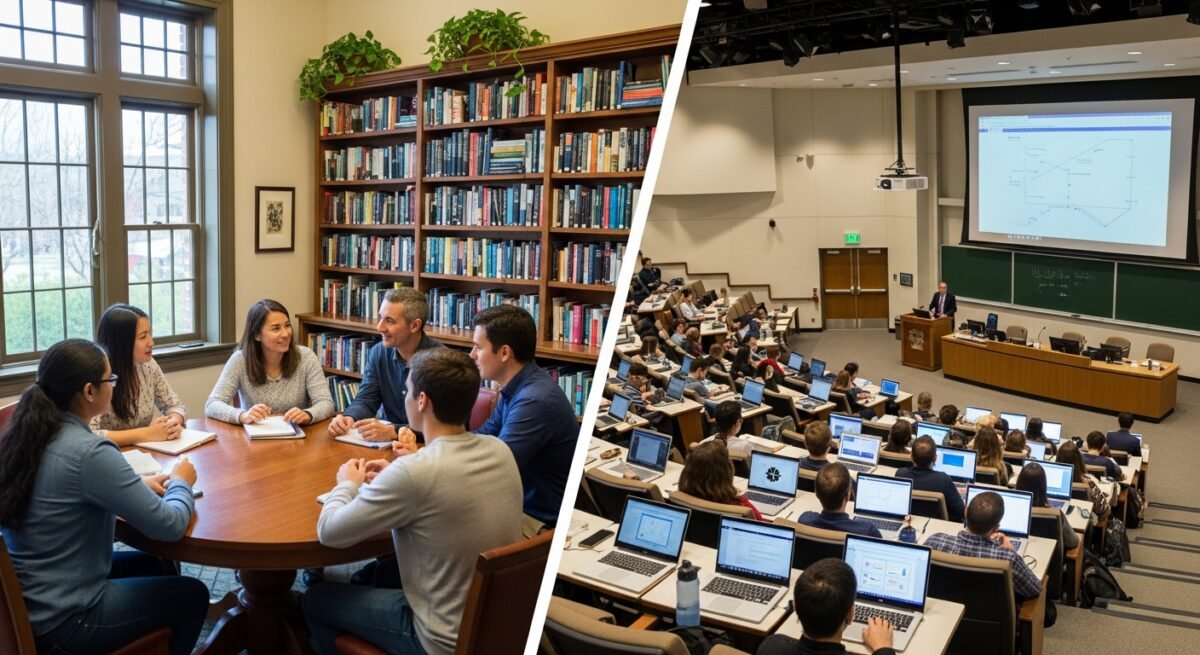
At its heart, the difference between a college and a university lies in their core mission and academic scope. Traditionally, a college is an institution that focuses primarily on undergraduate education. Its mission is centered on teaching and fostering a cohesive learning community for students pursuing bachelor’s degrees, associate degrees, or sometimes certificates. The faculty at a college are often hired and evaluated based on their teaching prowess and dedication to student mentorship. The atmosphere is typically characterized by smaller class sizes, more direct professor interaction, and a strong emphasis on the liberal arts and foundational sciences. Many colleges, particularly liberal arts colleges, pride themselves on providing a broad, well-rounded education designed to develop critical thinking, communication, and problem-solving skills applicable to any field.
In contrast, a university is a larger, more comprehensive institution that encompasses multiple colleges or schools within its umbrella. A key defining feature of a university is its commitment to graduate education and advanced research. While universities certainly educate undergraduates, their mission expands to include granting master’s and doctoral degrees. This dual focus on teaching and research shapes the entire ecosystem. University professors, often called faculty, are usually expected to conduct original research, publish scholarly work, and secure grants in addition to their teaching duties. This means undergraduates at universities may have access to cutting-edge research projects, state-of-the-art laboratories, and renowned experts in their field. However, introductory courses might be taught by graduate teaching assistants, and class sizes can be significantly larger. The scope of a university is simply broader, offering a wider array of programs, from engineering and business to medicine and law, all under one administrative roof.
Structural and Programmatic Differences
Beyond mission, the structural organization of colleges and universities reveals clear practical differences. A standalone college is often one self-contained school. A university, however, is a collection of several colleges or faculties. For example, a large state university might contain a College of Arts and Sciences, a College of Engineering, a School of Business, and a School of Education. Students apply to and are enrolled within a specific college at the university, which dictates their core curriculum and major options. This structure allows for immense specialization and interdisciplinary opportunities. A student in the College of Arts and Sciences might easily minor in a subject offered by the School of Business, leveraging the resources of the entire university.
The range of academic programs is a direct result of this structure. Colleges, especially liberal arts colleges, tend to offer a focused set of undergraduate majors, often with a strong grounding in the humanities, social sciences, and natural sciences. Universities offer a vastly wider catalog. They provide not only numerous undergraduate majors but also a full suite of graduate and professional degrees. If your goal is to earn a Ph.D., a medical degree (M.D.), a law degree (J.D.), or an MBA, you will need to attend a university (or a specialized graduate school, which is often part of a university). For students seeking accredited online degree programs, universities are more commonly the providers, given their infrastructure and breadth. Our guide on finding the best online colleges and universities explores how both institution types have adapted to digital learning.
Size, Resources, and Campus Culture
The structural differences naturally lead to variations in size, resources, and the overall student experience. Colleges are generally smaller, with total student populations often ranging from a few hundred to several thousand. This fosters a close-knit community where students and professors frequently know each other by name. Campus life is often centralized, with a strong emphasis on residential living and campus-wide events. The trade-off can be fewer specialized facilities and a more limited selection of extracurricular activities compared to a large university.
Universities are typically much larger, sometimes hosting tens of thousands of students across undergraduate, graduate, and professional programs. This scale brings immense resources: extensive libraries, major research institutes, expansive athletic complexes, specialized museums, and teaching hospitals. The student body is more diverse, both in terms of academic pursuit and background. Campus culture at a university is often decentralized, with social and academic life revolving around one’s specific college, major department, or the hundreds of student clubs and organizations available. The experience can be more independent, requiring students to proactively seek out opportunities and build their own community within the larger whole.
Making the Right Choice for Your Goals
So, which environment is right for you? The answer depends entirely on your personal academic style, career objectives, and preferred learning environment. To decide, consider the following key factors.
First, evaluate your learning style. Do you thrive in small seminar-style discussions where you are expected to participate actively and receive direct feedback from your professor? If so, a college may be an ideal fit. Do you prefer learning in a large lecture format initially, then breaking into smaller discussion sections led by a teaching assistant, while being motivated by the energy of a big campus? A university might suit you better.
Second, clarify your academic and career plans. If you are certain you want to pursue an advanced degree (like a Ph.D. or M.D.) and want early exposure to research, a university with strong research programs in your field of interest is likely advantageous. If you are undecided on a major or value a broad liberal arts foundation before specializing, a college could provide the exploratory space you need. For career-focused fields like nursing, engineering, or business, compare the specific programs at both colleges and universities, looking at accreditation, internship placement rates, and faculty industry experience.
Finally, consider the intangible elements of campus culture and fit. Ask yourself what kind of community you want. Do you prefer the cohesion of a smaller campus or the dynamic, bustling energy of a university city? Visiting campuses, when possible, is the best way to gauge this feel. Sit in on a class, talk to current students, and imagine your daily life there. Remember, there are also many hybrid models, like large universities that have honors colleges designed to provide a small-college experience within the big university resource pool.
To aid your research on program costs and financial planning, which is critical for both college and university paths, you can consult independent education tuition resources for comparative data and tools.
Frequently Asked Questions
Is a degree from a university more valuable than one from a college?
No, not inherently. Employers and graduate schools evaluate candidates based on the rigor of the specific program, the skills acquired, grades, recommendations, and experience. A degree from a highly respected liberal arts college can be just as valuable, if not more so in certain fields, as a degree from a large university. The “value” depends on the alignment between the institution’s strengths and your career goals.
Can a college become a university?
Yes, this is a common evolution. When a college expands its program offerings to include a significant number of graduate degrees and increases its research activity, it may choose to change its name to “university” to reflect its broader mission. This does not necessarily mean the quality of undergraduate teaching diminishes, but it does signal an institutional shift in focus.
Are community colleges considered “colleges” in this comparison?
Yes, but they are a specific type. Community colleges are primarily two-year institutions offering associate degrees and certificates. They are a vital part of the higher education landscape, often serving as an affordable pathway to a bachelor’s degree through transfer agreements with four-year colleges and universities. Their teaching-focused mission aligns with the college model, but their scope is typically more localized and career-technical.
Do universities offer a better social life?
“Better” is subjective. Universities offer more options: bigger sports programs, more clubs, and a larger, more diverse student body. Colleges offer greater intimacy and potentially deeper connections within a smaller community. Your social experience will be what you make of it in either setting.
For pre-med or pre-law, is one type of institution preferred?
Medical and law schools accept students from both colleges and universities. What matters most is excelling in your required courses, achieving a high GPA, scoring well on entrance exams (MCAT/LSAT), and gaining relevant experience (research, clinical work, internships). A university might offer easier access to hospital or lab research, while a college might provide stronger pre-professional advising and professor support for recommendation letters.
The journey through higher education is deeply personal. By moving beyond the interchangeable use of “college” and “university” and understanding their substantive differences, you equip yourself to make a proactive, confident choice. Reflect on where you will learn most effectively, which environment will support your personal growth, and which institution provides the clearest pathway to your envisioned future. The right fit is out there, whether it bears the name of a college or a university.