
Construction Trades Associate's Degree at Coconino CC
Earn a Construction Trades associate's degree in two years at Coconino Community College. Hands-on training leads to skilled trade careers.

By Sophia Clark
If you are looking for a hands-on path into the skilled trades without committing to a four-year bachelor's degree, a Construction Trades associate's degree at Coconino Community College offers a focused, two-year, in-person route to a career in building and construction. This program is designed for students who learn best by doing, who want to enter the workforce quickly, and who want to build a foundation for a stable, well-paying career that cannot be outsourced overseas. Whether you are a high school graduate, a career changer, or a veteran looking to translate military experience into civilian credentials, this degree can be a practical first step.
What Is the Construction Trades Associate's Degree?
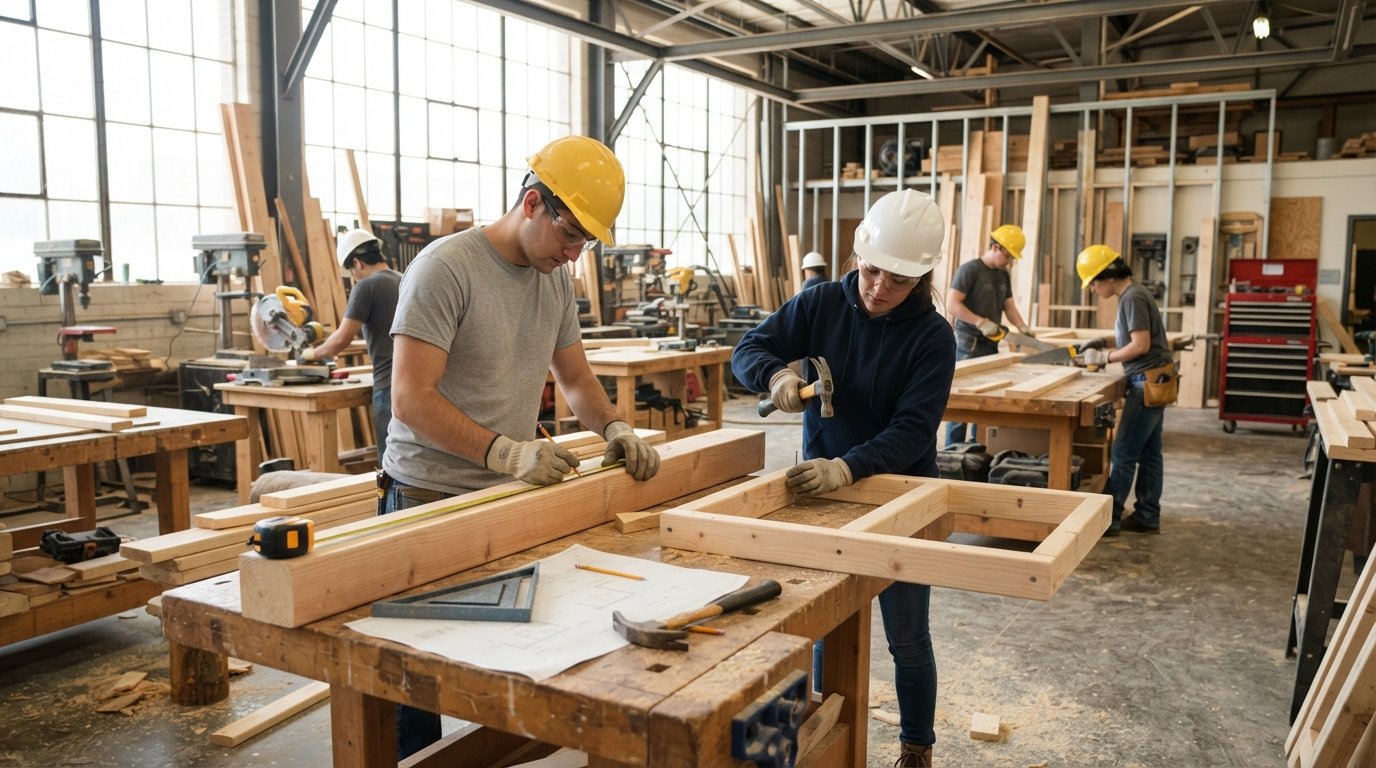
The Construction Trades associate's degree at Coconino Community College is a two-year program delivered entirely in person, which means students spend significant time in labs, shops, and job sites developing the physical skills that employers demand. Unlike fully online programs, this format ensures that students receive direct supervision, immediate feedback, and hands-on practice with tools, materials, and safety protocols. The curriculum typically blends general education courses with core trade courses, covering topics such as construction safety, blueprint reading, framing, electrical basics, plumbing, and project management.
This degree is not just about learning a single trade; it is about building a broad base of construction knowledge that allows graduates to adapt to different roles on a job site. Many students use this credential to enter the workforce as apprentices or entry-level technicians, while others use it as a stepping stone to supervisory positions or to start their own contracting businesses. Because the program is offered in person, students also benefit from networking with instructors who often have industry experience and with peers who may become future colleagues.
For students concerned about cost, it helps to compare this program with other options. For example, if you are also considering information technology, you can review our guide on online IT degree cost and tuition to see how costs differ across fields. However, the construction trades degree is particularly cost-effective because it can be completed at a community college, which typically has lower tuition than four-year institutions.
Program Structure and Coursework
The associate's degree typically requires about 60 to 70 credits, which full-time students can complete in two years. The program is structured to build skills progressively, starting with foundational safety and tool use, then moving into more specialized trade areas. Students should expect a mix of classroom instruction and hands-on lab work, with some courses potentially including field trips or projects on actual construction sites.
Core courses often include:
- Construction safety and OSHA regulations
- Blueprint reading and drafting
- Framing and carpentry
- Electrical and plumbing basics
- Concrete and masonry
- Project estimation and management
In addition to trade-specific courses, students usually take general education classes in communication, mathematics, and business, which help them advance into supervisory roles later. The in-person format allows for immediate correction of techniques and safety practices, which is critical in a field where mistakes can be costly or dangerous. Students also learn to work as part of a team, follow instructions, and solve problems on the fly, all of which are essential for success in construction.
Because the program is hands-on, students should be prepared for physical activity and early morning starts, as many construction jobs begin before dawn. The college likely provides access to tools and safety gear, but students may need to purchase their own basic equipment such as work boots, hard hats, and safety glasses. It is advisable to check with the program advisor for a complete list of required supplies.
Admission Requirements and How to Apply
Admission to the Construction Trades associate's degree at Coconino Community College generally follows the college's standard admission process, which is designed to be accessible to a wide range of students. Prospective students typically need to submit an application, provide proof of high school graduation or equivalent, and may need to take placement tests in math and English to ensure they are ready for college-level coursework. Some programs may also require a minimum GPA or a personal interview.
Here is a general step-by-step process for applying:
- Complete the college application online or in person.
- Submit official high school transcripts or GED scores.
- Take the placement test if required.
- Meet with an academic advisor to plan your schedule.
- Register for classes and pay tuition or apply for financial aid.
It is important to note that some courses may have prerequisites, such as basic math or English, which must be completed before enrolling in higher-level trade courses. Students are encouraged to apply early because programs with hands-on components often have limited seats. For those who need to brush up on academic skills, the college may offer developmental courses or tutoring services.
Financial aid is available for eligible students, including federal grants, loans, and work-study programs. Students should complete the Free Application for Federal Student Aid (FAFSA) as early as possible to determine their eligibility. The college's financial aid office can help students understand their options and apply for scholarships, which may be offered by the college or local construction industry organizations.
Career Outcomes and Job Outlook
Graduates of the Construction Trades associate's degree are prepared for a variety of entry-level positions in the construction industry. According to the U.S. Bureau of Labor Statistics, employment of construction trades workers is projected to grow steadily over the next decade, driven by infrastructure repairs, new construction, and energy efficiency upgrades. Many of these jobs offer competitive wages and opportunities for advancement, especially for workers who have formal training and certifications.
Potential job titles for graduates include:
- Construction apprentice
- Carpenter
- Electrician's helper
- Plumber's assistant
- Construction technician
- Site supervisor (with experience)
Wages vary by region and trade, but construction workers generally earn above minimum wage, with skilled tradespeople earning significantly more. Many graduates choose to continue their education by pursuing apprenticeships, which combine on-the-job training with classroom instruction and lead to journey-level certification. Others may pursue bachelor's degrees in construction management or business to move into leadership roles. The hands-on nature of the program gives graduates a tangible advantage when applying for jobs, as employers value the practical experience gained in the labs and shops.
For students who want to explore a wide range of career options, Careers.org provides detailed profiles of construction trades, including educational requirements, salary expectations, and job duties. This resource can help you understand how an associate's degree fits into the broader career landscape and what steps you might take after graduation.
Cost and Financial Aid
Tuition for the Construction Trades associate's degree at Coconino Community College is generally lower than at four-year institutions, making it an affordable option for students seeking a high-return credential. In-state students pay significantly less than out-of-state students, and there may be additional fees for lab supplies or equipment. Students should budget for tools, safety gear, and transportation to off-campus sites if required.
Financial aid options include:
- Federal Pell Grants
- Federal student loans
- Work-study programs
- College scholarships
- Industry sponsorships or apprenticeships
Many construction companies offer tuition reimbursement or apprenticeship programs that can offset the cost of education. Students should also look for scholarships from local trade associations, unions, and community organizations. The college's financial aid office can provide guidance on applying for aid and understanding the terms of loans and grants. It is important to fill out the FAFSA even if you think you may not qualify, as many scholarships require it.
Compared to a bachelor's degree, the associate's degree requires fewer credits and less time, which translates to lower overall cost and a faster return on investment. Graduates can start earning sooner and often receive on-the-job training that further increases their skills and value. For students who are concerned about debt, this program offers a practical way to gain marketable skills without taking on excessive loans.
Why Choose Coconino Community College?
Coconino Community College is located in Flagstaff, Arizona, a region with a growing construction industry and a need for skilled workers. The college's in-person program allows students to learn in facilities that simulate real job sites, with access to modern tools and equipment. The faculty often includes experienced professionals who bring real-world insights into the classroom, and the small class sizes ensure that students receive personalized attention.
Another benefit is the college's connections to local employers. Through internships, job fairs, and advisory boards, students may have opportunities to network with companies that are hiring. The college may also offer career services such as resume writing, interview preparation, and job placement assistance. For students who want to stay in the Flagstaff area, these connections can be invaluable.
Additionally, the program's emphasis on safety and proper technique helps students develop habits that will serve them throughout their careers. Graduates leave with a portfolio of skills and a credential that demonstrates their commitment to the trade. Whether you want to work for a large construction firm, a small contractor, or start your own business, the foundation you build here can open doors.
Comparing Construction Trades to Other Programs
Prospective students often compare the Construction Trades associate's degree to other programs, such as online IT degrees or business degrees. While online programs offer flexibility, the hands-on nature of construction trades requires in-person instruction to ensure safety and competence. The cost of the construction trades program is often lower than that of online IT degrees, especially when you factor in lab fees and equipment. However, both fields offer strong job prospects and opportunities for advancement.
If you are unsure which path is right for you, consider your interests and strengths. Do you enjoy working with your hands, solving physical problems, and seeing tangible results? If so, construction trades may be a great fit. If you prefer working with computers and data, an IT degree might be more suitable. You can explore both options by researching program costs and outcomes, and by speaking with advisors at the colleges you are considering.
It is also worth noting that the construction industry offers a variety of career paths, from field work to management to entrepreneurship. An associate's degree can be the first step toward a bachelor's degree in construction management, which can lead to higher-paying roles. The skills you learn in the program, such as project management and estimation, are transferable to other industries as well.
Tips for Success in the Program
To make the most of your time in the Construction Trades associate's degree, it helps to adopt good habits from the start. Attend all classes, especially labs, because hands-on practice is where you learn the most. Ask questions, take notes, and review safety procedures regularly. Build relationships with your instructors and classmates, as they can be valuable references and contacts later.
Consider seeking out internships or part-time work in construction while you are enrolled. This not only gives you extra experience but also helps you apply what you are learning in real time. Keep a record of your projects and skills, which can be useful when applying for jobs. Finally, stay informed about industry trends and new technologies, such as green building practices and energy-efficient materials, which are becoming increasingly important.
If you need help with academic skills, take advantage of tutoring and study groups. The college likely offers resources to help students succeed, including writing centers and math labs. Balancing work, family, and school can be challenging, but time management and planning can help you stay on track. Remember that the effort you put in now will pay off in a rewarding career.
The Construction Trades associate's degree at Coconino Community College is a practical, affordable, and hands-on pathway to a career in the skilled trades. With a two-year commitment, you can gain the skills and credentials that employers value, without the time and expense of a four-year degree. By taking advantage of financial aid, networking opportunities, and the college's resources, you can set yourself up for a successful and stable future in construction.