
PA Beyond Bachelor's at Concordia Ann Arbor
Earn a Master of Science in Physician Assistant Studies at Concordia University Ann Arbor. In-person training, clinical rotations, and strong career outcomes await.

By Ethan Brooks
Earning a bachelor's degree is a major milestone, but for aspiring physician assistants, it is only the first step. The path to becoming a PA is competitive, rigorous, and requires a graduate-level education that goes far beyond what a four-year undergraduate program provides. At Concordia University Ann Arbor, students who are ready to advance their careers can pursue a Master of Science in Physician Assistant Studies through an in-person program that combines faith-based values with clinical excellence. This article explores what the physician assistant beyond bachelor's degree in-person at Concordia University Ann Arbor entails, from admissions requirements and curriculum design to costs, clinical rotations, and career outcomes. Whether you are a current undergraduate considering your next move or a working professional seeking a meaningful career change, understanding the full scope of this program will help you make an informed decision about your educational investment.
Why Pursue a Physician Assistant Career Beyond a Bachelor's Degree
Physician assistants are among the most versatile and in-demand healthcare professionals in the United States. They diagnose illnesses, develop treatment plans, perform procedures, and prescribe medications, all under the supervision of a licensed physician. The role offers a unique blend of autonomy and collaboration, making it attractive to individuals who want to practice medicine without attending medical school. However, entering this profession requires more than a bachelor's degree. All states require PAs to complete an accredited graduate-level program and pass the Physician Assistant National Certifying Exam (PANCE) before they can practice.
The decision to pursue a PA program beyond a bachelor's degree is significant, both financially and personally. Students invest two to three years of intensive study, including classroom instruction and supervised clinical practice. Yet the return on that investment is substantial. According to the Bureau of Labor Statistics, the median annual wage for physician assistants exceeded $130,000 in 2024, and employment is projected to grow much faster than the average for all occupations through 2032. For many students, the combination of job stability, competitive compensation, and the ability to make a direct impact on patients' lives justifies the time and cost involved.
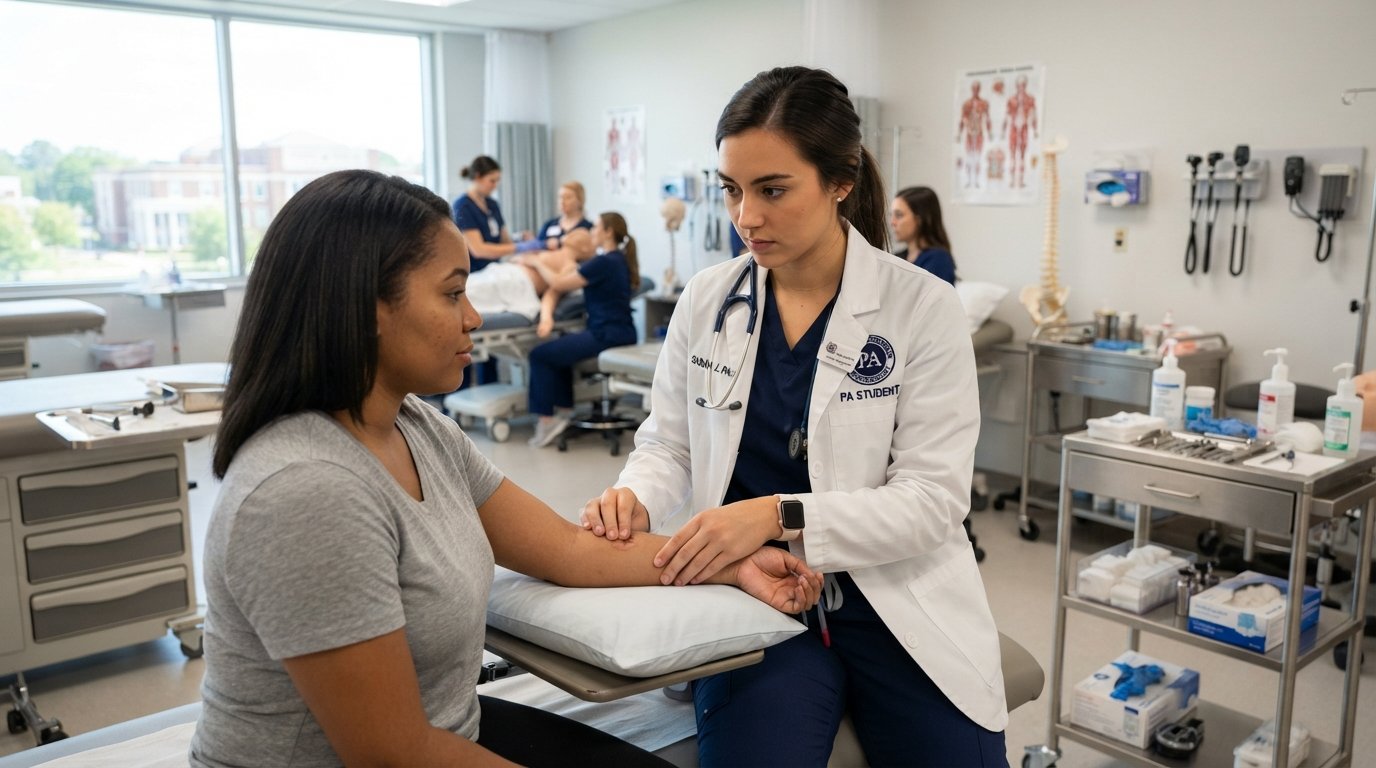
At Concordia University Ann Arbor, the PA program is designed for students who have already completed their undergraduate education and are ready to take the next step. The in-person format ensures that students receive hands-on training, face-to-face interaction with faculty, and access to clinical sites throughout Michigan and beyond. This residential model fosters a strong sense of community and allows students to build the professional networks that will support them throughout their careers. For those who thrive in a structured, collaborative environment, the in-person experience at Concordia offers distinct advantages over online or hybrid alternatives.
Program Overview: What to Expect from Concordia's PA Program
The Master of Science in Physician Assistant Studies at Concordia University Ann Arbor is a 27-month, full-time program that integrates basic science, clinical medicine, and professional practice. Students begin with a didactic phase that covers anatomy, physiology, pharmacology, pathophysiology, and clinical skills, all taught in small-group settings that encourage active learning. The curriculum is grounded in evidence-based medicine and emphasizes critical thinking, patient communication, and ethical decision-making. Faculty members are experienced clinicians who bring real-world perspectives to the classroom, and the program's Christian mission informs a holistic approach to patient care.
After completing the didactic year, students transition to the clinical phase, where they rotate through core specialties such as family medicine, internal medicine, pediatrics, obstetrics and gynecology, surgery, and behavioral health. These rotations take place at hospitals, clinics, and private practices across the region, giving students exposure to diverse patient populations and practice settings. Students also complete elective rotations in areas of interest, such as emergency medicine, dermatology, or orthopedics. Throughout the clinical year, students are supervised by licensed physicians and PAs who provide mentorship and feedback, ensuring that graduates are practice-ready upon completion.
The program culminates in a capstone experience that includes a comprehensive exam and a research project or quality improvement initiative. Graduates are eligible to sit for the PANCE and apply for state licensure. Concordia's PA program has a strong reputation for producing competent, compassionate clinicians who are well-prepared for the demands of modern healthcare. The in-person format allows for immediate feedback, hands-on skill development, and the formation of lasting professional relationships with peers and faculty. For students who value a supportive learning community and a clear pathway to licensure, Concordia's program stands out as a compelling option.
Admissions Requirements and Prerequisites
Admission to Concordia's PA program is competitive, and applicants are expected to have a strong academic background, relevant healthcare experience, and a clear understanding of the PA role. The program requires a bachelor's degree from a regionally accredited institution, completed coursework in anatomy, physiology, microbiology, chemistry, and statistics, and a minimum cumulative GPA of 3.0 (though the average admitted student has a higher GPA). Applicants must also complete a minimum number of patient care experience hours, which can be gained through roles such as medical assistant, EMT, paramedic, scribe, or physical therapy aide. This requirement ensures that students enter the program with a foundational understanding of clinical practice and patient interaction.
In addition to academic and experiential requirements, applicants must submit three letters of recommendation, a personal statement, and scores from the Graduate Record Examination (GRE) or the Physician Assistant College Admission Test (PA-CAT). The program also requires completion of a Casper situational judgment test, which assesses interpersonal skills and professionalism. International applicants must demonstrate English proficiency through TOEFL or IELTS scores. The admissions committee reviews applications holistically, considering factors such as resilience, cultural competence, and a commitment to serving underserved communities. Prospective students are encouraged to attend information sessions and speak with admissions counselors to ensure they understand the full scope of requirements and deadlines.
Because the program is in-person and cohort-based, students should plan to relocate to the Ann Arbor area for the duration of their studies. The university offers resources to help students find housing, and the surrounding community provides a welcoming environment for graduate students. For those who are considering a career in healthcare but are unsure whether the PA path is right for them, exploring resources such as Careers.org can provide valuable insights into the day-to-day responsibilities, work settings, and advancement opportunities available to PAs. Understanding these details before applying can help applicants craft stronger personal statements and make more informed decisions about their future.
Costs, Financial Aid, and Return on Investment
The cost of attending a physician assistant program is a significant consideration for most students. At Concordia University Ann Arbor, tuition for the PA program is set at a per-credit rate, and students should also budget for fees, books, supplies, housing, and transportation. Because the program is 27 months long, students should plan for living expenses over that period. While the total cost may seem daunting, it is important to view the expense in the context of the earning potential and job security that a PA career offers. Graduates typically earn starting salaries that allow them to repay student loans within a few years, especially if they pursue loan repayment programs or work in underserved areas.
Financial aid options for PA students include federal Direct Unsubsidized Loans, Grad PLUS Loans, and private loans. Concordia's financial aid office can help students navigate the application process and identify scholarship opportunities. Some students may qualify for institutional scholarships or external awards from professional organizations such as the American Academy of Physician Assistants. Additionally, some employers offer tuition reimbursement or loan repayment assistance for employees who pursue advanced degrees in healthcare. Prospective students should complete the Free Application for Federal Student Aid (FAFSA) as early as possible and explore all available funding sources before committing to the program.
When evaluating the return on investment, it is helpful to consider not only the cost of tuition but also the opportunity cost of not working full-time during the program. However, the long-term financial benefits of a PA career, including competitive salaries, benefits, and job stability, typically outweigh the short-term sacrifices. The Bureau of Labor Statistics projects strong demand for PAs across all healthcare settings, and the aging population is expected to drive continued growth in the field. For students who are passionate about patient care and willing to invest in their education, the PA program at Concordia University Ann Arbor offers a pathway to a rewarding and financially secure career.
Clinical Training and In-Person Learning Advantages
One of the most distinctive features of Concordia's PA program is its emphasis on in-person, experiential learning. The clinical phase places students in real healthcare settings where they apply classroom knowledge to patient care. This hands-on approach is essential for developing the clinical reasoning, procedural skills, and professional judgment that PAs need in practice. Students learn to take histories, perform physical exams, order and interpret diagnostic tests, and develop treatment plans under the guidance of experienced preceptors. The in-person format also allows for simulation-based training, where students practice procedures and respond to emergency scenarios in a controlled environment.
The clinical rotations are arranged by the program and take place at affiliated sites throughout Michigan and neighboring states. Students may be assigned to urban hospitals, rural clinics, community health centers, or private practices, providing a broad exposure to different practice models and patient populations. This diversity is invaluable for students who are considering a career in primary care, specialty medicine, or underserved communities. Throughout the clinical year, students are supported by faculty advisors who monitor their progress and provide additional instruction as needed. The relationships that students build with preceptors often lead to job offers or mentorship opportunities after graduation.
In addition to clinical skills, the in-person format fosters the development of interprofessional teamwork and communication skills. Students participate in case discussions, grand rounds, and collaborative projects with other health professions students, preparing them for the team-based nature of modern healthcare. The program also emphasizes cultural humility and health equity, encouraging students to consider social determinants of health and to advocate for their patients. These values are central to Concordia's mission and are woven throughout the curriculum.
Accreditation, Licensure, and Career Outcomes
Concordia University Ann Arbor's PA program is accredited by the Accreditation Review Commission on Education for the Physician Assistant (ARC-PA), which ensures that the program meets rigorous standards for curriculum, faculty, resources, and student outcomes. Graduates are eligible to sit for the PANCE, a national certification exam that is required for licensure in all states. The program's first-time PANCE pass rate is consistently high, reflecting the quality of instruction and the preparedness of graduates. Students should be aware that licensure requirements vary by state, and they should review the specific requirements of the state where they intend to practice.
Career outcomes for PA graduates are strong across the board. PAs work in a variety of settings, including primary care clinics, hospitals, emergency departments, surgical specialties, and long-term care facilities. Some PAs pursue additional training in areas such as cardiology, oncology, or psychiatry, while others move into leadership, education, or research roles. The versatility of the PA credential allows for career mobility and the ability to adapt to changing healthcare needs. Concordia's alumni network provides ongoing support and professional development opportunities, helping graduates stay connected and advance in their careers.
For students who are considering a career in healthcare but are not yet ready to commit to a PA program, exploring related fields such as environmental science can provide a broader perspective on health and the environment. In our guide on the Environmental Science Bachelor's Degree at Concordia University-Wisconsin, we explain how undergraduate programs in related fields can prepare students for interdisciplinary careers. While environmental science is distinct from physician assistant studies, both fields require a strong foundation in science and a commitment to improving communities. The key is to choose a path that aligns with your interests, values, and long-term goals.
Is the In-Person PA Program at Concordia Right for You?
Deciding whether to pursue a PA program is a deeply personal decision that depends on your career goals, learning style, and financial situation. The in-person format at Concordia University Ann Arbor is ideal for students who benefit from face-to-face instruction, structured schedules, and a strong sense of community. If you thrive in collaborative environments and want to build close relationships with faculty and peers, this program offers a supportive and challenging experience. The Christian mission of the university also appeals to students who value service, ethics, and holistic care.
Prospective applicants should carefully review the prerequisites, application timeline, and costs before applying. It is also helpful to shadow a practicing PA, volunteer in a healthcare setting, and speak with current students or alumni to gain a realistic understanding of the program's demands and rewards. The admissions team at Concordia is available to answer questions and provide guidance throughout the application process. By taking the time to research and prepare, you can position yourself as a competitive candidate and make a confident decision about your future.
In summary, the physician assistant beyond bachelor's degree in-person at Concordia University Ann Arbor is a rigorous, rewarding pathway to a fulfilling healthcare career. The program combines academic excellence, clinical experience, and a supportive community to prepare graduates for success in a rapidly evolving field. If you are ready to take the next step in your education and career, consider reaching out to Concordia's admissions office to learn more about how this program can help you achieve your goals.