
Find Technical Colleges With High-Value Career Programs
Technical colleges that offer practical career programs provide direct training for in-demand jobs, often leading to employment in two years or less. This path focuses on hands-on skills and industry alignment for a faster return on investment.

By Lisa Bennett
In today’s rapidly evolving job market, a four-year university degree is no longer the sole, or even the most direct, path to a stable and rewarding career. For many students, the promise of immediate, hands-on training leading directly to in-demand jobs is a far more compelling proposition. This is the core mission of technical colleges that offer practical career programs. These institutions are designed not just to educate, but to equip, providing students with the specific skills, certifications, and real-world experience that employers are actively seeking. If your goal is to enter the workforce quickly with a valuable credential, understanding the landscape of technical and vocational education is your first critical step.
What Defines a Modern Technical College?
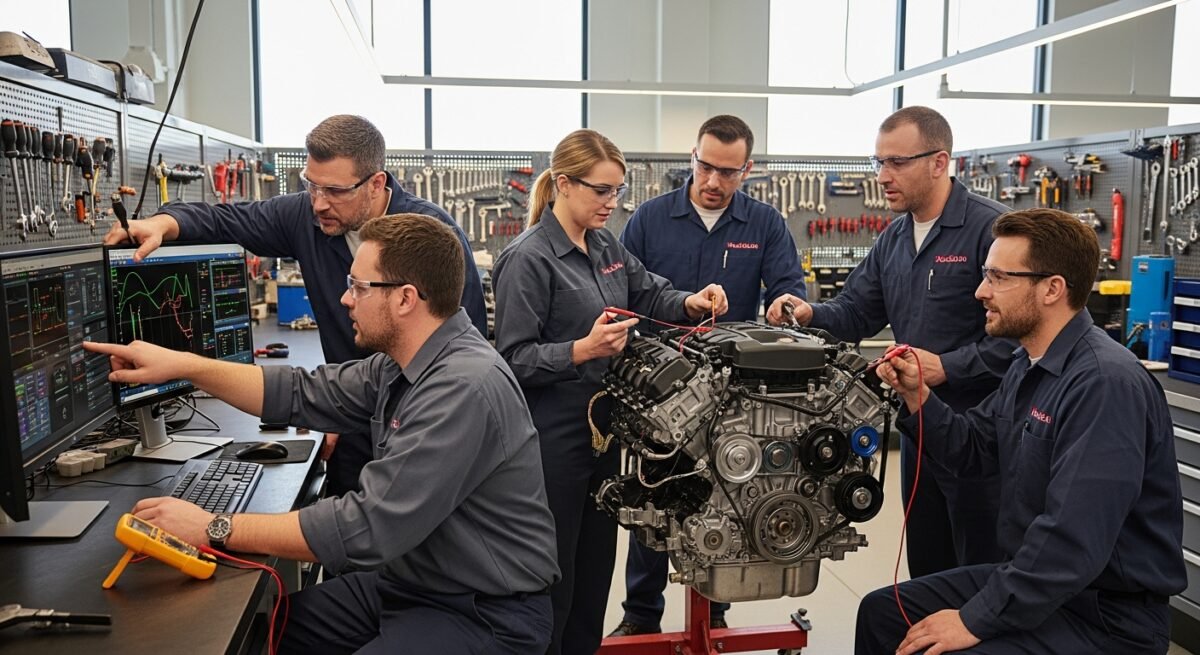
The term “technical college” encompasses a diverse range of post-secondary institutions, but they share a common DNA: a laser focus on career readiness. Unlike traditional liberal arts curricula, programs at a technical college are built from the ground up around industry standards and workforce needs. The pedagogy emphasizes applied learning over theoretical study. You are more likely to find students welding in a bay, diagnosing automotive systems, coding in a lab, or practicing patient care in a simulated clinic than debating in a lecture hall. This model significantly reduces the gap between classroom learning and job performance, creating graduates who can contribute from day one.
Modern technical colleges have also evolved beyond their historical roots in trades like construction and manufacturing. While those remain vital pathways, today’s technical education landscape includes advanced fields such as cybersecurity, robotics, healthcare technology, renewable energy, and data analytics. The defining characteristic is not the field itself, but the program’s structure: intensive, skill-based, and closely aligned with specific occupational outcomes. Furthermore, many technical colleges have forged deep partnerships with local and national employers. These relationships often guide curriculum development, provide guest instructors, supply modern equipment, and, most importantly, create pipelines for internships and job placements.
Key Benefits of Choosing a Career-Focused Technical Program
Opting for a technical college program is a strategic decision with several distinct advantages. The most prominent benefit is time-to-employment. Many career certificates and associate degrees can be completed in two years or less, allowing you to enter your chosen field and start earning a salary much faster than with a traditional four-year degree. This accelerated timeline also translates to lower overall education costs, including reduced tuition and less time out of the full-time workforce. The financial equation is a major consideration for many students and families navigating college cost & financial planning.
The curriculum’s practicality is another paramount advantage. Every course is typically designed with a direct application to the job. There is little to no “filler” coursework. You learn how to perform tasks, operate equipment, use industry-standard software, and adhere to professional protocols. This creates a high level of competency and confidence. Additionally, technical programs are often taught by instructors who are veterans of the industry they are teaching, bringing current, real-world insights and professional networks into the classroom. Finally, many technical colleges boast high job placement rates, as their success is measured by their graduates’ employment outcomes. Career services departments are intensely focused on connecting students with employers, often through job fairs, interview preparation, and portfolio reviews.
How to Identify and Evaluate High-Quality Technical Programs
Not all technical colleges are created equal. Conducting thorough research is essential to ensure you invest your time and money in a program that will deliver on its promises. Your evaluation should begin with accreditation. Regional or national accreditation is a non-negotiable baseline, as it ensures the institution meets accepted standards of quality and that your credits may transfer if you pursue further education later. For specific trades, look for programmatic accreditation from respected industry bodies (e.g., ABET for engineering technology, ACCSC for career schools).
Next, investigate tangible outcomes. A reputable technical college will be transparent about its graduation rates, job placement rates, and licensure exam pass rates. Don’t hesitate to ask admissions counselors for this data. Scrutinize the curriculum and facilities. Does the program use up-to-date equipment and technology? Does the course catalog reflect current industry trends? Speaking with current students and alumni can provide unfiltered insights into the student experience and career results. Finally, consider the strength of the college’s industry connections. Ask about apprenticeship opportunities, internship partnerships, and which companies regularly hire graduates. A program with robust employer ties is a strong indicator of its market relevance.
When researching, it’s valuable to explore all available educational formats. Many technical skills can now be acquired through online associate degree programs, which offer flexibility for those balancing work or family commitments while pursuing career advancement.
Top In-Demand Fields for Technical College Graduates
The demand for skilled technical professionals spans nearly every sector of the economy. By aligning your training with these high-growth areas, you position yourself for long-term stability and opportunity. Here are some of the most promising fields where technical colleges that offer practical career programs excel:
- Healthcare and Medical Technology: The aging population ensures continuous demand. Programs include Nursing (LPN/LVN), Medical Assisting, Radiologic Technology, Surgical Technology, Dental Hygiene, and Health Information Technology. These roles often require specific certifications and offer clear career lattices for advancement.
- Information Technology and Cybersecurity: Digital infrastructure is critical. Technical colleges offer focused programs in Network Administration, Cybersecurity Analysis, Computer Support Specialist roles, Cloud Computing, and Software Development. Certifications from companies like Cisco, CompTIA, and Microsoft are frequently integrated into the curriculum.
- Advanced Manufacturing and Robotics: Modern manufacturing is high-tech. Careers include CNC Machining, Welding Technology (especially advanced processes), Robotics Technician, Mechatronics, and Industrial Maintenance. These roles are crucial in sectors from aerospace to automotive.
- Skilled Trades and Construction: There is a significant shortage of skilled tradespeople. Electrician, Plumber, HVAC-R Technician, and Construction Management programs lead to well-compensated, essential careers that are difficult to offshore or automate.
- Transportation and Logistics: This field keeps the economy moving. Diesel and Automotive Technology, Aviation Maintenance, Commercial Driving (CDL), and Supply Chain Management programs are directly tied to massive, ongoing industry needs.
Each of these fields typically offers a combination of classroom instruction and extensive hands-on lab work, culminating in an internship, externship, or apprenticeship that provides the final, critical layer of real-world experience.
Navigating the Financial Aspects of Technical Education
While often more affordable than a four-year degree, technical education still requires a financial plan. The first step is to complete the Free Application for Federal Student Aid (FAFSA). This unlocks federal grants, like the Pell Grant, which do not need to be repaid, as well as federal student loans. Many states also offer their own grant programs for residents attending in-state technical colleges. Importantly, numerous technical programs qualify for these standard forms of aid, provided the institution is accredited.
Beyond federal aid, explore scholarships specifically for career and technical education. These are offered by community foundations, industry associations, and the technical colleges themselves. Many employers also sponsor tuition reimbursement or apprenticeship programs where you earn while you learn. When evaluating cost, look beyond just tuition. Factor in fees, tools, uniforms, and required materials, which can be substantial in some trades. However, also consider the potential return on investment: compare the total program cost to the average starting salary for that occupation in your region. For many technical careers, this ROI is positive and rapid.
Frequently Asked Questions
Can credits from a technical college transfer to a four-year university?
It depends on the accreditation of the technical college and its articulation agreements with local universities. Many regionally accredited community colleges that offer technical associate degrees have designed their programs for transfer. Credits from nationally accredited career colleges may not transfer as easily. Always check with both the technical college and the target university before enrolling if you think you might pursue a bachelor’s degree later.
Are technical college graduates in high demand?
Absolutely. There is a well-documented skills gap in the United States and many other economies, where employers have more job openings for skilled technical workers than there are qualified applicants to fill them. This demand often leads to competitive salaries, job security, and opportunities for advancement.
What’s the difference between a certificate, a diploma, and an associate degree at a technical college?
A certificate program is the shortest, often focusing on a very specific skill set and taking a few months to a year. A diploma program is typically more comprehensive than a certificate but less so than a degree, often taking 1-2 years. An Associate of Applied Science (AAS) degree is the most comprehensive, usually a two-year program that includes general education courses (like math and communication) alongside the technical core, providing a broader academic foundation.
Do I need any prior experience or specific high school courses to apply?
Most technical colleges have open admissions or minimal prerequisites, such as a high school diploma or GED. However, some competitive programs in fields like nursing or allied health may require specific high school math or science grades, placement tests, or prior coursework. Always check the specific admission requirements for your program of interest.
Choosing the right educational path is one of the most significant decisions you will make. For individuals seeking a direct, efficient route to a fulfilling career, technical colleges that offer practical career programs represent a powerful and often overlooked option. By focusing on skill mastery, industry alignment, and employment outcomes, these institutions provide a tangible alternative to the traditional degree path. The key to success lies in diligent research: verifying accreditation, assessing outcomes, and ensuring the program aligns with both your career aspirations and the demonstrated needs of the modern workforce. With the right training, you can build a stable, prosperous future based on the value of your hands-on skills.