
How Campus Educational Programs Enhance Learning Outcomes
Campus educational programs integrate hands-on learning, research, and professional development to boost graduate outcomes. They bridge academic theory with real-world application for a complete education.

By Lisa Bennett
For countless students, the phrase “college education” conjures a static image of lecture halls, textbooks, and final exams. Yet, the most transformative academic experiences rarely occur in these traditional settings alone. The true power of a university education lies in its ecosystem of integrated, hands-on campus educational programs. These initiatives extend learning beyond the syllabus, weaving academic theory into the fabric of practical application, community engagement, and professional development. They are the bridge between knowing and doing, transforming passive students into active scholars, innovators, and leaders. In an era where digital learning methods offer unprecedented flexibility, the curated, immersive environment of a physical campus provides irreplaceable value through these structured, co-curricular, and experiential programs.
The Core Components of a Modern Educational Ecosystem
A contemporary university campus is no longer merely a collection of academic departments. It functions as a dynamic learning laboratory, where formal instruction is synergistically supported by a network of programs designed to develop the whole student. This ecosystem is built on several foundational pillars that work in concert. The first is the academic core itself, which is now frequently augmented by specialized honors colleges, undergraduate research initiatives, and writing across the curriculum programs. These are not add-ons but are integrated into the degree pathway, ensuring that critical thinking and scholarly inquiry are cultivated from day one.
Beyond the classroom, career and professional development programs form a crucial second pillar. These include dedicated career centers offering resume workshops and mock interviews, but more importantly, they facilitate co-operative education (co-op) programs, mandatory internships for academic credit, and industry-led practicums. Such programs provide students with tangible work experience, often clarifying career paths and building professional networks long before graduation. A third, equally vital pillar is student support and enrichment. This encompasses everything from peer tutoring and academic success workshops to first-year experience seminars and diversity and inclusion programming. These resources ensure students from all backgrounds have the tools to navigate academic and social challenges, promoting retention and success.
Experiential Learning as a Differentiator
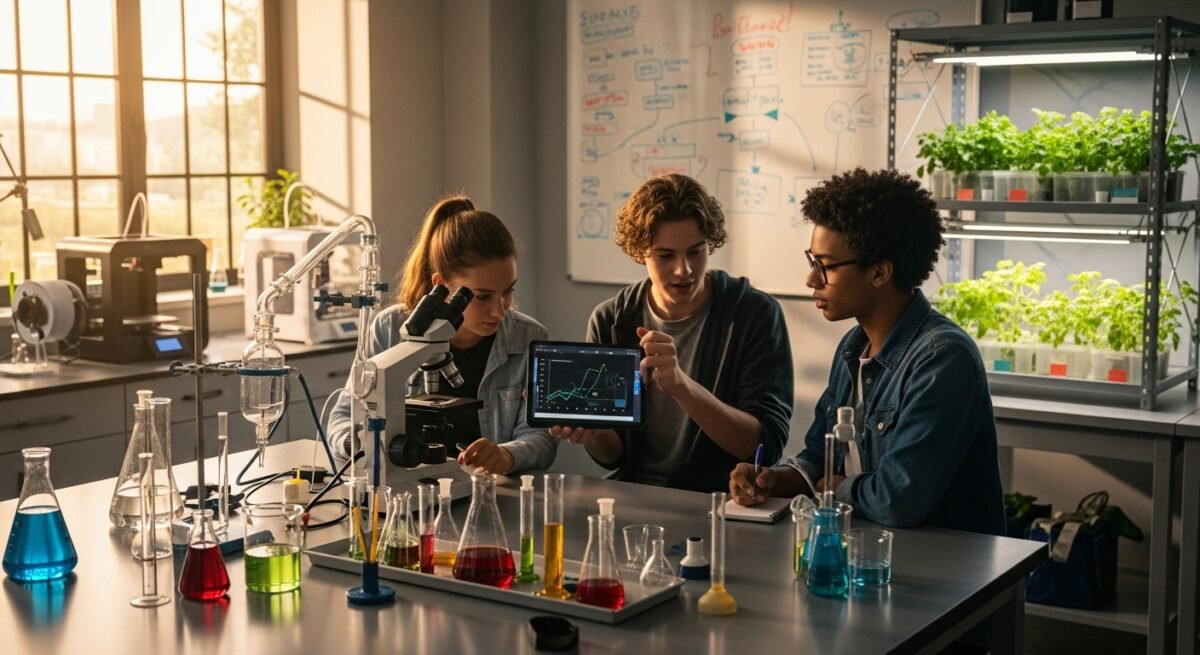
Among these pillars, experiential learning has emerged as the most significant differentiator for campus-based education. It represents the active application of theory in real-world contexts. Key modalities include undergraduate research fellowships, where students work alongside faculty on original projects; service-learning courses that combine academic objectives with community service; and study abroad/away programs that immerse students in new cultural and academic environments. The impact is profound. Students engaged in these programs report higher levels of motivation, a deeper understanding of their field, and enhanced problem-solving skills. They learn to tolerate ambiguity, collaborate in diverse teams, and communicate complex ideas effectively—competencies highly sought after in the global workforce.
For instance, a biology major participating in a wetland restoration research project gains not only technical lab skills but also learns about environmental policy, community stakeholder engagement, and scientific communication. This holistic learning is difficult to replicate in a purely online setting. The campus provides the physical infrastructure—labs, field stations, art studios, performance halls—and the curated community necessary to support these intensive, hands-on experiences. It creates a “sandbox” where failure is a part of learning, guided by mentors who provide immediate feedback and support.
Integrating Technology and Innovation on Campus
The modern campus educational program does not exist in a technological vacuum. Instead, forward-thinking institutions are leveraging cutting-edge tools to amplify traditional strengths. This integration creates a hybrid model where digital fluency is developed alongside interpersonal skills. Makerspaces and innovation hubs are now common fixtures, providing students with access to 3D printers, VR development kits, and prototyping tools for courses in engineering, art, and business alike. These spaces democratize innovation, allowing students from philosophy to physics to experiment with turning ideas into tangible prototypes.
Furthermore, academic disciplines are increasingly intertwined with technological frontiers. Dedicated campus programs in Data Science, Artificial Intelligence, and the Internet of Things often feature project-based curricula that tackle real industry problems. Similarly, Blockchain applications are explored not just in computer science departments but within business, law, and supply chain management programs. This interdisciplinary approach, housed in collaborative campus spaces, prepares students for the convergent nature of modern problems. Even fields like healthcare administration and nutrition are integrating data analytics and digital health tools into their campus programs, ensuring graduates are ready for the evolving landscapes of their professions.
Strategic use of technology also personalizes the learning journey. Adaptive learning platforms may be used in large introductory courses to ensure mastery of fundamentals, freeing up campus class time for higher-order discussions, debates, and group work. This flipped model maximizes the value of face-to-face interaction, which remains the cornerstone of the campus experience. The goal is not to replace human connection but to use technology to make it more meaningful and productive.
Navigating Costs and Maximizing Value
A significant consideration for any student and family is the investment in a campus-based education. The value proposition hinges on the return generated by the complete suite of experiences and programs, not just the degree credential. To manage costs, students must be proactive in seeking out institutional aid and external funding sources. A comprehensive financial strategy is essential.
Key steps include completing the FAFSA (Free Application for Federal Student Aid) as early as possible to unlock federal grants, work-study opportunities, and loans. Students should also diligently search for and apply to institutional scholarships offered by the university itself, which are often based on merit, talent, or specific majors. Beyond university walls, numerous private organizations, non-profits, and community foundations offer scholarships. Diligent research and meeting application deadlines are critical. For detailed guidance and aggregated opportunities, prospective students can explore comprehensive resources like Scholarship & Financial Aid Resources. Furthermore, participating in campus programs like paid internships, co-ops, or teaching assistantships can provide valuable income and experience simultaneously.
To truly maximize the value of tuition dollars, students must actively engage with the campus ecosystem from the start. This means going beyond required courses to build relationships with professors, seeking out research assistant positions, joining academic clubs related to their field, and utilizing career center services early and often. The following list outlines a proactive engagement strategy for students:
- First Year: Focus on foundational courses and explore broadly. Attend major fairs, join one or two student organizations, and establish a relationship with an academic advisor. Begin using the career center to explore interests.
- Second Year: Declare a major and delve deeper. Seek out a faculty mentor, apply for smaller-scale research or creative projects, and target a summer internship or specific skill-building workshop.
- Third Year: Pursue advanced experiential learning. Secure a significant internship, co-op, or study abroad program. Present at an undergraduate research symposium. Begin networking with alumni in desired fields.
- Fourth Year: Synthesize and transition. Complete a capstone thesis or project. Utilize career center for graduate school applications or job search preparation. Solidify professional network and mentor relationships.
This structured engagement ensures students fully leverage the programs their tuition supports, transforming their education from a passive consumption of information into an active construction of their future.
The Future of Campus-Based Learning
The future of campus educational programs lies not in resisting digital transformation but in redefining the unique value of place-based learning. Campuses will increasingly function as hubs for collaboration and human-centered innovation that cannot be digitized. We will see a greater emphasis on transdisciplinary “grand challenge” programs that bring together students from STEM, social sciences, and the humanities to work on complex issues like climate resilience or public health equity. These programs will rely heavily on the serendipitous interactions and sustained teamwork that a physical campus nurtures.
Furthermore, the line between undergraduate and graduate education may continue to blur, with more accelerated master’s programs and integrated bachelor’s-to-doctoral pathways becoming standard offerings. Lifelong learning will also be embedded into the campus model, with alumni returning for micro-credentialing programs, executive education, and seminars that leverage both online and on-campus resources. The campus will evolve into a perpetual learning community. Ultimately, the most successful institutions will be those that consciously design their campus educational programs as a coherent, interconnected journey—one that builds human capital, fosters resilient communities, and equips graduates not just for their first job, but for a lifetime of adaptive learning and leadership. The immersive, integrated experience they provide remains a powerful catalyst for intellectual and personal transformation.