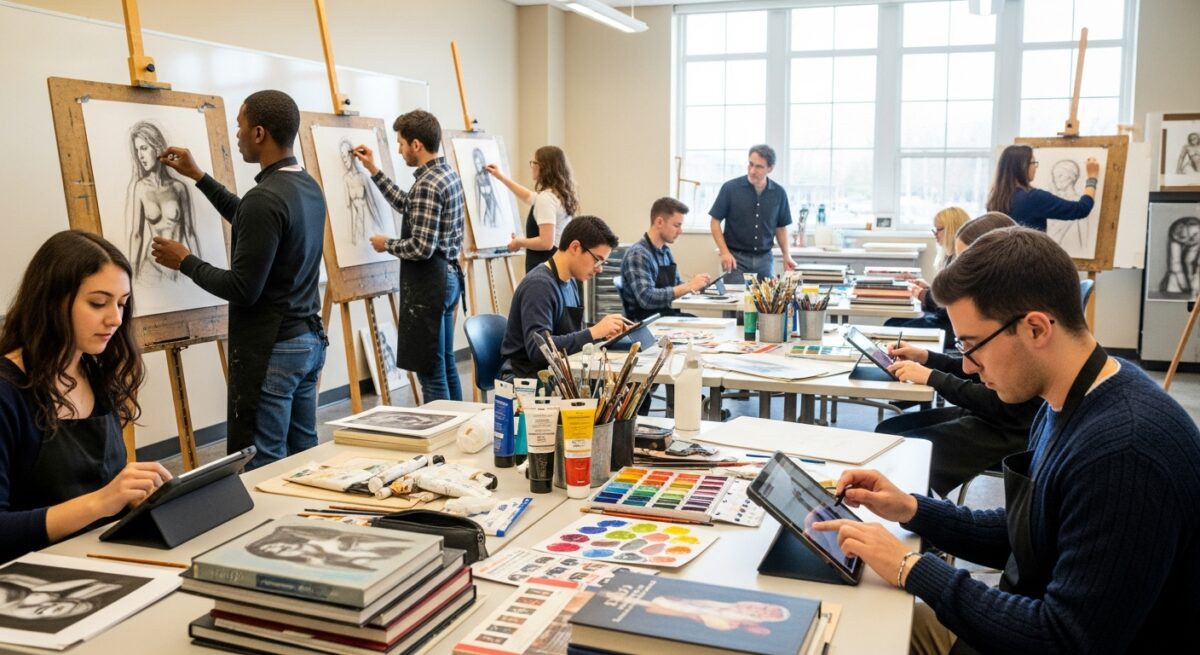
Pursuing a degree in the arts does not have to mean drowning in student debt. Many talented students assume that a career in creative fields requires attending a prestigious, high-cost private institution. However, a growing number of accredited schools offer exceptional programs at a fraction of the price. By focusing on value and understanding where to look, you can find some of the cheapest art schools and affordable creative education options that lead to meaningful careers without the financial hangover.
The key is to shift your mindset from chasing brand names to evaluating return on investment. Affordable creative education is not about settling for less; it is about being strategic. Community colleges, state universities, and specialized public art institutes often provide the same foundational skills and networking opportunities as their expensive counterparts. In fact, many successful illustrators, graphic designers, and studio artists began their journeys at low cost art programs before transferring to finish their degrees at larger institutions.
This guide will walk you through the most affordable pathways, highlight specific schools that balance cost and quality, and explain how to maximize financial aid. Whether you are a high school senior or a career changer, the information below will help you build a practical plan for funding your creative future. For a broader look at managing college expenses across different fields, our guide on affordable higher education in New Hampshire offers useful strategies that apply nationwide.
Why Affordable Creative Education Matters More Than Ever
The cost of higher education has risen dramatically over the past two decades, and art schools have not been immune. Tuition at private art institutes can exceed $50,000 per year, a figure that forces many graduates into years of loan repayment. This financial pressure can stifle the very creativity a degree was meant to foster. Choosing an affordable art college allows you to graduate with manageable debt, giving you the freedom to take internships, freelance gigs, or entry-level positions that build your portfolio rather than just paying bills.
Furthermore, employers in creative industries care more about your portfolio and skills than the name on your diploma. A degree from a low cost art program at a respected public university can open just as many doors as one from a private school, provided you complete strong projects and network effectively. The stigma around affordable options is fading as more industry leaders recognize the talent emerging from these programs.
Top Strategies for Finding Low Cost Art Programs
Before diving into specific schools, it helps to understand the strategies that make the cheapest art schools accessible. These approaches can reduce your total cost by thousands of dollars.
- Start at a community college: Complete general education requirements and introductory art courses at a local community college. Transfer to a four-year institution later. This can cut total costs by 40 percent or more.
- Attend an in-state public university: Public universities offer significantly lower tuition for state residents. Many have strong art departments with dedicated faculty and studio space.
- Apply for school-specific scholarships: Many affordable art colleges offer merit-based scholarships for portfolios and academic achievement. These can further reduce an already low sticker price.
- Consider online or hybrid programs: Some accredited institutions offer fully online art degrees at lower tuition rates, saving you room and board costs as well.
- Use the FAFSA and state grants: Federal Pell Grants and state-based aid do not require repayment. File the FAFSA early to maximize your eligibility.
Each of these strategies works best when combined. For example, attending community college for two years and then transferring to an in-state university while using Pell Grants can result in a bachelor’s degree for under $20,000 in total costs. This approach to affordable creative education is practical and widely available.
Specific Cheapest Art Schools Worth Considering
Below are several institutions known for offering high-quality art programs at lower-than-average tuition. These schools represent some of the best value in the country for creative students.
University of Texas at Tyler
The University of Texas at Tyler offers a Bachelor of Fine Arts with concentrations in studio art, graphic design, and art history. As a public university, tuition for in-state students is remarkably low, often under $10,000 per year. The program emphasizes hands-on studio experience and digital media. Students benefit from small class sizes and faculty who are practicing artists. Out-of-state tuition is also competitive compared to private alternatives.
California State University, Northridge (CSUN)
CSUN is one of the most affordable art colleges in California. Its Department of Art and Design offers degrees in animation, illustration, graphic design, and photography. In-state tuition hovers around $7,000 per year. The school is located in Los Angeles, giving students access to a major creative job market. Internships with studios and design firms are common. CSUN’s low cost art programs do not sacrifice quality; the faculty includes award-winning professionals.
University of Florida
The University of Florida’s School of Art and Art History is consistently ranked among the best public art programs in the nation. In-state tuition is approximately $6,300 per year, making it one of the cheapest art schools for Florida residents. The program offers BFA and BA tracks in drawing, painting, sculpture, graphic design, and digital arts. UF also provides substantial financial aid packages and scholarships for art students. The campus has excellent studio facilities and a strong alumni network.
Minneapolis College of Art and Design (MCAD) – with caution
MCAD is a private nonprofit art school with a higher sticker price, but it offers generous merit scholarships that can bring the cost down significantly. For students who receive substantial aid, MCAD can become a viable option. However, it is important to compare the net price after scholarships, not the published tuition. For most students, the public universities above will remain the cheapest art schools overall.
How to Calculate the True Cost of an Art Degree
When evaluating affordable art colleges, look beyond tuition. The total cost of attendance includes fees, supplies, housing, food, transportation, and health insurance. Art programs often require expensive materials, software subscriptions, and printing fees. Some schools include these costs in their estimates, while others do not.
To get an accurate picture, use the net price calculator on each school’s website. This tool asks for your family income and assets, then estimates what you will actually pay after grants and scholarships. Compare net prices across several schools. A school with a higher sticker price but generous aid may end up being cheaper than a low-tuition school that offers no aid. This is especially true for low cost art programs that serve a large number of in-state students.

Additionally, consider the cost of living in the school’s location. A university in a rural area may have lower housing costs than one in a major city. If you are open to online learning, you can eliminate housing and transportation costs entirely. Many affordable creative education options now exist fully online, allowing you to study from home while working part-time.
Financial Aid and Scholarships for Art Students
Financial aid is the single most important factor in making the cheapest art schools even more affordable. Every student should complete the Free Application for Federal Student Aid (FAFSA) as early as possible. This determines eligibility for Pell Grants, which can provide up to $7,395 per year (as of 2025) that does not need to be repaid. Many states also offer grant programs for residents attending in-state schools.
Beyond federal aid, art students have access to specialized scholarships. The Scholastic Art and Writing Awards, the National YoungArts Foundation, and the American Society of Illustrators all offer scholarships for talented high school students. Many affordable art colleges also have portfolio-based scholarships. Submitting a strong portfolio can reduce your tuition by thousands of dollars per year. Do not assume that low cost art programs do not have scholarship money; many set aside funds specifically to attract talented students.
Work-study programs are another valuable resource. The federal work-study program provides part-time jobs on campus, often in art departments, galleries, or libraries. These jobs not only pay for expenses but also build your resume and network. Combining work-study with grants and scholarships can make a degree from an affordable art college nearly debt-free.
Online and Hybrid Options for Creative Degrees
Online education has expanded dramatically, and art programs are no exception. Accredited online degrees in graphic design, digital media, and illustration are offered by several public universities at reduced tuition rates. Because you are not paying for campus facilities or housing, the total cost can be significantly lower than traditional programs. Online affordable creative education is ideal for students who need flexibility due to work or family obligations.
However, online art programs require self-discipline and reliable internet access. Studio courses like painting or sculpture are harder to replicate online, but digital art, photography, and design translate well. Some schools offer hybrid programs where core courses are online and studio courses are completed during intensive on-campus workshops. These options combine the best of both worlds: low tuition and hands-on experience. When researching online programs, verify that the school is regionally accredited and that the degree is recognized by employers.
Frequently Asked Questions
What is the single cheapest art school in the United States?
The cheapest art school varies by state of residence, but community colleges consistently offer the lowest tuition. For a four-year degree, the University of Texas at Tyler and California State University, Northridge are among the most affordable options for in-state students, with annual tuition under $10,000. Out-of-state students may find lower costs at online programs or schools in states with low non-resident tuition.
Can I get a good art education at a community college?
Yes. Many community colleges have excellent art programs with experienced faculty and strong transfer agreements with four-year universities. Completing your first two years at a community college is one of the best ways to pursue affordable creative education. Just ensure your credits will transfer to your target school.
Are there any fully free art schools?
There are no tuition-free four-year art schools in the United States. However, some schools like the Cooper Union in New York City offer full-tuition scholarships to all admitted students, but admission is extremely competitive. Most students rely on a combination of grants, scholarships, and work-study to reduce costs to near zero.
Do employers care if I attended a cheap art school?
Employers in creative fields prioritize your portfolio, skills, and experience over the school’s name. A strong body of work from a low cost art program can be just as impressive as a degree from a prestigious private school. Networking and internships matter more than prestige.
How do I find low cost art programs in my state?
Start by searching for public universities and community colleges in your state that offer art degrees. Use the Department of Education’s College Scorecard to compare costs and graduation rates. Contact the admissions office of each school to ask about art-specific scholarships and net price calculators.
Finding the cheapest art schools and affordable creative education requires research and planning, but the payoff is immense. By choosing a low-cost pathway, you can graduate with a strong portfolio, minimal debt, and the freedom to pursue the creative career you deserve. Learn more
About the Author: Lisa Bennett