
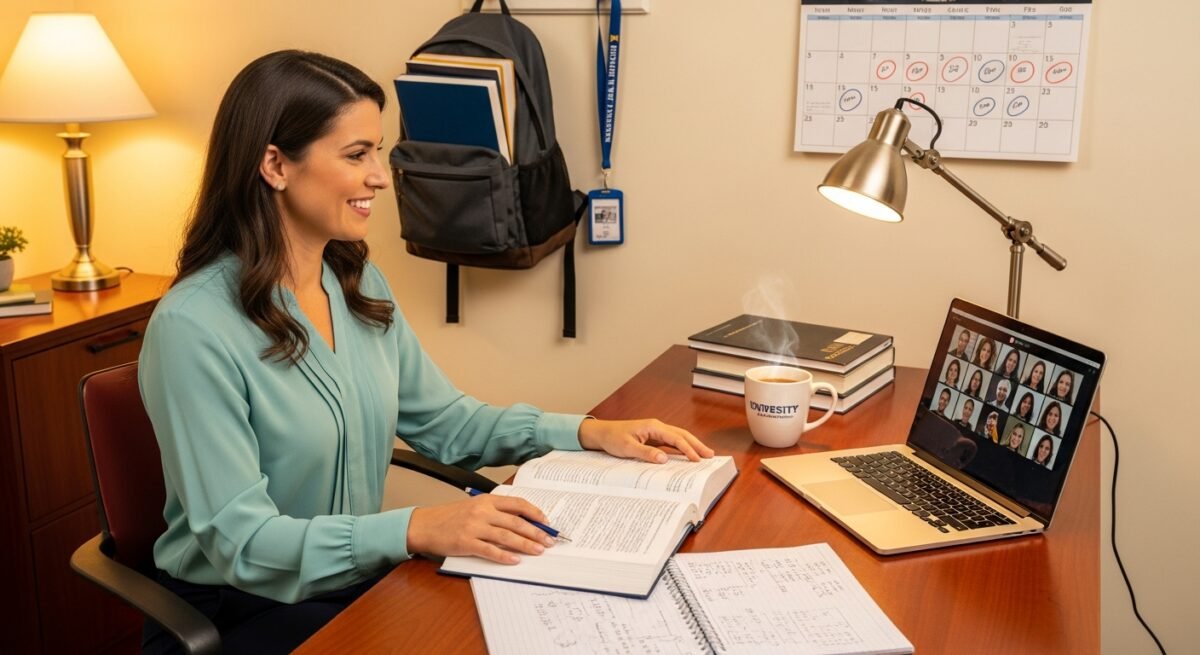
Hybrid Learning Programs: What They Are and How They Work
Hybrid learning programs blend online flexibility with essential in-person interaction, creating an accessible and engaging educational model. This approach helps students balance studies with work and life commitments while developing key digital skills.

By Andrew Wilson
Imagine designing an educational experience that offers the best of both worlds: the flexibility and self-paced nature of online coursework, combined with the invaluable face-to-face interaction, hands-on labs, and networking opportunities of a traditional campus. This is not a futuristic concept but the present reality of hybrid learning programs, a model that has evolved from an emergency solution into a deliberate, strategic approach to modern education. By blending synchronous and asynchronous elements, hybrid learning programs create a dynamic ecosystem that caters to diverse learning styles and life circumstances, from working professionals and parents to traditional students seeking a more adaptable college journey. This comprehensive exploration will dissect the structure, benefits, and strategic considerations of this powerful educational model.
The Core Structure of a Hybrid Learning Model
A hybrid learning program, sometimes called blended learning, is defined by its intentional integration of online and in-person instructional components. The key to its effectiveness lies in the deliberate design, where each modality is used to maximize its strengths. The online portion typically involves accessing lectures, readings, discussion forums, and assignments through a learning management system, allowing students to engage with the material on their own schedule. The in-person component, which may be scheduled weekly, bi-weekly, or in intensive weekend sessions, is reserved for activities that benefit most from physical presence: complex discussions, collaborative projects, laboratory work, presentations, and direct mentorship from instructors.
The ratio of online to in-person time can vary significantly between programs, often described as “low-residency” or “mixed-mode.” For instance, some programs might follow an 80/20 split, with the majority of content delivered online and periodic campus immersions. Others might have a 50/50 balance with weekly classroom meetings. This flexibility in structure is what allows institutions to tailor hybrid learning programs to specific disciplines; a hybrid MBA might focus on online case studies and monthly weekend workshops, while a hybrid engineering program would emphasize online theory coupled with mandatory, hands-on lab sessions on campus, as explored in resources on distance learning Engineering programs.
Key Advantages for Students and Institutions
The rise of hybrid learning programs is driven by tangible benefits that address the core challenges of accessibility, engagement, and cost in higher education. For students, the advantages are transformative. The most significant is flexibility, allowing individuals to maintain employment, family responsibilities, and other commitments while pursuing a degree. This accessibility opens doors for non-traditional students and those in geographically remote locations. Furthermore, the model fosters the development of crucial digital literacy and self-discipline skills highly valued in today’s workforce.
For institutions, hybrid learning programs offer a sustainable path to expand their reach and optimize resources. They can serve a larger and more diverse student body without proportional increases in physical campus infrastructure. The model also encourages pedagogical innovation, prompting faculty to thoughtfully curate content and redesign courses to leverage the best tools for each learning objective. When considering the broader landscape of educational options, a thoughtful comparison can be essential, similar to the process outlined in our guide on which program is right for me.
The concrete benefits of this model can be summarized as follows:
- Enhanced Accessibility: Breaks down geographical and scheduling barriers for a diverse student population.
- Improved Retention & Engagement: Combines the convenience of online learning with the motivational and relational benefits of in-person interaction.
- Development of Digital Fluency: Students gain proficiency with collaboration and learning technologies essential in modern professions.
- Cost-Effectiveness: Reduces commuting and, in some cases, relocation costs for students while allowing institutions to scale efficiently. Exploring Scholarship & Financial Aid Resources can further help mitigate the overall cost of any degree program.
- Personalized Learning Pathways: The online component allows for self-paced review, while in-person time can be focused on addressing individual challenges.
Implementing Hybrid Learning Effectively
Successful hybrid learning programs do not happen by accident; they require meticulous planning, robust technology, and committed support structures. The foundation is a reliable and intuitive learning management system (LMS) that serves as the digital hub for course materials, submissions, and communication. However, technology alone is insufficient. Faculty development is critical. Instructors must be trained not merely to use tools, but to redesign their curriculum with a “blended” mindset, understanding what content is best delivered asynchronously online and what experiences necessitate synchronous, in-person collaboration.
Student support services must also adapt to this dual-mode environment. This includes offering technical support for the online platform, providing academic advising virtually as well as in-person, and ensuring that library resources, tutoring, and career services are fully accessible to students regardless of their physical location. Clear, consistent communication about schedules, expectations, and how to access help is paramount to prevent students in hybrid learning programs from feeling isolated during their online phases. The structure should feel seamless, with the online and in-person elements feeding into and reinforcing one another to create a cohesive educational journey.
Choosing the Right Hybrid Program for Your Goals
With the growing popularity of this model, prospective students must become discerning evaluators. Not all hybrid learning programs are created equal. The first step is accreditation; ensuring the institution and the specific program hold recognized accreditation is non-negotiable for the value of your degree. Next, scrutinize the program’s specific blend. How often are on-campus meetings required, and what is the format? Are the in-person sessions truly interactive, or are they simply broadcast lectures? Understanding the actual time commitment, both online and offline, is crucial for balancing it with your other responsibilities.
Investigate the technology and support. What LMS does the program use, and what orientation is provided? What are the qualifications and involvement level of the faculty? Speaking with current students or alumni can provide invaluable insights into the real student experience, the quality of peer interaction, and the program’s effectiveness in meeting career objectives. Whether you’re aiming for a business, healthcare, or technology field, the principles of careful selection apply universally to ensure the program’s structure aligns with your learning preferences and professional aspirations.
As education continues to evolve beyond the binary of fully online or entirely on-campus, hybrid learning programs stand out as a sophisticated and responsive model. They acknowledge that learning is a multifaceted human experience that sometimes requires quiet, individual focus and at other times thrives on the dynamism of shared physical space. By intentionally designing for both, these programs offer a pragmatic and powerful pathway for lifelong learning. They represent not just a compromise, but a synthesis that can lead to deeper understanding, greater accessibility, and an education that fits the rhythm of modern life, preparing graduates not only with knowledge but with the adaptability to apply it in an ever-changing world.