
Job Ready Training: How Technical Schools Launch Careers
Technical schools that provide job ready training offer a direct path to in-demand careers through hands-on, industry-aligned programs. This approach leads to faster workforce entry and often lower student debt.

By Lisa Bennett
In a rapidly evolving job market, the direct path from education to employment is more valuable than ever. While traditional four-year degrees offer a broad foundation, many students and career-changers are seeking a more targeted, efficient route to stable, high-demand jobs. This is where technical schools that provide job ready training shine. These institutions are designed with a singular focus: equipping students with the precise, hands-on skills employers need right now. From healthcare and information technology to advanced manufacturing and skilled trades, technical education bridges the gap between learning and earning, often in two years or less. For those prioritizing a clear return on investment and a swift entry into the workforce, understanding the landscape of career-focused technical training is the first critical step.
The Core Advantage of Technical and Vocational Education
Technical schools, also known as vocational schools, career colleges, or trade schools, operate on a fundamentally different model than liberal arts colleges. Their curriculum is built backwards from industry requirements. Instead of a broad exploration of a field, students engage in concentrated, practical training on the specific tools, technologies, and procedures used in their chosen profession. This model creates several distinct advantages. First, program lengths are typically condensed, ranging from several months for a certification to two years for an associate degree. This accelerated timeline means students can enter the workforce and start earning a salary much sooner, often with significantly less student debt.
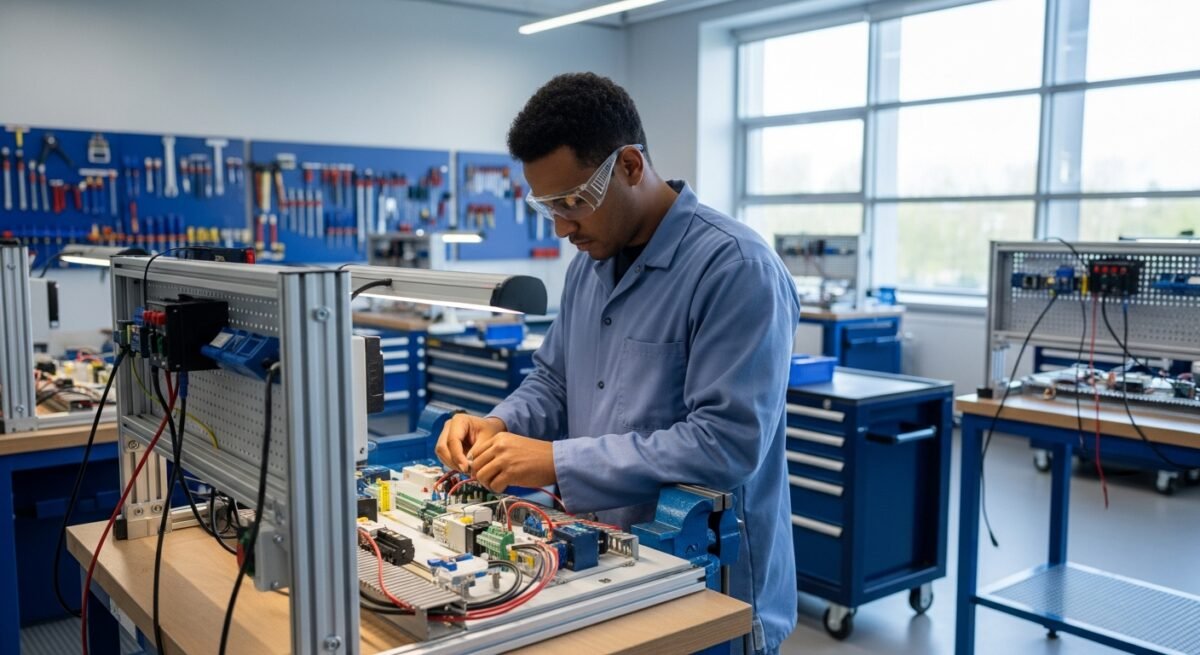
Second, the learning environment is intensely hands-on. Whether it’s a student welding in a booth, a nursing student practicing patient assessments in a simulated lab, or an IT student configuring a network server, the emphasis is on doing. This experiential learning builds not just knowledge, but also muscle memory and problem-solving skills in real-world contexts. Instructors are frequently industry veterans who bring current practices directly into the classroom. Finally, the connection to the local and regional job market is explicit. Many technical schools maintain advisory boards staffed by local employers who help shape curriculum to ensure graduates possess the exact skills companies are hiring for. This close industry alignment is the engine behind high job placement rates for reputable institutions.
Identifying High-Quality, Job-Focused Technical Programs
Not all technical schools are created equal. The key to a successful outcome lies in thorough research and vetting. Prospective students must look beyond marketing claims and evaluate concrete indicators of a program’s effectiveness and legitimacy. The most critical factor is accreditation. Regional or national accreditation ensures the school meets established standards of educational quality. For specific trades, programmatic accreditation from a recognized industry body (like the Accrediting Commission of Career Schools and Colleges, or ACCSC) is even more telling. Accreditation is also essential for federal financial aid eligibility and for the transferability of credits, should a student wish to pursue further education later.
Job placement rates and graduate outcomes are the ultimate metrics of a school’s success. A reputable institution will transparently share data on the percentage of graduates who are employed in their field within a certain timeframe after completion. Be wary of schools that are vague or use misleading statistics. It is perfectly reasonable to ask for this data and to inquire about the career services department. A strong career services team will offer resume workshops, interview coaching, job fairs, and direct partnerships with employers. Furthermore, investigating the tools and facilities is crucial. The best technical schools invest heavily in state-of-the-art equipment that mirrors what is used in the industry, ensuring students are not learning on obsolete technology. A visit to the campus or a virtual tour can provide invaluable insight into the learning environment.
Key Questions to Ask During Your Research
Before enrolling, arm yourself with specific questions. This due diligence will separate exceptional programs from mediocre ones. Start by inquiring about the qualifications of the instructors. Do they have recent, relevant industry experience? Ask for details on the curriculum: is it updated regularly to reflect current industry standards? Request to speak with recent alumni about their experience and career trajectory. Crucially, understand the total cost of the program, including fees, tools, and supplies, and compare it to the typical starting salaries for graduates in your area. Finally, verify the licensing exam pass rates for programs that lead to a licensed profession, such as nursing or electrical work. High pass rates indicate effective preparation.
Popular Career Paths Powered by Technical Training
The scope of careers accessible through technical education is vast and growing. These programs are particularly dominant in fields where skilled labor is in high demand. In healthcare, for example, technical schools train diagnostic medical sonographers, radiologic technologists, dental hygienists, surgical technologists, and licensed practical/vocational nurses (LPNs/LVNs). These roles are critical to patient care and often require an associate degree or post-secondary certificate. The training combines classroom science with extensive clinical rotations in medical facilities.
In the technology sector, technical schools offer intensive programs in cybersecurity, network administration, cloud computing, and software development. These courses are frequently updated to cover the latest programming languages and security protocols. For those interested in the skilled trades, programs in welding, electrical work, plumbing, HVAC (heating, ventilation, and air conditioning), and automotive technology provide a direct pipeline to well-compensated, essential careers that cannot be outsourced. Advanced manufacturing and robotics is another booming area, with training in computer numerical control (CNC) machining, mechatronics, and industrial maintenance. Each of these paths offers a clear credential, whether a certificate, diploma, or associate degree, that signals competency to employers. For a broader look at institutions that prioritize employment outcomes, our guide on finding career training schools with high job placement rates offers additional strategies for evaluation.
Financing Your Technical Education
While technical programs are often more affordable than four-year degrees, understanding financing options remains essential. The first step for any student is to complete the Free Application for Federal Student Aid (FAFSA). This form determines eligibility for federal grants, which do not need to be repaid, and federal student loans. Many states also use FAFSA data to award their own grants. Technical school students should actively search for industry-specific scholarships offered by professional associations, unions, and local businesses. Some employers even offer tuition reimbursement or apprenticeship programs that pay students to learn while they work.
It is vital to approach student loans with caution. Calculate your total estimated debt and compare it to the expected starting salary for your chosen career. A useful rule of thumb is that your total student loan debt should not exceed your expected first year’s salary. Many technical schools also offer payment plans that allow you to spread the cost over the duration of the program. When researching programs, always factor in the cost of required tools, uniforms, licensing exams, and other mandatory fees to get a true picture of the total investment. For students considering online technical programs or hybrid models, it’s wise to research college tuition information and compare funding options across different delivery formats to find the most financially sustainable path.
Frequently Asked Questions
What is the difference between a technical school and a community college?
Both can offer job-focused associate degrees and certificates. Community colleges are typically public, offer a wider range of academic transfer programs, and have lower tuition. Technical or career colleges are often private and may specialize more intensely in specific trades or fields, sometimes with a higher cost but potentially more streamlined, industry-specific training and career services.
Can I transfer credits from a technical school to a four-year university?
This depends entirely on the accreditation of the technical school and the policies of the receiving university. Credits from a regionally accredited school are more likely to transfer. It is crucial to discuss your long-term educational goals with advisors at both institutions before enrolling if you think you may want to pursue a bachelor’s degree later.
Are online technical school programs effective for job ready training?
Yes, for many fields. Hybrid models are particularly common, where theory is learned online and hands-on labs are completed in person or through shipped kits. For purely knowledge-based IT roles, fully online programs can be very effective. However, for trades requiring physical skill (welding, nursing), in-person training is irreplaceable.
How do I know if a technical career is right for me?
Consider your learning style and career goals. If you enjoy working with your hands, solving concrete problems, seeing tangible results from your work, and prefer a structured, practical learning environment over theoretical study, technical training could be an excellent fit. Job shadowing or speaking with professionals in the field is highly recommended.
What if I choose a field and then want to change careers?
The skills from technical training are often highly transferable. For example, an HVAC technician has electrical, mechanical, and customer service skills that are valuable in many industries. Furthermore, the discipline and work ethic gained are lifelong assets. Many technical professionals later start their own businesses or move into management, sales, or training roles within their industry.
The landscape of education is diversifying to meet the needs of a complex economy. Technical schools that provide job ready training represent a pragmatic, powerful alternative for individuals seeking a direct and efficient route to meaningful employment. By focusing on marketable skills, hands-on experience, and strong industry connections, these institutions fulfill a critical role in building a skilled workforce. For the student who values practicality, efficiency, and a clear career trajectory, investing time in finding the right technical program can be one of the most consequential decisions for their future prosperity and professional satisfaction. The path to a rewarding career doesn’t always require a four-year journey, sometimes, it requires the right training.