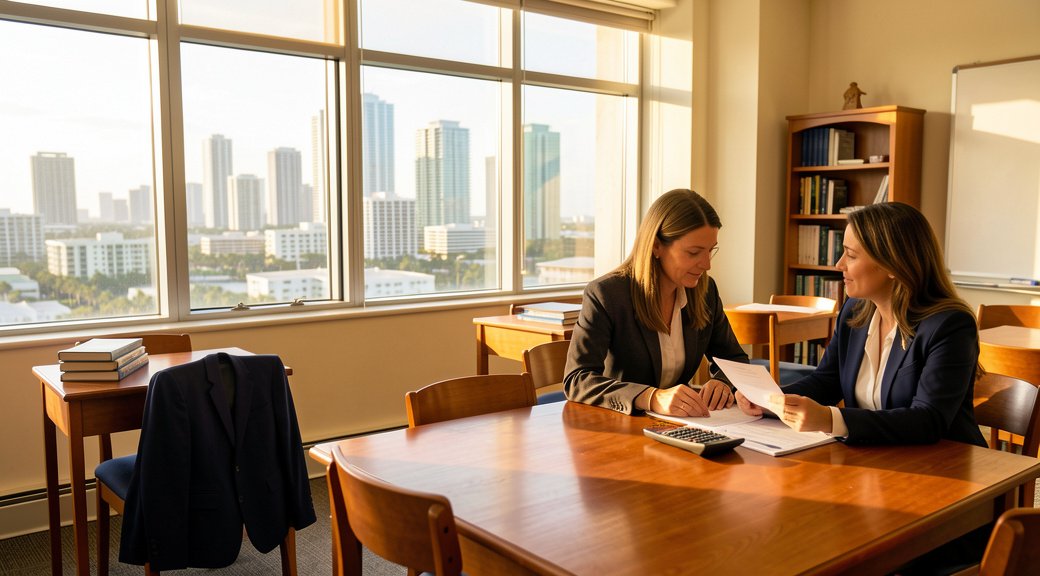
When families consider moving to Miami or enrolling their child in a private school here, the first question is almost always about money. Private school costs in Miami, Florida vary widely depending on the school, grade level, and extracurricular offerings. Some parents expect a single tuition figure, but the reality involves multiple layers of fees, financial aid options, and long-term planning. Understanding these costs upfront can prevent surprise bills and help families make confident decisions about their child’s education.
Miami is home to some of the most prestigious private schools in the country, including Ransom Everglades, Gulliver Preparatory, and Carrollton School of the Sacred Heart. These institutions boast rigorous academics, state-of-the-art facilities, and impressive college placement records. However, that quality comes with a price tag that often exceeds $40,000 per year for tuition alone. For families exploring options, it is essential to compare not just tuition but also the total cost of attendance, which includes registration fees, technology fees, uniforms, transportation, and after-school programs.
This guide breaks down the typical private school costs in Miami, Florida, explains what drives those costs, and provides actionable strategies for affording them. Whether you are evaluating preschool through high school options or planning for multiple children, the information below will help you navigate the financial landscape with confidence. For additional context on how these costs compare to other regions, you can review our analysis of private school fees in New Braunfels, which illustrates the range of expenses across different markets.
What Drives Private School Tuition in Miami?
Several factors contribute to the high cost of private education in Miami. First, the cost of living in Miami-Dade County is significantly above the national average, and private schools must pay competitive salaries to attract and retain qualified teachers. Faculty compensation often represents the largest line item in a school’s budget. Second, many Miami private schools invest heavily in facilities, including science labs, performing arts centers, athletic fields, and swimming pools. These capital improvements are funded partially through tuition and partially through fundraising campaigns.
Third, the demand for private school seats in Miami is high, particularly in neighborhoods like Coconut Grove, Coral Gables, and Pinecrest. Limited supply relative to demand allows schools to set higher tuition rates. Finally, many schools offer robust financial aid programs, and the cost of supporting those programs is built into the tuition structure for full-pay families. Understanding these drivers helps parents see why private school costs in Miami, Florida are among the highest in the state.
Average Tuition Ranges by School Type
Tuition varies by grade level and school type. Below is a general breakdown of annual tuition ranges for the 2025-2026 school year. Note that these figures are estimates and can change annually.
- Preschool and Pre-K: $8,000 to $18,000 per year. Many programs offer half-day and full-day options, with full-day programs at the higher end of the range.
- Elementary School (K-5): $15,000 to $30,000 per year. Schools with strong STEM or arts programs may charge more.
- Middle School (6-8): $20,000 to $38,000 per year. Extracurricular activities and specialized instruction often increase costs at this level.
- High School (9-12): $25,000 to $50,000 per year. College preparatory programs, advanced placement courses, and sports teams contribute to higher tuition.
These ranges reflect tuition only. Families should expect to pay additional fees for registration, technology, lab supplies, and field trips. Some schools also require parents to participate in fundraising or volunteer hours, which can carry a financial penalty if not fulfilled. When evaluating private school costs in Miami, Florida, always request a full fee schedule before committing.
Hidden Costs Beyond Tuition
Many families focus solely on tuition and overlook other significant expenses. These hidden costs can add $5,000 to $15,000 or more per year to the total cost of attendance. Common additional fees include:
- Application and registration fees: Non-refundable fees ranging from $100 to $500 per school.
- Technology fees: Annual charges for laptops, tablets, or software licenses, often $500 to $2,000.
- Uniforms and dress code items: Required attire can cost $300 to $1,000 per year, especially for schools with formal uniforms.
- Transportation: Bus service or carpool costs; some schools charge $1,000 to $3,000 annually for bus passes.
- After-school care and enrichment: Programs for working parents run $200 to $800 per month.
Additionally, many Miami private schools require participation in annual giving campaigns or capital fund drives. While technically voluntary, there is often social pressure to contribute. Families should budget for these extras when calculating the true private school costs in Miami, Florida. For a broader look at how these expenses compare with other cities, see our guide on private school fees in Springfield Massachusetts, which highlights regional differences in fee structures.
Financial Aid and Scholarship Opportunities
Despite the high sticker prices, many Miami private schools are committed to economic diversity and offer substantial financial aid. Need-based aid is the most common form, and families with incomes up to $250,000 or more may qualify for partial assistance at some schools. The application process typically requires submitting tax returns, W-2 forms, and a detailed financial statement through a third-party service like School and Student Services (SSS) or FACTS Grant & Aid.
Merit-based scholarships are less common but available at certain schools, particularly for high school students with exceptional academic records, artistic talent, or athletic ability. Some schools also offer sibling discounts, typically 10% to 25% off tuition for the second or third child enrolled. Additionally, Florida’s Step Up for Students program provides state-funded scholarships for low- and middle-income families to attend private schools. This program can cover a significant portion of tuition and is worth exploring for eligible families.
When applying for financial aid, submit applications early because funds are often distributed on a first-come, first-served basis. Be prepared to provide detailed documentation and to reapply each year. Understanding these options can make private school costs in Miami, Florida more manageable for families who might otherwise feel priced out.
Strategies for Affording Private School
Paying for private school requires planning and discipline. Here are several strategies that families use to manage the expense while maintaining their overall financial health.
Start saving early. Opening a 529 plan or a Coverdell Education Savings Account (ESA) when your child is young allows tax-advantaged growth. Funds from a 529 plan can be used for K-12 tuition, not just college, making it a powerful tool for private school costs in Miami, Florida. Contribute regularly, even if the amounts are small, and take advantage of state tax deductions if available.
Negotiate tuition. Some schools are open to negotiation, especially if you have multiple children or can pay the full year upfront. It never hurts to ask the admissions or business office about payment plans, early payment discounts, or adjusted tuition based on need. Be polite and prepared to explain your situation.
Leverage employer benefits. Some companies offer tuition assistance or flexible spending accounts (FSAs) that can be used for educational expenses. Check with your human resources department to see if your employer provides any education-related benefits. Even a small contribution can offset a portion of the cost.
Consider a payment plan. Most private schools offer monthly or quarterly payment plans instead of requiring a lump sum at the start of the year. These plans often come with a small administrative fee but can make budgeting much easier. Some schools also offer reduced tuition for families who pay the full year in advance.
Apply for multiple scholarships. Beyond the school’s own aid, look for external scholarships from community organizations, religious institutions, and foundations. Websites like Scholarship America and Fastweb list opportunities for private school students. Every dollar of outside scholarship money reduces the burden on your family.
Frequently Asked Questions
What is the average private school tuition in Miami?
The average tuition ranges from $15,000 for elementary grades to over $40,000 for high school. Prestigious college-preparatory schools often charge $45,000 to $55,000 per year for upper grades.
Are there any free or low-cost private schools in Miami?
Some religious-affiliated schools offer lower tuition, sometimes below $10,000 per year. Additionally, Florida’s Step Up for Students scholarship can make private school affordable or even free for qualifying low-income families.
Do private schools in Miami offer payment plans?
Yes, most schools offer monthly or quarterly payment plans. Some charge a small processing fee for this service. Always ask about payment options before enrolling.
How do I apply for financial aid at a Miami private school?
Contact the school’s admissions or financial aid office to learn their specific process. Most schools require submission of tax returns and other financial documents through a third-party service like SSS or FACTS. Deadlines are typically in January or February for the following school year.
Can I use a 529 plan for private school tuition in Miami?
Yes, federal law allows 529 plan funds to be used for K-12 tuition up to $10,000 per year per beneficiary. Florida also offers a state income tax deduction for 529 contributions, making this a tax-efficient savings tool.
Making an Informed Decision
Choosing a private school for your child is a significant financial commitment, but it does not have to be overwhelming. By understanding the full picture of private school costs in Miami, Florida, including tuition, hidden fees, and financial aid opportunities, you can make a decision that aligns with both your educational goals and your budget. Start the process early, ask detailed questions, and explore every avenue of assistance. For families who plan carefully, the investment in private education can open doors to exceptional academic experiences and lifelong opportunities.
If you are also planning for college expenses down the road, remember that the same financial discipline you apply to private school can serve you well later. Resources like college tuition information from College & Tuition can help you continue planning for higher education costs after your child graduates from private school. The key is to stay informed, ask the right questions, and leverage every tool available to make education affordable.
About the Author: Logan Parker