
On-Campus Undergraduate Programs: Are They the Right Choice?
Explore the immersive benefits and important considerations of traditional on-campus undergraduate programs. Discover if this transformative college experience aligns with your learning style and goals.

By Lisa Bennett
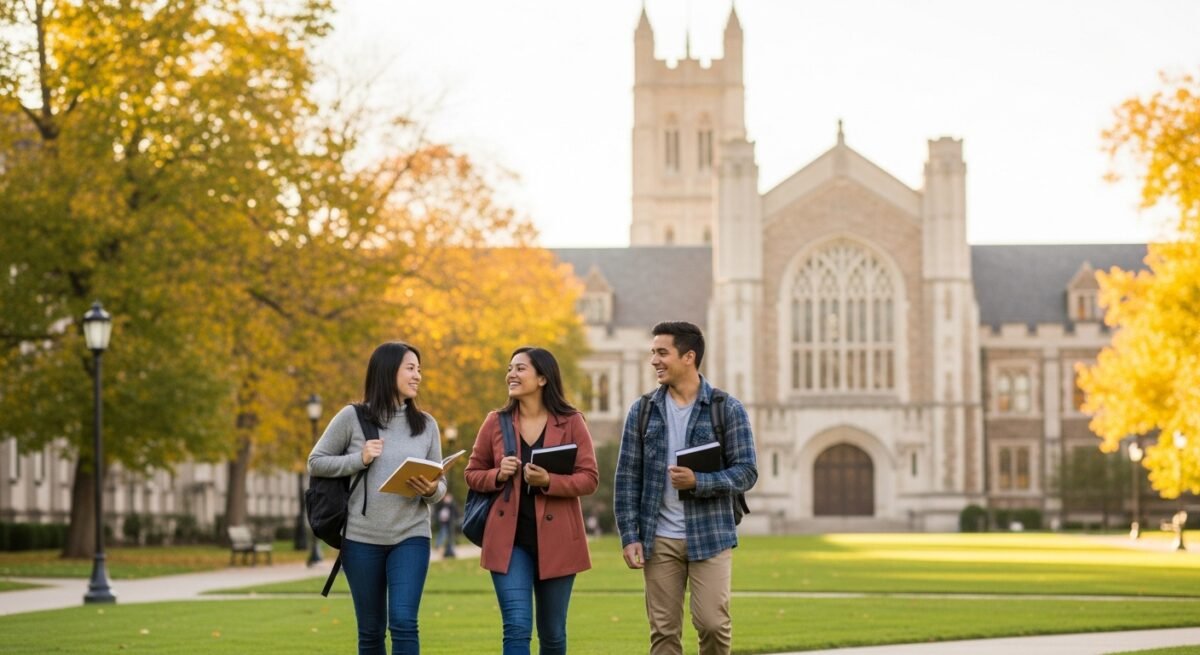
For generations, the quintessential image of higher education has been a student walking across a sun-dappled quad, backpack slung over one shoulder, heading to a lecture hall or a late-night study session in the library. This is the enduring promise of traditional on-campus undergraduate programs: a holistic, immersive experience that extends far beyond the classroom syllabus. In an era increasingly dominated by digital learning, the value of this physical, communal model of education is under a new lens. Prospective students and their families are weighing a critical question: does the significant investment of time, money, and energy in a residential college experience deliver a commensurate return in education, personal growth, and career readiness? The answer isn’t universal, but understanding the multifaceted benefits and inherent challenges of on-campus life is the first step in making an informed decision that aligns with your academic goals and personal development needs.
The Defining Advantages of the Traditional Campus Experience
The core appeal of on-campus undergraduate programs lies in their ability to facilitate a depth of engagement that is difficult to replicate remotely. This engagement operates on multiple levels: academic, social, and professional. Academically, the environment is structured for immersion. The physical proximity to professors during office hours, the spontaneous study groups that form in common areas, and the direct access to specialized laboratories, performance spaces, and research facilities create a rich tapestry of learning opportunities. The routine of attending scheduled classes in person imposes a discipline and structure that many students find essential for success, fostering time management skills within a supportive community framework.
Perhaps the most celebrated aspect is the social and developmental journey. Living independently, often for the first time, within a curated community of peers is a profound catalyst for personal growth. Students learn to navigate relationships, manage responsibilities, and develop a sense of self away from their familial environment. Campus life is intentionally designed to expose undergraduates to a diversity of perspectives, cultures, and ideas through dormitory living, student organizations, cultural events, and intramural sports. This microcosm of society helps build soft skills—communication, collaboration, empathy, and leadership—that are highly valued by employers and essential for a fulfilling life. The network forged during these years, from roommates and classmates to professors and mentors, often evolves into a lifelong professional and personal support system.
Structured Support and Serendipitous Discovery
On-campus programs provide a built-in ecosystem of support services that are readily accessible. Academic advising, career counseling, mental health services, tutoring centers, and disability resources are typically housed in central locations, making it easier for students to seek help. Furthermore, the campus environment is ripe for serendipity. A poster on a bulletin board might lead to an internship opportunity, a conversation after class might spark a research collaboration, and attending a guest lecture outside one’s major can ignite a new passion. This element of unstructured discovery and networking is a significant, though often intangible, benefit of the physical campus.
Weighing the Challenges and Financial Considerations
Despite the compelling advantages, choosing an on-campus undergraduate program requires a clear-eyed assessment of its significant demands, primarily financial and logistical. The cost is the most substantial hurdle. Tuition for on-campus programs at public and private institutions has risen markedly, and when combined with mandatory fees, room and board, meal plans, textbooks, and personal expenses, the total price tag can be daunting. This financial burden often leads to substantial student loan debt, which can impact life choices for years after graduation. While online programs also carry costs, the elimination of room, board, and often commuting expenses can present a more affordable path for some learners.
Logistically, on-campus education requires geographic relocation for most students, which means leaving established support networks, jobs, or family responsibilities. The rigid schedule of in-person classes can also be a constraint for non-traditional students, such as working adults, parents, or career-changers who require greater flexibility. The pace and structure of a full-time residential program are designed for students who can dedicate themselves primarily to their studies and campus life, which may not be feasible for everyone. It is crucial to conduct thorough research on total cost of attendance and explore all avenues for reducing expenses before committing.
Funding a degree is a major undertaking, and exploring scholarships, grants, and work-study programs is essential. For a comprehensive directory of opportunities to help mitigate costs, prospective students should consult Scholarship & Financial Aid Resources. A strategic approach to financing can make the on-campus experience accessible without crippling debt.
Key Factors for Making an Informed Decision
Determining if an on-campus undergraduate program is your optimal path requires introspection and research. The decision should align with your learning style, career objectives, life stage, and personality. A self-assessment can clarify which model serves you best. Consider the following critical factors that differentiate the on-campus experience from its online counterparts:
- Your Learning Style: Do you thrive on in-person interaction, immediate feedback, and the energy of a live classroom? Or are you a highly self-directed learner who prefers to absorb material at your own pace?
- Your Field of Study: Does your intended major require hands-on practice, specialized equipment, or lab work (e.g., engineering, studio art, nursing, chemistry)? These fields heavily favor on-campus access.
- Your Need for Flexibility: Can you commit to living near campus and adhering to a fixed class schedule, or do you require the ability to learn asynchronously around work or family commitments?
- Your Social and Developmental Goals: How important is the “college experience”—independence, networking, extracurricular leadership—to your personal growth?
- Your Financial Reality: Have you calculated the total cost, explored all financial aid options, and considered the long-term implications of potential debt?
Once you’ve reflected on these questions, the next step is diligent research. When evaluating specific on-campus undergraduate programs, look beyond rankings. Schedule campus visits to gauge the community atmosphere. Speak directly with current students and faculty in your department of interest. Scrutinize the details of the curriculum, internship placement rates, and the strength of the career services office. For those considering all their options, our comparison of Campus College Degrees vs. Online Programs offers a detailed framework for this evaluation. Furthermore, understanding the full scope of undergraduate pathways can be enhanced by Exploring Undergraduate Degree Programs in a broader context.
The Enduring Value in a Digital Age
The rise of high-quality online education has not rendered the on-campus model obsolete; rather, it has clarified its unique value proposition. On-campus undergraduate programs offer a total immersion environment that educates the whole person. They are less about information transmission—a function the internet now performs ubiquitously—and more about transformation. This transformation happens through mentorship, through debate over coffee, through collaborative projects that stretch into the night, and through the simple act of being part of a living, learning community. For students seeking this type of formative journey, who are at a life stage to fully embrace it, and who can navigate the financial planning required, the traditional campus experience remains a powerful and rewarding investment. It builds not just a resume, but a network, a worldview, and a foundational sense of self that can define a lifetime of achievement and purpose.