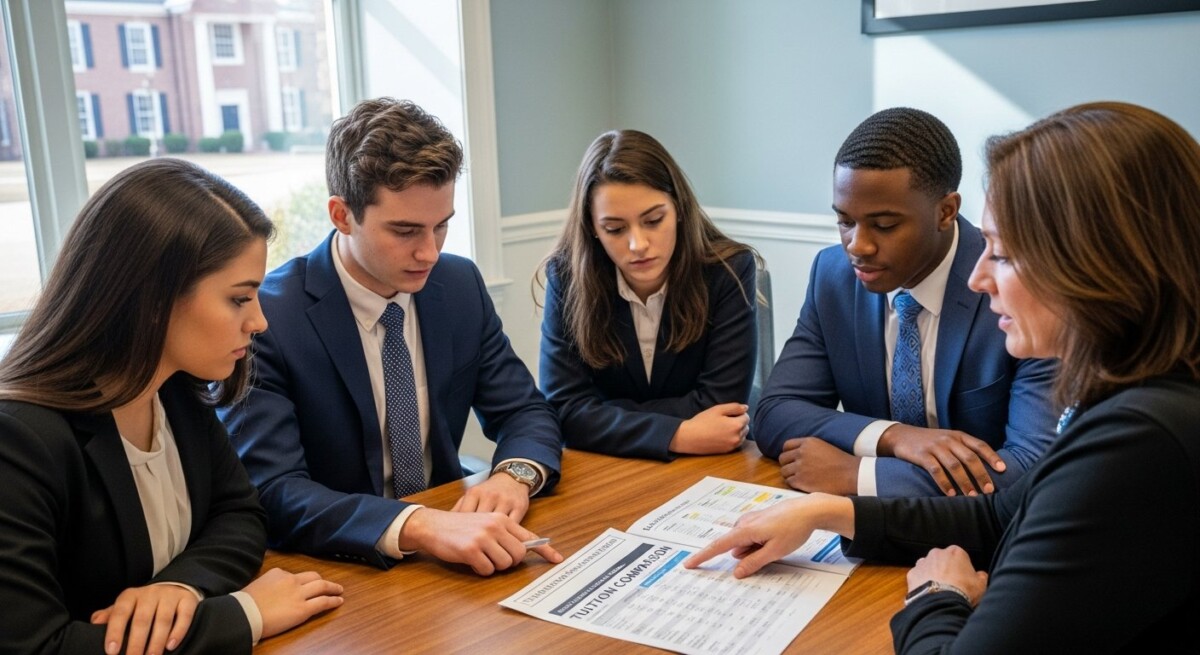
Families exploring higher education options in Mississippi’s capital often find themselves comparing public university rates with private institution tuition. The cost of private higher education in Jackson, Mississippi presents a unique financial picture that differs significantly from both public in-state options and private colleges in other regions. Understanding these costs requires looking beyond the sticker price to examine fees, room and board, and the financial aid packages that can dramatically change the bottom line.
Jackson hosts several private institutions that serve students from across the state and beyond. Each school structures its pricing differently, and the final cost families pay often bears little resemblance to the published tuition figure. This guide breaks down the actual expenses families should expect, the factors that influence pricing, and the strategies that can make private education in Jackson more affordable.
Tuition and Fee Structures at Jackson’s Private Colleges
Private colleges in Jackson set their tuition independently, which means costs vary by institution. The largest private university in the city, Belhaven University, charges undergraduate tuition that typically falls in the range of $28,000 to $30,000 per academic year before financial aid. Millsaps College, another prominent private institution, lists tuition near $42,000 annually. These figures represent the baseline before scholarships, grants, and other discounts are applied.
Beyond tuition, students face mandatory fees that cover technology, student activities, health services, and campus facilities. At some Jackson private colleges, these fees add $1,500 to $3,000 per year. Room and board costs represent another major expense, with on-campus housing and meal plans ranging from $10,000 to $14,000 annually depending on the institution and the housing tier selected.
For families comparing options, exploring resources like college tuition information can help build a clearer picture of total costs across different institution types. Understanding the full cost breakdown is essential before evaluating financial aid offers.
How Financial Aid Reshapes the Real Cost
The published tuition figures at private colleges in Jackson can seem daunting, but the majority of students receive significant institutional aid. Private colleges use discounting strategies to attract students, meaning the average net price paid by students is often 40 to 60 percent lower than the sticker price. At Millsaps College, for example, the average institutional grant exceeds $25,000 per year, bringing the effective cost closer to $20,000 for many students.
This discounting creates an important dynamic for families. Students who qualify for merit-based scholarships or demonstrate financial need can access private education at prices competitive with out-of-state public universities. However, the discounting model also means that families with higher incomes may pay closer to full price, making careful financial planning essential.
When comparing the cost of private higher education in Jackson, Mississippi to other regions, families should consider that Mississippi’s private colleges often have lower overall tuition than peer institutions in the Northeast or West Coast. This regional difference, combined with generous aid packages, can make Jackson private schools a value proposition for students who qualify for substantial discounts.
Key Financial Aid Components to Evaluate
When reviewing financial aid offers from Jackson private colleges, families should look at several specific elements:
- Merit scholarships: These are awarded based on GPA, test scores, or special talents and do not require repayment. Belhaven and Millsaps both offer tiered merit awards that can cover 30 to 60 percent of tuition.
- Need-based grants: Determined by the FAFSA and CSS Profile, these funds close the gap between what a family can afford and the cost of attendance. Private colleges in Jackson typically meet a higher percentage of demonstrated need than many public universities.
- Work-study opportunities: Federal and institutional work-study programs allow students to earn money toward educational expenses. These positions also provide valuable professional experience.
- Outside scholarships: Students can supplement institutional aid with awards from community organizations, employers, and national scholarship programs. Every dollar from an outside scholarship reduces the amount a family must pay.
The combination of these aid types can dramatically reduce out-of-pocket costs. Families should always compare net price, not sticker price, when evaluating affordability across different institutions.
Comparing Private and Public Higher Education Costs in Mississippi
Mississippi’s public universities, including the University of Mississippi and Mississippi State University, charge in-state tuition around $9,000 to $10,000 per year. At first glance, this makes public education appear significantly cheaper than private options. However, the net price comparison becomes more nuanced when factoring in graduation rates, time to degree, and the quality of academic support.
Private colleges in Jackson typically boast higher four-year graduation rates than public universities. A student who graduates in four years rather than five or six saves an entire year of tuition and living expenses, plus gains earlier entry into the workforce. For many families, this factor alone narrows the cost gap between public and private education.
Additionally, private colleges often provide more personalized academic advising and smaller class sizes, which can lead to better academic outcomes and stronger career placement. These intangible benefits should factor into any cost comparison. For a deeper look at how private tuition stacks up in other regions, readers can refer to our guide on private university tuition in Tulsa Oklahoma cost guide for additional context on regional pricing patterns.
Hidden Costs Families Often Overlook
When budgeting for private college in Jackson, families should account for expenses beyond tuition, fees, and housing. Textbooks and course materials can cost $800 to $1,200 per year, though some private institutions are moving toward inclusive access programs that bundle materials into tuition. Transportation costs vary based on whether a student lives on campus or commutes, with on-campus students needing funds for travel home during breaks and off-campus students facing commuting expenses.
Health insurance represents another significant cost. Many private colleges require students to have health insurance and automatically enroll those who cannot provide proof of coverage in the school’s plan. These plans typically cost $2,000 to $4,000 per year. Personal expenses, including toiletries, clothing, entertainment, and incidental costs, add another $2,000 to $3,000 annually for most students.
Families should request a detailed cost of attendance breakdown from each college they consider. This document includes the institution’s official estimate of all educational expenses and serves as the basis for calculating financial aid eligibility. Understanding these figures helps prevent surprises when bills arrive.
Strategies to Reduce the Cost of Private Higher Education
Several proactive steps can help families manage the cost of private higher education in Jackson, Mississippi. Early financial planning remains the most effective strategy. Families who begin saving in a 529 plan when children are young can accumulate significant tax-advantaged funds by college age. Mississippi residents also benefit from a state income tax deduction for 529 contributions, adding an additional incentive to save.
Another effective approach involves strategic college selection. Students should apply to multiple private colleges, including at least one where their academic profile places them in the top 25 percent of applicants. These students often receive the most generous merit scholarship offers. Comparing financial aid packages from multiple institutions gives families leverage to request additional aid from their preferred school.
Completing the FAFSA early each year is critical. Some institutional aid is awarded on a first-come, first-served basis, and students who file late may miss out on certain grants or scholarships. Families should also research outside scholarships throughout high school, as even small awards add up and reduce loan dependency.
Frequently Asked Questions
What is the average net price at private colleges in Jackson?
The average net price varies by institution and family income level. After financial aid, many students at Jackson private colleges pay between $15,000 and $25,000 per year for tuition, fees, room, and board. Families with lower incomes often pay significantly less due to need-based grants.
Do private colleges in Jackson offer merit scholarships?
Yes. Both Belhaven University and Millsaps College offer substantial merit-based scholarships. Awards are typically based on high school GPA, standardized test scores, and class rank. Some scholarships require separate applications or interviews, so students should check each school’s requirements carefully.
How does the cost compare to public universities in Mississippi?
Public university in-state tuition is lower at around $9,000 to $10,000 per year. However, after accounting for financial aid and graduation rates, the net cost difference narrows. Private colleges often provide more aid and higher four-year graduation rates, which can make them competitive on overall value.
Can out-of-state students attend Jackson private colleges affordably?
Yes. Private colleges charge the same tuition regardless of state residency. Out-of-state students may receive the same merit scholarships and need-based aid as in-state students, making Jackson private schools accessible to families from across the country.
What is the best way to compare costs between schools?
Use each school’s net price calculator, available on their financial aid websites, to estimate your family’s actual cost. Compare financial aid award letters side by side, looking at the total cost of attendance minus all grants and scholarships. Do not compare sticker prices alone.
Families researching private education costs should also consider that tuition rates and financial aid policies change annually. Visiting college websites and speaking with financial aid offices provides the most current information for planning purposes.
About the Author: Sophia Clark