Families exploring higher education options in West Michigan often encounter a mix of sticker prices and net costs that can be difficult to decipher. Private college pricing in Grand Rapids, Michigan, varies significantly from one institution to the next, and the published tuition numbers rarely reflect what most students actually pay. Understanding how these prices work, what drives them, and how to reduce out-of-pocket expenses can make the difference between ruling out a private school and finding an affordable path to a degree.
Grand Rapids is home to several well-regarded private colleges, including Calvin University, Aquinas College, Cornerstone University, and Grace Christian University. Each institution sets its own tuition structure, but they share common practices around discounting, financial aid packaging, and merit-based scholarships. This article breaks down the real costs, the strategies for lowering them, and the resources available to families who want to make private education financially feasible.
Understanding Sticker Price Versus Net Price
The first step in evaluating private college pricing in Grand Rapids, Michigan, is distinguishing between the published sticker price and the net price. Sticker price includes tuition, fees, room, board, and other mandatory charges. For the 2024-2025 academic year, Calvin University lists a comprehensive fee of approximately $48,000, while Aquinas College and Cornerstone University each post totals in the mid-$40,000 range. These figures can cause sticker shock, but they are rarely the final cost.
Net price is what a student actually pays after subtracting grants, scholarships, and tuition discounts. According to data from the National Association of College and University Business Officers, private colleges in the United States discount tuition by an average of roughly 50 percent. Grand Rapids private schools follow this trend closely. Many incoming freshmen at Calvin University, for example, receive institutional scholarships that reduce the net cost by 40 to 60 percent. The key is to apply early and complete all financial aid paperwork to maximize eligibility.
How Discounting Works in Practice
Institutional discounting is not a one-size-fits-all process. Colleges use it to attract students with strong academic records, specific talents, or demographic characteristics that align with institutional goals. When a student receives a merit scholarship from Aquinas College or a need-based grant from Cornerstone University, the college is essentially reducing its own revenue to enroll that student. This means families should not assume that the sticker price is non-negotiable. In fact, comparing financial aid offers from multiple schools can sometimes lead to adjustments if a student is highly desired.
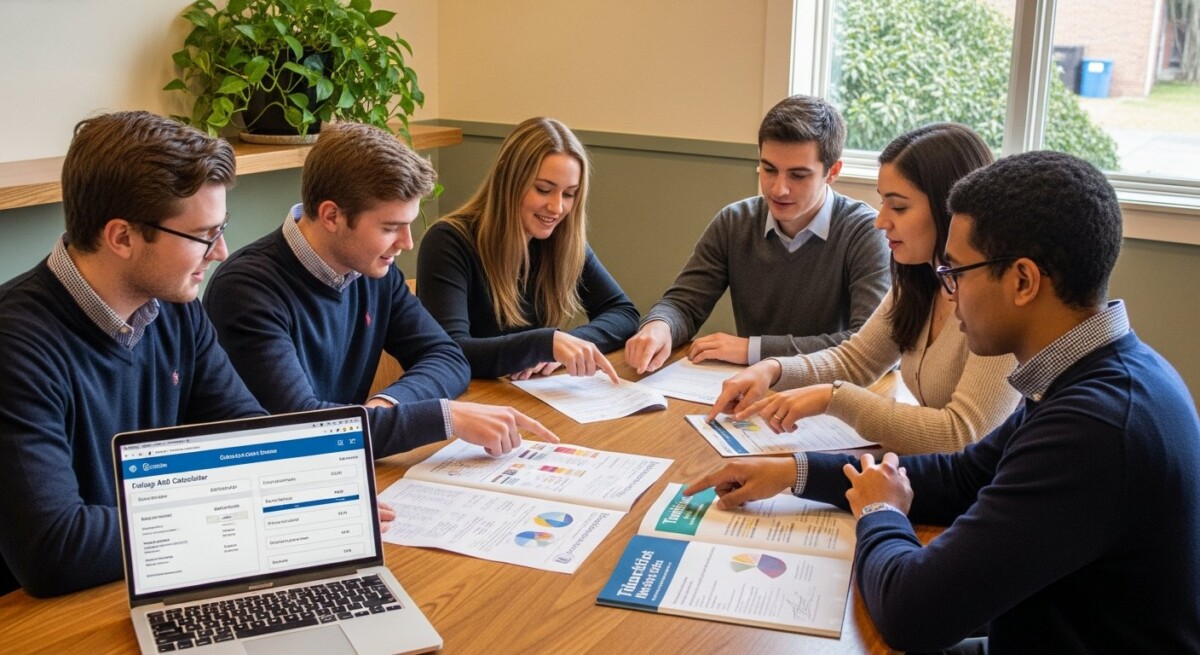
For families researching private college pricing in Grand Rapids, Michigan, a useful exercise is to use each school’s net price calculator. These online tools ask for basic financial information and provide an estimate of what a specific student might pay. The results are not guarantees, but they offer a more realistic starting point than the published tuition. College & Tuition’s college tuition information resources can help families compare these estimates side by side.
Key Factors That Influence Private College Costs
Several variables determine what a family ultimately pays for a private college education in Grand Rapids. Understanding these factors can help students and parents plan more effectively and avoid surprises.
- Academic Profile: Higher GPA and test scores typically unlock larger merit-based scholarships. Calvin University offers the Calvin Scholars Award, which ranges from $10,000 to full tuition for top-performing students.
- Financial Need: Completing the FAFSA (Free Application for Federal Student Aid) is essential. Need-based grants from the federal government, the state of Michigan, and the institution itself can significantly lower costs for families with demonstrated need.
- Residency Status: While private colleges do not differentiate in-state versus out-of-state tuition like public universities, some Grand Rapids schools offer regional scholarships for students from neighboring states.
- Housing Choices: Living on campus is typically more expensive than commuting from home. Off-campus apartments near Aquinas College or Cornerstone University can reduce room and board expenses by thousands per year.
- Program of Study: Some majors, such as nursing or engineering, may have additional fees or require more credits, which can increase total cost. Check each program’s specific requirements.
Each of these factors interacts with the others. A student with strong academics and high financial need might qualify for both merit and need-based aid, creating a package that brings the net price well below the sticker price. Conversely, a student from a higher-income family with average grades may receive less discounting and face a higher net cost. This variability underscores why personalized research is critical.
Comparing Grand Rapids Private Colleges by Cost
To make informed decisions, families should compare not only the sticker prices but also the average net prices for students with similar profiles. The table below provides a snapshot of recent data for four major private colleges in Grand Rapids. Note that these figures are approximate and can change yearly.
Calvin University: Sticker price around $48,000. Average net price for students receiving aid is approximately $26,000. Calvin offers strong merit scholarships and a tuition guarantee that locks in rates for four years.
Aquinas College: Sticker price around $44,000. Average net price for aided students is roughly $24,000. Aquinas emphasizes personalized financial aid counseling and has a robust work-study program.
Cornerstone University: Sticker price around $43,000. Average net price for aided students is approximately $22,000. Cornerstone provides generous scholarships for ministry and leadership involvement.
Grace Christian University: Sticker price around $20,000. This is significantly lower than other private options in the area, and average net price for aided students can fall below $15,000. Grace Christian focuses on affordability and offers a fixed tuition rate.
These numbers illustrate that private college pricing in Grand Rapids, Michigan, is not monolithic. Families who prioritize cost should explore Grace Christian University, while those seeking a larger university experience with robust programs might find Calvin or Aquinas more suitable, especially with financial aid.
Strategies to Reduce Out-of-Pocket Costs
Reducing the financial burden of private college requires a proactive approach. Here are actionable strategies that families in Grand Rapids can use.
Apply for outside scholarships. Local organizations such as the Grand Rapids Community Foundation and the Grand Rapids Chamber of Commerce offer scholarships specifically for area students. National databases like Fastweb and the College Board’s scholarship search can also uncover opportunities. Every dollar from an outside scholarship is a dollar the family does not need to borrow or earn.
Negotiate financial aid offers. If a student receives a better package from one school, they can appeal to another school for a matching offer. This process, called professional judgment or merit aid matching, works best when the student has a compelling reason, such as a higher offer from a competitor or a change in family circumstances. Be polite and provide documentation.
Consider dual enrollment or AP credits. Earning college credits in high school through dual enrollment programs or Advanced Placement exams can reduce the total number of credits needed for graduation. This shortens the time to degree and lowers overall tuition costs. Many Grand Rapids private colleges accept these credits, but policies vary, so check each school’s transfer credit guidelines.
Explore accelerated degree programs. Some private colleges offer three-year bachelor’s degree options or allow students to take overload credits each semester. Finishing a year early saves a full year of tuition, room, and board. For example, Aquinas College has a “Fast Track” program for certain majors that can be completed in three years.
In our guide on Affordable Michigan Colleges: Lowest Tuition Fees for 2026, we explain how to compare these strategies across different institutions. That resource can help families weigh the trade-offs between lower-cost public options and private colleges with strong financial aid.
The Role of Financial Aid and Scholarships
Financial aid is the primary mechanism that makes private college pricing in Grand Rapids, Michigan, manageable for most families. The FAFSA opens the door to federal grants, federal student loans, and work-study opportunities. The State of Michigan also offers the Michigan Tuition Grant, which provides up to $2,400 per year for eligible students attending private, nonprofit colleges in the state. Grand Rapids private schools participate in this program, so families should complete the FAFSA by the March 1 priority deadline.
Institutional scholarships are equally important. Calvin University’s Honors Scholarship, Aquinas College’s President’s Scholarship, and Cornerstone University’s Dean’s Scholarship are examples of merit-based awards that can significantly reduce costs. Some of these scholarships require separate applications or interviews, so students should check deadlines carefully. Additionally, many private colleges award departmental scholarships for students pursuing specific majors, such as business, nursing, or education.
Families should also be aware of the net price guarantee programs. Calvin University, for instance, guarantees that tuition will not increase for four years as long as the student remains enrolled full-time. This predictability makes long-term financial planning easier and protects against inflation in college costs.
Frequently Asked Questions
Q: What is the average cost of private college in Grand Rapids after financial aid?
A: The average net price for students who receive aid ranges from roughly $15,000 at Grace Christian University to $26,000 at Calvin University. Actual costs depend on academic profile, financial need, and the specific scholarship package offered.
Q: Do Grand Rapids private colleges offer need-blind admissions?
A: Most Grand Rapids private colleges are not fully need-blind. They consider financial need in admissions decisions, but they also commit to meeting a high percentage of demonstrated need for admitted students. It is best to ask each admissions office about its specific policy.
Q: Can I negotiate tuition at a private college in Grand Rapids?
A: Yes, many families successfully appeal financial aid offers. The process involves submitting a formal request with supporting documentation, such as a competing offer from another school or evidence of changed financial circumstances.
Q: Are there local scholarships specifically for Grand Rapids students?
A: Yes. The Grand Rapids Community Foundation offers dozens of scholarships for local residents. Additionally, the Grand Rapids Public Schools Foundation and various community organizations provide awards. Students should also check with their high school counseling office for localized opportunities.
Q: How does the Michigan Tuition Grant work for private colleges?
A: The Michigan Tuition Grant provides up to $2,400 per year to Michigan residents attending eligible private, nonprofit colleges in the state. Students must file the FAFSA and demonstrate financial need. The grant is renewable for up to four years.
These questions reflect common concerns among families navigating private college pricing in Grand Rapids, Michigan. Each situation is unique, so personalized research and direct communication with financial aid offices remain essential.
Private colleges in Grand Rapids offer distinct educational experiences, from Calvin University’s nationally recognized programs to Grace Christian University’s close-knit community. While the sticker prices can seem daunting, the combination of institutional discounting, federal and state aid, and outside scholarships makes these schools accessible to a wide range of families. The key is to start early, compare offers, and use every available resource to bring the net cost into a manageable range. By approaching the process with a clear understanding of how pricing works, families can make confident decisions that align with both their educational goals and their financial reality.
About the Author: Sarah Thompson