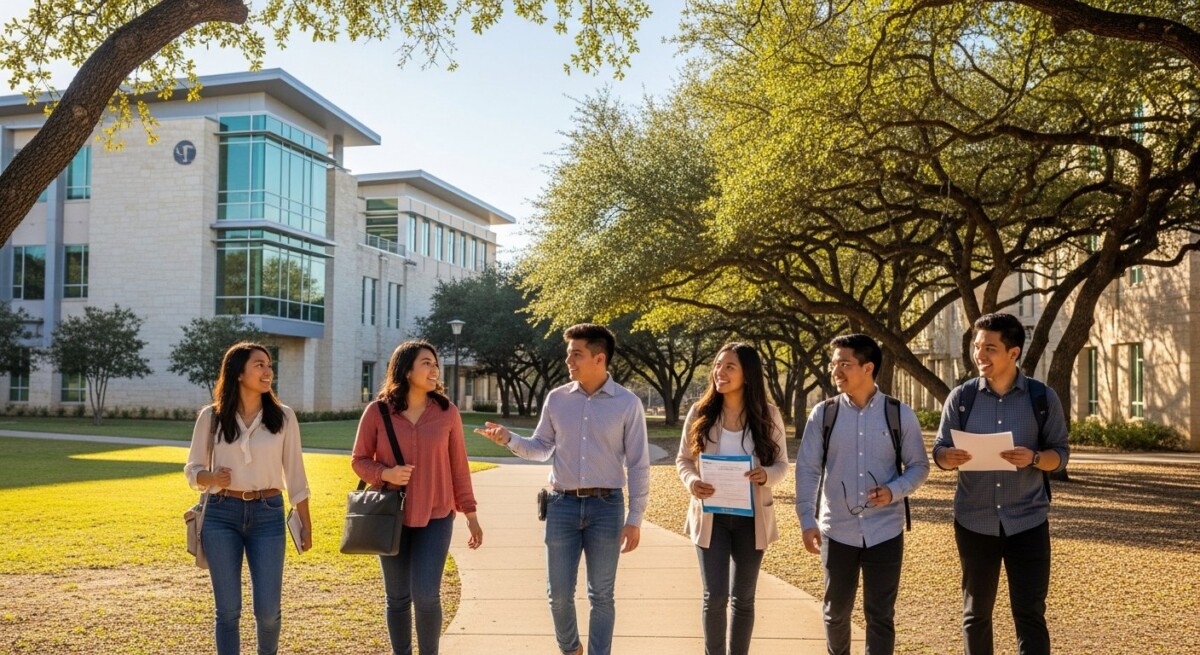
Families evaluating higher education in Texas often focus on public university tuition, but private college rates in Austin, Texas, present a compelling alternative that deserves careful attention. While the sticker prices at private institutions can appear daunting, the actual cost after financial aid can rival or even undercut in-state public university expenses. Understanding how these rates work, what drives them, and how to navigate the financial aid process is essential for making an informed decision. This guide provides a thorough breakdown of tuition, fees, room and board, and the strategies that can make private education in Austin affordable.
Understanding the True Cost of Private Colleges in Austin
When families first see the published tuition for private colleges in Austin, the numbers often cause sticker shock. Annual tuition at private institutions in the city typically ranges from $35,000 to over $50,000 before financial aid. However, the real cost that most families pay is significantly lower. This gap between the sticker price and the net price is one of the most misunderstood aspects of private college rates in Austin, Texas.
The net price is what a student actually pays after scholarships, grants, and other gift aid are subtracted from the total cost of attendance. Private colleges often have large endowments that allow them to offer substantial institutional aid. For example, a student from a family earning $75,000 per year might receive a financial aid package that brings the net cost down to $15,000 to $25,000 per year. This is comparable to or even less than the out-of-pocket cost for a Texas public university after scholarships.
To get a clear picture of your potential costs, use the net price calculator available on each college’s website. These tools ask for basic financial information and provide an estimate of your likely aid package. They are not binding, but they offer a realistic starting point. For additional context on how costs compare across different regions, you can review our analysis of Private College Costs in Kansas and Missouri, which highlights similar financial aid dynamics.
Major Private Colleges in Austin and Their Published Rates
Austin is home to several well-regarded private colleges, each with its own tuition structure and financial aid philosophy. Here are the primary institutions and their published rates for the current academic year.
St. Edward’s University
St. Edward’s University is a Catholic liberal arts institution located in south Austin. The published tuition and fees for undergraduate students are approximately $48,000 per year. Room and board add another $13,000, bringing the total cost of attendance to around $61,000. However, the university awards over $80 million in institutional aid annually, with the average freshman receiving a grant of about $24,000. Many students also qualify for federal and state grants, further reducing the net price.
Concordia University Texas
Concordia University Texas is a private Lutheran university located in northwest Austin. Its published tuition and fees are approximately $35,000 per year, with room and board around $11,000. The total cost of attendance is about $46,000. Concordia is known for offering generous merit-based scholarships. Students with strong GPAs and test scores can receive awards ranging from $10,000 to full tuition. Need-based aid is also available.
Huston-Tillotson University
Huston-Tillotson University is a historically Black university located near downtown Austin. Published tuition and fees are approximately $16,000 per year, making it one of the most affordable private colleges in Texas. Room and board add about $9,000, bringing the total to roughly $25,000. The university provides substantial federal and institutional aid, and most students receive some form of financial assistance.
Austin Presbyterian Theological Seminary
While primarily a graduate institution, Austin Presbyterian Theological Seminary offers some undergraduate programs and courses. Its tuition is approximately $20,000 per year for full-time study. Financial aid is available, and many students receive scholarships covering a significant portion of costs.
These published rates change annually. Always verify current tuition and fees directly with the institution’s financial aid office.
Factors That Influence Private College Rates in Austin, Texas
Several key factors drive the variability in private college rates in Austin, Texas. Understanding these can help you anticipate costs and identify the best value for your family.
- Endowment size: Schools with larger endowments can offer more generous institutional aid. St. Edward’s, for example, has a sizable endowment that supports significant grant programs.
- Merit-based vs. need-based aid philosophy: Some colleges prioritize merit scholarships to attract high-achieving students, while others focus on meeting full financial need. Concordia leans heavily on merit aid.
- Cost of living in Austin: Austin’s rising housing costs affect room and board charges. Private colleges may adjust these fees annually based on local market conditions.
- Program-specific fees: Certain majors, such as nursing, engineering, or business, may carry additional lab or program fees that increase the total cost.
- Geographic competition: Private colleges in Austin compete with each other and with the University of Texas at Austin for students. This competition can lead to more aggressive financial aid packaging.
Each of these factors interacts differently depending on the institution. For example, a student with high academic credentials may receive a large merit scholarship from Concordia, while a student with high financial need may find better aid at St. Edward’s, which meets a higher percentage of demonstrated need. Comparing offers side by side is essential.
How Financial Aid Transforms Private College Rates
The financial aid process is where private college rates in Austin, Texas, become manageable. The key is understanding the three main types of aid: grants, scholarships, and loans. Grants and scholarships are gift aid that does not need to be repaid. Loans must be repaid, but federal student loans offer low interest rates and flexible repayment options.
To apply for aid, you must complete the Free Application for Federal Student Aid (FAFSA) each year. Some private colleges also require the CSS Profile, which collects more detailed financial information. The FAFSA determines eligibility for federal grants, work-study, and loans. The CSS Profile helps colleges award their own institutional aid.
Here is a typical breakdown of how a financial aid package might look for a student at a private college in Austin with a family income of $80,000 and strong academic credentials.
- Total cost of attendance: $58,000
- Federal Pell Grant: $7,395 (if eligible)
- State grant (Texas Grant): $5,000 (varies by institution)
- Institutional merit scholarship: $18,000
- Institutional need-based grant: $10,000
- Federal Direct Subsidized Loan: $5,500
- Federal Work-Study: $3,000
- Net out-of-pocket cost: $9,105
In this scenario, the family pays less than $10,000 per year out of pocket, which is often less than the net cost of attending a public university. The key is that the college’s institutional aid fills the gap between the federal aid and the total cost. Without applying for aid, the family would be responsible for the full $58,000.
For more context on how these dynamics play out in other markets, you can refer to our guide on Private College Costs in Lynn Massachusetts, which shows similar patterns of institutional aid reducing net costs.
Comparing Private College Rates to Public University Costs
Many families assume that public universities are automatically cheaper than private ones. While the sticker price for public schools is lower, the net cost after aid can be surprisingly similar or even higher for some students. The University of Texas at Austin, for example, had in-state tuition and fees of approximately $11,000 for the 2023-2024 academic year. Room and board added another $13,000, bringing the total to $24,000. However, UT Austin is highly competitive and offers limited institutional aid to out-of-state students and some in-state students.
For a student who does not qualify for significant merit aid at UT Austin, the net cost may be close to $24,000 per year. Meanwhile, that same student might receive a $20,000 merit scholarship at Concordia University Texas, bringing the net cost to $26,000. The difference is only $2,000 per year, and the private college may offer smaller class sizes, more personalized attention, and a different campus culture.
Additionally, private colleges often graduate students in four years at higher rates than public universities. This means fewer years of tuition payments and faster entry into the workforce. When comparing costs, it is important to consider the total cost over four years, including the likelihood of graduating on time.
Strategies to Lower Private College Rates in Austin
There are several actionable strategies that families can use to reduce the net cost of private college rates in Austin, Texas. These require planning and proactive communication with financial aid offices.
First, apply early for admission and financial aid. Many private colleges have priority deadlines for scholarship consideration. Missing these deadlines can mean losing access to the most generous aid packages. Submit the FAFSA as soon as it opens on October 1 of your senior year of high school.
Second, negotiate your financial aid offer. If you receive a better offer from a competing college, you can request a professional judgment review from the college you prefer. Provide documentation of the competing offer and explain why you need additional aid. Financial aid officers have discretion to adjust packages, especially if they want to attract you to their institution.
Third, research outside scholarships. Many local organizations, national nonprofits, and corporations offer scholarships that can reduce your out-of-pocket costs. Websites like College & Tuition provide search tools to find scholarships that match your profile. Even small scholarships of $500 to $2,000 add up over four years.
Fourth, consider living off-campus after the first year. Room and board charges at private colleges are often higher than the cost of renting an apartment in Austin. If you can find roommates and manage expenses, living off-campus can save thousands per year.
Finally, explore federal work-study programs. These part-time jobs on campus provide income that can be used for textbooks, transportation, or personal expenses. The money is paid directly to you and does not need to be repaid.
For those seeking comprehensive tools and resources to compare costs and find additional savings, college tuition information is available through College & Tuition, which offers scholarship databases, college comparison tools, and planning guides to support your decision-making.
Frequently Asked Questions
Are private colleges in Austin more expensive than public universities?
Sticker prices are higher at private colleges, but net costs after financial aid can be comparable to or lower than public university costs. Many students pay less than $20,000 per year out of pocket at private institutions after grants and scholarships.
What is the average financial aid award at St. Edward’s University?
The average institutional grant for freshmen at St. Edward’s is approximately $24,000. Many students also receive federal Pell Grants and state aid, reducing the net price significantly.
Can I negotiate my financial aid offer at a private college in Austin?
Yes. You can submit a professional judgment review with documentation of a better offer from another college. Financial aid officers often have flexibility to adjust packages, especially if you demonstrate strong academic credentials or financial need.
Do private colleges in Austin offer merit-based scholarships?
Yes. Concordia University Texas and St. Edward’s University both offer substantial merit-based scholarships. Awards are based on GPA, test scores, and sometimes leadership or extracurricular involvement.
How do I find outside scholarships for private college in Austin?
Use the scholarship search tools on College & Tuition, check with local community organizations, and search national databases like Fastweb or Scholarships.com. Apply for multiple scholarships to increase your chances of receiving awards.
Understanding private college rates in Austin, Texas, requires looking beyond the sticker price and focusing on the net cost after financial aid. With careful planning, early application, and proactive negotiation, private education in Austin can be an affordable and valuable investment. Use the resources at College & Tuition to compare costs, find scholarships, and make a confident decision about your educational future.
About the Author: Emily Wilson