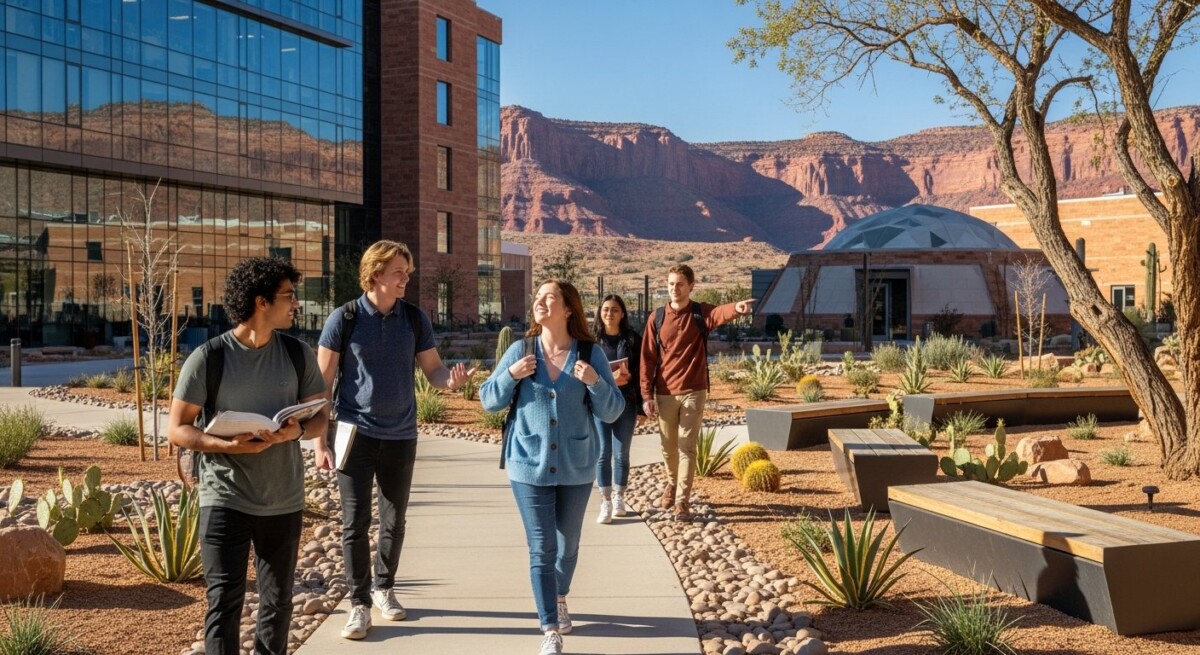
Families exploring higher education in southern Utah often discover a surprising mix of options. While public universities like Utah Tech University (formerly Dixie State) dominate the local conversation, private institutions in St. George serve a growing number of students seeking smaller class sizes, faith-based curricula, or specialized programs. Understanding private college rates in St. George, Utah is essential for making an informed financial decision. These rates vary widely depending on the institution, program type, and available financial aid. This article breaks down current tuition figures, explains what drives costs, and offers practical strategies for affording a private education in this rapidly growing desert city.
Why Choose a Private College in St. George?
St. George is known for its red rock landscapes, warm climate, and outdoor recreation. But it is also becoming a regional hub for higher education. Private colleges here attract students for several reasons. First, class sizes tend to be smaller than at large public universities. This means more personalized attention from professors and a tighter-knit campus community. Second, many private schools offer values-based education, often aligned with religious traditions such as The Church of Jesus Christ of Latter-day Saints. Third, some private institutions provide accelerated degree programs or flexible scheduling for working adults.
However, the sticker price at a private college can be intimidating. Private college rates in St. George, Utah often exceed $15,000 to $25,000 per year in tuition alone. Yet the net price after scholarships and grants can be significantly lower. It is critical to look beyond the published tuition number. Many private schools offer substantial institutional aid that brings the actual cost closer to that of an in-state public university. Families should compare net price calculators on each school’s website to get a realistic estimate.
For a broader perspective on college costs across the country, including how private options compare to public ones, readers can refer to our comprehensive guide on where to find the cheapest online college. That resource explains cost-saving strategies that apply to both online and campus-based programs.
Overview of Private Institutions in St. George
St. George is home to several private colleges and universities, each with a distinct mission and tuition structure. The most prominent include:
- Dixie Technical College (Dixie Tech): While technically a public technical college, it offers certificate programs with tuition rates that rival private schools. However, it is not a traditional private college.
- Utah Tech University: A public university, not private. Included here only for comparison.
- Western Governors University (WGU): A private, nonprofit online university headquartered in Salt Lake City but serving many St. George residents. WGU charges flat-rate, competency-based tuition.
- Stevens-Henager College (now closed): Was a private for-profit college. Its closure highlights the volatility of some for-profit institutions.
- Eagle Gate College: A private career college with programs in healthcare, business, and technology. It has a campus in St. George.
- Provo College (satellite): Some private colleges based in northern Utah offer courses or clinical placements in St. George.
Additionally, several private online universities with no physical campus in St. George enroll local students. These include Southern New Hampshire University (SNHU), Liberty University, and Grand Canyon University. While not technically St. George institutions, they compete for the same students and often appear in local search results for private college rates in St. George, Utah.
Current Tuition Ranges for Private Colleges in St. George
Private college rates in St. George, Utah vary by institution type and program length. Below is a summary of typical annual tuition figures for local private and career-oriented schools (2025-2026 academic year estimates):
Eagle Gate College (St. George campus): Tuition for associate degree programs ranges from $14,000 to $18,000 per year. Certificate programs in medical assisting or business administration cost between $12,000 and $15,000 for the full program (often completed in 9 to 12 months).
Western Governors University (online, but serving St. George): WGU charges approximately $4,000 to $7,000 per six-month term for most undergraduate programs. Since students can accelerate, total cost can be lower than traditional semester-based schools.
SNHU (online): Around $9,600 per year for undergraduates. SNHU is private and nonprofit.
Grand Canyon University (online): Approximately $8,500 to $11,000 per year for traditional students. GCU is private and faith-based.
Dixie Technical College (public, but included for context): Tuition is roughly $2,000 to $4,000 per year for certificate programs. This is not a private college but is often compared by local students.
These figures represent tuition only. Fees, books, and living expenses add $10,000 to $15,000 per year for students who relocate or live on campus. Commuter students can reduce costs by living at home.
What Drives Private College Costs in St. George?
Several factors influence private college rates in St. George, Utah. Understanding these can help families anticipate costs and find ways to save.
Institutional Type: Nonprofit private colleges generally have lower tuition than for-profit schools. For-profit institutions like Eagle Gate College must generate returns for shareholders, which can lead to higher tuition. Nonprofit schools reinvest revenue into academic programs and student services.
Program Demand: Nursing, healthcare, and technology programs cost more to deliver due to specialized equipment, clinical placements, and faculty expertise. These programs typically have higher tuition rates than general studies or liberal arts degrees.
Accreditation: Regionally accredited schools often charge more than nationally accredited ones, but regional accreditation is more widely recognized by employers and other colleges. Students should verify accreditation before enrolling.
Location: St. George’s growing economy and relatively high cost of living (compared to rural Utah) push tuition upward. Faculty salaries, facility maintenance, and administrative costs are higher than in less expensive regions.
Financial Aid Availability: Private colleges with large endowments can offer more institutional aid, reducing net price. Smaller schools may have limited scholarship funds, making the sticker price closer to the actual cost.
How to Afford a Private Education in St. George
Given that private college rates in St. George, Utah can exceed $15,000 per year, most students need financial aid. Here are the primary ways to bridge the gap:
- Federal Student Aid (FAFSA): Completing the Free Application for Federal Student Aid is the first step. It determines eligibility for Pell Grants, federal loans, and work-study programs. Pell Grants do not need to be repaid.
- Institutional Scholarships: Many private colleges offer merit-based and need-based scholarships. Eagle Gate College, for example, provides scholarships for high school graduates and transfer students.
- State Grants: Utah offers the Utah Promise Scholarship and other need-based aid for residents attending eligible institutions. Some private schools qualify.
- Employer Tuition Assistance: Working adults should check if their employer offers tuition reimbursement. Many companies in St. George, including healthcare providers and tech firms, provide this benefit.
- Private Student Loans: As a last resort, private loans can cover remaining costs. Compare interest rates and repayment terms carefully.
For a detailed breakdown of accredited online programs that often cost less than campus-based private schools, see our article on regionally accredited online colleges. Many St. George residents use these programs to save on tuition while working locally.
Comparing Private vs. Public Costs in St. George
To put private college rates in St. George, Utah in perspective, consider the cost of attending Utah Tech University (public). Utah Tech charges in-state tuition of approximately $6,000 per year. Out-of-state tuition is around $17,000. Private schools in the area often land somewhere between $12,000 and $18,000 per year. However, the net price at a private school after scholarships may be lower than the out-of-state public rate.
Students who qualify for little or no institutional aid may find that public universities offer better value. Those who receive significant scholarships may pay less at a private college than at a public one. The key is to apply to multiple schools and compare financial aid offers side by side.
Another factor is program length. Some private career colleges offer accelerated programs that allow students to graduate in 12 to 18 months. This reduces total tuition and gets graduates into the workforce sooner. For example, a medical assisting certificate at Eagle Gate College can be completed in about 10 months for $14,000. A similar program at a public community college might take two years and cost $8,000 in tuition, but the longer time out of the workforce may offset the savings.
Hidden Fees and Additional Costs
When evaluating private college rates in St. George, Utah, families must look beyond tuition. Common additional costs include:
- Technology fees: $200 to $500 per year for online platforms and lab software.
- Lab fees: $100 to $1,000 per course for science, nursing, or computer labs.
- Books and supplies: $800 to $1,500 per year. Some programs require specialized equipment (e.g., nursing scrubs, stethoscopes, laptop requirements).
- Parking permits: $50 to $200 per year at campus-based schools.
- Graduation fees: $100 to $300 for diploma processing and cap and gown.
Ask each school for a complete cost of attendance sheet before enrolling. This document includes all estimated expenses and forms the basis for financial aid calculations.
Scholarship Opportunities Specific to St. George
Local scholarships can significantly reduce private college rates in St. George, Utah. Here are some worth exploring:
- Washington County School District Scholarships: Graduating seniors from local high schools may qualify for scholarships funded by community organizations.
- St. George Area Chamber of Commerce Scholarships: The chamber offers small scholarships for residents pursuing higher education.
- Rotary Club of St. George Scholarships: Rotary clubs in the area award scholarships based on community service and academic achievement.
- Institutional Scholarships: Eagle Gate College and other private schools have their own scholarship applications. Check each school’s financial aid page.
- Private Online University Scholarships: WGU, SNHU, and GCU offer scholarships for new students. Some are specifically for Utah residents.
Students should also search for national scholarships that can be used at any accredited institution. Websites like Fastweb and Scholarships.com list thousands of opportunities.
Frequently Asked Questions
What is the average private college tuition in St. George, Utah?
The average annual tuition for private career colleges in St. George ranges from $12,000 to $18,000. Online private universities serving the area charge $8,000 to $11,000 per year. Actual costs vary by program and financial aid.
Are private colleges in St. George more expensive than public universities?
Generally yes. Utah Tech University (public) charges about $6,000 per year for in-state students. Private schools in St. George are typically two to three times that amount before aid. However, after scholarships, net prices can be similar.
Can I get financial aid for private college in St. George?
Yes. Federal aid (Pell Grants, loans) is available at any accredited school. Many private colleges also offer institutional scholarships. Complete the FAFSA and check each school’s financial aid office for additional forms.
What is the cheapest private college in St. George?
Eagle Gate College is one of the more affordable private options in St. George, with certificate programs starting around $12,000 total. Online private universities like WGU and SNHU often have lower annual tuition than local campus-based schools.
Do private colleges in St. George offer online programs?
Yes. Eagle Gate College offers hybrid and online options. Many St. George residents also enroll in fully online programs from WGU, SNHU, Liberty University, and Grand Canyon University. These can be more affordable than campus-based attendance.
Making an Informed Decision
Private college rates in St. George, Utah should never be evaluated in isolation. The true cost of attendance depends on scholarships, grants, living arrangements, and program length. Families who take the time to compare net prices across multiple institutions often find that private education is more affordable than the sticker price suggests. Additionally, for students who are flexible about location or delivery format, online private universities offer some of the lowest tuition rates available anywhere in the country.
For those seeking additional resources on tuition planning and financial aid strategies, College & Tuition provides detailed guides, scholarship databases, and tools to help students compare costs. We recommend visiting college tuition information pages to explore how different institutions stack up in terms of value. With careful research and early financial planning, a private college education in St. George is within reach for many families.
About the Author: Lisa Bennett