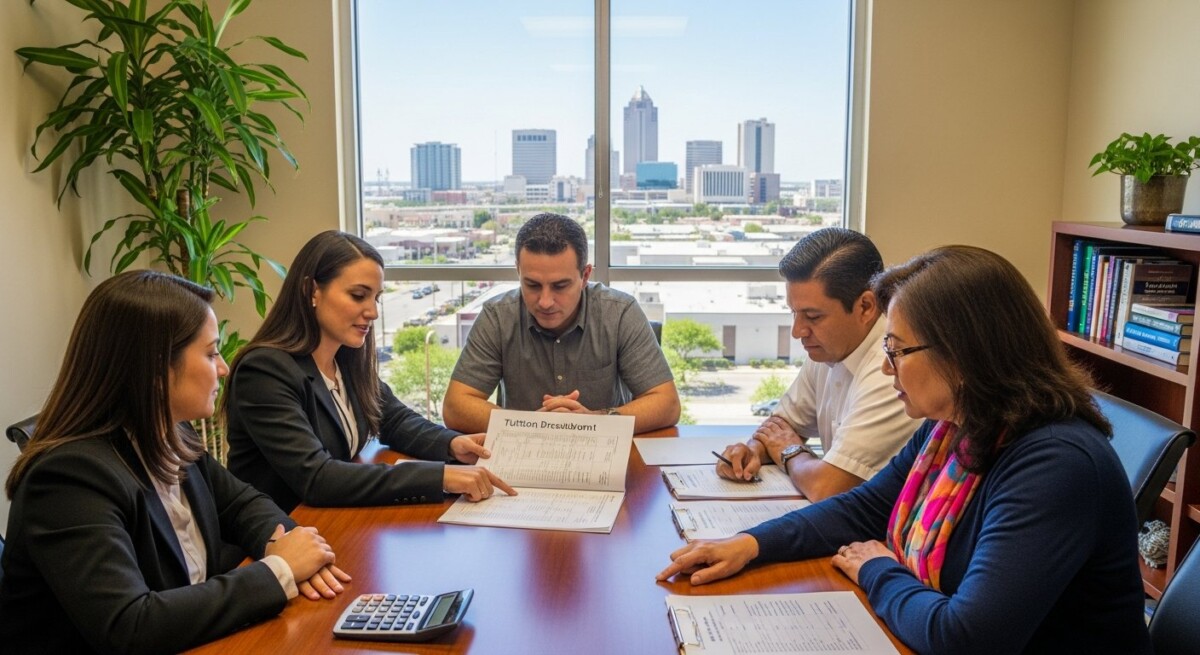
Families considering private education in Brownsville, Texas often face a complex financial landscape. Tuition rates vary widely by institution, and additional costs for fees, uniforms, transportation, and extracurricular activities can significantly impact the total budget. Understanding these expenses is essential for making an informed decision that aligns with both educational goals and household finances. This guide breaks down the typical costs, hidden fees, and strategies to manage private school expenses in Brownsville, Texas, helping you plan effectively for your child’s education.
Understanding Tuition Ranges for Brownsville Private Schools
Private school tuition in Brownsville varies depending on the school’s mission, grade level, and religious affiliation. For the 2025-2026 academic year, annual tuition for elementary programs typically ranges from $4,000 to $8,000. Middle and high school programs often cost between $6,000 and $12,000 per year. Schools with specialized curricula, such as Montessori or International Baccalaureate programs, tend to charge higher rates reflecting their enhanced resources and smaller class sizes.
Several factors influence these price points. Schools with endowments or parish support may offer lower tuition for members of their faith community. Conversely, independent secular schools without such backing often set higher fees to cover operational costs. It is important to compare tuition across multiple institutions and request detailed fee schedules before applying.
Hidden Fees and Additional Costs Beyond Tuition
Tuition is only one component of private school expenses in Brownsville, Texas. Many schools charge mandatory fees that can add $500 to $2,500 annually. Common additional costs include registration fees, technology fees for laptops or tablets, lab fees for science courses, and activity fees for athletics or arts programs. Uniforms are another significant expense, with initial purchases ranging from $200 to $500 and annual replacements costing around $100 to $200.
Transportation is an often overlooked cost. If the school does not provide bus service, parents must factor in fuel and vehicle maintenance for daily drop-offs and pickups. After-school care programs, tutoring services, and field trip fees also contribute to the total. Families should request a complete breakdown of all anticipated costs during the admissions process to avoid surprises.
Breakdown of Typical Annual Costs for a K-12 Student
To illustrate the full financial picture, here is a sample budget for one child attending a mid-range private school in Brownsville:
- Tuition: $7,000 (average for elementary through middle school)
- Registration and activity fees: $800 (includes materials and technology access)
- Uniforms and supplies: $350 (first year higher, subsequent years lower)
- Transportation: $600 (fuel and vehicle wear for 180 school days)
- After-school care (optional): $2,400 (for 10 months at $240 per month)
This brings the total to approximately $11,150 per year for a single child. Families with multiple children may receive sibling discounts, typically 10 to 20 percent off tuition for the second and third child. However, even with discounts, the cumulative cost can exceed $30,000 annually for two children.
Financial Aid and Scholarship Opportunities
Many Brownsville private schools offer need-based financial aid to make attendance more accessible. The application process typically requires submitting tax returns, a financial aid form (such as the SSS or FACTS Grant & Aid), and a letter explaining family circumstances. Awards can cover 10 to 50 percent of tuition depending on demonstrated need and available funds.
Merit-based scholarships are also available for students with exceptional academic records, artistic talent, or athletic ability. These scholarships may cover full or partial tuition but often require maintaining a minimum GPA or participating in specific programs. Families should inquire about scholarship deadlines early, as funds are limited and awarded on a first-come, first-served basis.
For those planning ahead, 529 savings plans can be used to pay for K-12 private school tuition up to $10,000 per year per beneficiary under federal tax law. Texas residents also benefit from the Texas Tuition Promise Fund, although this program primarily covers public college costs. Consulting a tax professional can help maximize these savings strategies.
Comparing Private Schools in Brownsville
When evaluating options, families should compare not only costs but also the value each school provides. For example, a school with higher tuition might include free after-school care, advanced placement courses, or robust college counseling services that reduce future expenses. Conversely, a lower-cost school may lack these amenities, requiring families to pay separately for enrichment activities.
In our guide on private school expenses in Elizabeth, New Jersey, we explain how to evaluate total cost of attendance versus educational outcomes. The same principles apply in Brownsville: request data on college acceptance rates, standardized test scores, and student-teacher ratios. Schools that invest in professional development for teachers and technology infrastructure often justify higher fees with better academic results.
Strategies to Reduce Private School Expenses
Managing private school expenses in Brownsville, Texas requires proactive planning. Start by creating a dedicated education savings account and contributing monthly, even if the amount is small. Automating deposits ensures consistency and reduces the burden of lump-sum payments at the start of the school year.
Negotiating with the school’s admissions office is another option. Some schools offer payment plans that spread tuition over 10 or 12 months rather than requiring a single payment. Others may reduce fees for families who volunteer at the school, serve on committees, or contribute professional services like accounting or IT support. It never hurts to ask about discounts for paying early or for referrals that result in new enrollments.
Additionally, families can offset costs by leveraging community resources. Local nonprofit organizations and churches sometimes provide tuition assistance grants for low-income families. The Texas Education Agency also offers the Texas Educational Opportunity Grant for college-bound students, but private school families may qualify for supplemental aid through local foundations.
Long-Term Financial Planning for Private Education
Choosing private school for the duration of a child’s K-12 education represents a significant long-term commitment. At current rates, a family could spend between $100,000 and $150,000 over 13 years for one child, not including college. This makes it critical to evaluate how private school expenses align with other financial goals, such as retirement savings, college funding, and emergency reserves.
For a broader perspective on managing education costs, you can read our analysis of private school fees in Mesquite, Texas. That guide highlights how geographic and demographic factors influence pricing, which can inform your expectations in Brownsville. The key is to treat private school expenses as a multiyear investment and revisit the budget annually as tuition and fees typically increase by 3 to 5 percent each year.
When researching college financing options for after private school, families can explore resources like college tuition information to compare costs and financial aid packages for higher education. This forward-looking approach helps ensure that private school does not jeopardize future educational opportunities.
Frequently Asked Questions
What is the average private school tuition in Brownsville, Texas?
The average annual tuition ranges from $5,000 for elementary programs to $10,000 for high school. Actual costs depend on the school’s prestige, curriculum, and grade level.
Are there any free private schools in Brownsville?
There are no tuition-free private schools in Brownsville. However, some religious schools offer significantly reduced tuition for members of their congregation, and need-based financial aid can lower costs substantially.
Can I use a 529 plan for private school expenses in Texas?
Yes. Federal law allows 529 plan withdrawals of up to $10,000 per year per beneficiary for K-12 private school tuition. Check with your plan administrator for specific rules regarding fees and other expenses.
Do private schools in Brownsville offer sibling discounts?
Many schools provide discounts of 10 to 20 percent for the second child and additional discounts for subsequent children. Policies vary, so inquire directly with each school.
How can I get financial aid for private school?
Complete the school’s financial aid application, typically through SSS or FACTS, and submit tax documents. Apply early, as funds are limited. Also research local scholarships from community foundations and religious organizations.
Planning for private school expenses in Brownsville, Texas requires careful research and budgeting. By understanding the full cost picture, exploring financial aid options, and using strategic savings tools, families can make private education a sustainable choice. Whether you are just beginning your search or preparing for the next school year, taking the time to evaluate each school’s total value will help you invest wisely in your child’s future.
About the Author: Lisa Bennett