When families in central Georgia begin weighing educational options, the cost of private education in Macon, Georgia often surfaces as the first major question. It is a decision that involves more than monthly tuition payments; it shapes household budgets, extracurricular opportunities, and long-term financial planning. Parents want to know what they are paying for, how the numbers compare across schools, and whether financial aid can close the gap.
This guide breaks down the real expenses behind private schooling in Macon, from tuition ranges and fees to hidden costs like uniforms, technology, and transportation. You will also find practical strategies for reducing the financial load, including scholarships, sibling discounts, and state-based savings plans. By the end, you will have a clear picture of what to expect and how to prepare without sacrificing your family’s financial health.
What Drives the Cost of Private Education in Macon, Georgia
Private school tuition in Macon varies widely because each institution operates with its own mission, staffing model, and facility requirements. Independent schools with large campuses, advanced science labs, and robust arts programs naturally charge more than smaller religious or community-based schools. Faculty salaries, class sizes, and administrative overhead all factor into the final price tag.
Another major influence is accreditation and specialized programming. Schools that offer International Baccalaureate (IB) programs, dual enrollment with local colleges, or extensive special education support invest heavily in teacher training and curriculum development. Those costs pass through to families in the form of higher tuition. Conversely, parish schools supported by local churches often keep tuition lower because the congregation subsidizes operational expenses.
Demand also plays a role. Macon’s private schools compete for students with public options, including magnet programs and charter schools. When a school maintains strong college placement records and low student-to-teacher ratios, it can command premium pricing. Families are paying for perceived outcomes: safety, individualized attention, and a values-based environment.
Average Tuition Ranges Across Macon Private Schools
Tuition figures for Macon private schools typically fall between $4,500 and $14,000 per year, depending on grade level and institution type. Preschool and early childhood programs often cost less than upper grades because they may operate on half-day schedules. Elementary through high school tuition tends to increase incrementally, with high school being the most expensive due to advanced coursework and college counseling services.
To give you a concrete sense of the market, here is a breakdown of typical ranges:
- Religious parish schools: $4,500 to $7,500 annually. These schools often offer discounts for parish members and multiple children from the same family.
- Independent college-preparatory schools: $9,000 to $14,000 annually. These institutions emphasize rigorous academics, small class sizes, and extensive extracurricular offerings.
- Specialized or Montessori programs: $6,000 to $11,000 annually. Tuition reflects unique teaching methods, specialized materials, and often lower student-teacher ratios.
It is important to note that these figures are base tuition only. Many schools charge additional fees for application processing, enrollment deposits, and annual activity or technology fees. These supplemental costs can add $500 to $1,500 per year on top of tuition, so always request a complete fee schedule before making comparisons.
Beyond Tuition: Hidden Costs Families Often Overlook
When budgeting for the cost of private education in Macon, Georgia, many parents focus solely on the tuition line item. However, the true expense includes several other components that can catch families off guard. Uniforms, for instance, are mandatory at many schools and can cost $150 to $400 per year depending on the number of outfits and where they are purchased. Some schools require specific vendors, which limits secondhand options.
Technology fees are increasingly common. Laptop or tablet programs, digital textbooks, and online learning platforms add $200 to $600 annually. Transportation is another variable cost; if the school does not offer bus service, parents must factor in daily driving time and fuel. Extended care programs for working parents, such as before-school and after-school care, typically run $50 to $150 per week.
Field trips, class projects, and fundraising obligations also add up. While some schools cover these costs within tuition, others expect parents to pay per event. Over the course of a school year, these incidental expenses can total $1,000 or more. Ask each school for a detailed breakdown of optional versus mandatory fees so you can compare apples to apples.
Financial Aid and Scholarships in Macon
Families should not assume that private school is out of reach based on sticker price. Many Macon private schools offer need-based financial aid, merit scholarships, and tuition assistance programs. The application process typically requires a family financial statement, often processed through FACTS or School and Student Services (SSS). These tools assess household income, assets, and family size to determine demonstrated need.
Merit scholarships are less common at the elementary level but more prevalent in high schools, especially for students with exceptional academic records, artistic talent, or athletic ability. Some schools also offer scholarships funded by endowments or donor contributions, which may be renewable each year if the student maintains certain grades. It is always worth asking the admissions office about available aid before ruling out a school.
Local nonprofits and community foundations sometimes provide scholarships for students attending private schools. The Community Foundation of Central Georgia, for example, administers various educational funds. Additionally, some employers offer tuition reimbursement programs for dependents of employees. These resources, combined with school-based aid, can significantly reduce the out-of-pocket cost.
Comparing Private School Costs to Public School Investments
While private school tuition appears steep at first glance, it is helpful to compare it with what families already pay for public education through property taxes. The average homeowner in Macon contributes thousands of dollars annually to school taxes, whether or not they have children in public schools. Private school families essentially pay twice for education: once through taxes and again through tuition.
That said, private schools often provide services that public schools do not, such as smaller class sizes, specialized curricula, and a stronger emphasis on character development. For some families, these benefits justify the additional expense. Others may find that high-quality public options in Bibb County, including magnet programs and advanced placement tracks, meet their children’s needs without the private school price tag.
To make an informed decision, create a side-by-side comparison of the total costs of each option, including hidden fees, transportation, and aftercare. Then weigh those numbers against the academic outcomes, school culture, and opportunities each setting provides. The right choice depends on your child’s learning style, your family’s values, and your long-term financial goals.
Strategies to Reduce the Cost of Private Education in Macon, Georgia
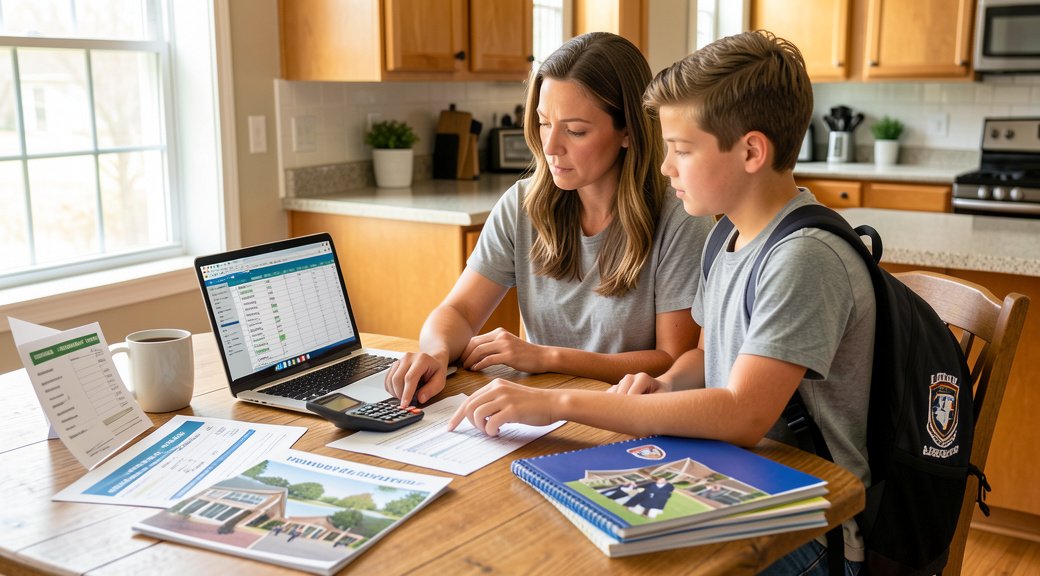
If you are set on private school but need to manage the expense, several strategies can help. First, apply for financial aid even if you think your income is too high. Many families assume they will not qualify, but aid formulas account for cost of living, number of dependents, and other expenses. You may be surprised by the award you receive.
Second, ask about sibling discounts. Most schools offer a 10% to 25% reduction for the second or third child enrolled. Some also provide tuition credits for referrals or for parents who volunteer in the school community. Third, consider a 529 plan, which allows you to save for K-12 tuition with tax advantages. Georgia’s Path2College 529 Plan lets families invest after-tax dollars, and withdrawals for qualified education expenses, including private school tuition, are tax-free at the federal level and often at the state level too.
Finally, explore payment plans. Many schools allow families to spread tuition over 10 or 12 months rather than paying in one lump sum. This does not reduce the total cost but does make budgeting easier. If you are already managing multiple expenses, a monthly payment schedule can prevent the need for high-interest loans or credit card debt.
Planning for the Long Term: Is Private School Worth the Investment?
Deciding whether the cost of private education in Macon, Georgia is worth it requires a long-term perspective. Private school graduates often gain access to strong college counseling, rigorous coursework, and a network of alumni that can open doors in higher education and careers. For some students, this translates into scholarships and better college outcomes, which can offset the initial tuition investment.
However, the financial commitment is substantial. If you are paying $12,000 per year for 13 years of schooling, that totals over $150,000 per child before college. It is essential to consider how that money could be used alternatively, such as growing a college fund or saving for a down payment on a home. Families should also think about the opportunity cost of one parent reducing work hours to handle school logistics, which affects household income.
A practical approach is to evaluate the return on investment. Look at each school’s college placement record, average SAT/ACT scores, and the percentage of graduates who attend four-year universities. Compare those metrics with your child’s potential in a public school setting. If the private school offers significant advantages in areas you value, the cost may be justified. If not, you might achieve similar outcomes at a fraction of the expense.
For a broader perspective on how private education costs compare in other regions, you can review our guide on private education costs in Naperville Illinois. Similarly, if you are exploring other parts of the country, our analysis of private education expenses in El Monte offers useful benchmarks. These resources help you contextualize Macon’s pricing against national trends.
Frequently Asked Questions
What is the average private school tuition in Macon, Georgia?
Average tuition ranges from $4,500 to $14,000 per year depending on the school type and grade level. Elementary schools tend to be on the lower end, while college-preparatory high schools are at the higher end.
Are there scholarships available for private schools in Macon?
Yes, many schools offer need-based financial aid and merit scholarships. Families should contact the admissions office directly and submit required financial documents by the deadline. Local foundations and community organizations also provide some scholarships.
Can I use a 529 plan for private school tuition in Georgia?
Yes, Georgia’s Path2College 529 Plan allows tax-free withdrawals for K-12 tuition expenses, up to the annual gift tax exclusion limit. This can provide significant tax savings for families paying private school tuition.
Do private schools in Macon offer payment plans?
Most private schools offer monthly payment options, often through third-party tuition management services. These plans typically spread the annual tuition over 10 to 12 months, with a small enrollment fee.
What hidden costs should I budget for?
Beyond tuition, plan for uniforms, technology fees, field trips, transportation, and aftercare. These extras can add $1,000 to $2,500 per year depending on the school and your child’s activities.
Making the Right Financial Decision for Your Family
Choosing a private school is deeply personal, and the financial aspect is only one part of the equation. Take time to visit campuses, talk to other parents, and observe classrooms. Understand what each school truly offers for the price, and be honest about what your family can afford without compromising other financial goals.
Remember that the cost of private education in Macon, Georgia is not just a monthly payment; it is an investment in your child’s future. With careful planning, financial aid, and the right savings tools, private school can be attainable for many families. And for those who decide it is not the right fit, the public school options in Macon provide their own pathways to success. The key is to make a decision that aligns with your values, your budget, and your child’s needs.
If you are still exploring how to finance education beyond high school, you can find comprehensive college tuition information on our site. We cover scholarships, financial aid, and cost comparisons to help you prepare for every stage of your child’s academic journey. Whatever you decide, approaching the process with clear eyes and a solid plan will serve your family well.
About the Author: Michael Grant