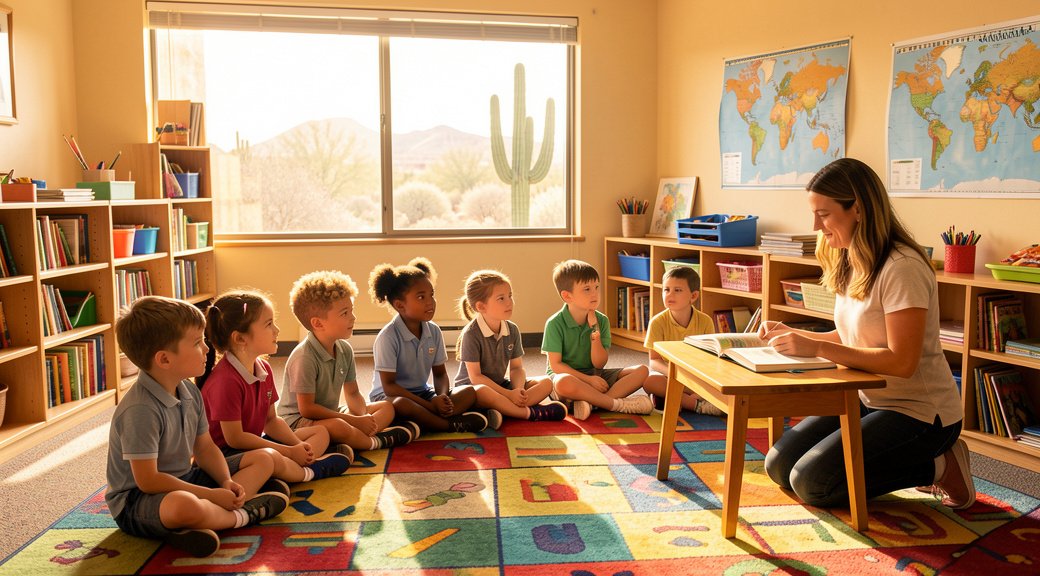
Families exploring education options in southern Arizona often ask the same question: how much does private school tuition in Tucson, Arizona actually cost? The answer depends on grade level, school philosophy, and the services included. Unlike public schools funded by property taxes and state allocations, private schools rely on tuition, donations, and endowments. This creates a wide range of price points and financial aid opportunities. Understanding the full picture of private school tuition in Tucson, Arizona helps parents make informed decisions without surprise costs.
Tucson offers more than 40 private schools serving preschool through 12th grade. These include Montessori programs, college-preparatory academies, faith-based institutions, and specialized schools for students with learning differences. Annual tuition ranges from roughly $4,000 for small faith-based preschools to over $18,000 for elite college-preparatory high schools. The average private school tuition in Tucson, Arizona falls between $9,000 and $13,000 per year for K-12 programs. This guide breaks down what families actually pay and what those tuition dollars include.
What Drives Tuition Costs in Tucson Private Schools
Several factors determine why one school charges $6,000 while another charges $16,000. School size plays a major role. Smaller schools with low student-to-teacher ratios require more faculty per student, which drives up per-pupil costs. Facilities also matter. Schools with science labs, performing arts centers, athletic fields, and swimming pools must maintain those assets through tuition revenue. Faculty qualifications and salary levels directly affect cost. Schools employing teachers with advanced degrees and years of experience typically charge higher tuition.
Location within Tucson influences pricing as well. Schools in the Catalina Foothills, Oro Valley, and other higher-income areas often have higher tuition to match the local cost of living and competitive faculty salaries. Conversely, schools in central or south Tucson may offer lower tuition while maintaining strong academic programs. Accreditation status also matters. Schools accredited by organizations like the Arizona State Board for Private Postsecondary Education or the Western Association of Schools and Colleges (WASC) often invest more in compliance, teacher training, and curriculum development.
Program specialization is another important factor. Montessori schools, for instance, require specialized teacher training and specific classroom materials, which can increase tuition. College-preparatory schools offering Advanced Placement (AP) courses, International Baccalaureate (IB) programs, or dual-enrollment options with local universities incur additional costs for exam fees, lab supplies, and teacher training. Schools serving students with learning differences may charge higher tuition because they maintain smaller class sizes and employ specialized staff.
Tuition Ranges by School Type and Grade Level
Private school tuition in Tucson, Arizona varies significantly by school type. Faith-based schools typically offer the most affordable options. Catholic elementary schools in the Diocese of Tucson charge between $5,000 and $7,500 annually for parishioners, with slightly higher rates for non-parishioners. Protestant Christian schools range from $6,000 to $10,000 per year. Jewish day schools and other religious institutions fall in a similar range, often offering tuition assistance for families who are members of the sponsoring congregation.
Montessori schools in Tucson charge between $7,000 and $13,000 annually for full-day programs. Primary grades (ages 3-6) tend to be slightly less expensive than elementary and middle school programs. Some Montessori schools offer half-day options at reduced rates. Independent secular schools and college-preparatory academies represent the highest tuition tier. These schools charge between $12,000 and $18,000 per year for upper grades. Many of these institutions offer sliding-scale tuition or need-based aid to increase economic diversity.
For preschool and kindergarten, parents can expect to pay between $4,000 and $10,000 depending on the program type and hours. Full-day programs with extended care options cost more than half-day academic programs. Middle school tuition often increases by $1,000 to $3,000 compared to elementary grades, reflecting the addition of specialized subject teachers, lab sciences, and competitive athletics. High school tuition typically represents the highest cost, with many schools charging $13,000 to $18,000 for a comprehensive college-preparatory education.
Additional Fees Beyond Tuition
Families should budget for expenses beyond the base tuition figure. Registration fees typically range from $200 to $1,000 and are non-refundable. Technology fees for laptops, tablets, or learning management systems add $200 to $800 annually. Many schools charge separate fees for athletics, performing arts, field trips, and extracurricular activities. Uniform costs, if required, can add $300 to $600 per year. Before- and after-school care programs cost extra, usually $2,000 to $4,000 annually for full-time use.
Some schools bundle these costs into an all-inclusive tuition model. Others itemize fees separately. Parents should request a complete fee schedule during the admissions process. Ask specifically about lab fees, AP exam costs, graduation fees, and any mandatory fundraising requirements. Transparent schools provide a total cost of attendance document that includes all required expenses. This prevents unexpected bills mid-year.
Financial Aid and Tuition Assistance Options
Most Tucson private schools offer some form of financial aid. Need-based aid is the most common type. Families complete a confidential application, often through a third-party service like FACTS or School and Student Services (SSS). The school reviews household income, assets, family size, and other factors to determine eligibility. Awards typically range from 10% to 90% of tuition. Many schools commit to meeting a certain percentage of demonstrated need for admitted students.
Merit-based scholarships exist at some schools, particularly for high school students with exceptional academic records, artistic talent, or athletic ability. These scholarships may cover partial or full tuition and often require maintaining a minimum GPA. Some schools offer sibling discounts of 5% to 15% for the second or third child enrolled. Early payment discounts are another option. Paying the full year’s tuition by a specific date may earn a 2% to 5% reduction.
Arizona’s private school tax credit program provides additional financial relief. Individuals and couples can receive a dollar-for-dollar tax credit for donations to school tuition organizations (STOs). These STOs then distribute the funds as scholarships to eligible students. Many Tucson families use this program to reduce their net tuition cost. The maximum credit amount changes annually and applies to both public school and private school STOs. Consulting a tax professional familiar with Arizona education tax credits ensures families maximize this benefit.
For families comparing options, it is also worth examining how private school costs relate to broader higher education expenses. Our analysis of Arizona public university tuition costs and total expenses provides context for how K-12 private school investments align with future college costs. Understanding both sides of the equation helps families plan long-term education budgets more effectively.
Comparing Value: What Tuition Dollars Actually Buy
Higher tuition does not automatically mean better education. Parents should evaluate what each school delivers for the price. Class size is one of the most important metrics. Schools with average class sizes of 12 to 18 students often provide more individualized instruction than those with 22 or more students per class. Teacher qualifications matter. Schools employing teachers with advanced degrees and specialized certifications typically invest more in faculty development.
Curriculum offerings and enrichment programs add tangible value. Schools with robust STEM programs, foreign language instruction beginning in elementary grades, and integrated arts curricula often justify higher tuition through expanded learning opportunities. College counseling services become particularly valuable in high school. Dedicated college counselors who guide students through applications, test preparation, and scholarship searches can significantly impact post-secondary outcomes.
Extracurricular program quality also factors into value. Schools with competitive athletic programs, award-winning performing arts groups, and active community service programs provide opportunities that extend beyond the classroom. Facility quality affects the student experience. Modern science labs, well-equipped libraries, safe playgrounds, and updated technology infrastructure all contribute to the educational environment. Families should tour multiple schools and ask current parents about their experiences before making a decision based solely on tuition price.
How to Budget for Private School Education
Creating a realistic budget for private school tuition in Tucson, Arizona requires looking beyond the sticker price. Start by listing all potential costs: tuition, fees, uniforms, supplies, transportation, extracurriculars, and before- or after-care. Then subtract any anticipated financial aid or scholarship awards. The remaining figure represents the family’s out-of-pocket obligation. Many schools offer payment plans that spread tuition over 10 or 12 monthly installments. Some charge a small fee for this service, while others include it at no extra cost.
Families should also consider the opportunity cost of private school tuition. Money spent on K-12 education cannot simultaneously go toward college savings. However, a strong private school education may reduce the need for remedial coursework in college and could lead to more scholarship opportunities. Our guide on Arkansas college tuition costs offers a framework that applies to any state, including Arizona, for understanding how to balance K-12 and higher education expenses.
Some families use 529 college savings plans to pay for K-12 private school tuition. The federal Tax Cuts and Jobs Act expanded 529 plan distributions to include up to $10,000 per year for elementary and secondary school tuition. This strategy offers tax advantages on earnings withdrawn for qualified education expenses. However, not all states conform to this federal provision. Arizona conforms, meaning families can use 529 funds for private school tuition without state tax penalties. Consult a financial advisor to determine if this approach aligns with overall education funding goals.
Frequently Asked Questions About Private School Tuition in Tucson
Is private school tuition in Tucson tax deductible? Tuition payments themselves are not deductible on federal or Arizona state income taxes. However, donations to school tuition organizations (STOs) qualify for Arizona’s dollar-for-dollar tax credit. Families can reduce their state tax liability by contributing to an STO that provides scholarships to the school their child attends.
Do Tucson private schools offer payment plans? Yes, most private schools offer monthly or quarterly payment plans. Some charge a nominal fee for this service. Tuition payment plans typically run from June through May or August through May. Schools may require automatic bank draft enrollment for installment plans.
How do I compare private school tuition across different schools? Request a total cost of attendance document from each school. This should include tuition, all mandatory fees, and optional costs like after-care or lunch programs. Compare schools on the same basis, and factor in any financial aid for which you may qualify.
Can I negotiate private school tuition? Some schools are open to discussion, especially if you have competing offers or unique circumstances. Approach the conversation professionally. Explain your financial situation and ask if additional aid or a payment adjustment is available. Be prepared to provide documentation of need.
What happens if I cannot pay tuition mid-year? Most schools have policies for financial hardship. Contact the business office immediately. Some schools offer emergency grants, short-term payment extensions, or reduced tuition for the remainder of the year. Ignoring the issue can result in the student being withdrawn from classes.
For families researching broader college funding strategies, College & Tuition provides a comprehensive resource for college tuition information including scholarship databases, financial aid guides, and comparison tools. This platform helps families connect the dots between K-12 planning and higher education affordability.
Private school tuition in Tucson, Arizona represents a significant investment in a child’s education. The range of options from $4,000 faith-based programs to $18,000 college-preparatory academies means families at various income levels can find suitable choices. By understanding the full cost structure, exploring financial aid opportunities, and evaluating what each school offers for the price, parents can make informed decisions that align with both their educational values and their household budget. Start the process early, ask detailed questions, and use available resources to maximize the value of every tuition dollar spent.
About the Author: Ethan Brooks