
Technical Institutes: Education Focused on Real Skills for Careers
Technical institutes provide accelerated, hands-on training for in-demand careers, offering a faster and often more affordable path to employment than traditional four-year degrees.

By Lisa Bennett
In an era where the value of a college degree is under intense scrutiny, a distinct educational pathway is gaining prominence for its direct connection to employment and economic mobility. This model, embodied by technical institutes, prioritizes practical, hands-on skill acquisition over theoretical exploration, offering a streamlined route to in-demand careers. Unlike traditional four-year programs that often require students to navigate a broad liberal arts curriculum before specializing, technical institutes operate with a different philosophy: education is a direct investment in a specific career outcome. For students burdened by the rising cost of higher education and anxious about their return on investment, this focused approach provides a compelling alternative. It answers a critical question for many modern learners: how can I efficiently gain the verified skills employers are actively seeking? Technical institutes: education focused on real skills is not just a tagline, it is the foundational principle of an educational model designed to bridge the persistent skills gap in the workforce.
The Defining Philosophy of Technical and Vocational Education
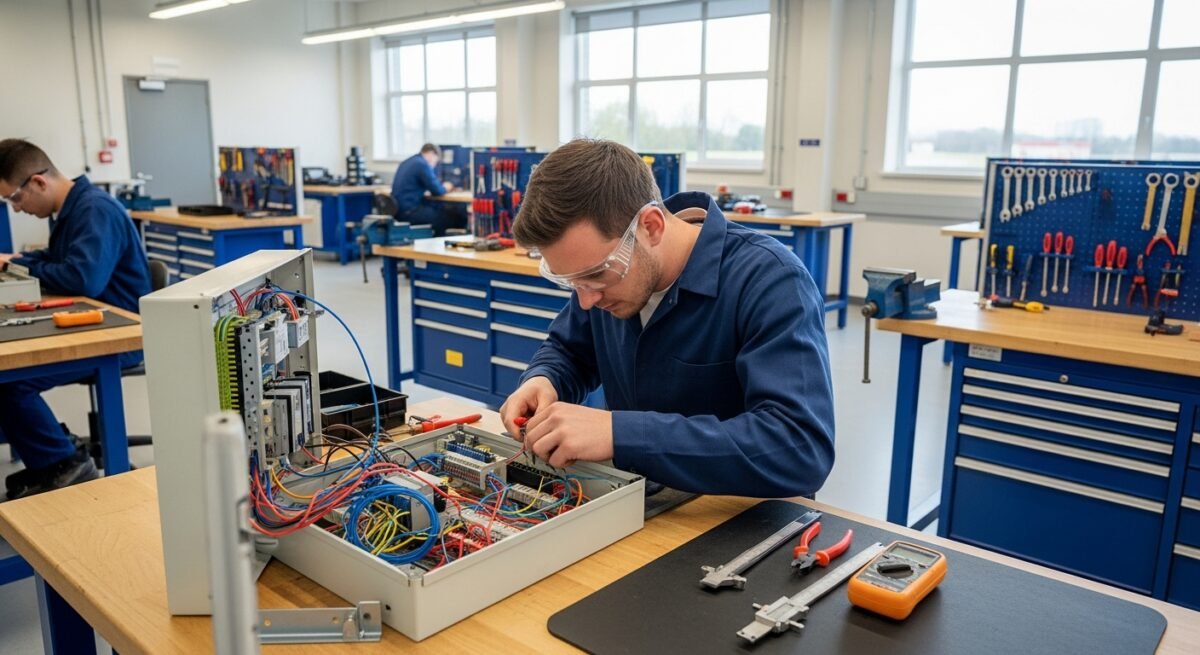
The core mission of a technical institute is to align its curriculum precisely with the current and projected needs of industry. This creates a symbiotic relationship between education and employment. Faculty are often industry professionals who bring real-world experience into the classroom, or even the workshop, from day one. The learning environment itself is designed to simulate workplace conditions, featuring labs, shops, and technology that mirror what students will encounter on the job. This immersion is critical. It moves learning beyond textbook diagrams and into the realm of tactile, applied knowledge. Students don’t just learn about electrical circuits, they build and troubleshoot them. They don’t just study diagnostic procedures, they perform them on actual equipment.
This philosophy stands in contrast to a more traditional academic model, which, while valuable for developing critical thinking and a broad knowledge base, can sometimes leave a gap between graduation and job readiness. The technical institute model seeks to eliminate that gap entirely. The measure of success is not merely graduation rates, but more importantly, job placement rates and career advancement. This outcomes-focused approach requires institutes to maintain agile curricula, constantly updating programs in response to technological advancements and shifting market demands. For instance, a program in information technology today must include cloud computing and cybersecurity modules that may not have existed a decade ago. This responsiveness ensures that the “real skills” being taught remain genuinely relevant.
Key Benefits of Choosing a Technical Institute Pathway
Opting for an education at a technical institute offers a suite of advantages tailored to students seeking efficiency, affordability, and direct career entry. The most prominent benefit is the significantly reduced time to completion. Many certificate and diploma programs can be completed in under two years, and associate degree programs are typically designed as two-year endeavors. This accelerated timeline allows students to enter the workforce, start earning a salary, and begin building professional experience much sooner than their peers in four-year programs. This early entry can have profound long-term financial implications, including earlier retirement savings and less student debt accumulation.
The financial aspect is another cornerstone benefit. While costs vary, technical programs are generally more affordable than a four-year bachelor’s degree. The shorter duration means fewer semesters of tuition, fees, and living expenses. Furthermore, because the training is so focused, students are not paying for credits in unrelated general education courses. Every class and every credit hour is directly contributing to their vocational skill set. This cost-effectiveness, combined with strong job placement support, often leads to a high return on investment. Graduates can quickly attain gainful employment in their field, enabling them to manage or pay off any incurred debt more rapidly. For a deeper look at the practical skills developed in focused programs, our guide on 5 ready-to-use skills that you develop by studying an online master explores similar outcomes in advanced settings.
Beyond time and money, the pedagogical approach itself is a major benefit. The learning is hands-on, project-based, and often collaborative, mirroring modern work environments. This style of education is highly effective for kinesthetic learners and those who thrive by doing rather than just listening. Students build a portfolio of completed projects and demonstrable competencies, which becomes a powerful tool during job interviews. They can point to specific skills, software proficiencies, or technical certifications they have earned, providing concrete evidence of their readiness to contribute from day one. This direct line from classroom to career is the ultimate value proposition of technical institutes: education focused on real skills.
Popular and High-Demand Fields of Study
Technical institutes excel in preparing students for careers in sectors where specific, certifiable skills are paramount. These fields are often characterized by strong job growth, competitive salaries, and a clear pathway for advancement based on skill and experience. One of the largest and most dynamic sectors is healthcare and allied health. The aging population and advances in medical technology continuously drive demand for skilled professionals. Technical institutes offer programs for roles such as:
- Registered Nursing (ADN): An Associate Degree in Nursing provides the fastest route to becoming a licensed RN, a profession with critical demand.
- Radiologic Technologist: Operating sophisticated imaging equipment like MRI and CT scanners.
- Dental Hygienist: Providing critical preventive oral care in clinical settings.
- Medical Laboratory Technician: Performing the essential tests that inform diagnoses.
- Surgical Technologist: Assisting in operating rooms, a role requiring precision and composure.
Another dominant area is information technology and computer science. The digital transformation of every industry has created an insatiable need for IT support, network management, and cybersecurity expertise. Technical institute programs in this field are highly technical and certification-focused, often preparing students for industry-recognized credentials from companies like Cisco, CompTIA, and Microsoft. Common programs include Network Administration, Cybersecurity Analysis, Software Development, and Data Management. These programs teach the specific programming languages, network architectures, and security protocols that businesses use daily.
The skilled trades represent a third pillar of technical education, and one experiencing a significant renaissance. As a generation of tradespeople retires, demand for their replacements is soaring. These careers offer excellent pay, job security, and the satisfaction of tangible creation and problem-solving. Key trades taught at technical institutes include Electrician, Welding Technology, HVAC/R (Heating, Ventilation, Air Conditioning, and Refrigeration), Automotive Technology, and Construction Management. These programs combine classroom theory with extensive shop time, where students master the tools and techniques of their trade under the guidance of experienced instructors.
Critical Considerations for Prospective Students
While the benefits are clear, making an informed decision about attending a technical institute requires careful research and self-assessment. The first and most critical step is to verify the institution’s accreditation. Accreditation by a recognized regional or national agency is a non-negotiable marker of educational quality. It ensures that the school meets established standards, that its credits may be transferable to other institutions, and that its students are eligible for federal financial aid. Prospective students should be wary of institutions that lack proper accreditation, as their credentials may not be respected by employers or other colleges.
Investigating job placement rates and career services is equally important. A reputable technical institute will transparently share data on graduate employment outcomes. Students should ask: What percentage of graduates are employed in their field of study within six months of graduation? What specific companies hire from the institute? How active is the career services office in facilitating internships, co-ops, and job interviews? This data is a direct indicator of the institute’s effectiveness and its reputation among local employers. A strong network of industry partnerships is often the backbone of a successful placement program.
Finally, students must consider the total cost and their financing options. While typically more affordable, technical education still represents a significant investment. It is essential to get a complete picture of all costs, including tuition, fees, books, tools, and supplies specific to the program (e.g., welding gear, nursing kits, specialized software). Students should complete the Free Application for Federal Student Aid (FAFSA) to determine their eligibility for grants, loans, and work-study. Many institutes also offer their own scholarships or payment plans. Additionally, some employers offer tuition reimbursement programs for employees seeking to advance their skills, which can be a perfect fit for part-time technical institute students. For those comparing different postsecondary paths, comprehensive college tuition information is vital for making a fully informed financial decision.
Frequently Asked Questions
Are technical institute credits transferable to a four-year college or university?
This varies significantly. Some technical institutes have articulation agreements with specific colleges that allow credits, particularly in general education courses, to transfer toward a bachelor’s degree. However, many highly specialized technical courses may not transfer. If you think you might want to pursue a bachelor’s degree in the future, it is crucial to discuss transfer pathways with admissions counselors at both the institute and the potential four-year school before enrolling.
What is the difference between a technical institute and a community college?
There is considerable overlap, and many community colleges host robust technical and vocational divisions. The primary difference is one of focus. A standalone technical institute is exclusively dedicated to career and technical education (CTE). A community college typically offers a wider array of programs, including CTE, associate of arts degrees designed for transfer to a four-year university, and general continuing education courses. Both can be excellent choices for career-focused education.
Do employers value technical institute degrees and certificates?
Yes, especially in the fields for which they are designed. Employers in healthcare, technology, manufacturing, and the skilled trades are often very familiar with local technical institutes and actively recruit their graduates. These employers prioritize demonstrated, hands-on skills and relevant certifications, which are the hallmarks of a quality technical institute education. The proof is in the job placement and starting salary data from reputable institutions.
Can I attend a technical institute while working full-time?
Many technical institutes are designed with working adults in mind. They frequently offer flexible scheduling options, including night classes, weekend programs, hybrid online/in-person formats, and accelerated cohorts. This flexibility is a key feature that makes this form of education accessible to non-traditional students seeking to change careers or upgrade their skills without leaving the workforce.
The landscape of postsecondary education is diversifying to meet the varied needs of 21st-century learners and the economy. Technical institutes: education focused on real skills represents a powerful and pragmatic segment of this landscape. By offering accelerated, affordable, and intensely practical training, they provide a vital pathway to economic stability and fulfilling careers for millions of students. For individuals who have a clear career goal in a technical field, who learn best by doing, and who seek an efficient return on their educational investment, a technical institute is not just an alternative, it can be the optimal choice. The ultimate success of this model hinges on its continued agility and its unwavering commitment to aligning the skills it teaches with the evolving demands of the world of work.