
Traditional College Courses: The Enduring Value of On-Campus Learning
Explore the enduring benefits of traditional college courses, from in-person mentorship to structured campus life. Understand who thrives in this immersive learning environment and how it fosters holistic development beyond academics.

By Lisa Bennett
In an era of digital proliferation, where online degree programs and micro-credentials are just a click away, the classic model of attending a physical campus for traditional college courses can seem almost nostalgic. Yet, far from being obsolete, this time-honored educational format continues to offer a distinct, multifaceted value proposition that remains deeply relevant for a significant segment of learners. The decision between a brick-and-mortar classroom and a virtual one isn’t merely about content delivery; it’s a choice between two fundamentally different educational ecosystems, each with its own rhythms, rewards, and developmental pathways. This exploration delves into the core characteristics, benefits, and considerations of traditional, on-campus learning to help you understand its unique and enduring role in higher education.
Defining the Traditional College Experience
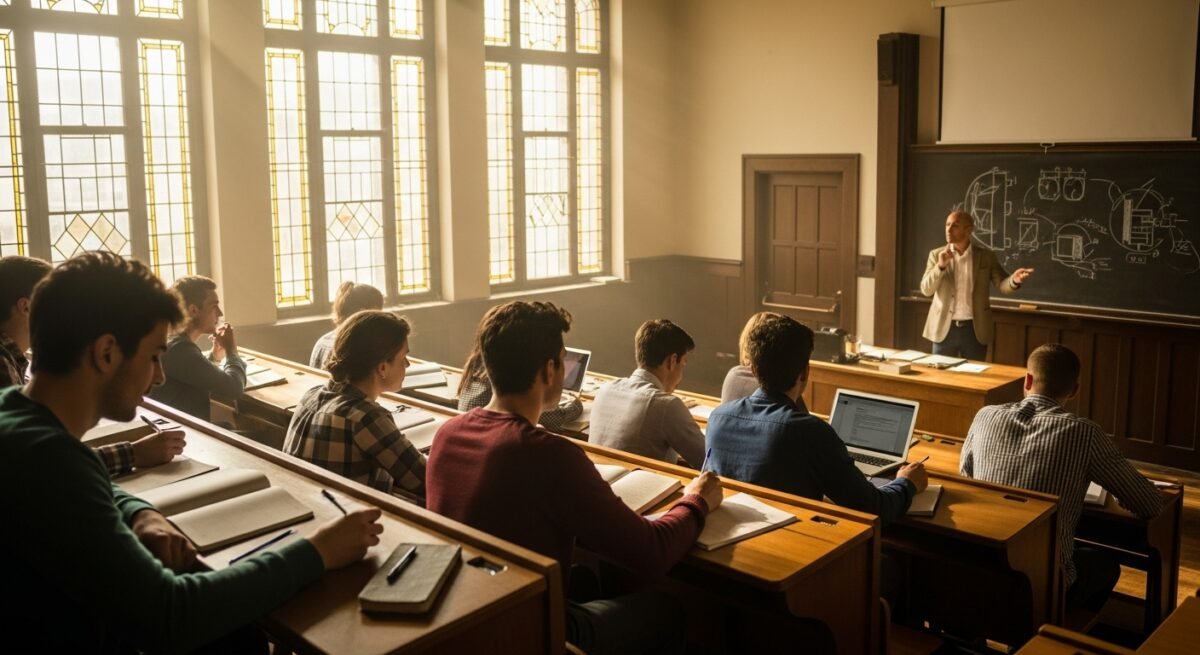
At its heart, a traditional college course is defined by synchronous, in-person instruction within a shared physical space. This model operates on a fixed schedule, typically following a semester or quarter system, requiring students and professors to be present in a lecture hall, seminar room, or laboratory at designated times. The structure is inherently communal, built around the premise that learning is a social and collaborative act. This environment extends far beyond the classroom walls, encompassing libraries, student unions, dormitories, and campus greens. The experience is holistic, integrating academic instruction with a vast array of extracurricular activities, social organizations, and impromptu interactions that collectively contribute to personal and intellectual growth. It’s this immersive, 360-degree environment that forms the bedrock of the traditional model, distinguishing it from more compartmentalized forms of education.
The Tangible Benefits of In-Person Learning
The advantages of traditional college courses are often rooted in the richness of direct human interaction and the structured discipline of a physical learning environment. One of the most significant benefits is the immediacy of feedback and mentorship. In a lecture or seminar, a professor can read the room, adjust explanations in real-time based on student expressions, and engage in spontaneous, clarifying dialogue. This dynamic allows for nuanced discussion where ideas can be challenged and refined on the spot, fostering critical thinking skills in a live, responsive setting. The laboratory components of science and engineering courses offer a prime example, where hands-on work with physical equipment under direct supervision is irreplaceable for developing practical skills and understanding scientific method.
Furthermore, the traditional schedule imposes a beneficial structure and discipline. The routine of attending classes, studying in designated spaces like libraries, and participating in campus life helps students develop time management and self-regulation skills within a supportive framework. The campus itself acts as a curated environment for growth, minimizing distractions and maximizing access to academic resources and peer support. The network built during these years the study groups formed in the library, the conversations after class, the connections with faculty during office hours often evolves into a professional network of unparalleled value. For a deeper understanding of the foundational credibility of any educational path, exploring the basics of college accreditation is essential, as it applies equally to on-campus and online programs.
Curriculum Depth and the Liberal Arts Foundation
Traditional college programs, particularly at four-year liberal arts institutions, are frequently designed around a philosophy of broad, deep, and sequential learning. The curriculum often includes a robust set of general education requirements intended to produce well-rounded graduates with exposure to the humanities, social sciences, and natural sciences. This approach champions the idea of learning for its own sake and developing transferable skills like communication, ethical reasoning, and cultural literacy. The pace is typically deliberate, allowing for deep dives into complex subjects over a 15-week semester, fostering a mastery that goes beyond surface-level understanding.
Majors within this system are structured to build knowledge cumulatively, with introductory courses laying the groundwork for advanced seminars and capstone projects. This scaffolded approach ensures a comprehensive grasp of a discipline’s methodologies and theoretical frameworks. The depth is further enhanced by direct access to specialized facilities: art studios, music practice rooms, theater stages, advanced research labs, and archival libraries. These resources are not just tools; they are environments that inspire creativity and innovation. For students considering the full spectrum of structured, long-term options, researching the best 4-year online colleges can provide a valuable comparison to understand how traditional depth is being replicated or reimagined in digital formats.
The Social and Developmental Dimension
Perhaps the most celebrated aspect of traditional college life is its role as a crucible for personal development and social integration. Living on or near campus facilitates a profound immersion in a community of peers navigating similar challenges and explorations. This environment accelerates the development of soft skills like teamwork, leadership, conflict resolution, and cultural competency through daily interaction in dorms, clubs, sports teams, and student government. The exposure to diverse perspectives in a shared living and learning space is often more intense and impactful than in virtual settings, challenging preconceptions and fostering empathy. This period of semi-autonomous living, away from the direct oversight of family, is a critical transitional stage where young adults learn to balance freedom with responsibility, forming an identity and building lifelong friendships and professional networks in the process.
Challenges and Modern Considerations
Despite its strengths, the traditional model is not without significant challenges that have been brought into sharp relief by the rise of alternatives. The most prominent is cost. Tuition for on-campus programs has risen dramatically, often compounded by expenses for room, board, transportation, and fees. This financial burden can lead to substantial student debt, making the return on investment a pressing concern for many families. Furthermore, the model’s rigidity can be a barrier for non-traditional students, such as working adults, caregivers, or career-changers, who require the flexibility that asynchronous online courses provide.
The geographical constraint is another limitation. Attending a specific campus requires relocation or commuting, which may not be feasible for everyone. This can limit a student’s choice to institutions within a certain radius unless they are willing and able to incur the high costs of out-of-state or private tuition. Additionally, while the pace of a semester system allows for depth, it can also feel slow for highly motivated students or those seeking to acquire specific skills quickly. In a fast-changing job market, the four-year timeline can sometimes feel out of sync with immediate technical or vocational needs.
Who Is the Ideal Candidate for Traditional Courses?
Identifying who stands to gain the most from traditional college courses involves assessing personal learning styles, life circumstances, and educational goals. This model is often an exceptional fit for recent high school graduates seeking a defined transitional experience into adulthood. Students who thrive on direct social interaction, learn best through kinetic or auditory means in a live setting, and benefit from external structure will find the on-campus environment highly supportive. Those pursuing fields requiring extensive hands-on practice, such as performing arts, laboratory sciences, studio art, or certain engineering disciplines, will heavily rely on the specialized physical facilities only a campus can provide.
Furthermore, individuals for whom the holistic development of the classic “college experience” the networking, independence, leadership opportunities, and cultural exposure is a primary goal will find immense value in the residential model. It is also a powerful path for students who are undecided on a major, as the broad liberal arts curriculum and exposure to diverse departments on campus can help them discover their passions organically. The ideal candidate is one who can commit the time, financial resources, and physical presence to fully engage with the immersive community a campus offers.
When evaluating any educational path, it is crucial to weigh these personal factors against practical considerations. Key questions to ask include:
- Learning Style: Do I absorb information best through live lecture and discussion, or through self-paced, reading-intensive study?
- Financial Reality: What is the total cost of attendance (tuition, fees, room, board), and what funding options (scholarships, grants, work-study) are available?
- Life Stage & Responsibilities: Am I able to relocate or commute to a campus, and can I adhere to a fixed class schedule?
- Career Goals: Does my intended profession require hands-on skill development, licensure with clinical hours, or a network best built in person?
- Personal Growth Objectives: Is becoming part of a residential community and developing independence in a structured environment a high priority for me?
Answering these questions honestly provides a clearer framework for decision-making. It’s also important to recognize that the binary choice between “traditional” and “online” is increasingly blurred. Many universities now offer robust hybrid programs, blending the scheduled, in-person benefits of traditional courses with the flexibility of online modules, providing a middle path that captures strengths from both models.
The Evolving Landscape and Future Integration
The future of traditional college courses is not one of replacement but of evolution and integration. Forward-thinking campuses are actively incorporating the lessons and technologies from digital learning to enhance the in-person experience. This includes using online platforms for course management (posting syllabi, submitting assignments), flipping classrooms where lecture content is viewed online so class time can be dedicated to interactive problem-solving, and offering hybrid options for greater schedule flexibility. The goal is to leverage technology to make the traditional model more efficient, accessible, and engaging, preserving the core of interpersonal connection while adopting the best tools of the digital age.
This synthesis suggests that the most enduring institutions will be those that offer a strategic blend, allowing students to craft an educational journey that may include semesters in residence, online terms for convenience, and hybrid courses that fit a busy schedule. The value proposition of the physical campus is thus being refined. It becomes less about being the sole source of information which the internet provides ubiquitously and more about being a curated community for application, collaboration, mentorship, and experiential learning that cannot be digitized.
The resonance of traditional college courses endures because they offer more than information transfer; they facilitate transformation within a community. For those who can access it, the immersive, structured, and deeply social environment of a campus provides a unique and powerful venue for intellectual, professional, and personal development that extends far beyond the transcript. In the diverse ecosystem of higher education, it remains a vital and irreplaceable pathway for shaping engaged, adaptable, and well-rounded individuals.