
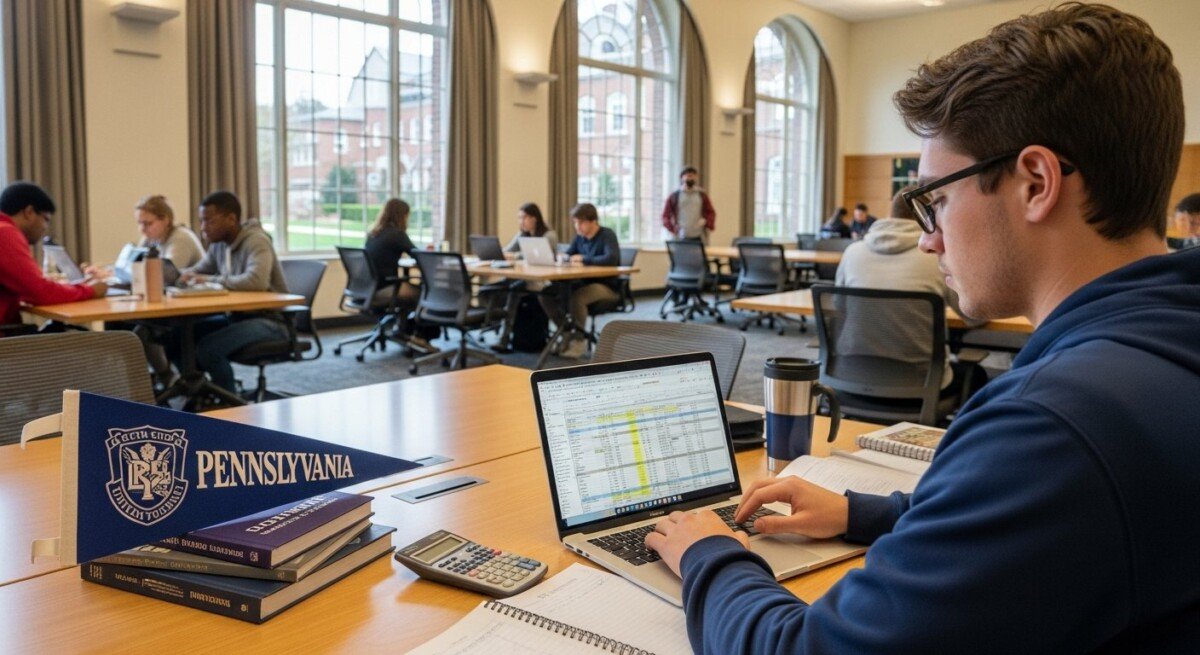
Understanding Pennsylvania College Costs: A Complete Breakdown
This detailed Pennsylvania college cost breakdown reveals the true net price after aid and provides strategies to manage both direct and hidden expenses for students and families.

By Lisa Bennett
Navigating the financial landscape of higher education in Pennsylvania can feel like deciphering a complex code. With a diverse array of institutions, from prestigious private universities to the extensive state system, the price tags vary dramatically, and the true cost often extends far beyond the tuition figure advertised on a website. For students and families across the Keystone State and beyond, creating a realistic budget requires peeling back the layers of direct and indirect expenses. This comprehensive Pennsylvania college cost breakdown moves beyond sticker shock to provide a clear, actionable framework for understanding what you will actually pay, how financial aid dramatically alters the equation, and strategic ways to manage the total investment in your education.
The Core Components of College Costs in Pennsylvania
To accurately budget for a Pennsylvania education, you must separate costs into two primary categories: direct costs and indirect costs. Direct costs are billed directly by the institution and typically appear on your semester invoice. These are the most visible expenses and form the basis of a school’s published Cost of Attendance (COA). Indirect costs, however, are equally critical to plan for. These are educational expenses you will incur but are not paid directly to the college. They include books, transportation, and personal spending. A realistic budget that accounts for both types of expenses is essential to avoid financial shortfalls during the academic year.
The single largest direct cost is almost always tuition. In Pennsylvania, tuition rates are heavily influenced by residency status and institutional type. Pennsylvania residents pay significantly less at public universities like those in the Pennsylvania State System of Higher Education (PASSHE), which includes schools like West Chester and Slippery Rock, or at the Commonwealth’s related institutions like Penn State, Pitt, and Temple. Non-residents face a much higher tuition rate at these public schools. Private institutions, such as the University of Pennsylvania, Carnegie Mellon, or Villanova, charge one tuition rate for all students, though it is typically higher than even the non-resident rate at public schools. It is crucial to look at tuition per credit hour for part-time students or those in specific programs, as detailed in our guide on understanding college tuition per credit hour.
The other major direct cost is room and board. This covers housing and a meal plan if you live on campus. Many schools require freshmen to live on campus and purchase a meal plan, making this a non-negotiable part of the first-year budget. For upperclassmen or those attending commuter schools, off-campus housing and self-provided food become significant indirect costs that require careful estimation. Additional mandatory fees round out the direct costs. These can include technology fees, student activity fees, lab fees for science courses, and health service fees. Always review the detailed fee schedule from your prospective college.
Comparing Public, Private, and Community College Costs
The type of institution you choose is the most significant determinant of your baseline cost. Pennsylvania’s higher education ecosystem offers three primary tiers, each with a distinct financial profile.
Public four-year universities present the most affordable in-state option. For the 2023-2024 academic year, average published tuition and fees for in-state students at Pennsylvania’s public four-year schools were approximately $15,000 to $18,000, with room and board adding another $12,000 to $14,000. For out-of-state students, tuition can double or even triple, making the total COA comparable to or exceeding that of some private institutions. The Pennsylvania State System of Higher Education schools generally offer the lowest in-state tuition, while the state-related universities (Penn State, Pitt, Temple) have a higher, but still reduced, rate for residents.
Private non-profit colleges and universities carry the highest published price tags. Tuition and fees alone often exceed $50,000 per year, with total COA frequently surpassing $70,000. However, these institutions also typically have the largest endowments and can offer substantial institutional grant aid, which significantly reduces the net price for many students. It is a critical mistake to rule out a private school based on its sticker price alone, as your actual cost after financial aid may be surprisingly competitive.
Pennsylvania’s community colleges, such as the Community College of Philadelphia or the Community College of Allegheny County, offer the most accessible entry point. With average tuition around $5,000 per year for in-district students, they provide a pathway to complete general education requirements at a fraction of the cost. Many students pursue a “2+2” plan: earning an associate degree at a community college before transferring to a four-year institution to complete a bachelor’s. This strategy can save tens of thousands of dollars. Understanding the full scope of these costs is vital, and our resource on understanding Pennsylvania college tuition costs provides deeper analysis.
Financial Aid: The Key to Your Net Price
The published Cost of Attendance is merely the starting point for financial planning. The figure that truly matters is the net price: the amount you and your family will actually pay after all grants and scholarships are subtracted. Financial aid bridges the gap between the COA and what a family can reasonably contribute. The process begins with the Free Application for Federal Student Aid (FAFSA), which uses financial information to calculate your Expected Family Contribution (EFC), now known as the Student Aid Index (SAI).
Gift aid, which does not need to be repaid, is the most desirable form of financial aid. This includes:
- Federal Pell Grants: Awarded to undergraduate students with exceptional financial need.
- Pennsylvania State Grant: A need-based grant for Pennsylvania residents attending an approved in-state or out-of-state school. The amount varies based on financial need and the cost of the institution.
- Institutional Scholarships & Grants: Awards provided directly by the college from its own funds, based on merit, need, or specific talents.
- Private Scholarships: Awards from external organizations, foundations, and companies.
To maximize gift aid, students should aggressively search for private scholarships and ensure they meet all deadlines for institutional aid. A valuable starting point for this search is the comprehensive database at Scholarship & Financial Aid Resources, which aggregates opportunities from numerous sources.
Self-help aid includes work-study programs and student loans. Federal Work-Study provides part-time jobs for students with financial need, allowing them to earn money to help pay education expenses. Student loans, both federal and private, must be repaid with interest. Federal Direct Subsidized Loans (for undergraduates with need) and Unsubsidized Loans (for all students) should be maximized before considering private loans, due to their fixed interest rates and flexible repayment options. It is essential to borrow only what is absolutely necessary, as loan repayment will impact your finances for years after graduation.
Hidden and Indirect Costs You Must Budget For
Failing to plan for indirect costs is a common budgeting error that leads to credit card debt or loan over-borrowing. These expenses are not on the college bill but are unavoidable components of student life.
Textbooks and academic supplies are a major annual cost, often ranging from $1,200 to $1,500. Students can save substantially by renting textbooks, buying used copies, utilizing library reserves, or opting for digital versions when available. Transportation costs vary widely. A commuter student must budget for gas, parking permits, and vehicle maintenance. A student flying home for breaks must account for airfare. Even on-campus students may want a budget for local bus fare or ride-sharing services. Personal expenses encompass laundry, toiletries, clothing, entertainment, and mobile phone bills. While variable, setting a realistic monthly allowance is crucial.
One often-overlooked cost is the “summer gap.” If your financial aid or housing covers only the nine-month academic year, you must plan for three months of living expenses, including rent, food, and potentially summer tuition if you take courses. Securing a summer job or internship with pay is an important part of covering this period. Proactively estimating and saving for these indirect costs prevents financial stress and allows you to focus fully on your academic success.
Strategic Planning to Reduce Your Total Cost
A proactive, strategic approach can significantly reduce the financial burden of a Pennsylvania college degree. Implementing even a few of these strategies can yield savings of thousands of dollars.
First, prioritize applying to a mix of “safety,” “match,” and “reach” schools financially. Your list should include at least one in-state public school and one community college pathway as affordable baselines. Use each college’s net price calculator, available on their financial aid website, to get an early, personalized estimate of your cost after aid. This tool is invaluable for making smart application decisions.
Second, maximize credit-earning opportunities before enrollment. Scoring well on Advanced Placement (AP), International Baccalaureate (IB), or College-Level Examination Program (CLEP) exams can grant you college credits, potentially allowing you to graduate a semester early, saving an entire term’s worth of costs. Similarly, taking dual-enrollment courses at a local community college while in high school can transfer as credit to your four-year institution.
Third, live frugally while in school. Choosing a standard meal plan instead of the unlimited option, living in a standard double room, using student discounts, and cooking occasional meals instead of eating out all contribute to lower indirect costs. Finally, maintain academic performance. Many merit-based scholarships require a minimum GPA for renewal. Staying focused on your studies protects your financial aid and sets you up for post-graduation success.
Frequently Asked Questions
What is the average total cost for a Pennsylvania resident at a public four-year university?
For the 2023-2024 year, the average total Cost of Attendance (including tuition, fees, room, board, and estimated indirect costs) for an in-state student living on campus at a Pennsylvania public university ranged from approximately $30,000 to $35,000 per year. Remember, your net price after financial aid will likely be lower.
How do I qualify for the Pennsylvania State Grant?
You must be a Pennsylvania resident for at least 12 months prior to enrollment, demonstrate financial need via the FAFSA, be enrolled at least half-time in an approved program, and not have a prior bachelor’s degree. You must also meet satisfactory academic progress requirements.
Is it cheaper to go to a private college with a big scholarship or a public college with less aid?
You must compare the final net price at each institution. A private college offering a $30,000 institutional grant might bring your net price down to $25,000, which could be lower than the $28,000 net price at a public university with only federal aid. Always run the net price calculators and compare financial aid award letters side-by-side.
What are the biggest mistakes families make when budgeting for college?
Common mistakes include: only looking at sticker price and not net price, forgetting to budget for indirect costs like books and travel, not filing the FAFSA because they think they won’t qualify, and over-borrowing in private student loans before maximizing federal loan options and scholarships.
Can I negotiate my financial aid offer?
Yes, you can appeal your financial aid award, especially if your financial circumstances have changed (job loss, medical expenses) or if you have a more favorable offer from a comparable institution. Contact the financial aid office, be polite, provide documentation, and formally request a professional judgment review.
Planning for college in Pennsylvania demands moving beyond anxiety about high prices and toward empowered, informed financial planning. By thoroughly understanding the breakdown of costs, actively pursuing all forms of gift aid, and implementing cost-saving strategies, a quality higher education becomes an achievable investment. The goal is not merely to get into college, but to graduate with a degree and a financial foundation that allows you to thrive in your next chapter.