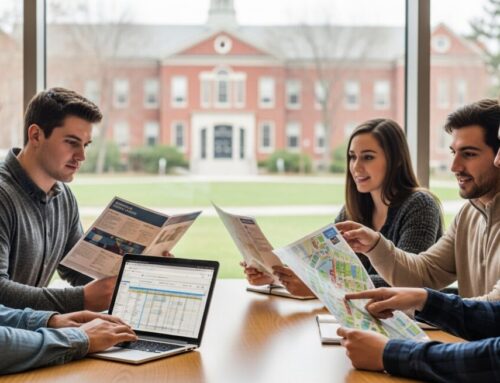
Families in Garden Grove, California, often assume that private colleges are financially out of reach. Yet the reality is more nuanced. Private colleges in and around Garden Grove offer distinct academic experiences, smaller class sizes, and robust financial aid packages that can make them more affordable than their sticker prices suggest. Understanding the true cost of private college tuition in Garden Grove, California, requires looking beyond the published price to explore scholarships, grants, and payment strategies that can significantly reduce out-of-pocket expenses.
Garden Grove sits within Orange County, a region known for its high cost of living and competitive educational landscape. While public universities in the California State University and University of California systems draw significant attention, private institutions provide alternative pathways that may better suit certain students’ academic goals and financial situations. This guide breaks down the components of private college costs, the financial aid opportunities available, and practical steps families can take to make private education a viable option.
Understanding the Published Tuition vs. Net Price
Every private college publishes a “sticker price” that includes tuition, fees, room, board, and other expenses. For many families, this figure is intimidating. However, the net price is what students actually pay after subtracting grants and scholarships. According to the National Association of College and University Business Officers, private nonprofit colleges discount tuition by an average of over 50 percent for first-time, full-time students. This means the actual cost for many families is far lower than the advertised price.
For Garden Grove residents, several private colleges within commuting distance offer competitive net prices. Institutions like Chapman University, Concordia University Irvine, and Vanguard University of Southern California provide generous institutional aid. Families should use each college’s net price calculator, which is required by federal law, to get a personalized estimate before ruling out any school based on sticker price alone.
For more detailed strategies on comparing costs across private institutions, our guide on affordable private college tuition provides a framework for evaluating offers and identifying the best value.
Factors That Influence Private College Tuition in Garden Grove
Several variables affect the final cost of attending a private college in this region. Understanding these factors helps families plan more effectively.
Geographic Location and Cost of Living
Orange County’s high cost of living directly impacts college operating expenses. Faculty salaries, facility maintenance, and administrative costs are higher here than in many other parts of the country. These costs are partially passed on to students, which is why private college tuition in Garden Grove, California, may appear elevated compared to similar institutions in lower-cost regions. However, many local private colleges also have larger endowments and more robust scholarship programs to offset these expenses for students with financial need.
Institutional Endowment and Aid Capacity
Colleges with larger endowments can offer more generous need-based and merit-based aid. Chapman University, for example, has a substantial endowment that supports significant scholarship programs for Orange County residents. When evaluating private colleges, families should research each institution’s average financial aid package and the percentage of students receiving grants. This data is available on the College Scorecard website and each college’s financial aid page.
Program of Study
Certain majors, such as nursing, engineering, and business, often carry additional fees or higher tuition rates due to specialized equipment, lab space, or faculty expertise. Students pursuing these fields at private colleges should factor in these extra costs when comparing programs. Conversely, liberal arts programs may have lower additional fees, making them more budget-friendly options at the same institution.
For families seeking faith-based options, our article on affordable Christian colleges explores how religious institutions in Southern California structure their tuition and financial aid.
Financial Aid Opportunities for Garden Grove Families
Financial aid is the primary mechanism that makes private college tuition in Garden Grove, California, accessible. Families should pursue every available avenue, starting with federal aid, then state programs, and finally institutional and private scholarships.
Federal Aid Programs
The first step is completing the Free Application for Federal Student Aid (FAFSA). This form determines eligibility for federal Pell Grants, work-study programs, and Direct Loans. Pell Grants, which do not require repayment, are awarded to undergraduate students with exceptional financial need. For the 2025-2026 academic year, the maximum Pell Grant award is expected to exceed $7,000. Garden Grove families with household incomes below $60,000 are often eligible for significant Pell Grant support.
State of California Aid
California offers several grant programs that can be applied to private colleges. The Cal Grant program, administered by the California Student Aid Commission, provides awards to eligible students attending qualifying private institutions. For the 2025-2026 year, Cal Grant A awards for private college students can reach up to $9,220 annually. Additionally, the Middle Class Scholarship program supports families with incomes up to $217,000, offering a sliding-scale award that reduces tuition costs at both public and private California institutions.
Students must submit both the FAFSA and the California Dream Act Application (if applicable) by the March 2 priority deadline to maximize their eligibility for state aid.
Institutional Scholarships and Grants
Private colleges in Garden Grove and nearby areas offer several types of institutional aid:
- Merit-based scholarships: Awarded based on academic achievement, test scores, and extracurricular involvement. These do not require separate applications at many schools and are automatically considered during admissions.
- Need-based grants: Determined by the information provided on the FAFSA or CSS Profile. These grants fill the gap between what a family can afford and the cost of attendance.
- Talent-based awards: Available for students excelling in athletics, music, art, theater, or other specific areas. These often require auditions, portfolios, or tryouts.
- Departmental scholarships: Offered by specific academic departments to students pursuing particular majors. For example, a biology department may fund research scholarships for STEM students.
Families should contact each college’s financial aid office to learn about deadlines and application requirements for these opportunities. Some scholarships require early action or early decision applications, so planning ahead is essential.
Comparing Private Colleges Near Garden Grove
Several private colleges within a 30-minute drive of Garden Grove offer distinct academic programs and cost structures. Comparing their tuition and aid profiles helps families make informed decisions.
Chapman University, located in Orange, has a published tuition of approximately $62,000 per year. However, the average net price for students receiving aid is around $35,000. Chapman offers strong programs in film, business, and law, and its proximity to Garden Grove makes it a convenient option for commuter students.
Concordia University Irvine, a Lutheran-affiliated institution, lists tuition near $42,000 but provides substantial merit scholarships. Many students pay between $20,000 and $28,000 after aid. Concordia is known for its education, nursing, and business programs.
Vanguard University of Southern California, based in Costa Mesa, charges approximately $40,000 in tuition. With institutional grants and scholarships, the average net price drops to about $25,000. Vanguard emphasizes Christian values and offers popular programs in psychology, ministry, and business.
For families willing to consider a slightly longer commute, Biola University in La Mirada and University of La Verne provide additional options with comparable net prices after financial aid.
Strategies to Reduce Out-of-Pocket Costs
Beyond financial aid, families can take proactive steps to lower the cost of private college tuition in Garden Grove, California. These strategies require planning but can yield significant savings.
First, consider the option of living at home and commuting. Room and board can add $15,000 to $20,000 annually to the cost of attendance. Garden Grove families who live within driving distance of a private college can eliminate this expense entirely. Commuting may also reduce meal plan costs and transportation expenses if students use public transit or carpool.
Second, explore tuition payment plans offered by most private colleges. These plans allow families to spread tuition payments over 10 or 12 months without interest, rather than paying a large lump sum at the beginning of each semester. This can make budgeting easier and reduce the need for student loans.
Third, apply for outside scholarships throughout high school. Local organizations such as the Garden Grove Community Foundation, Orange County Community Foundation, and Rotary Clubs offer scholarships specifically for local students. Even small awards of $500 to $2,000 add up and reduce loan dependency.
Fourth, consider a federal work-study position on campus. These jobs provide income that can be used for personal expenses, textbooks, or transportation. Work-study earnings are not counted as income on the following year’s FAFSA, so they do not reduce future financial aid eligibility.
Fifth, investigate tuition reciprocity or consortium agreements. Some private colleges in Orange County allow students to take courses at partner institutions at no additional cost, potentially reducing the time to degree and overall tuition.
For comprehensive tools and resources to compare tuition and financial aid offers, visit college tuition information pages that aggregate data from multiple institutions.
Frequently Asked Questions
How much does private college tuition in Garden Grove, California, typically cost?
Published tuition at private colleges near Garden Grove ranges from $40,000 to $62,000 per year. However, after financial aid, the average net price for students receiving grants is between $20,000 and $35,000. Each family’s actual cost depends on income, assets, and the specific college’s aid policies.
Are there any tuition-free private colleges in Garden Grove?
There are no tuition-free private colleges in Garden Grove. However, some institutions offer full-tuition scholarships for students with exceptional academic records or significant financial need. These are highly competitive and limited in number.
Can I use Cal Grant at private colleges near Garden Grove?
Yes, Cal Grant awards can be used at qualifying private nonprofit colleges in California. The Cal Grant A award for private institutions is currently up to $9,220 per year. Students must meet income, GPA, and other eligibility requirements and submit the FAFSA by the March 2 deadline.
How do I compare financial aid offers from different private colleges?
Compare net price, not sticker price. Look at the total cost of attendance minus grants and scholarships. Also consider the loan amounts included in each offer. A college that offers more grants and fewer loans is generally a better financial fit. Use each college’s net price calculator before applying.
Do private colleges in Garden Grove offer merit scholarships for high GPAs?
Yes, most private colleges in the area award merit scholarships based on GPA, test scores, and class rank. These scholarships are often renewable each year as long as the student maintains a minimum GPA, typically 3.0 or higher. Some colleges also offer full-tuition scholarships for valedictorians or National Merit finalists.
Understanding private college tuition in Garden Grove, California, requires moving past the sticker price and engaging with the financial aid process. Families who invest time in researching net prices, applying for scholarships, and comparing offers can find that private education is more attainable than they initially believed. The key is to start early, ask questions, and use every available tool to make informed financial decisions. With careful planning, a private college education in Garden Grove can be a realistic and rewarding investment in a student’s future.
About the Author: William Harris