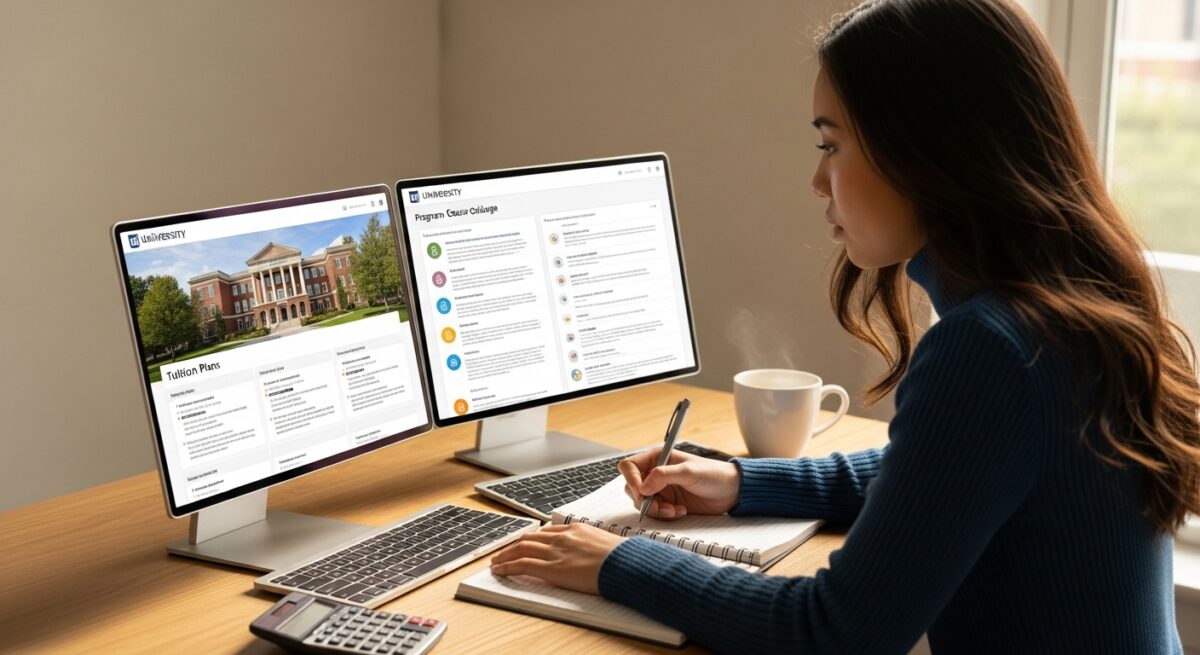
Choosing the right degree path is one of the most significant decisions you will make, and the growing number of online options has made this choice both exciting and overwhelming. For many students, the flexibility of earning a bachelor’s degree from home is a game changer. However, with hundreds of accredited online bachelor’s programs available, comparing them can feel like a full-time job. This article provides a structured framework for evaluating your options, ensuring you find a program that fits your career goals, budget, and lifestyle. We will explore the key factors that matter most in a top online undergraduate programs comparison.
Why Compare Online Undergraduate Programs Carefully?
The landscape of higher education has shifted dramatically. What was once a niche offering is now a mainstream pathway for millions of students. A thorough comparison is essential because not all online programs are created equal. Some may offer the same rigorous curriculum as their on-campus counterparts, while others might prioritize flexibility over depth. Your goal is to find a program that delivers real value without hidden costs or low academic standards.
When you start your search, you will quickly notice differences in tuition rates, program lengths, and support services. For example, a public university like the University of Florida offers an online bachelor’s degree in business administration for a fraction of the cost of a private nonprofit university. Meanwhile, a for-profit institution might offer a faster track but with a higher price tag and less robust career services. Understanding these nuances helps you avoid surprise bills and ensures you invest your time and money wisely.
A structured comparison also helps you align the program’s strengths with your personal circumstances. If you are a working parent, you might prioritize asynchronous classes and a generous transfer credit policy. If you are a recent high school graduate, you might value a program that offers live lectures and strong peer interaction. By focusing on your specific needs, you can narrow down the field to a few strong contenders.
Key Factors in a Top Online Undergraduate Programs Comparison
To make an informed decision, you need to evaluate several critical dimensions. Each factor plays a role in determining whether a program is a good fit for you. Below is a breakdown of the most important elements to consider.
Accreditation and Academic Reputation
Accreditation is the single most important factor to verify. It ensures the program meets established quality standards and that your degree will be recognized by employers and other institutions. Regional accreditation is the gold standard for most nonprofit colleges and universities. National accreditation is more common for trade and vocational schools. Always check the institution’s accreditation status on the U.S. Department of Education’s database. A degree from a regionally accredited school carries more weight in graduate school admissions and professional licensing.
Beyond accreditation, consider the school’s overall reputation. A degree from a well-known public university or a respected private college can open doors. However, don’t overlook smaller, specialized institutions that excel in specific fields like nursing, computer science, or education. Research the faculty’s credentials and their experience teaching online. Many top programs hire the same professors who teach on campus, ensuring consistent quality.
Cost and Financial Aid
Tuition for online undergraduate programs varies widely. In-state public university rates are often the most affordable, sometimes as low as $300 to $500 per credit hour. Out-of-state rates can be higher, but some schools offer a flat online rate that is the same for all students. Private universities typically charge more, but they may also offer substantial scholarships. You should compare the total cost of the program, including fees for technology, course materials, and proctored exams.
Financial aid is available for online students. Fill out the Free Application for Federal Student Aid (FAFSA) to qualify for federal grants, loans, and work-study programs. Many schools also offer institutional scholarships specifically for online learners. Some employers provide tuition reimbursement, so check with your HR department. When comparing costs, always look at the net price after aid, not the sticker price.
Flexibility and Format
Online programs come in different formats. Some are fully asynchronous, meaning you can complete coursework on your own schedule within a given week. Others are synchronous, requiring you to log in for live lectures at set times. Many programs use a hybrid model. Consider your learning style and daily commitments. If you have a full-time job or caregiving responsibilities, asynchronous programs offer the most freedom. If you thrive on structure and real-time interaction, synchronous classes may be a better fit.
Another aspect of flexibility is the program’s pacing. Some schools offer accelerated eight-week terms that allow you to finish in three years instead of four. Others follow a traditional 15-week semester calendar. Accelerated programs are intense but can save you money on tuition and get you into the workforce faster. However, they require strong time management skills.
Student Support Services
Strong support services can make or break your online learning experience. Look for programs that offer dedicated academic advisors, tutoring services, writing centers, and career counseling. Some schools provide 24/7 technical support and online library access. These resources help you stay on track and overcome challenges. Ask about the student-to-advisor ratio and how often you can meet with your advisor. A responsive support system is a sign that the institution values its online students.
Career services are especially important. Check if the program offers internship placement, resume workshops, and job search assistance. Some schools have partnerships with employers that can lead to direct job offers after graduation. A program with a strong career network can significantly boost your return on investment.

Comparing Specific Program Types
While the factors above apply broadly, certain fields have unique considerations. Here is a closer look at three popular areas of study.
Online Bachelor’s in Business Administration
Business is one of the most common online majors. Programs typically cover accounting, finance, marketing, management, and economics. When comparing business programs, look for accreditation from the Association to Advance Collegiate Schools of Business (AACSB) or the Accreditation Council for Business Schools and Programs (ACBSP). AACSB accreditation is the highest standard and is held by top universities like Penn State World Campus and the University of North Carolina. These programs often have strong alumni networks and career placement rates. Many business programs also offer concentrations in areas like supply chain management or entrepreneurship, allowing you to tailor your degree.
Online Bachelor’s in Computer Science
Computer science is a high-demand field with strong earning potential. When comparing programs, check the curriculum for core topics like data structures, algorithms, programming languages, and software engineering. Some programs offer specializations in cybersecurity, artificial intelligence, or data science. Look for programs that include hands-on projects and portfolio-building assignments. Accreditation from the Accreditation Board for Engineering and Technology (ABET) is valuable but not always required for computer science. Schools like Oregon State University and Arizona State University offer well-regarded online CS programs. Also consider the availability of internships and co-op programs, which provide real-world experience.
Online Bachelor’s in Nursing (RN to BSN)
For registered nurses seeking a Bachelor of Science in Nursing, online RN to BSN programs are a popular choice. These programs build on your associate degree or diploma in nursing. Key factors include the program’s accreditation by the Commission on Collegiate Nursing Education (CCNE) or the Accreditation Commission for Education in Nursing (ACEN). Many programs are designed to be completed in 12 to 18 months. Look for programs that offer clinical placement assistance and have strong pass rates on the NCLEX-RN exam. Schools like the University of Texas at Arlington and Ohio State University have respected online nursing programs.
How to Evaluate Program Quality
Beyond the basic factors, you need to dig deeper into program quality. Here are some practical steps to take.
- Read student reviews: Websites like GradReports and Niche provide honest feedback from current and former students. Pay attention to comments about course difficulty, instructor responsiveness, and job placement.
- Check graduation and retention rates: High graduation rates indicate that students are satisfied and able to complete the program. Low retention rates may signal problems with support or curriculum quality.
- Review the curriculum in detail: Look at the course descriptions and required assignments. Make sure the program covers the topics you need for your desired career. Avoid programs with overly vague or outdated course titles.
- Contact an admissions counselor: Ask specific questions about financial aid, transfer credits, and career services. A responsive and knowledgeable counselor is a good sign.
By taking these steps, you can separate high-quality programs from those that may not deliver on their promises. Remember that the cheapest option is not always the best value. Focus on the total package, including support, reputation, and outcomes.
Frequently Asked Questions
Are online undergraduate degrees respected by employers?
Yes, as long as the program is from an accredited institution. Many employers now view online degrees from reputable universities as equivalent to on-campus degrees. The key is to ensure the school has regional accreditation and a strong reputation in your field. Some employers may even prefer online degrees because they demonstrate self-discipline and time management skills.
Can I transfer credits from a community college to an online bachelor’s program?
Most online bachelor’s programs accept transfer credits from accredited community colleges. Many schools have articulation agreements that guarantee credit transfer for specific associate degrees. Before enrolling, check the transfer credit policy and request a preliminary evaluation. This will show you how many credits will apply to your new program, saving you time and money.
How long does it take to complete an online bachelor’s degree?
A traditional online bachelor’s degree takes four years of full-time study. However, many students take longer due to work or family commitments. Accelerated programs can be completed in as little as three years. Part-time students may take five to six years. The timeline depends on the number of credits you transfer and the pace of the program.
What technology do I need for online classes?
At a minimum, you need a reliable computer with a webcam, a high-speed internet connection, and a modern web browser. Some programs require specific software like Microsoft Office or statistical packages. Most schools provide a list of technical requirements before you start. Some also offer loaner laptops or technology grants for students in need.
Making Your Final Decision
After gathering all the information, it is time to make your choice. Create a short list of three to five programs that meet your core criteria. Compare them side by side using a spreadsheet. Include columns for tuition, financial aid, program length, accreditation, and support services. Consider visiting the school’s online campus if they offer a preview or open house. Talk to current students or alumni if possible. For more detailed guidance on how specific programs work, you can read our article on How Do Texas State Online Undergraduate Degrees Work to see a real-world example of program structure and benefits.
Your final decision should balance cost, quality, and convenience. The best program for you is one that fits your budget, accommodates your schedule, and provides the education you need to advance your career. Remember that this Top Online Undergraduate Programs Comparison is a starting point. The effort you put into researching now will pay off for years to come. Take your time, ask questions, and trust your instincts. When you find the right fit, you will know it. For more resources on finding affordable degree options, explore the tools and guides available at CollegeDegrees.School to compare programs and connect with schools that match your goals.
About the Author: Lisa Bennett